Artwork
The Parrot Addresses Khujasta at the Beginning of the Twenty-fifth Night, from a Tuti-nama (Tales of a Parrot)
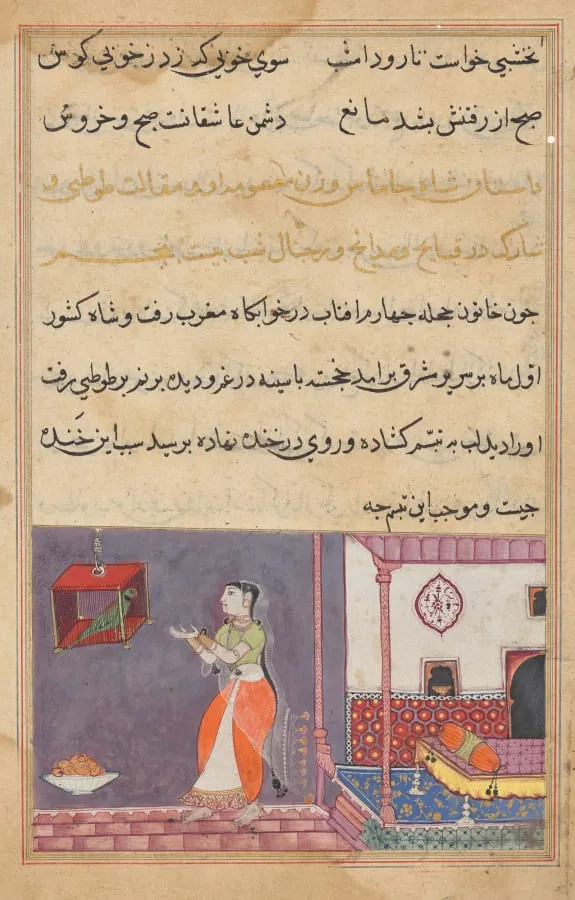
The Parrot Addresses Khujasta at the Beginning of the Twenty-fifth Night, from a Tuti-nama (Tales of a Parrot) is an unspecified painting by the Mughal Painting artist Unknown. It dates from 1560 and is held in the collection of the Cleveland Museum of Art.
About this work
The artist filled the scene with tiny patterns—carpets, fabrics, even the parrot’s feathers—showing off the luxury of the Mughal court.
A woman in a bright orange skirt stands on a blue carpet, listening to a green parrot perched on a bedpost. The bed behind her is empty, its sheets smooth. A thin muslin shawl flutters at her shoulders, its delicate fringe catching the light.
This painting comes from a book of stories told by a parrot to keep its owner from sneaking out at night. The artist filled the scene with tiny patterns—carpets, fabrics, even the parrot’s feathers—showing off the luxury of the Mughal court.
To see more art like this, look up Mughal India, court of Akbar (reigned 1556–1605).
Overview
This painting is one of many illustrations from a Tuti-nama manuscript, a collection of moral tales narrated by a parrot to distract its owner from nocturnal escapades. Created in the Mughal court during Akbar’s reign, it exemplifies the refined visual storytelling of imperial ateliers. The scene captures a quiet moment of suspense, as the parrot begins its story to delay Khujasta’s departure.
Subject & Meaning
Khujasta, a noblewoman, stands alone before an unoccupied bed, her posture suggesting anticipation and solitude. The parrot, perched on the bedpost, is the only other presence, its role as storyteller implying a tension between duty and desire. The empty bed underscores her internal conflict—her longing for a lover versus the parrot’s attempt to restrain her through narrative.
Technique & Style
The artist employs fine brushwork to render intricate textures: the woven patterns of the carpet, the delicate fringe of Khujasta’s muslin stole, and the feathery detail of the parrot. Soft modeling and luminous color, particularly the orange of her skirt against the blue carpet, create depth without heavy shading. The composition is intimate, focused, and rich in decorative precision typical of Mughal miniature painting.
History & Provenance
Produced in the imperial workshop under Emperor Akbar, this painting belonged to a manuscript commissioned to illustrate the Tuti-nama, a Persian adaptation of Indian fables. Such manuscripts were crafted by teams of artists, calligraphers, and poets, often over years. This folio likely originated in the 1560s–70s and was later dispersed, as was common with Mughal manuscripts after the empire’s decline.
Context
The Tuti-nama was part of a broader Mughal interest in translating and illustrating Indian literary traditions, blending Persian aesthetics with local themes. Court artists were encouraged to depict daily life with psychological nuance, elevating narrative illustration to a high art. This work reflects Akbar’s patronage of syncretic culture, where storytelling served both entertainment and moral instruction.
Legacy
This painting exemplifies the Mughal miniature tradition’s capacity to convey complex emotion through subtle detail. Its influence extended to later Indian and Persian schools, and surviving folios remain key sources for understanding courtly life, gender dynamics, and artistic collaboration in 16th-century India. Today, such works are studied for their narrative sophistication and technical mastery.
Artist & collection

 Domestic Scene
 Giacomo and Cardinal Marco, investing Andrea, Abbot of San Zeno, with his Benefice
 The Nymph of Fontainebleau
 Portrait of a Woman
 Madonna and Child with Saints in the Enclosed Garden
 Venus and Minerva
 Family Group of Four on Sofa
 Wall painting from Room H of the Villa of P. Fannius Synistor at Boscoreale
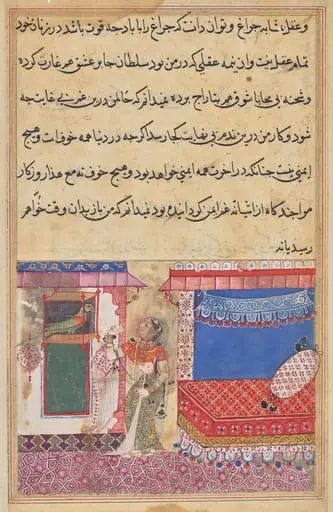 The Parrot Addresses Khujasta at the Beginning of the Eighteenth Night, from a Tuti-nama (Tales of a Parrot)
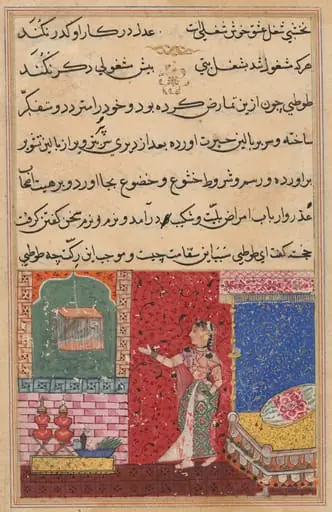 The Parrot Addresses Khujasta at the Beginning of the Fifteenth Night, from a Tuti-nama (Tales of a Parrot)
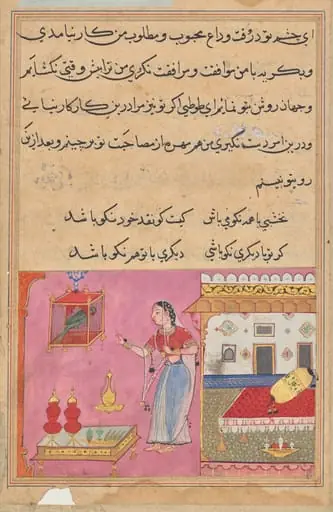 The Parrot Addresses Khujasta at the Beginning of the Twentieth Night, from a Tuti-nama (Tales of a Parrot)
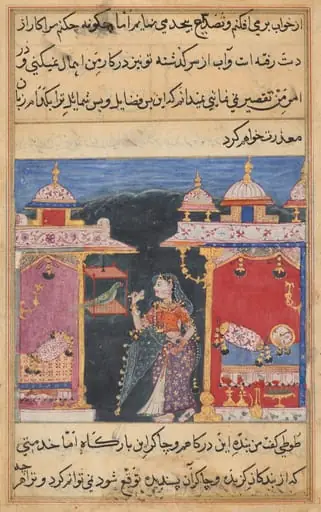 The Parrot Addresses Khujasta at the Beginning of the Seventh Night, from a Tuti-nama (Tales of a Parrot)
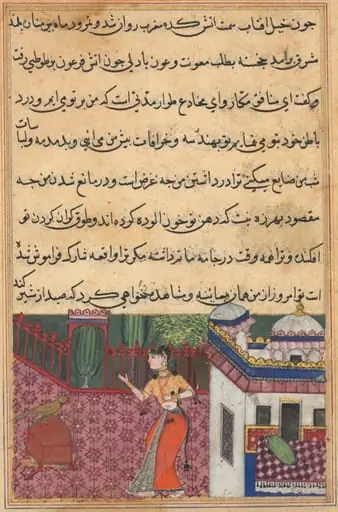 The parrot addresses Khujasta at the beginning of the thirty-third night, from a Tuti-nama (Tales of a Parrot)
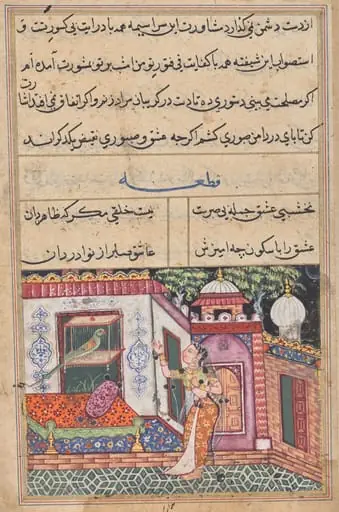 The Parrot Addresses Khujasta at the Beginning of the Eleventh Night, from a Tuti-nama (Tales of a Parrot)
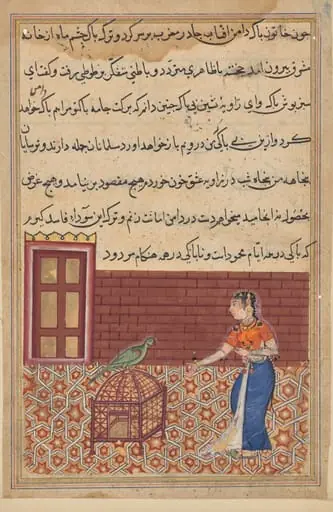 The parrot addresses Khujasta at the beginning of the fifty-first night, from a Tuti-nama (Tales of a Parrot): Fifty-first Night
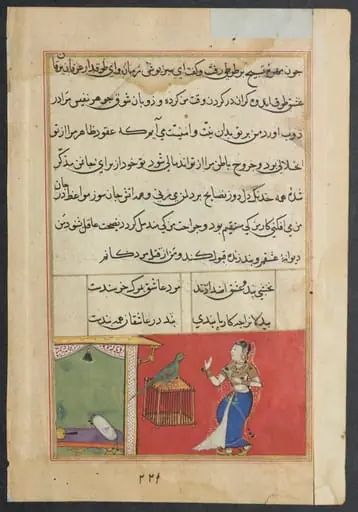 The parrot addresses Khujasta at the beginning of the forty-seventh night, from a Tuti-nama (Tales of a Parrot): Forty-seventh Night
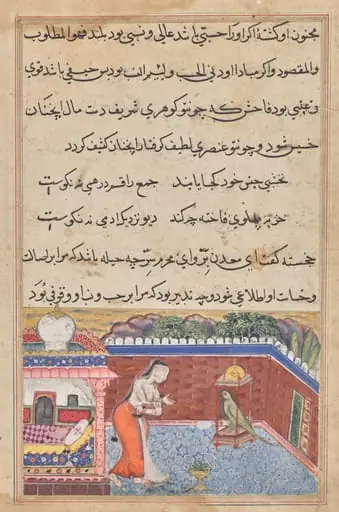 The parrot addresses Khujasta at the beginning of the thirty-first night, from a Tuti-nama (Tales of a Parrot)
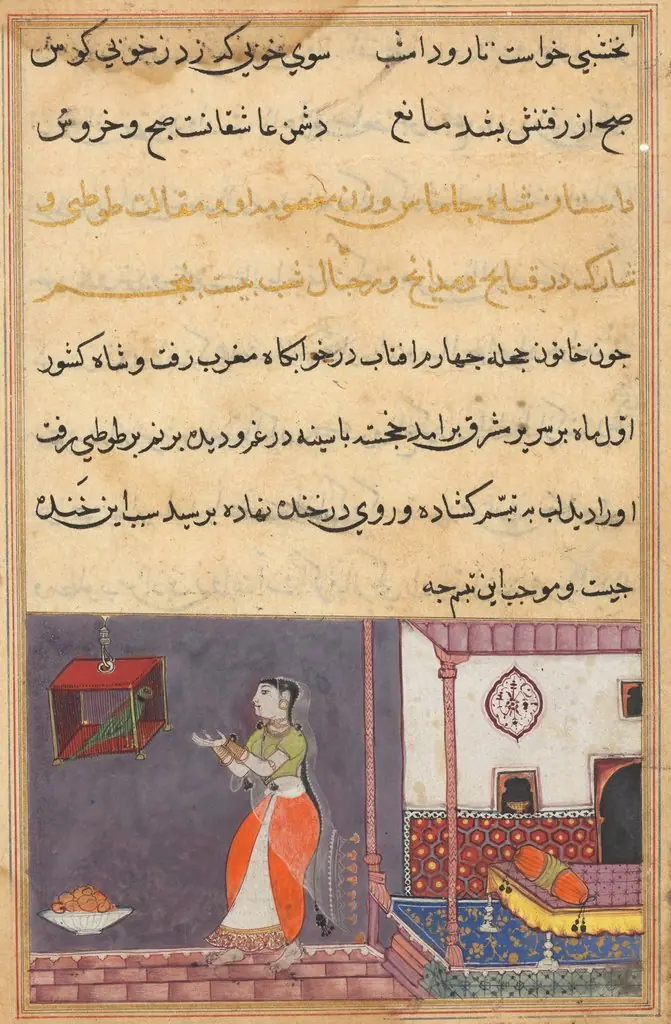 The Parrot Addresses Khujasta at the Beginning of the Twenty-fifth Night, from a Tuti-nama (Tales of a Parrot)
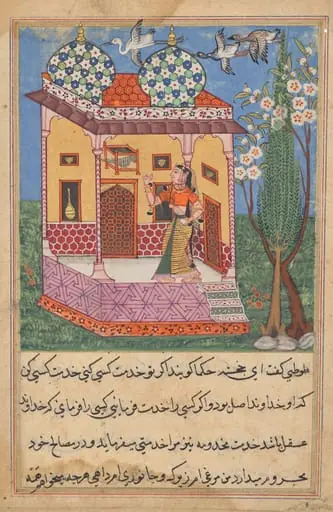 The Parrot Addresses Khujasta at the Beginning of the Twenty-sixth Night, from a Tuti-nama (Tales of a Parrot)