Artwork
The pious man’s son, now a king, reveals himself to his father; his nurse upbraids his unfaithful mother, from a Tuti-nama (Tales of a Parrot): Fifty-second Night
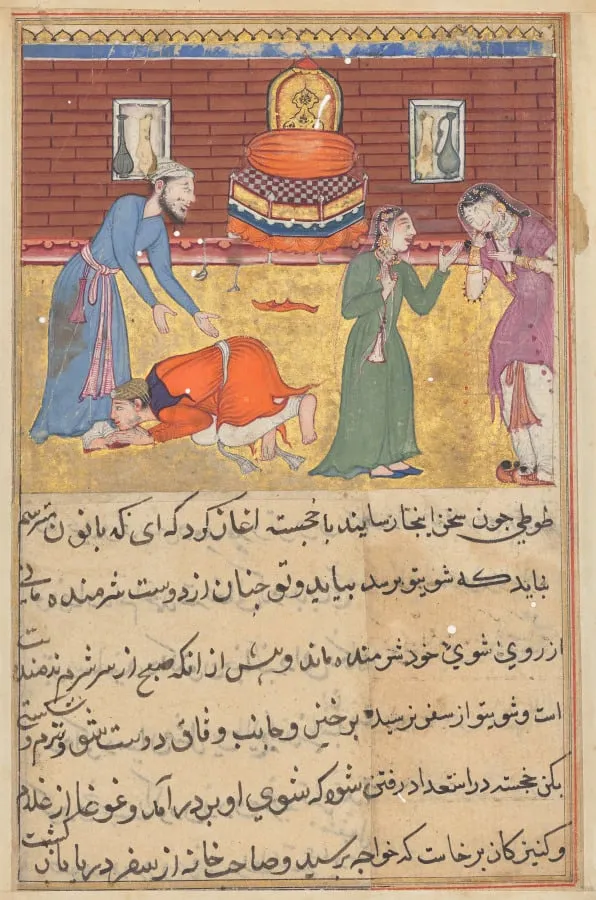
The pious man’s son, now a king, reveals himself to his father; his nurse upbraids his unfaithful mother, from a Tuti-nama (Tales of a Parrot): Fifty-second Night is an unspecified painting by the Mughal Painting artist Unknown. It dates from 1560 and is held in the collection of the Cleveland Museum of Art.
About this work
You see a crowded room in a palace: a young king kneels before an old man, while a woman in a green dress scolds another woman in red.
You see a crowded room in a palace: a young king kneels before an old man, while a woman in a green dress scolds another woman in red.
This painting tells a story from a *Tuti-nama*, or *Tales of a Parrot*, a book of fables Emperor Akbar loved. The nurse saved the boy from his mother’s plot, and years later, he returns as a king. The bright colors and tiny details were meant to impress the emperor’s court.
To see more art like this, look up Mughal India, court of Akbar (reigned 1556–1605).
Overview
The painting illustrates a dramatic reunion in a palace interior: a youthful monarch kneels before an elderly figure, while a woman in green rebukes another in red. The scene captures a moment from the fifty‑second night of the *Tuti‑nama*, a collection of moral tales favored by Emperor Akbar.
Subject & Meaning
The narrative follows a boy whose mother plotted his death to satisfy a lover. Rescued by his nurse, the child later slays a dragon, weds a princess, and ascends to the throne. The work emphasizes themes of loyalty, survival, and the transformative power of hidden virtue.
Technique & Style
Executed with vivid pigments and meticulous detailing, the composition employs a crowded spatial arrangement typical of Mughal court painting. The contrast of green and red garments, along with the elaborate architectural backdrop, reflects the artist’s intent to impress a sophisticated imperial audience.
History & Provenance
The scene derives from the *Tuti‑nama*, a Persian‑origin manuscript translated into Persian and Urdu for Akbar’s court in the late 16th century. The painting likely originated in the imperial workshop of the Mughal atelier, created to accompany the illustrated manuscript for the emperor’s personal library.
Context
Mughal visual culture under Akbar blended Persian artistic conventions with Indian motifs, producing richly colored narrative panels. Stories of moral instruction, such as those in the *Tuti‑nama*, served both entertainment and didactic purposes within the royal household.
Legacy
The work exemplifies the synthesis of literary and visual arts that defined Akbar’s reign, influencing subsequent generations of Indian miniature painting. Its preservation offers insight into courtly values and the aesthetic strategies employed to convey complex moral tales.
Artist & collection

 Domestic Scene
 Giacomo and Cardinal Marco, investing Andrea, Abbot of San Zeno, with his Benefice
 The Nymph of Fontainebleau
 Portrait of a Woman
 Madonna and Child with Saints in the Enclosed Garden
 Venus and Minerva
 Family Group of Four on Sofa
 Wall painting from Room H of the Villa of P. Fannius Synistor at Boscoreale
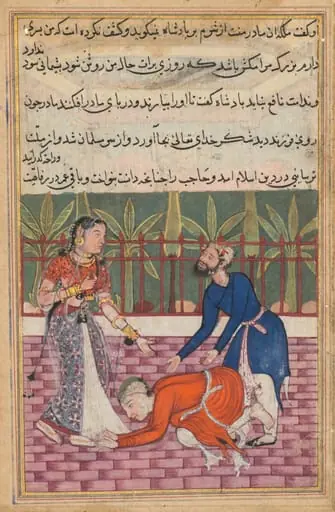 The guard restores the son who falls at his mother’s feet, from a Tuti-nama (Tales of a Parrot): Fiftieth Night
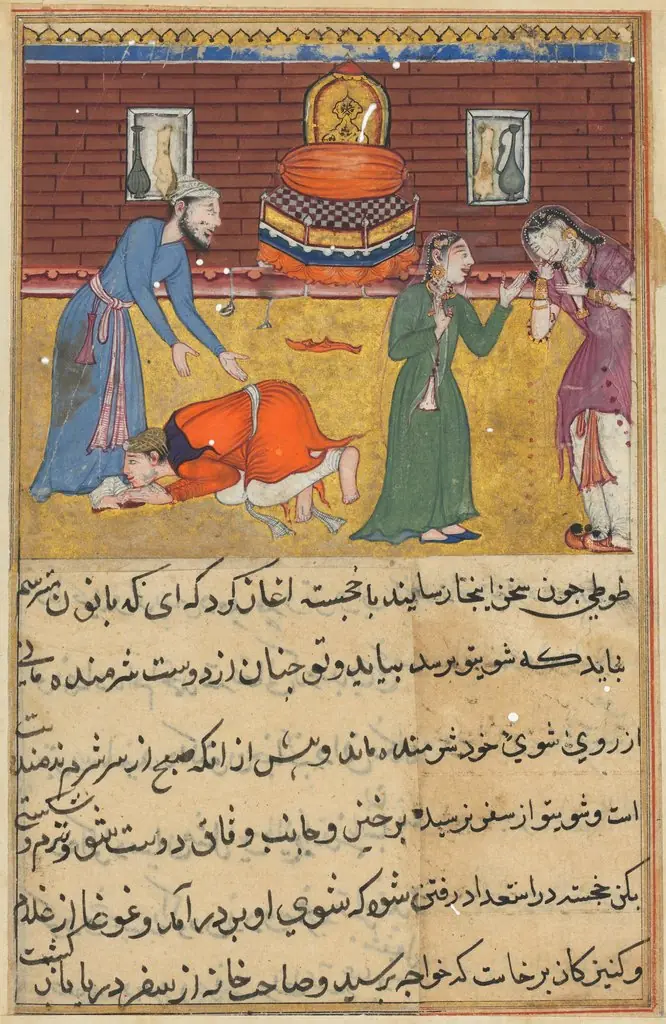 The pious man’s son, now a king, reveals himself to his father; his nurse upbraids his unfaithful mother, from a Tuti-nama (Tales of a Parrot): Fifty-second Night
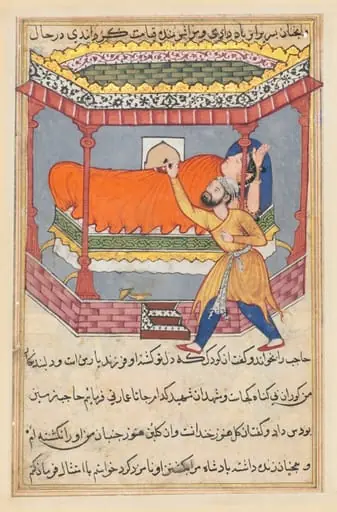 The king places the talisman on his sleeping wife, from a Tuti-nama (Tales of a Parrot): Fiftieth Night
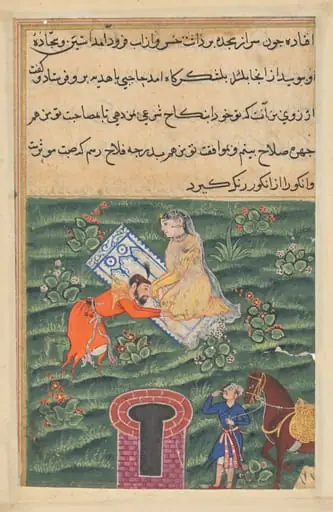 Khusrau, the King of Kings, pays homage to the pious daughter of Khassa, from a Tuti-nama (Tales of a Parrot): Fifty-first Night
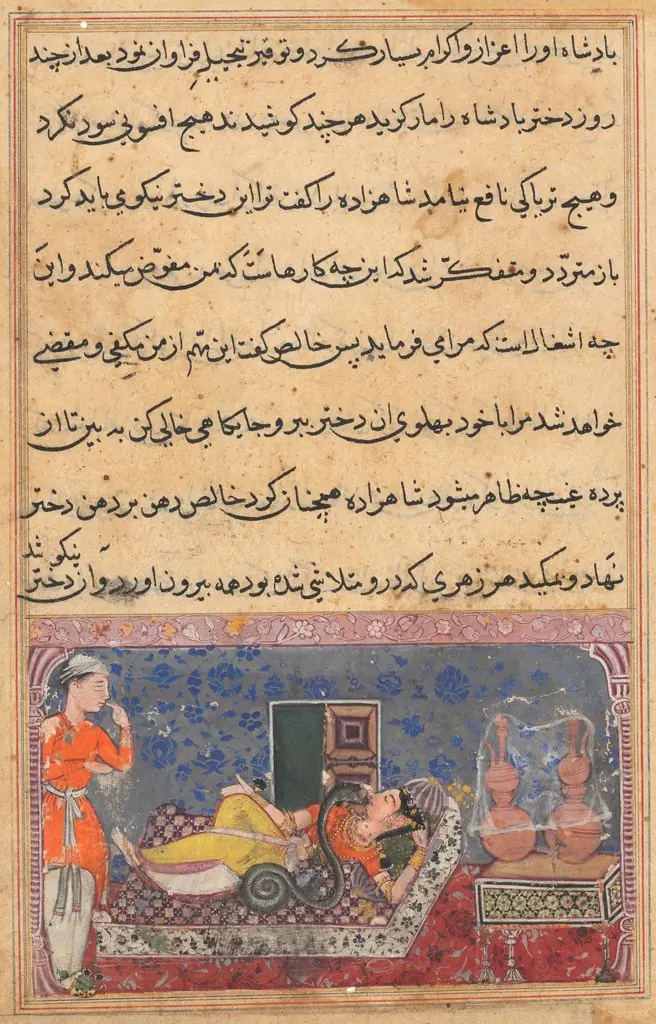 Khalis repays the prince for his kindness by changing into a snake and sucking the poison from the king’s daughter, from a Tuti-nama (Tales of a Parrot): Eighteenth Night
 Khalis repays the prince for his kindness by changing into a snake and sucking the poison from the king’s daughter, from a Tuti-nama (Tales of a Parrot): Eighteenth Night
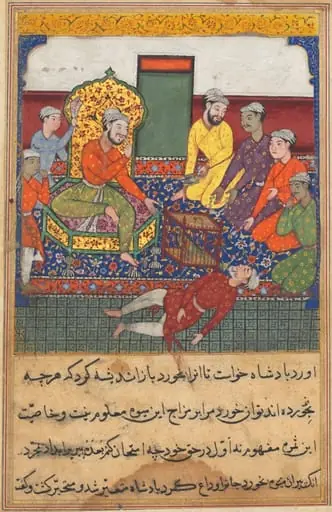 The old man eats of the fruit of the Tree of Life, but drops dead, from a Tuti-nama (Tales of a Parrot): Ninth Night
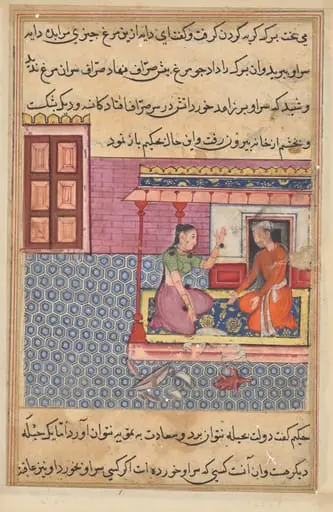 The pious man’s wife offers the seven-colored bird as food to her lover, but not finding its head, he breaks the pot and bowl in anger, from a Tuti-nama (Tales of a Parrot): Fifty-second Night
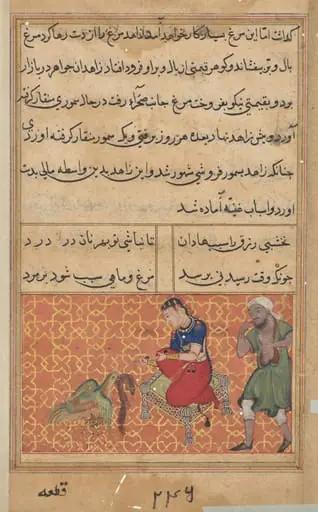 The bird of seven colors brings a sable to the pious man, from a Tuti-nama (Tales of a Parrot): Fifty-second Night
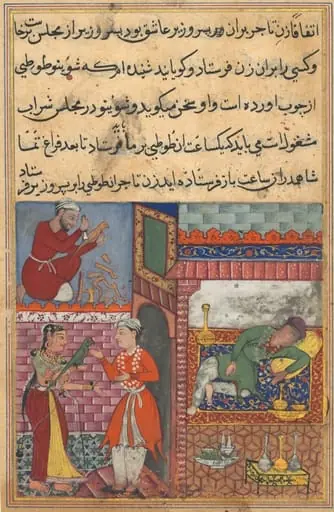 The vizier’s son receives the magic wooden parrot from the wife of the merchant, who is drunk, and has a replica made by a carpenter, from a Tuti-nama (Tales of a Parrot): Tenth Night