Artwork
The old man eats of the fruit of the Tree of Life, but drops dead, from a Tuti-nama (Tales of a Parrot): Ninth Night
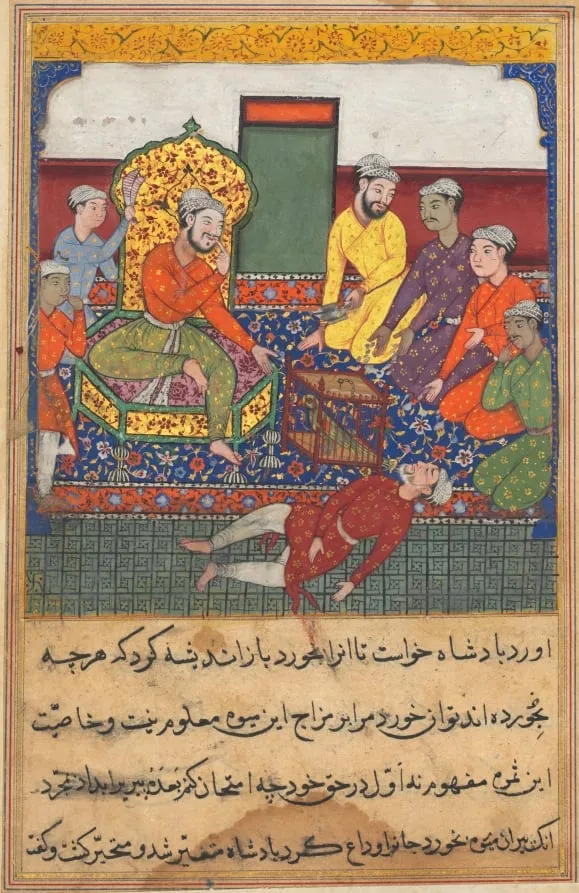
The old man eats of the fruit of the Tree of Life, but drops dead, from a Tuti-nama (Tales of a Parrot): Ninth Night is an unspecified painting by the Mughal Painting artist Lalu. It dates from 1560 and is held in the collection of the Cleveland Museum of Art. This painting illustrates a moment from the ninth night of the Tuti-nama, a collection of moral tales told to a Mughal emperor.
About this work
The parrot had brought the fruit to the king, but the old man took a bite first—only to drop dead.
A king sits on his throne, staring at an old man who just collapsed after eating fruit. A parrot in a cage watches from the center of the room. The king’s guards look ready to kill the bird.
The parrot had brought the fruit to the king, but the old man took a bite first—only to drop dead. The king thinks the parrot betrayed him. What he doesn’t know: a snake bit the fruit earlier, poisoning it.
This painting is part of a book of stories told to a Mughal emperor. To see more like it, look up *Mughal India, court of Akbar (reigned 1556–1605)*.
Overview
This painting illustrates a moment from the ninth night of the Tuti-nama, a collection of moral tales told to a Mughal emperor. It captures the immediate aftermath of an old man’s death after consuming a fruit offered by a parrot. The king, misled by appearances, believes the bird has betrayed him, while the true cause—poison from a snake’s bite—remains hidden. The scene unfolds within a richly detailed court interior, emphasizing tension and misjudgment.
Subject & Meaning
The narrative explores themes of misinterpretation and unintended consequences. The king’s swift condemnation of the parrot reflects human haste in assigning blame, while the unseen snake symbolizes hidden dangers beyond human perception. The old man’s death, though tragic, serves as a cautionary lesson within the larger cycle of stories designed to impart wisdom through irony and surprise.
Technique & Style
Executed in the Mughal miniature tradition, the painting employs fine brushwork, vibrant pigments, and intricate patterns in textiles and architecture. Figures are rendered with delicate precision, and spatial depth is suggested through layered architecture rather than linear perspective. The parrot’s cage, centrally placed, acts as both compositional anchor and symbolic focal point, drawing attention to the misunderstanding at the heart of the scene.
History & Provenance
Created during the reign of Emperor Akbar (1556–1605), this work belongs to a commissioned manuscript of the Tuti-nama, translated and illustrated under imperial patronage. Such manuscripts were produced in royal ateliers by teams of artists, calligraphers, and poets. This particular folio likely originated in the late 16th century and was later dispersed, with surviving pages held in museum and private collections worldwide.
Context
The Tuti-nama was adapted from a Persian collection of animal fables, reimagined for the Mughal court as a vehicle for political and ethical instruction. Stories were told nightly to the emperor, blending entertainment with counsel. The inclusion of a talking parrot as narrator reflects a broader Indo-Persian literary tradition that used animals to critique human behavior subtly and safely.
Legacy
This painting exemplifies the Mughal synthesis of Persian narrative traditions with Indian artistic sensibilities. Its enduring value lies not in grandeur but in its quiet psychological insight—capturing a moment of flawed judgment that resonates across cultures. Surviving folios from this series remain key references for understanding the intellectual and aesthetic priorities of Akbar’s court.
Artist & collection

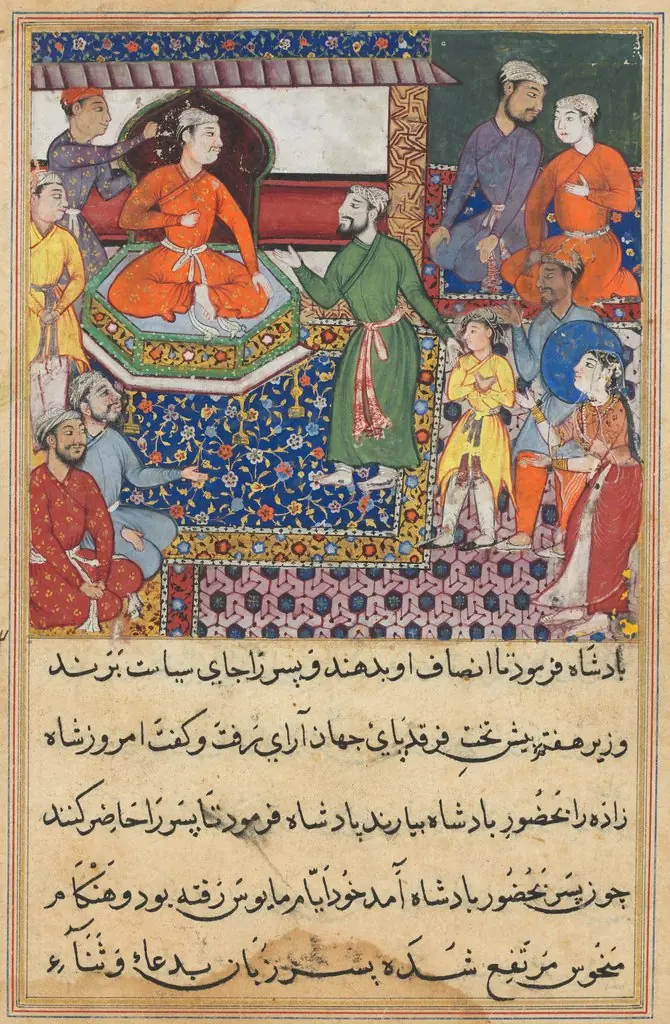 The handmaiden again pleads for the death of the prince, from a Tuti-nama (Tales of a Parrot): Eighth Night
 The handmaiden again pleads for the death of the prince, from a Tuti-nama (Tales of a Parrot): Eighth Night
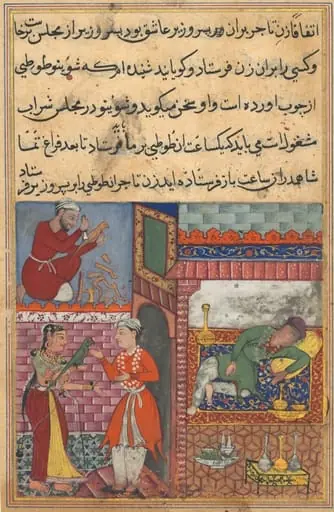 The vizier’s son receives the magic wooden parrot from the wife of the merchant, who is drunk, and has a replica made by a carpenter, from a Tuti-nama (Tales of a Parrot): Tenth Night
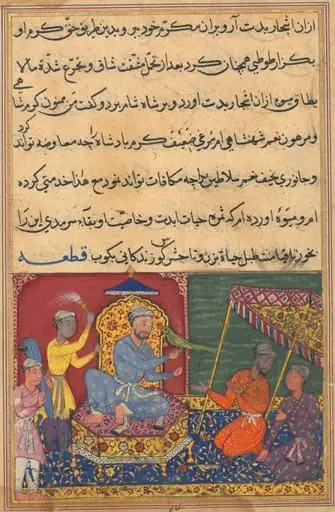 The parrot brings a fruit from the Tree of Life to the king of Syria, from a Tuti-nama (Tales of a Parrot): Ninth Night
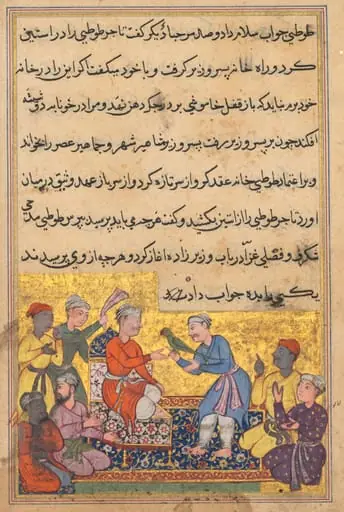 The magic parrot of the merchant talks to the vizier’s son, from a Tuti-nama (Tales of a Parrot): Tenth Night
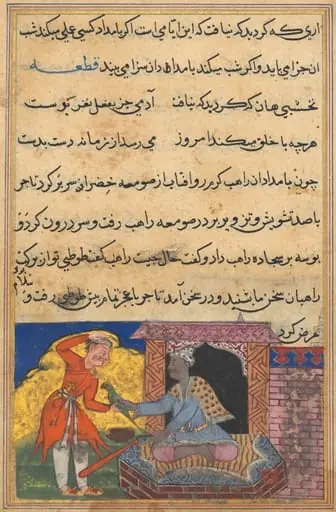 The monk returns the magic parrot to its rightful owner, the merchant, from a Tuti-nama (Tales of a Parrot): Tenth Night
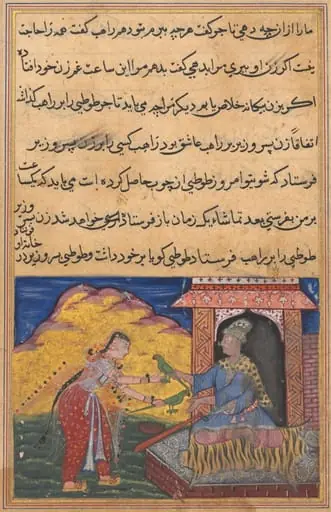 The wife of the son of the vizier brings the magic wooden parrot to her lover, the monk, who exchanges it for the replica, from a Tuti-nama (Tales of a Parrot): Tenth Night
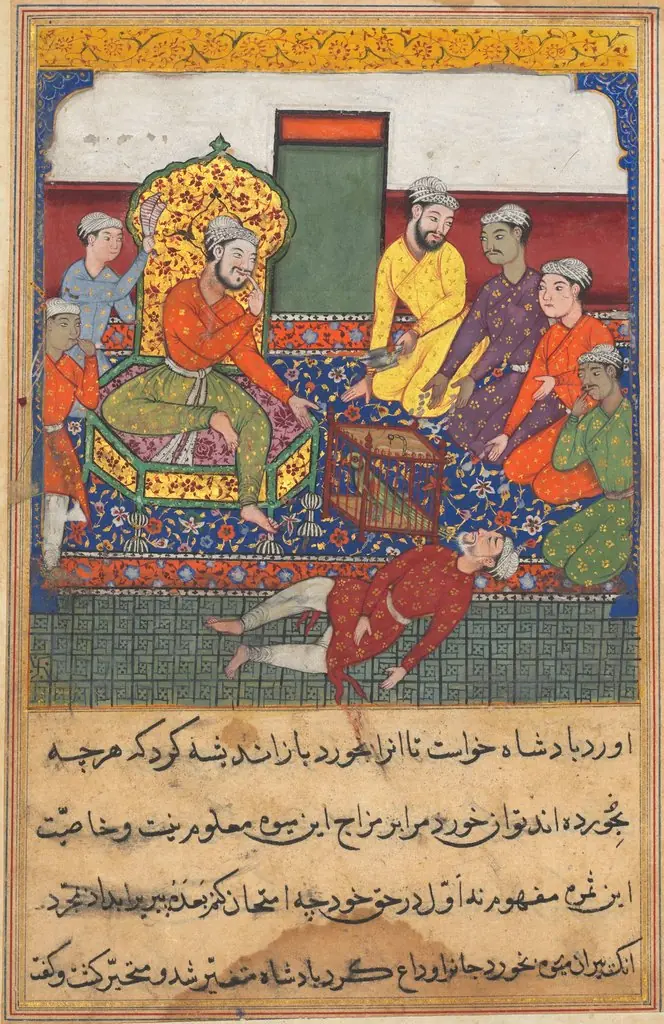 The old man eats of the fruit of the Tree of Life, but drops dead, from a Tuti-nama (Tales of a Parrot): Ninth Night
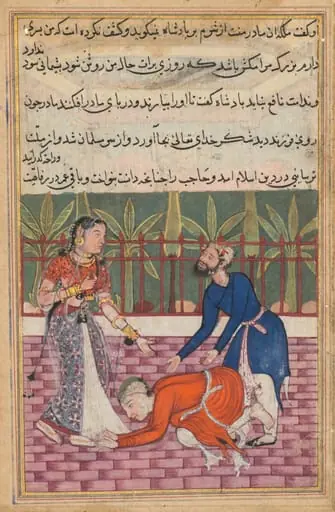 The guard restores the son who falls at his mother’s feet, from a Tuti-nama (Tales of a Parrot): Fiftieth Night
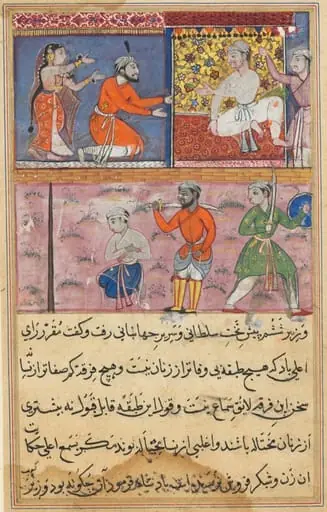 The prince sent back to the place of execution for the sixth time, from a Tuti-nama (Tales of a Parrot): Eighth Night
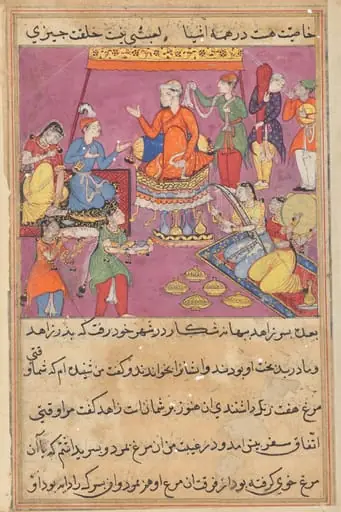 The king gives his daughter in marriage to the pious man’s son, from a Tuti-nama (Tales of a Parrot): Fifty-second Night
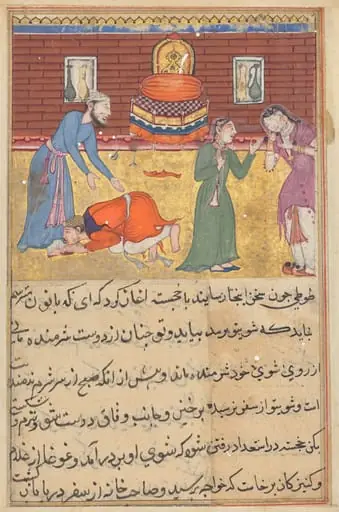 The pious man’s son, now a king, reveals himself to his father; his nurse upbraids his unfaithful mother, from a Tuti-nama (Tales of a Parrot): Fifty-second Night
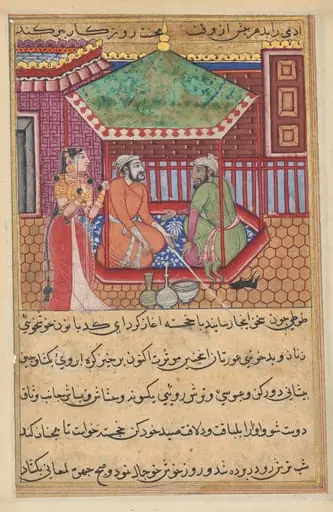 The eldest brother explains the reason for his youthful appearance, from a Tuti-nama (Tales of a Parrot): Forty-ninth Night
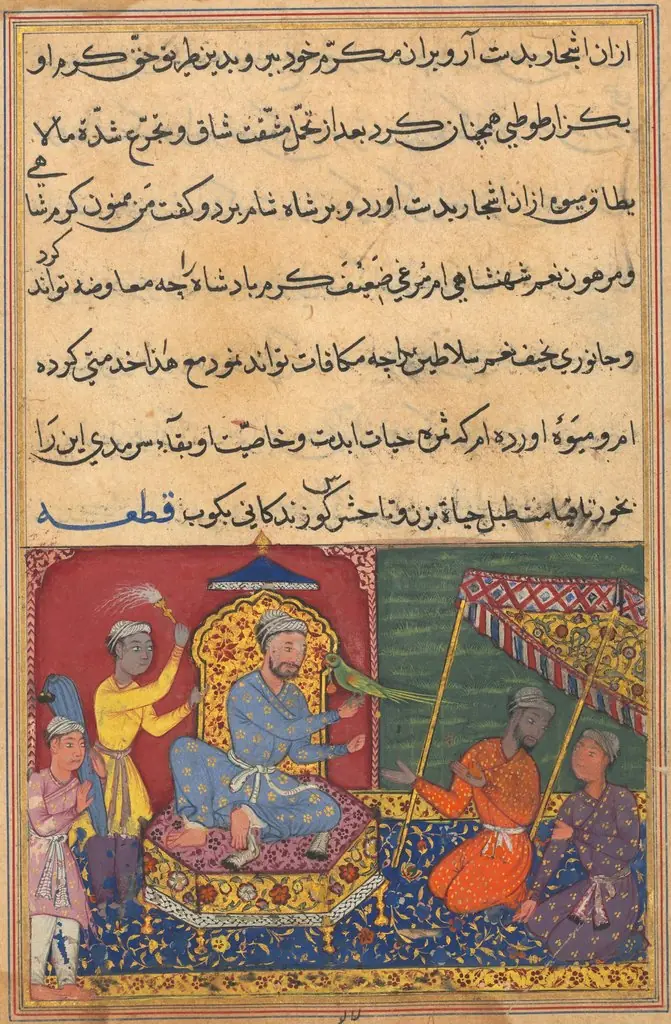 The parrot brings a fruit from the Tree of Life to the king of Syria, from a Tuti-nama (Tales of a Parrot): Ninth Night
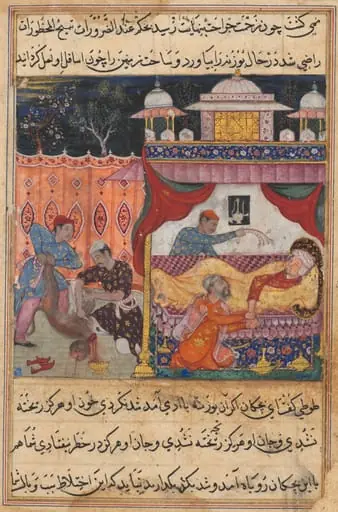 The monkey slain, his blood to be used as medicine for the ailing prince he has bitten, from a Tuti-nama (Tales of a Parrot): Fifth Night