Artwork
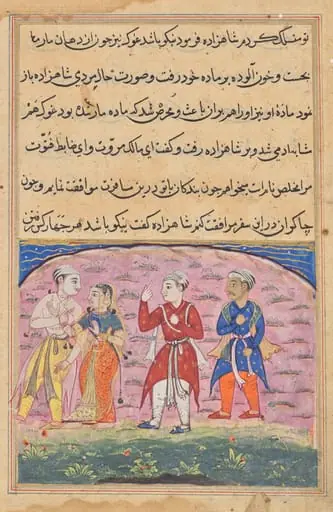
The tale of the three men trapped in a cave by a rolling boulder, from a Tuti-nama (Tales of a Parrot): Thirty-second Night
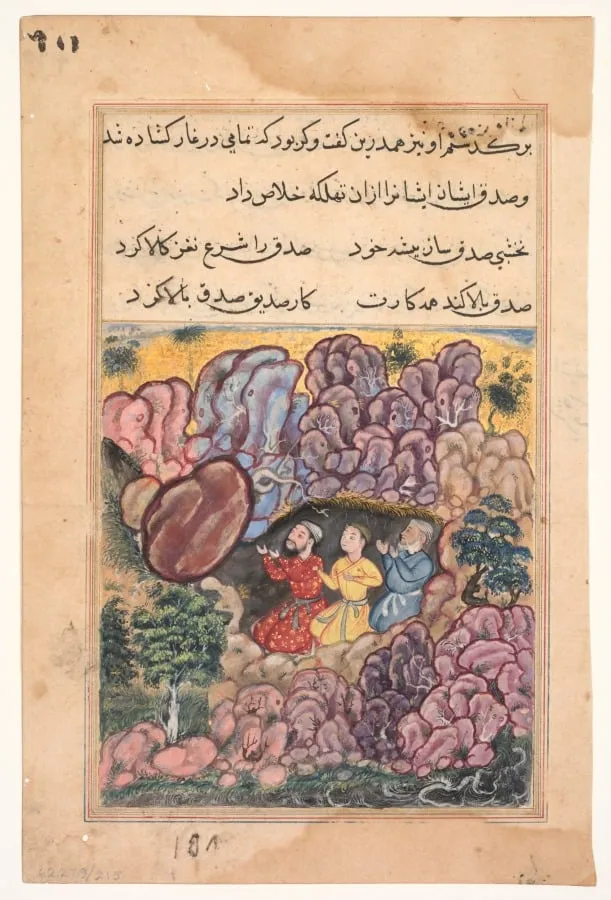
The tale of the three men trapped in a cave by a rolling boulder, from a Tuti-nama (Tales of a Parrot): Thirty-second Night is an unspecified painting by the Mughal Painting artist Bihzad. It is held in the collection of the Cleveland Museum of Art.
About this work
Look closely—the cave walls are filled with tiny flowers and patterns, almost like a hidden garden.
Three men crouch in a dark cave, their hands pressed together in fear. A huge boulder blocks the exit, and strange light glows from cracks in the rock.
This painting comes from a book of parrot tales told to a queen each night. The artist worked for Emperor Akbar, who loved stories and art. Look closely—the cave walls are filled with tiny flowers and patterns, almost like a hidden garden.
To see more art like this, look up mughal india, court of akbar (reigned 1556–1605).
Overview
The work illustrates a scene from the thirty‑second night of the *Tuti‑nama*, a collection of parrot‑told stories presented nightly to a queen. Three figures are shown crouched inside a dim cavern, blocked by a massive boulder that seals the entrance. A faint luminescence emanates from fissures in the stone, highlighting the men’s clasped hands and the intricate decoration of the surrounding walls.
Subject & Meaning
The narrative captures the moment when the trapped men, driven by greed for hidden treasure, are commanded by an unseen voice to confess their sins. As each confession is spoken, a fragment of the boulder recedes, symbolising the liberating power of truth and repentance within the moral framework of the tale.
Technique & Style
Executed in the Mughal court tradition, the painting combines delicate brushwork with fine detailing. The cavern walls are covered in miniature floral motifs and geometric patterns, creating a concealed garden effect that contrasts with the darkness of the setting. The use of subtle light from the rock cracks enhances the three‑dimensional illusion of space.
History & Provenance
Created for the imperial atelier of Emperor Akbar (reigned 1556–1605), the piece reflects the emperor’s patronage of literary and visual arts. The *Tuti‑nama* was a favored text in Akbar’s court, and this illustration was likely produced by an artist employed by the royal workshop, intended for inclusion in a deluxe manuscript.
Context
The painting exemplifies the synthesis of Persian narrative illustration with Indian aesthetic sensibilities that characterized Mughal art. Its emphasis on moral storytelling and ornamental detail influenced later court painters and contributed to the broader visual culture of the period, offering insight into the ethical themes promoted by Akbar’s administration.
Artist & collection

Artist
Kamāl ud-Dīn Behzād, also known as Kamal al-din Bihzad or Kamaleddin Behzād, was a Persian painter and head of the royal ateliers in Herat and Tabriz during the late Timurid and early Safavid eras.

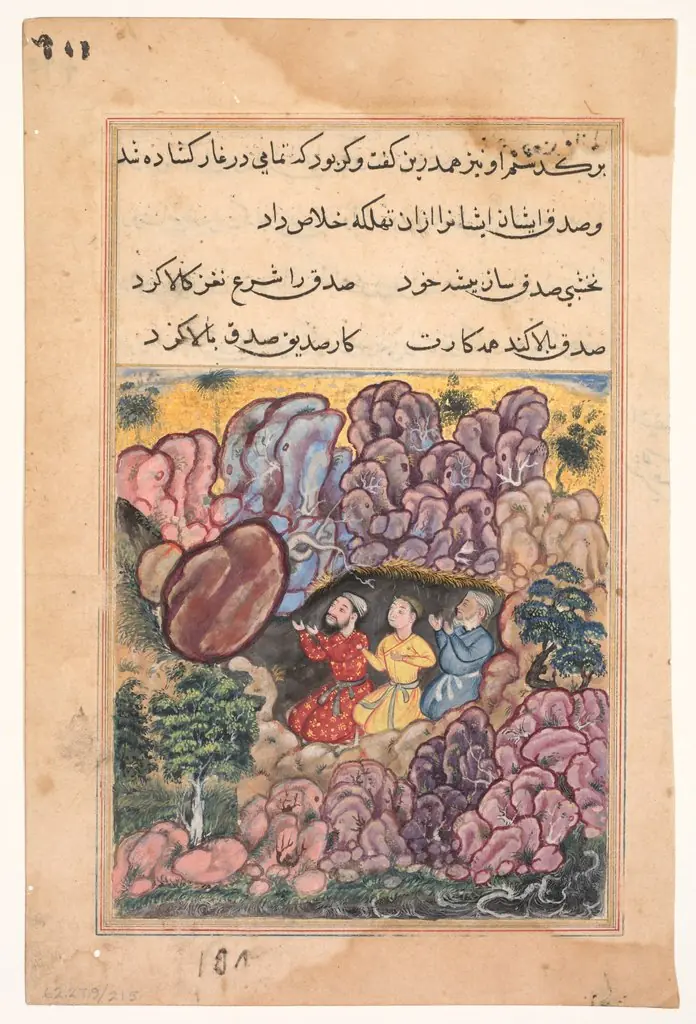 The tale of the three men trapped in a cave by a rolling boulder, from a Tuti-nama (Tales of a Parrot): Thirty-second Night
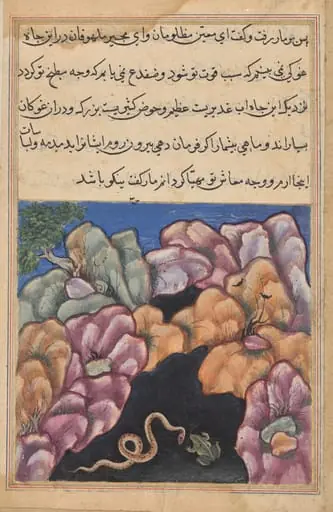 The snake enters into an argument with the frog, from a Tuti-nama (Tales of a Parrot): Twenty-sixth Night
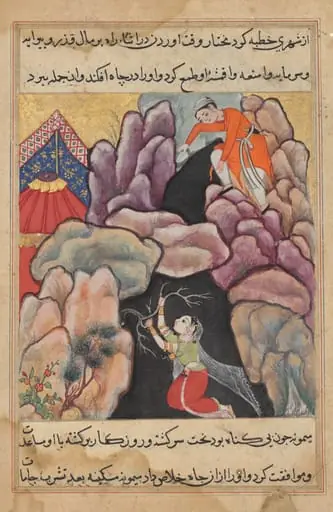 Mukhtar throws his wife Maimuna into the pit, but she saves herself, from a Tuti-nama (Tales of a Parrot): Twenty-fifth Night
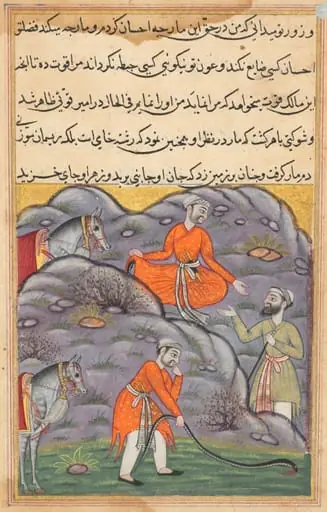 The emir slays the snake after giving it shelter, from a Tuti-nama (Tales of a Parrot): Forty-fifth Night
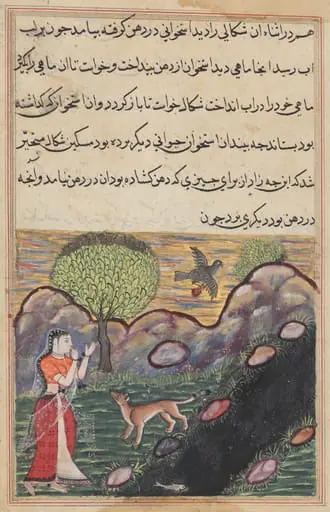 The daughter-in-law of the king of Banaras sees the jackal deprived of its food by a bird, as it unsuccessfully attempts to catch a fish, from a Tuti-nama (Tales of a Parrot): Sixteenth Night
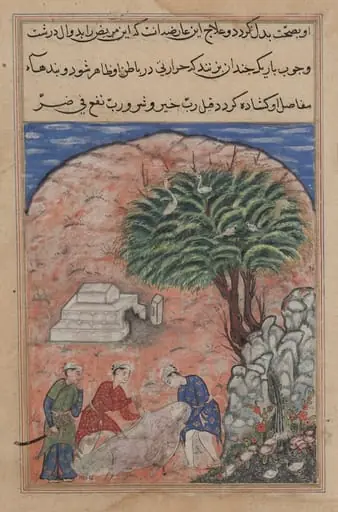 The suitors take the devotee’s daughter out of her tomb after breaking it open, when the physician discovers she is still alive, from a Tuti-nama (Tales of a Parrot): Twentieth Night
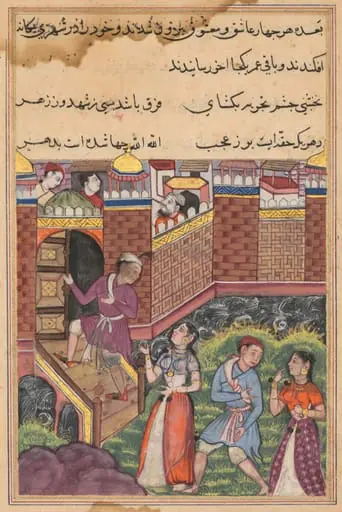 The two couples reach a foreign city where they make their home, from a Tuti-nama (Tales of a Parrot): Thirty-third Night
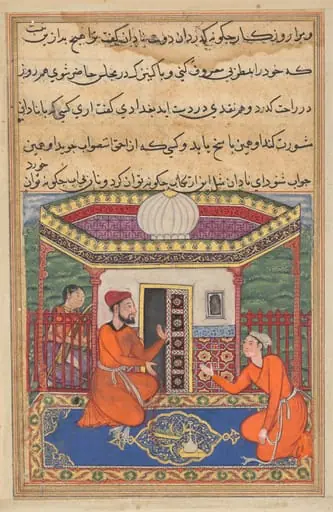 The young man of Baghdad solicits advice from a friend as his slave girl, who is adept at music, awaits, from a Tuti-nama (Tales of a Parrot): Forty-eighth Night
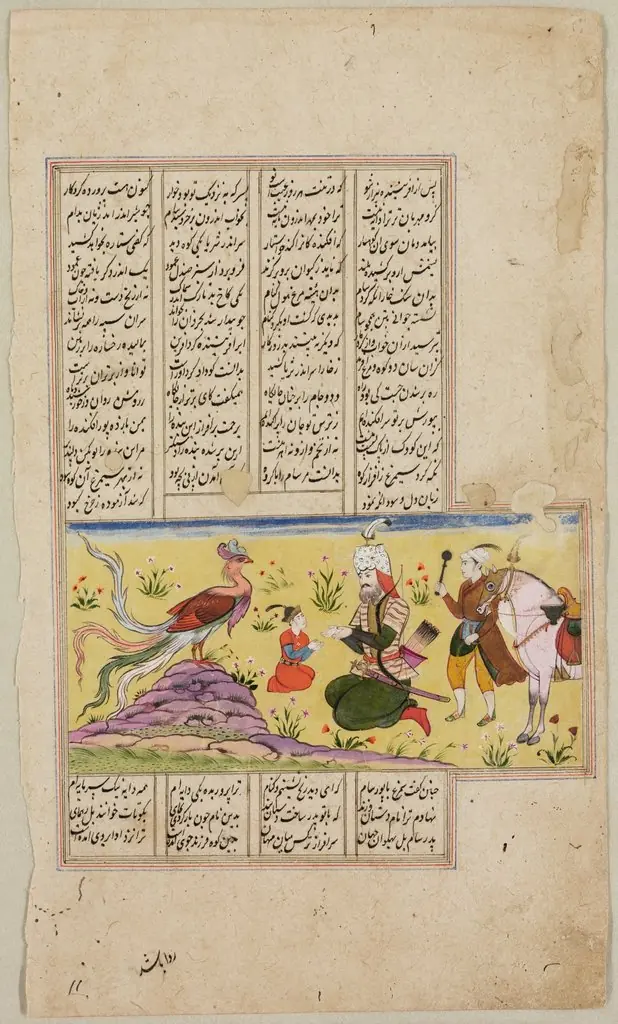 Rustam and the Simurgh
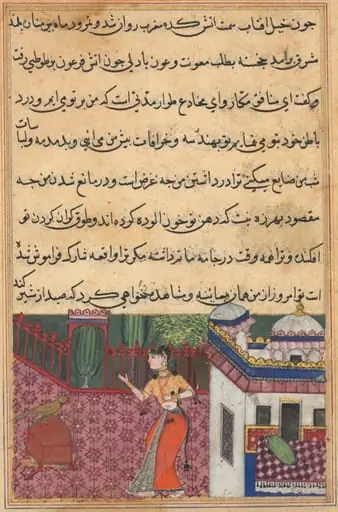 The parrot addresses Khujasta at the beginning of the thirty-third night, from a Tuti-nama (Tales of a Parrot)
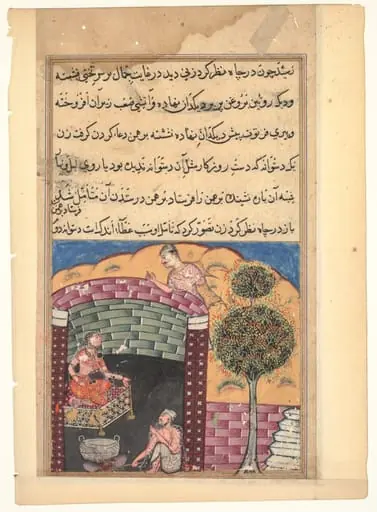 The Brahman gambler sees the daughter of the king of the jinns in a pit together with an old man and a cauldron of boiling oil, from a Tuti-nama (Tales of a Parrot: Seventh Night)
 The prince and Nikfal are joined by Khalis and the Mukhlis who are the grateful snake and frog in human form, from a Tuti-nama (Tales of a Parrot): Eighteenth Night