Artwork
The Seconda Macchina for the Chinea of 1762: A Kiosk, or Pleasure-House in Ottoman Style
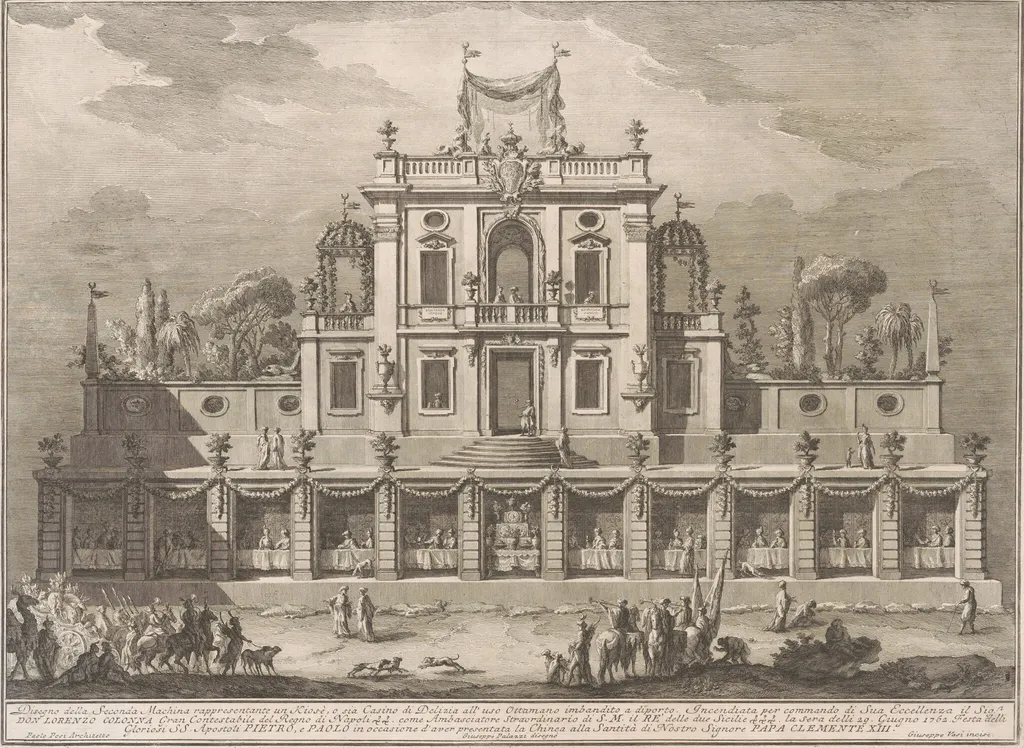
The Seconda Macchina for the Chinea of 1762: A Kiosk, or Pleasure-House in Ottoman Style is an ink print by the Romanticist artist Giuseppe Vasi. It dates from 1762 and is held in the collection of the National Gallery of Art.
About this work
You can learn more about this style by looking into the technique: etching.
This painting shows a kiosk or pleasure-house in Ottoman style.
It's an etching from 1762.
The artist included many details, like intricate architecture and patterns, which makes it interesting because it shows the artist's skill in drawing complex scenes.
The etching is very detailed and was likely made for a special event.
The event was the Chinea of 1762, which was a festival in Rome.
You can learn more about this style by looking into the technique: etching.
Overview
The Seconda Macchina for the Chinea of 1762: A Kiosk, or Pleasure-House in Ottoman Style is an etching created by Giuseppe Vasi in 1762.
Subject & Meaning
The print depicts a kiosk or pleasure-house in Ottoman style, showcasing intricate architecture and patterns. The level of detail suggests the artist's skill in rendering complex scenes.
Technique & Style
Executed in etching, the work demonstrates Vasi's proficiency in this technique, which allows for the capture of fine details and ornate designs characteristic of Ottoman architecture.
History & Provenance
The etching was created for the Chinea of 1762, a festival held in Rome, indicating its original purpose as a commemorative or celebratory work.
Artist & collection

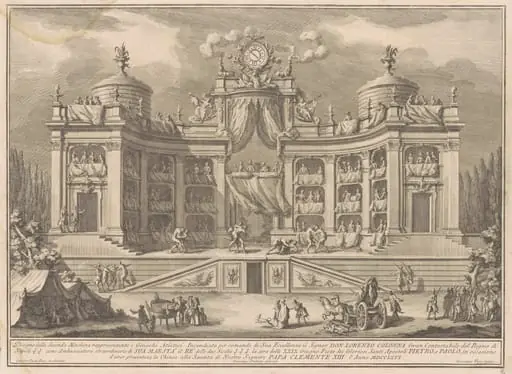 The Seconda Macchina for the Chinea of 1766: A Theater for Athletic Games
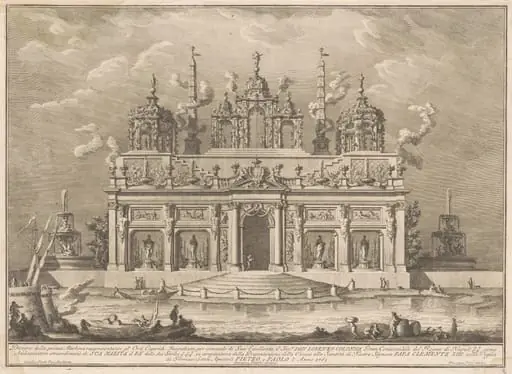 The Prima Macchina for the Chinea of 1765: The Garden of the Hesperides
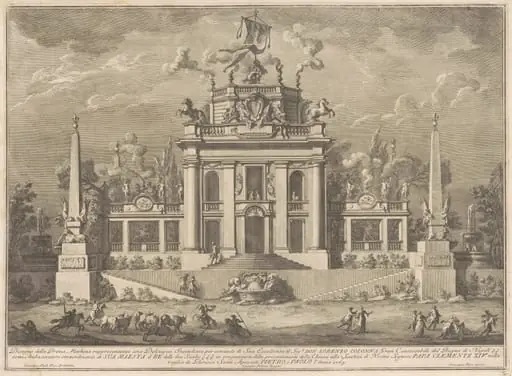 The Prima Macchina for the Chinea of 1769: A "Deliziosa"
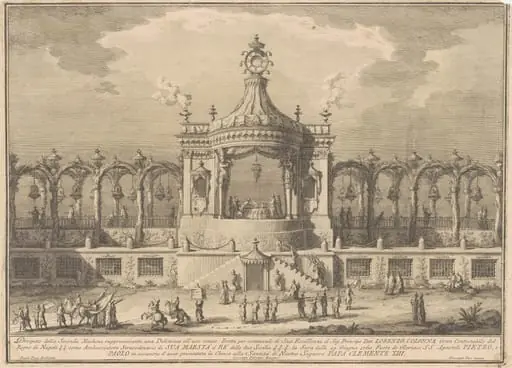 The Seconda Macchina for the Chinea of 1760: A Chinoiserie Pavilion
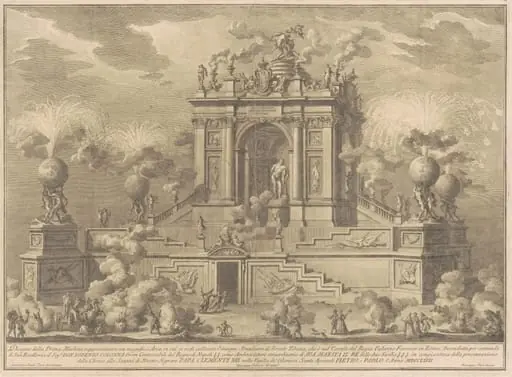 The Prima Macchina for the Chinea of 1767: A Triumphal Arch with the Farnese Hercules
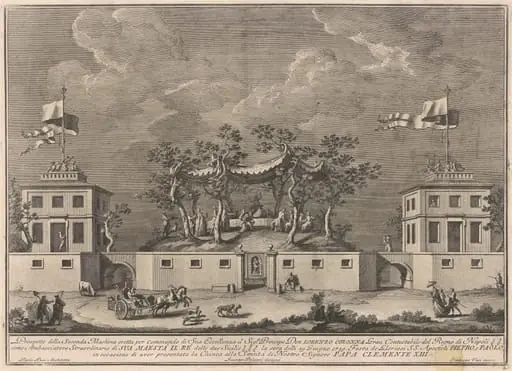 The Seconda Macchina for the Chinea of 1759: A "Deliziosa" with a Bacchanal
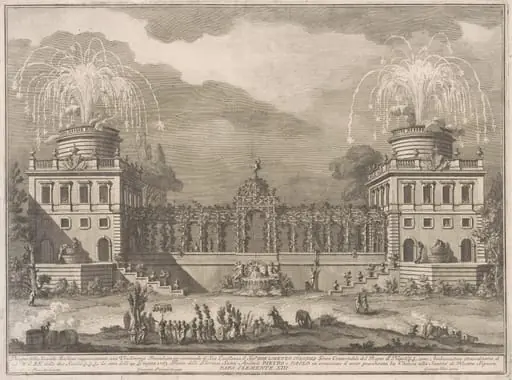 The Seconda Macchina for the Chinea of 1763: The Grape Harvest
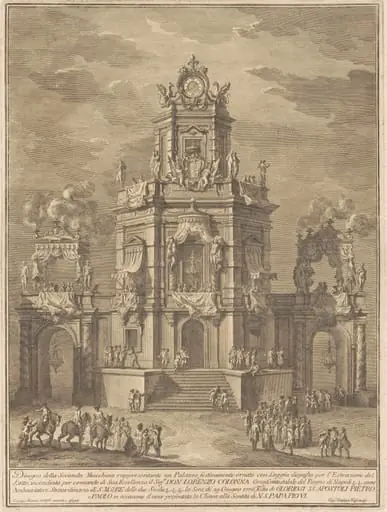 The Seconda Macchina for the Chinea of 1776: A Palace with a Loggia for the Lottery Draw
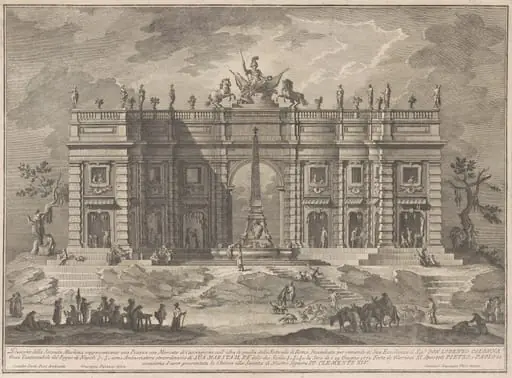 The Seconda Macchina for the Chinea of 1772: A Square with a Game Market and the Pantheon Fountain
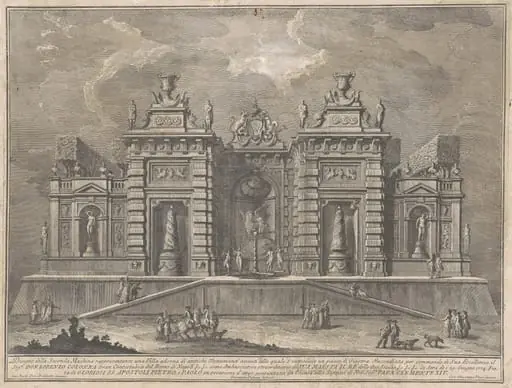 The Seconda Macchina for the Chinea of 1774: A Villa with Ancient Monuments and a Game of "Giostra"
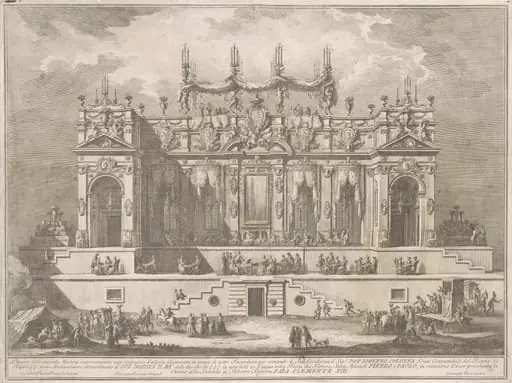 The Seconda Macchina for the Chinea of 1764: A Magnificent Gallery Illuminated at Night
 The Seconda Macchina for the Chinea of 1765: A Decorated Building with Cockaigne Poles
 The Seconda Macchina for the Chinea of 1775: A Bull-fight
 The Prima Macchina for the Chinea of 1770: An Roman Building for Commerce
 The Seconda Macchina for the Chinea of 1754: An Allegory of Waterworks
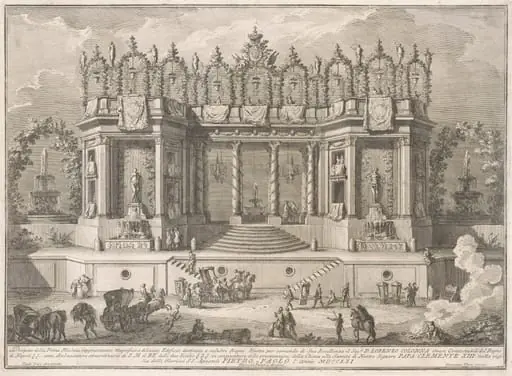 The Prima Macchina for the Chinea of 1761: The Salubrious Baths
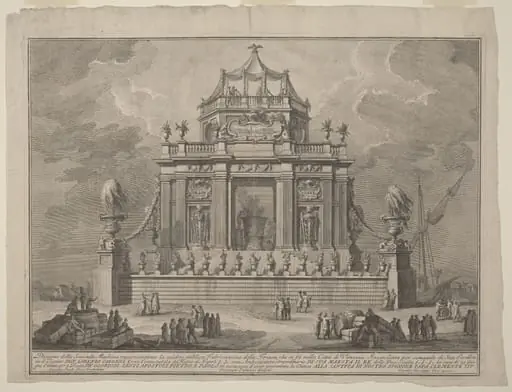 The Seconda Macchina for the Chinea of 1773: The Preparation of Theriac in Venice
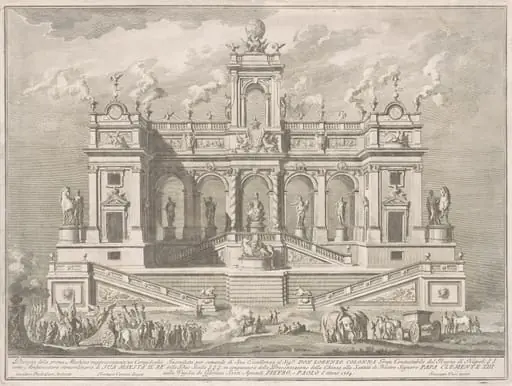 The Prima Macchina for the Chinea of 1764: A Capitol Building