Artwork
The Seconda Macchina for the Chinea of 1759: A "Deliziosa" with a Bacchanal
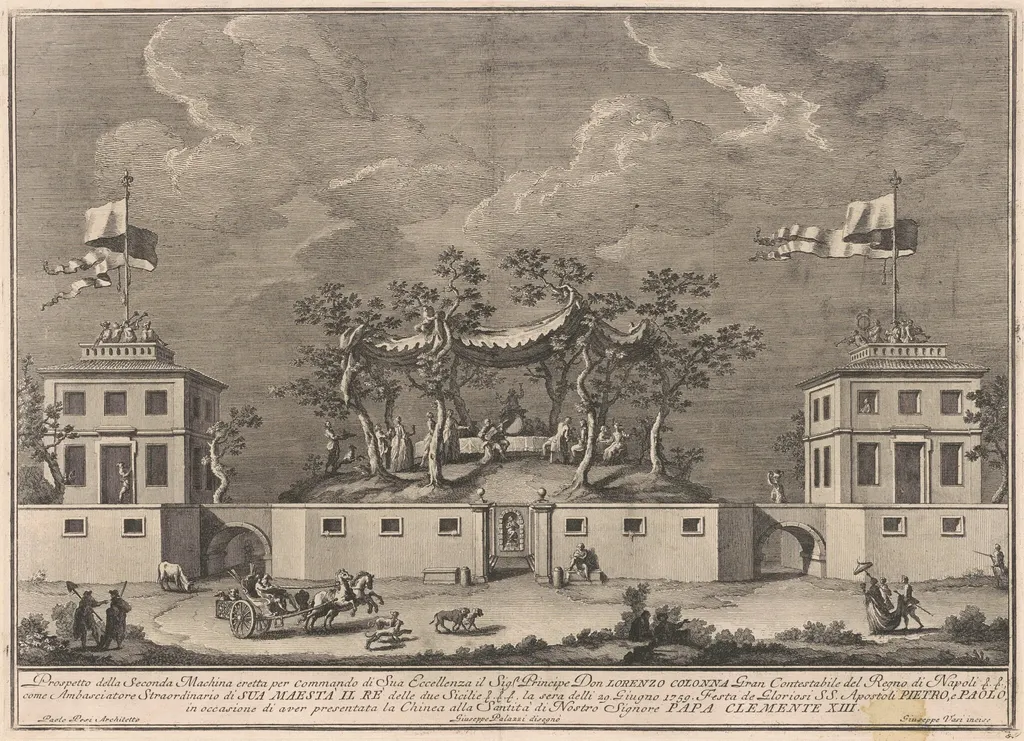
The Seconda Macchina for the Chinea of 1759: A "Deliziosa" with a Bacchanal is an ink print by the Romanticist artist Giuseppe Vasi. It dates from 1759 and is held in the collection of the National Gallery of Art.
About this work
People are gathered under the tree, some standing, some sitting, while others move around.
This print shows a courtyard with two tall buildings and a big tree in the center. People are gathered under the tree, some standing, some sitting, while others move around. Below, a few figures ride in a cart, and a dog runs nearby. Flags fly on poles at the top corners, and the scene looks busy but orderly.
The text at the bottom names it a "Seconda Macchina" for a special event in 1759. It’s a detailed record of a temporary structure built for celebration.
Next, look up the technique: etching to see how artists like Vasi made prints like this.
Overview
The Seconda Macchina for the Chinea of 1759: A "Deliziosa" with a Bacchanal is an etching created by Giuseppe Vasi in 1759, depicting a vibrant courtyard scene during a special event.
Subject & Meaning
The print captures a lively courtyard setting with a central tree, surrounded by people engaging in various activities. A cart with figures and a running dog add to the dynamic atmosphere, while flags at the top corners signify the celebratory context. The scene conveys a sense of orderly festivity.
Technique & Style
As an etching, this work was produced using a technique where a metal plate (likely copper) was coated with wax, drawn upon with a stylus, and then etched with acid to transfer the design to paper via printing. Vasi's detailed rendering and composition reflect the precision and expressive capabilities of etching.
History & Provenance
Commissioned for the Chinea of 1759, this etching documents a temporary 'macchina' (structure) built for the event. The 'Seconda' designation indicates it was the second such design featured. The current location and ownership history of the print are not specified.
Context
The Chinea was a significant event in 18th-century Rome, involving processions and temporary architectural constructions like the 'Deliziosa' depicted here. Vasi's etching serves as a historical record of these ephemeral celebratory structures.
Legacy
This etching by Vasi contributes to the historical documentation of 18th-century Roman festivities and temporary architecture. Its detailed depiction provides insight into the cultural and artistic practices of the time, though its direct influence on later art or widespread recognition is not prominently noted.
Artist & collection

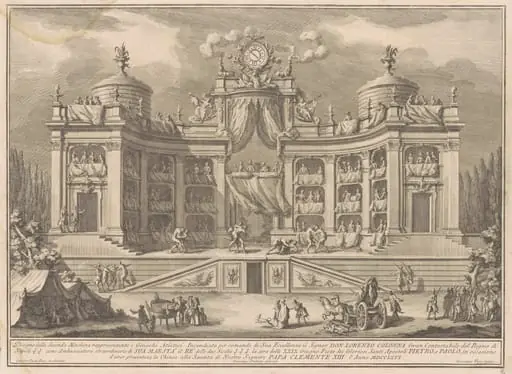 The Seconda Macchina for the Chinea of 1766: A Theater for Athletic Games
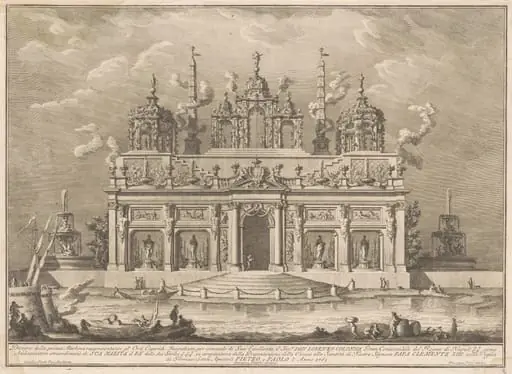 The Prima Macchina for the Chinea of 1765: The Garden of the Hesperides
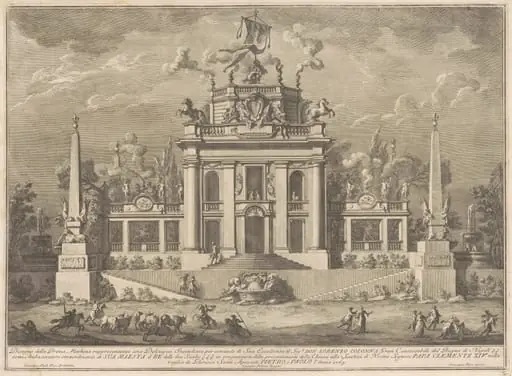 The Prima Macchina for the Chinea of 1769: A "Deliziosa"
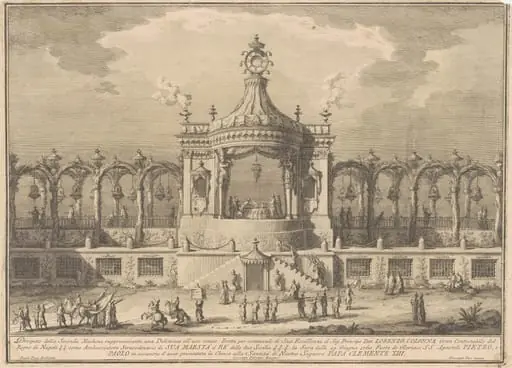 The Seconda Macchina for the Chinea of 1760: A Chinoiserie Pavilion
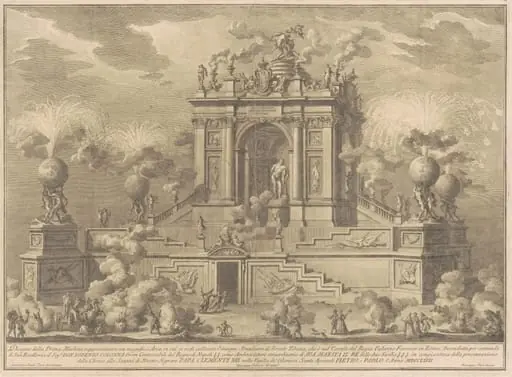 The Prima Macchina for the Chinea of 1767: A Triumphal Arch with the Farnese Hercules
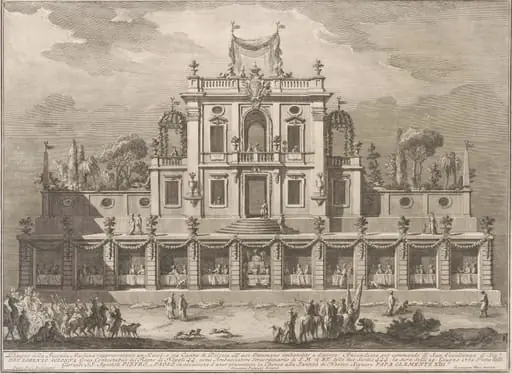 The Seconda Macchina for the Chinea of 1762: A Kiosk, or Pleasure-House in Ottoman Style
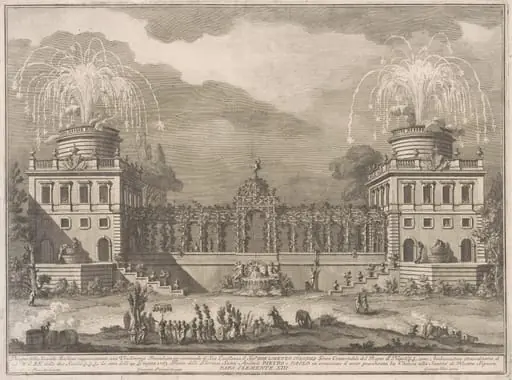 The Seconda Macchina for the Chinea of 1763: The Grape Harvest
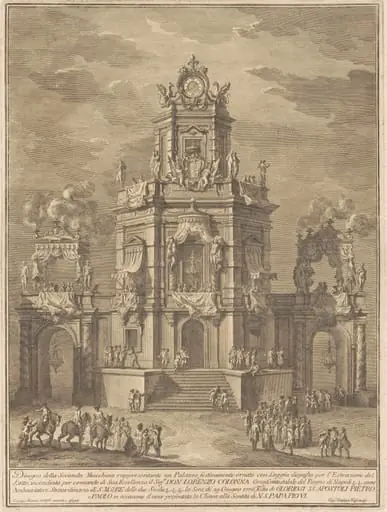 The Seconda Macchina for the Chinea of 1776: A Palace with a Loggia for the Lottery Draw
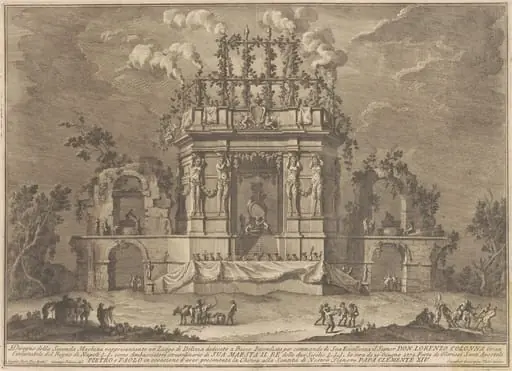 The Seconda Macchina for the Chinea of 1771: A Pleasure Palace Dedicated to Bacchus
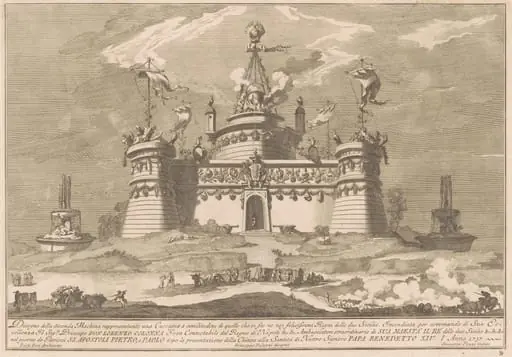 The Seconda Macchina for the Chinea of 1757: The Fortress of Cockaigne
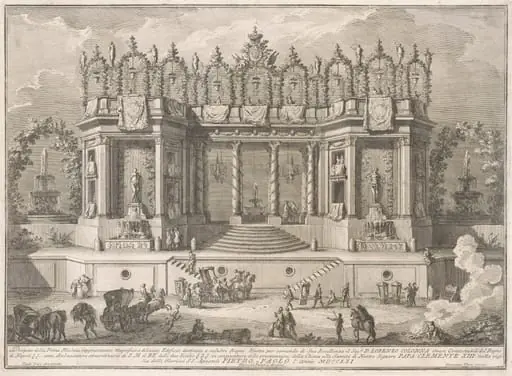 The Prima Macchina for the Chinea of 1761: The Salubrious Baths
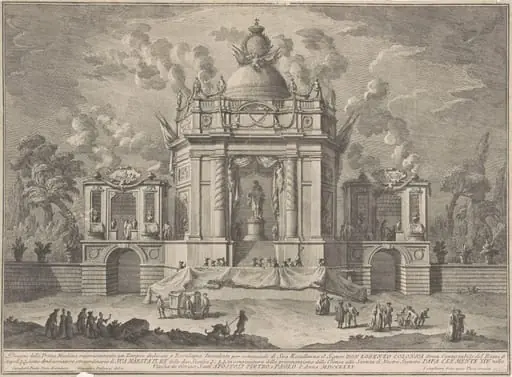 The Prima Macchina for the Chinea of 1771: The Temple of Asclepius
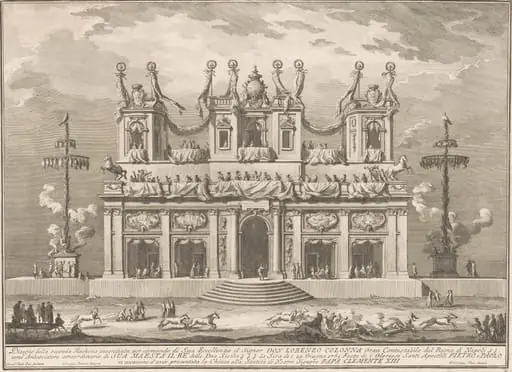 The Seconda Macchina for the Chinea of 1765: A Decorated Building with Cockaigne Poles
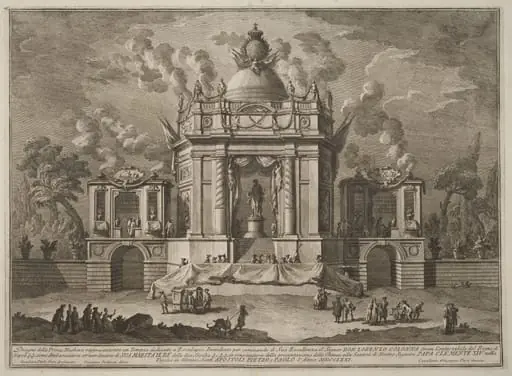 The Prima Macchina for the Chinea of 1771: The Temple of Asclepius
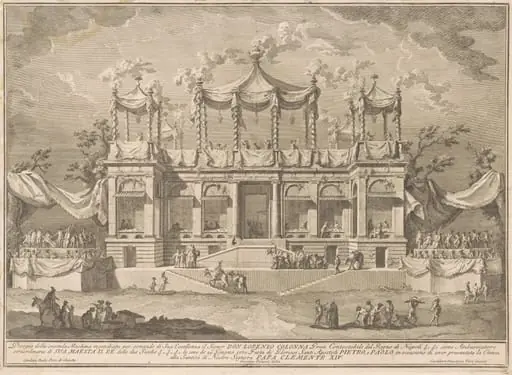 The Seconda Macchina for the Chinea of 1770: The Fish Market Portico
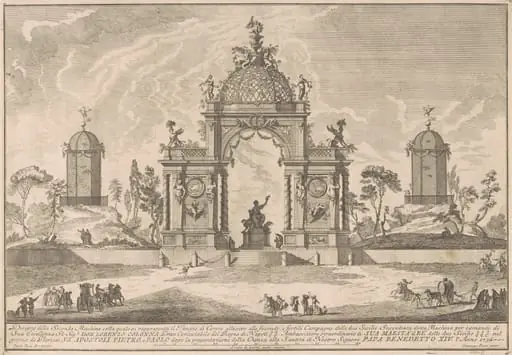 The Seconda Macchina for the Chinea of 1756: The Temple of Ceres
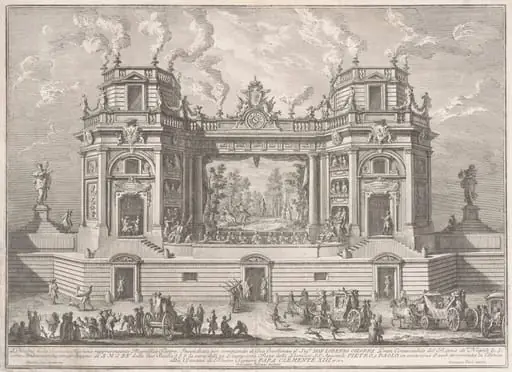 The Seconda Macchina for the Chinea of 1761: A Magnificent Theater