Artwork
The Seconda Macchina for the Chinea of 1754: An Allegory of Waterworks
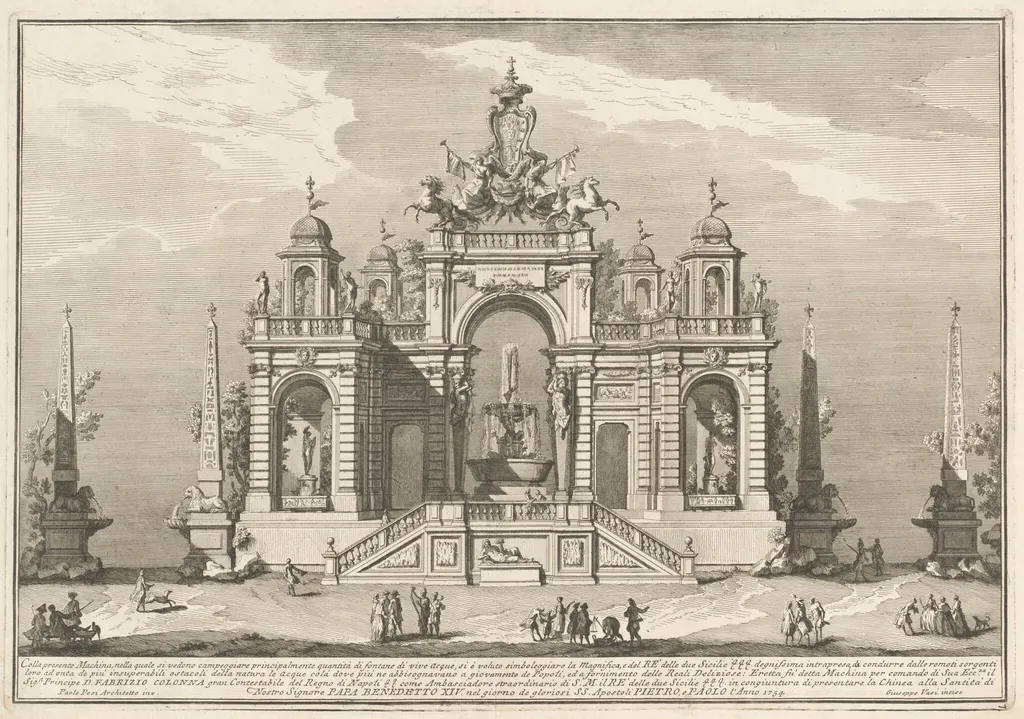
The Seconda Macchina for the Chinea of 1754: An Allegory of Waterworks is an ink print by the Romanticist artist Giuseppe Vasi. It dates from 1754 and is held in the collection of the National Gallery of Art.
About this work
Overview
The composition captures the elaborate structure’s formal symmetry and decorative richness, rendered with precision typical of Vasi’s topographical prints.
Created in 1754 by Giuseppe Vasi, this etching documents a ceremonial apparatus known as the Seconda Macchina, constructed for the annual Chinea procession in Rome. It depicts a temporary architectural spectacle designed to honor the papal tribute paid by the Kingdom of Naples. The composition captures the elaborate structure’s formal symmetry and decorative richness, rendered with precision typical of Vasi’s topographical prints.
Subject & Meaning
The scene represents an allegorical celebration of water as a symbol of papal authority and civic abundance. The central fountain, adorned with mythological figures and flowing water, alludes to the life-giving power of the Church’s stewardship over Rome’s aqueducts. Figures in period dress gather around the structure, reinforcing the event’s ritual significance and its role in affirming political and religious alliances.
Technique & Style
Vasi employed fine-line etching to render intricate architectural details—columns, balustrades, and sculptural reliefs—with clarity and depth. The composition is carefully balanced, using perspective to guide the eye toward the central fountain. Atmospheric gradation in the sky and subtle tonal contrasts enhance the monumentality of the structure without overwhelming its architectural precision.
History & Provenance
The print was produced as part of a series documenting Rome’s ceremonial pageants, commissioned to commemorate the Chinea, a tribute procession held each June. Vasi’s etchings served both as records and souvenirs for visitors to the city. This particular plate was included in his larger collection of Roman views, circulated among European collectors and antiquarians in the late 18th century.
Context
The Chinea procession originated as a feudal obligation from the Kingdom of Naples to the Pope, evolving into a grand public spectacle. Temporary architectural installations like the Seconda Macchina were designed to impress and reinforce papal prestige. Vasi’s work reflects the Baroque tradition of using ephemeral architecture to convey political and religious narratives through visual spectacle.
Legacy
Vasi’s etchings, including this one, became key references for later topographers and historians studying 18th-century Roman ceremonial culture. Though the original structure was dismantled after the event, the print preserved its form and symbolism, offering insight into how public rituals were visually constructed to communicate power and continuity in papal Rome.
Artist & collection

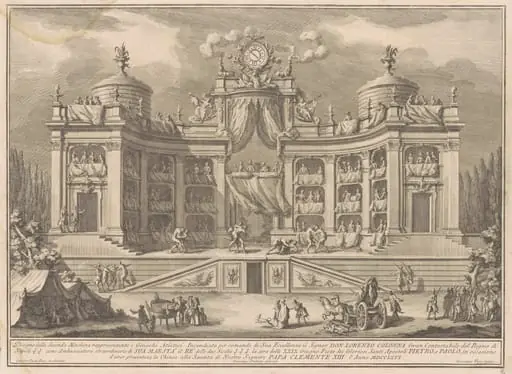 The Seconda Macchina for the Chinea of 1766: A Theater for Athletic Games
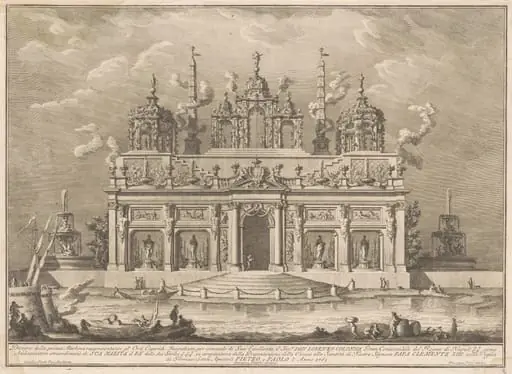 The Prima Macchina for the Chinea of 1765: The Garden of the Hesperides
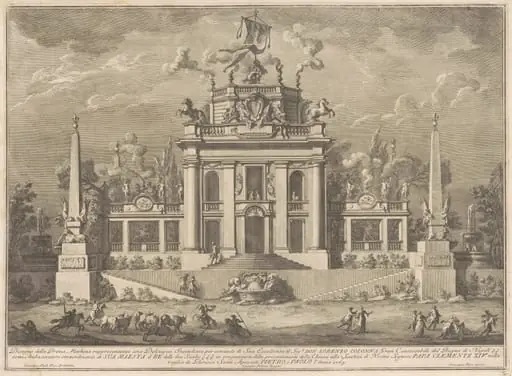 The Prima Macchina for the Chinea of 1769: A "Deliziosa"
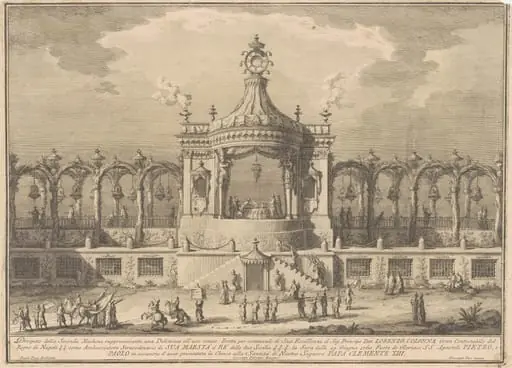 The Seconda Macchina for the Chinea of 1760: A Chinoiserie Pavilion
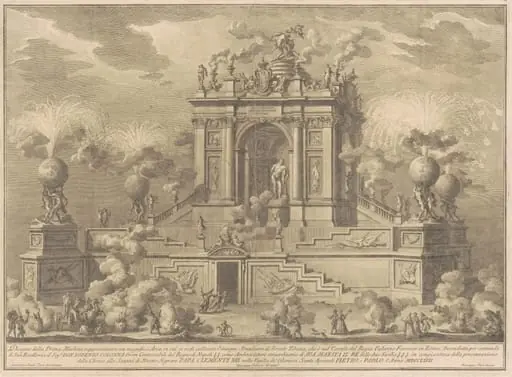 The Prima Macchina for the Chinea of 1767: A Triumphal Arch with the Farnese Hercules
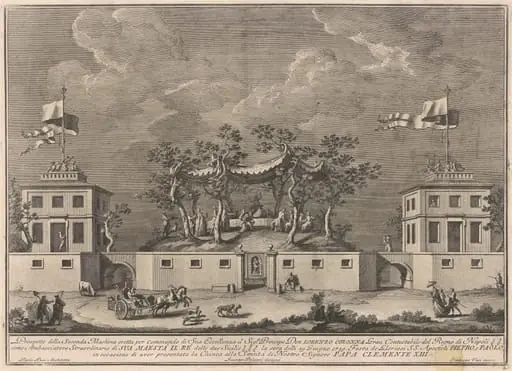 The Seconda Macchina for the Chinea of 1759: A "Deliziosa" with a Bacchanal
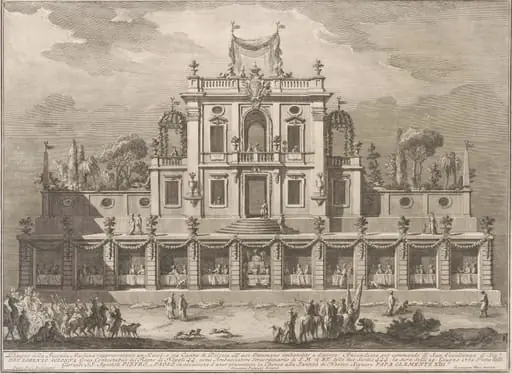 The Seconda Macchina for the Chinea of 1762: A Kiosk, or Pleasure-House in Ottoman Style
 The Seconda Macchina for the Chinea of 1763: The Grape Harvest
 The Prima Macchina for the Chinea of 1755: A Triumphal Bridge with Antiquities from Herculaneum
 The Prima Macchina for the Chinea of 1755: A Triumphal Bridge with Antiquities from Herculaneum
 The Seconda Macchina for the Chinea of 1772: A Square with a Game Market and the Pantheon Fountain
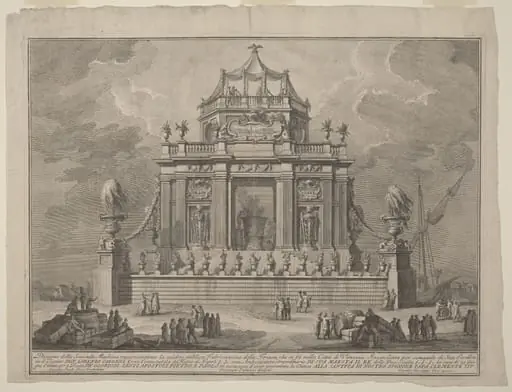 The Seconda Macchina for the Chinea of 1773: The Preparation of Theriac in Venice
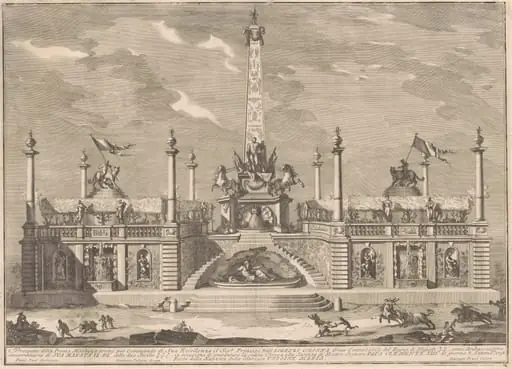 The Prima Macchina for the Chinea of 1758: A "Deliziosa" with Hanging Gardens
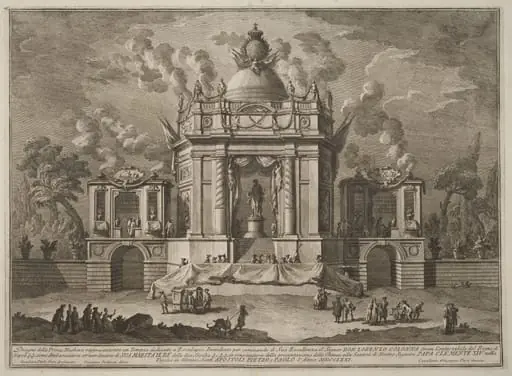 The Prima Macchina for the Chinea of 1771: The Temple of Asclepius
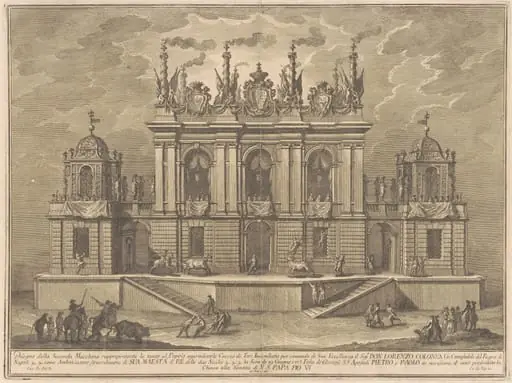 The Seconda Macchina for the Chinea of 1775: A Bull-fight
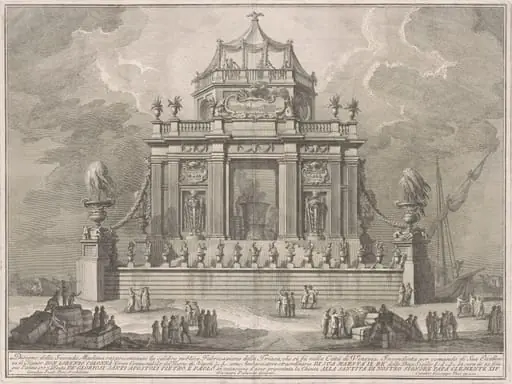 The Seconda Macchina for the Chinea of 1773: The Preparation of Theriac in Venice
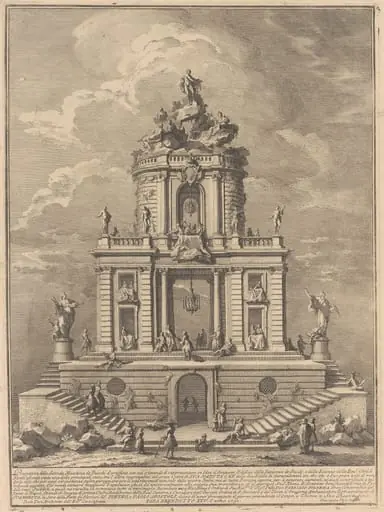 The Seconda Macchina for the Chinea of 1751: The Palace of Wisdom, Studies, and the Sciences
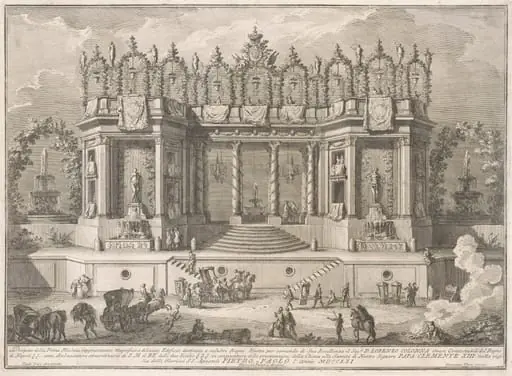 The Prima Macchina for the Chinea of 1761: The Salubrious Baths
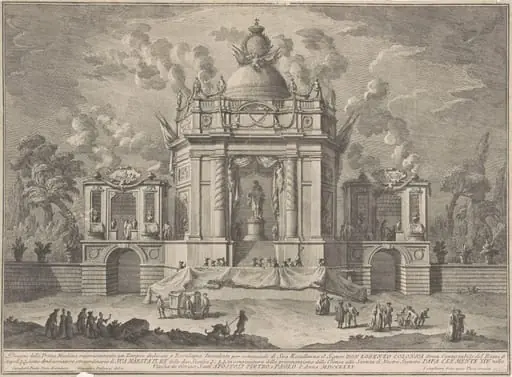 The Prima Macchina for the Chinea of 1771: The Temple of Asclepius