Artwork
The Seconda Macchina for the Chinea of 1773: The Preparation of Theriac in Venice
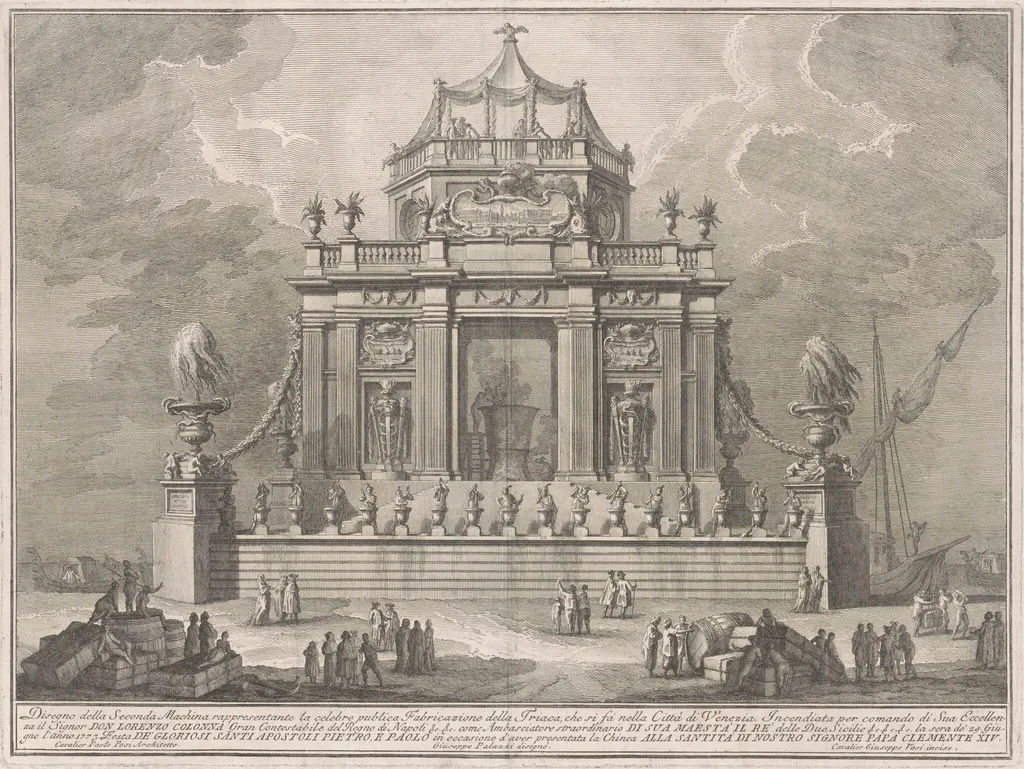
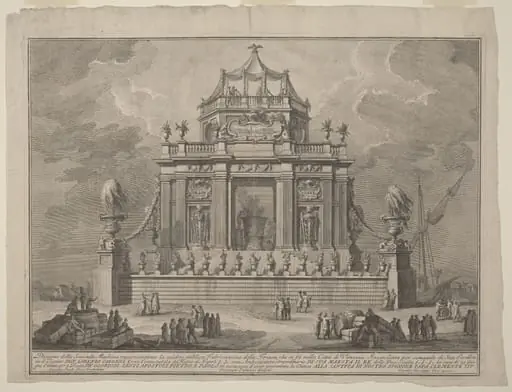
The Seconda Macchina for the Chinea of 1773: The Preparation of Theriac in Venice is an ink print by the Romanticist artist Giuseppe Vasi. It dates from 1773 and is held in the collection of the National Gallery of Art.
About this work
The whole scene looks like a mix of a theater set and a real building, with lots of tiny details like vases, flags, and even a boat on the right.
This print shows a giant, ornate stage set up in a public square. The centerpiece is a tall, boxy building with columns, statues, and a small tower on top. Around it, people in old-fashioned clothes mill about, some carrying tools or boxes, while others watch from the sides. The whole scene looks like a mix of a theater set and a real building, with lots of tiny details like vases, flags, and even a boat on the right.
The text at the bottom hints this was built for a special event in Venice in 1773. The crowd and the stage suggest it was meant to impress or celebrate something big—maybe a festival or a royal visit.
Look up etching to see how artists like Vasi carved these sharp, precise lines into metal.
Overview
The Seconda Macchina for the Chinea of 1773: The Preparation of Theriac in Venice is an etching created by Giuseppe Vasi in 1773.
Subject & Meaning
This print depicts a grand, ornate structure in a public square, surrounded by people in period attire. The scene blends theatrical and architectural elements, with intricate details. The image likely commemorates a significant event, possibly a festival or ceremonial occasion, in Venice.
Technique & Style
As an etching, the work showcases Vasi's skill in achieving sharp, precise lines and detailed textures. The medium allowed for the capture of intricate architectural and figurative elements.
Context
The print is related to the Chinea, an annual event held in Rome, but this particular work references an event in Venice in 1773, suggesting a connection or inspiration between the two cities' celebrations.
Artist & collection

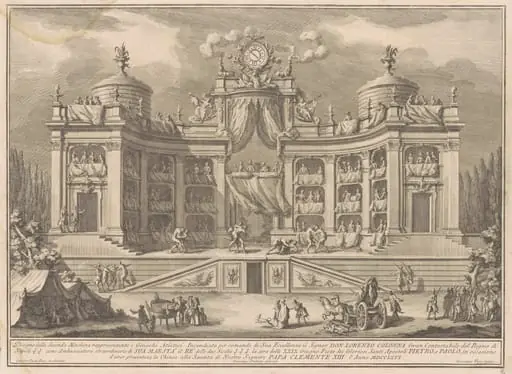 The Seconda Macchina for the Chinea of 1766: A Theater for Athletic Games
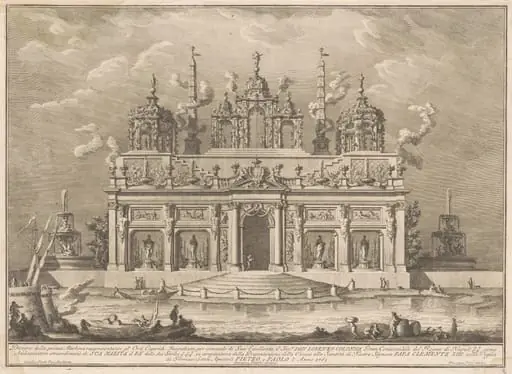 The Prima Macchina for the Chinea of 1765: The Garden of the Hesperides
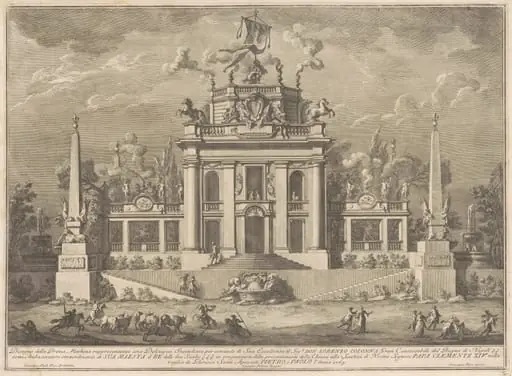 The Prima Macchina for the Chinea of 1769: A "Deliziosa"
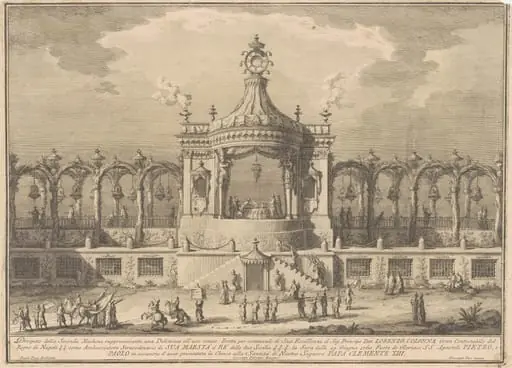 The Seconda Macchina for the Chinea of 1760: A Chinoiserie Pavilion
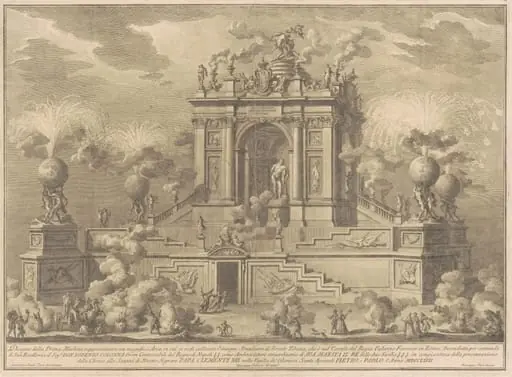 The Prima Macchina for the Chinea of 1767: A Triumphal Arch with the Farnese Hercules
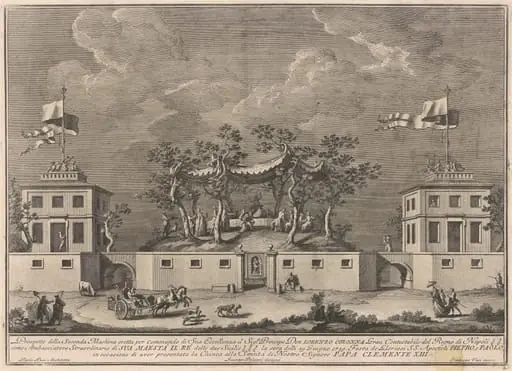 The Seconda Macchina for the Chinea of 1759: A "Deliziosa" with a Bacchanal
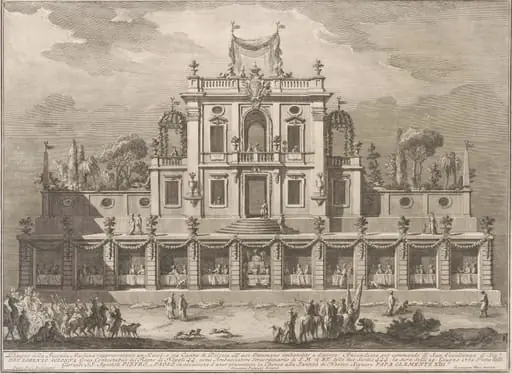 The Seconda Macchina for the Chinea of 1762: A Kiosk, or Pleasure-House in Ottoman Style
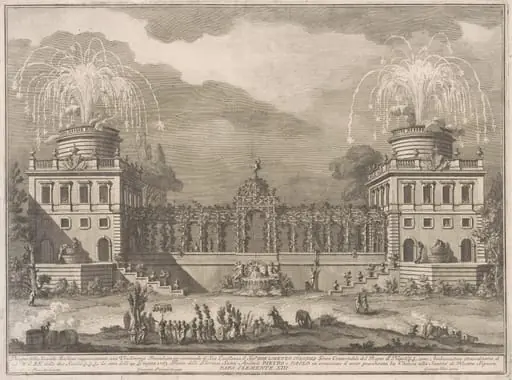 The Seconda Macchina for the Chinea of 1763: The Grape Harvest
 The Seconda Macchina for the Chinea of 1773: The Preparation of Theriac in Venice
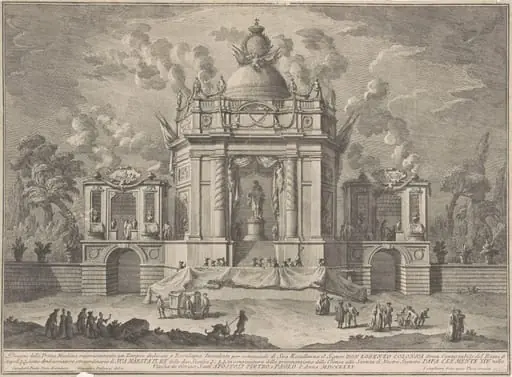 The Prima Macchina for the Chinea of 1771: The Temple of Asclepius
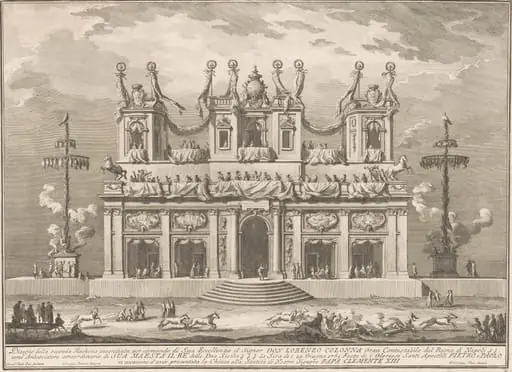 The Seconda Macchina for the Chinea of 1765: A Decorated Building with Cockaigne Poles
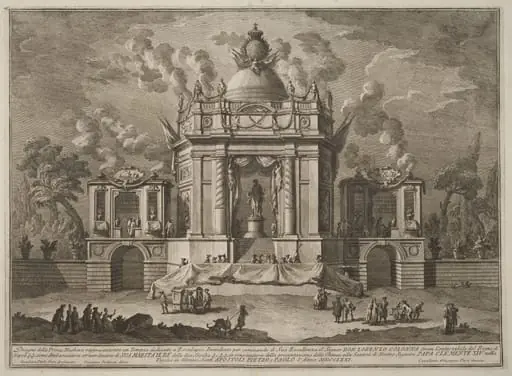 The Prima Macchina for the Chinea of 1771: The Temple of Asclepius
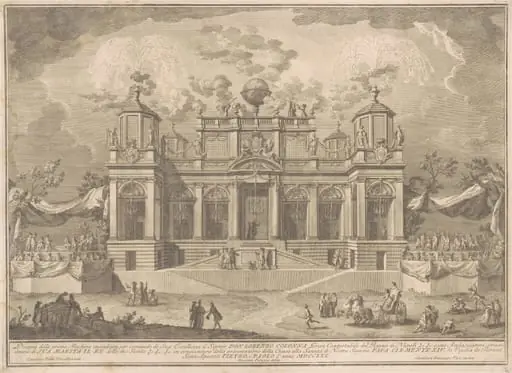 The Prima Macchina for the Chinea of 1770: An Roman Building for Commerce
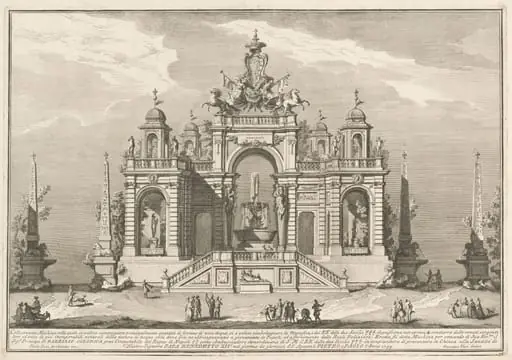 The Seconda Macchina for the Chinea of 1754: An Allegory of Waterworks
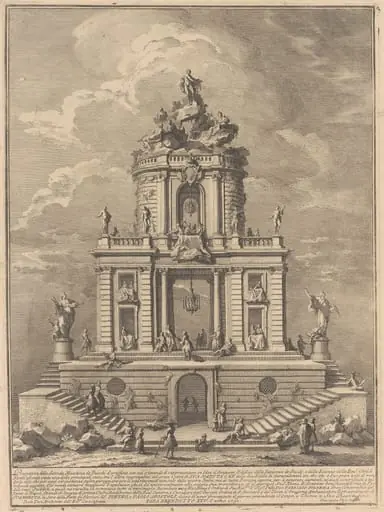 The Seconda Macchina for the Chinea of 1751: The Palace of Wisdom, Studies, and the Sciences
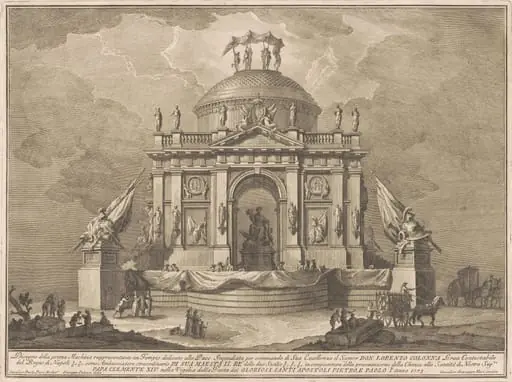 The Prima Macchina for the Chinea of 1773: The Temple of Peace
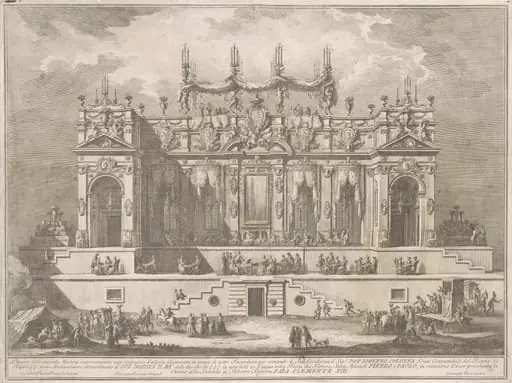 The Seconda Macchina for the Chinea of 1764: A Magnificent Gallery Illuminated at Night
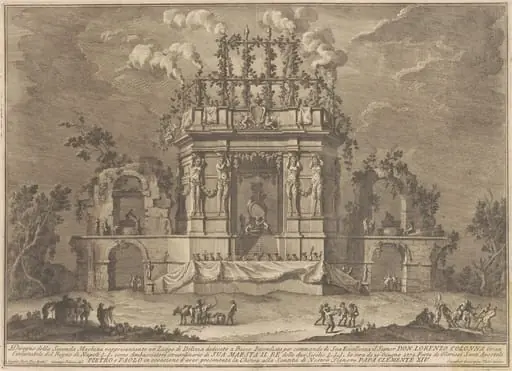 The Seconda Macchina for the Chinea of 1771: A Pleasure Palace Dedicated to Bacchus