Artwork
Tablou ”Omagiu” reprezentând-o pe Elena Ceaușescu. În dreapta jos, semnătura artistului și anul - ”Vasile Pop Negreșteanu, 1989”. Tablou comandat și oferit Elenei Ceaușescu de către Uniunea Asociațiilor Studenților Comuniști din România.
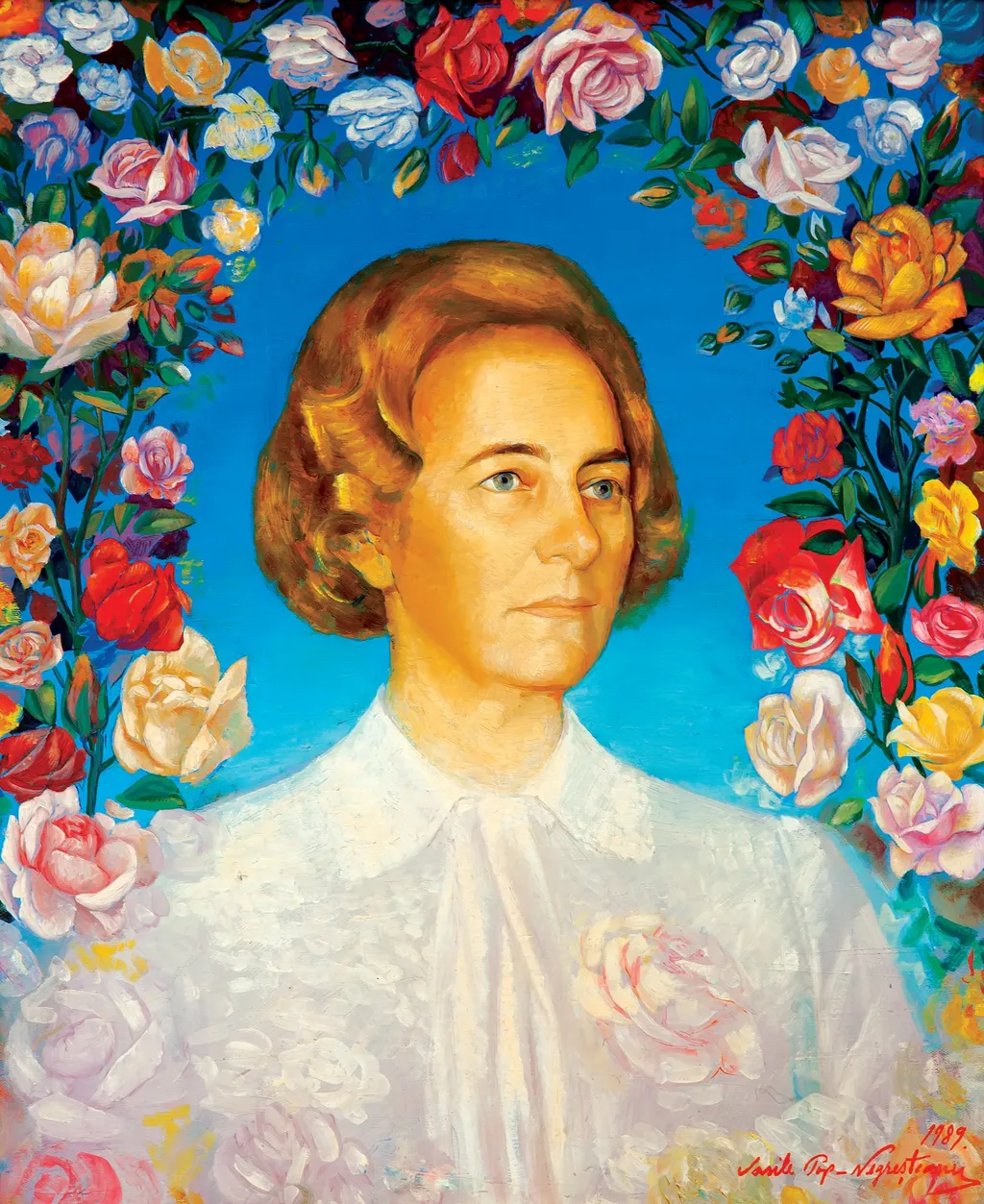
Tablou ”Omagiu” reprezentând-o pe Elena Ceaușescu. În dreapta jos, semnătura artistului și anul - ”Vasile Pop Negreșteanu, 1989”. Tablou comandat și oferit Elenei Ceaușescu de către Uniunea Asociațiilor Studenților Comuniști din România. is a print by Vasile Pop Negreșteanu. It is held in the collection of the National Museum of Romanian History.
About this work
Behind her is a bright blue sky filled with big, colorful flowers—reds, whites, pinks, and yellows—like a garden in bloom.
This painting shows a woman with warm brown hair and a calm face. She’s wearing a light-colored dress with a high neckline. Behind her is a bright blue sky filled with big, colorful flowers—reds, whites, pinks, and yellows—like a garden in bloom.
The artist signed it in the corner: *Vasile Pop Negreșteanu, 1989*. The flowers look almost too bold, as if they’re glowing against the sky.
Look up Vasile Pop Negreșteanu to see more of his work.
Overview
This portrait, painted in 1989 by Vasile Pop Negreșteanu, depicts Elena Ceaușescu in a stylized, idealized manner. Commissioned by the Union of Communist Student Associations in Romania, the work was presented as a formal tribute. The artist signed the lower right corner, confirming authorship and date. The painting’s composition blends realism with symbolic elements, reflecting its political purpose and the aesthetic norms of late communist-era Romania.
Subject & Meaning
Elena Ceaușescu is portrayed with serene expression and modest attire, conveying an image of dignified grace. The lush, exaggerated floral background—vivid reds, pinks, and yellows against a bright sky—functions as a metaphor for fertility, national prosperity, and ideological abundance. These elements align with state-propagated imagery that linked the First Lady to natural and moral purity, reinforcing her cultivated public persona during the final years of the regime.
Technique & Style
The painting employs a smooth, polished technique with soft transitions in skin tones and sharply defined, almost surreal floral forms. The background flowers are rendered with heightened color saturation and exaggerated scale, creating a dreamlike, non-naturalistic atmosphere. This departure from realism suggests symbolic intent rather than observational accuracy, typical of state-commissioned portraiture aiming to elevate the subject beyond ordinary representation.
History & Provenance
Commissioned by the Union of Communist Student Associations in 1989, the painting was intended as a ceremonial gift to Elena Ceaușescu. Its creation coincided with the final months of the Romanian communist regime, a period marked by intensified personality cults. After the December 1989 revolution, the work likely entered state archives or museum collections, though its current location remains unconfirmed in public records.
Context
Created during the waning days of Nicolae and Elena Ceaușescu’s rule, the portrait reflects the regime’s reliance on visual propaganda to sustain legitimacy. Artistic commissions like this one were common, using idealized imagery to construct mythic identities for party leaders. The floral motif echoes earlier socialist realist traditions but intensifies them into a hyperbolic, almost fantastical celebration of the First Lady’s perceived virtues.
Legacy
The painting stands as a cultural artifact of communist Romania’s final year, illustrating how art was mobilized to reinforce political authority. After the regime’s collapse, such works were largely removed from public display, viewed as relics of a discredited ideology. Today, they serve primarily as historical documents, offering insight into the aesthetics of power and the mechanisms of state-sponsored image-making in late totalitarian societies.
Artist & collection

Artist
Romanian painter Vasile Pop Negreșteanu made official portraits in the late 1980s.

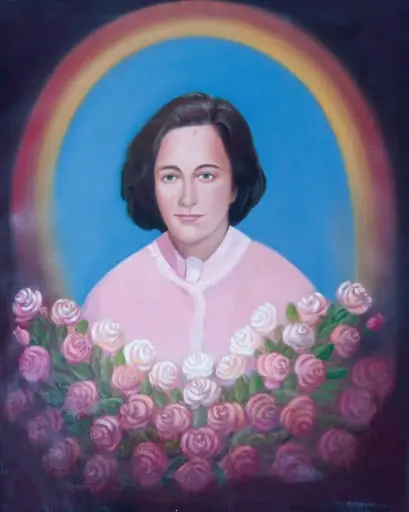 Tablou „Omagiu”, semnat N. Porumb și datat în partea dreaptă jos. Tabloul o reprezintă pe Elena Ceaușescu cu tricolorul în spate sub formă de curcubeu; în partea de jos a tabloului o ”mare” de trandafiri. Comandat de Comitetul Județean de Partid Sibiu și dăruit Elenei Ceaușescu cu ocazia zilie de naștere (ianuarie 1989).
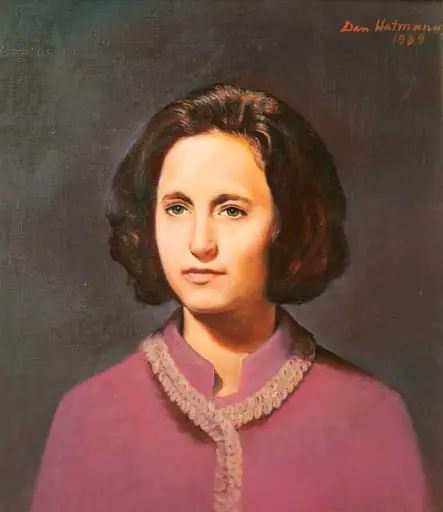 Tablou ulei pe pânză, , „Elena Ceaușescu”, semnat Dan Hatmanu și datat 1989 în partea dreaptă sus. Tabloul o înfățișază pe Elena Ceaușescu într-un costum cu volane în nuanțe de roz. Comandat de Consiliul Național al Femeilor și oferit Elenei Ceaușecu cu ocazia împlinirii vârstei de 70 de ani (ianuarie 1989).
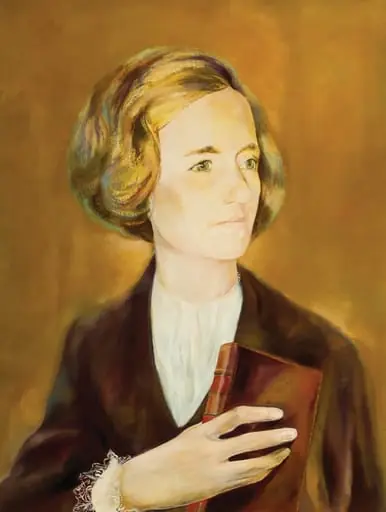 Tablou, ulei pe pânză, „Portret Elena Ceaușescu”, nedemnat, atribuit lui Zamfir Dumitrescu. Elena Ceaușescu este prezentată într-o postură contemplativă, ținând în mâna dreraptă un volum îmbrăcat în piele. Comandat și oferit de Consiliul Național al Femeilor, cu ocazia împlinirii vârstei de 60 de ani de către Elena Ceaușescu (5 ianuarie 1979).
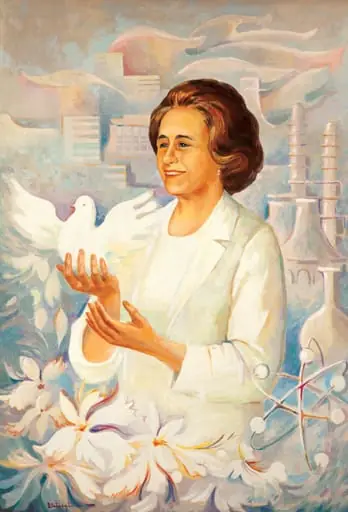 Tablou, ulei pe pânză, „Elena Ceaușescu”, semnat Doina Catargiu în partea stângă jos, nedatat. Elena Ceaușescu este reprezentată în centrul tabloului ținând în mâini un porumbel alb - simbolul păcii - cu aripile desfăcute; pe fundal un combinat petrochimic; în partea de jos a tabloului sunt reprezentate flori mari albe. În stânga jos o reprezentare a atomului. Comandat și oferit de Comitetul Județean de Partid Suceava (1985).
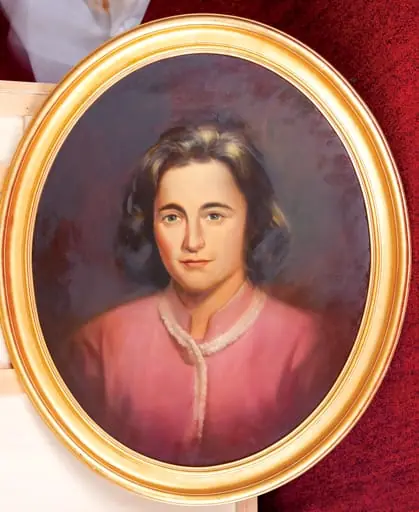 Tablou, ulei pe pânză, portret Elena Ceaușescu, atribuit Corneliu Brudașcu. Oferit de Uniunea Artiștilor Plastici (1979).
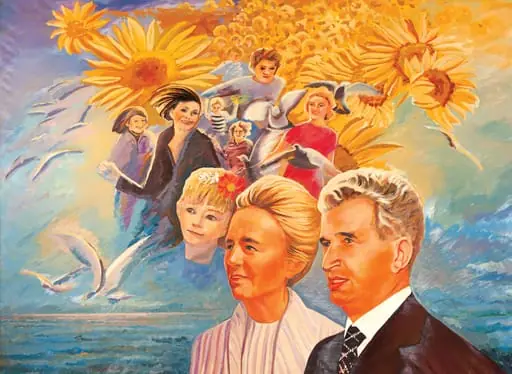 Tablou, „Omagiu”, ulei pe pânză atribuit Cornelia Ionescu Drăgușin. Cuplul Ceaușescu este reprezentat într-o atitudine de contemplare a orizontului, pe fundal marea și pescărușii. În partea de sus un joc de copii printre flori de floarea - soarelui. Oferit de Comitetul pentru Problemele Consiliilor Populare (1984)
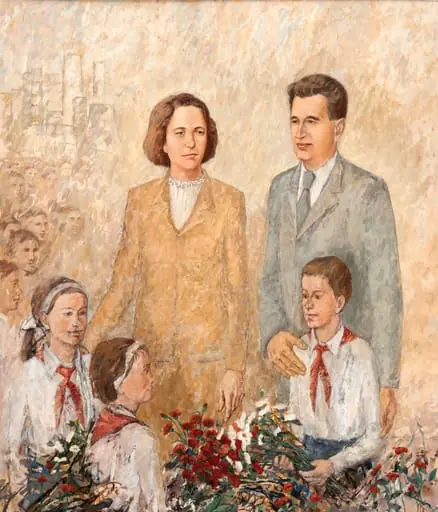 Tablou ulei pe pânză, „Omagiu”, semnat M.B, I.Ș. (atribuit Mircea Bejgu, Ion Șincă), datat 1984 în partea dreaptă jos. Elena și Nicolae Ceaușescu alături de pionieri. Comandat și oferit de Comitetul Județean de Partid Argeș (1984).
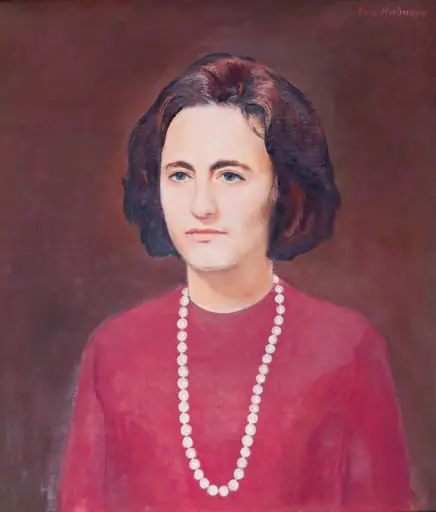 Tablou, ulei pe pânză, „Elena Ceaușescu”, semnat în partea dreaptă sus Dan Hatmanu. Oferit de autor, 6 ianuarie 1979.
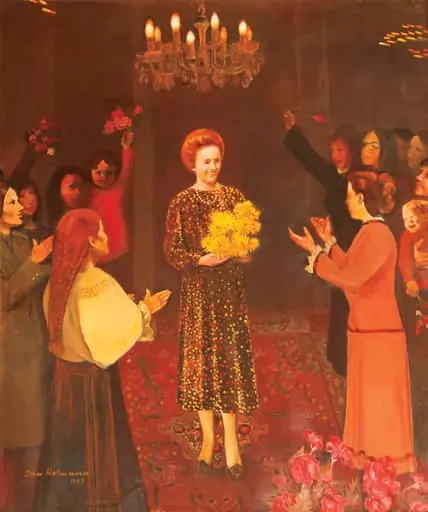 Tablou, ulei pe pânză, „Elena Ceaușescu”, semnat Dan Hatmanu și datat 1989 în partea stângă jos. Tabloul o prezintă pe Elena Ceaușescu într-un cadru festiv, cu un buchet de flori în brațe, primind urale din partea unui grup de femei (membrele Consiliului Nașional al Femeilor). Comandat de Consiliul Național al Femeilor și oferit cu ocazia aniversării zilei de naștere (ianuarie 1989).
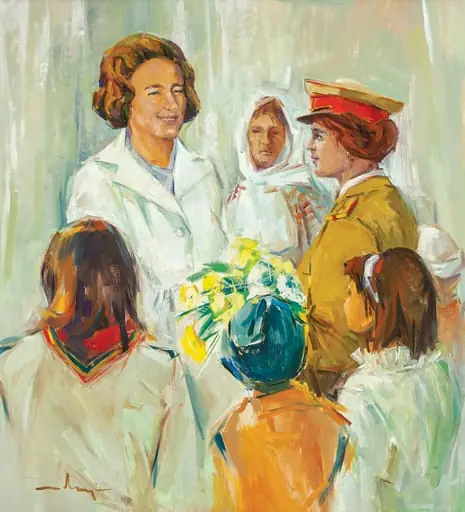 Tablou, ulei pe pânză, „Omagiu” , semnat stânga jos indescifrabil, atribuit Ion Țarălungă. Elena Ceaușescu într-un grup de copii și tineri, o tânără femeie militar îi oferă un buchet de flori. Comandat și oferit de Ministerul Apărării Naționale (1984).
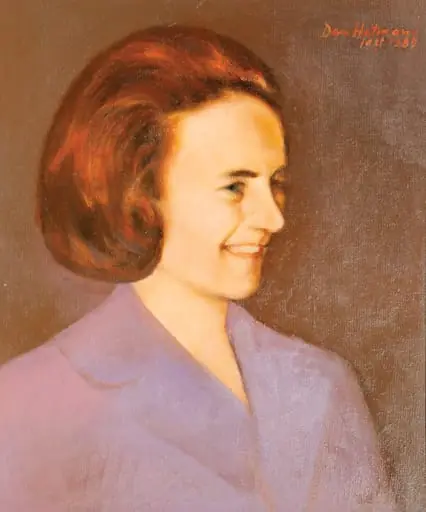 Tablou ”Portret Elena Ceaușescu” semnat Dan Hatmanu și datat dreapta sus.Ulei/pânză. Comandat de Comitetul Județean de Partid Iași și oferit cadou Elenei Ceaușescu cu ocazia aniversării a 70 de ani (ianuarie 1989).
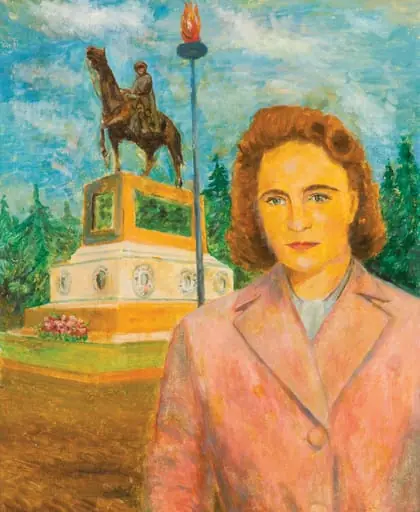 Tablou, ulei pe pânză, Elena Ceaușescu în fața monumentului lui Ataturk, semnat stânga jos Rami Uluer, nedatat. Oferit de autor, președinte al Asociației Pictorilor Turci din Ankara (1985).
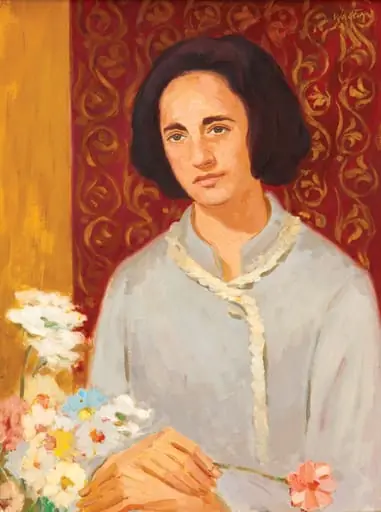 Tablou, ulei pe pânză, Portret Elena Ceaușescu, atribuit lui Fredric Bytoy. Elena Ceaușescu reprezentată înt-o atitudine melancolică alături de un buchet de flori. Comandat și oferit de Comitetul de Partid Maramureș, 7 ianuarie 1979.
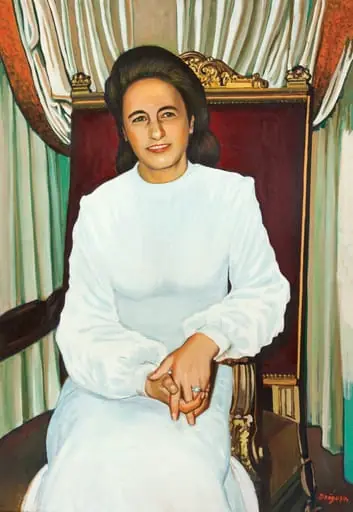 Tablou, ulei pe pânză, „Portret Elena Ceaușescu”, semnat Drăgușin în partea dreaptă jos, nedatat. Elena Ceaușescu, stând pe un scaun cu spătar înalt (jilț) într-o rochie elegantă de culoare albă. Comandat și oferit de Ministerul de Interne, 5 ianuarie 1979.
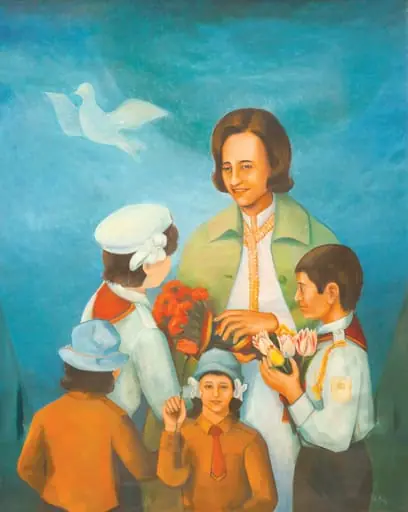 Tablou, ulei pe pânză, „Elena Ceaușecu, pioneri și șoimi ai patriei”, semnat în partea dreaptă jos Gh. Ene. Elena Ceaușescu primește flori de la un grup de copii, pe fundal cerul albastru, în stânga un porumbel alb în zbor - simbolul păcii. Comandat și oferit de Comitetul Municipal de Partid București (1984).
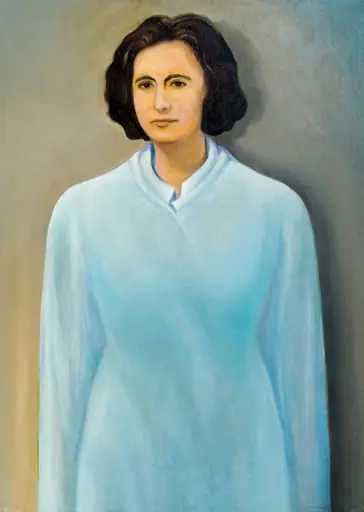 Tablou, ulei pe pânză, ”Portret Elena Ceaușescu”, nesemnat, atribui lui Nicolae Toma. Oferit de autor, cu ocazia zilei de naștere a Elenei Ceaușescu, Ploiești, ianuarie 1978.
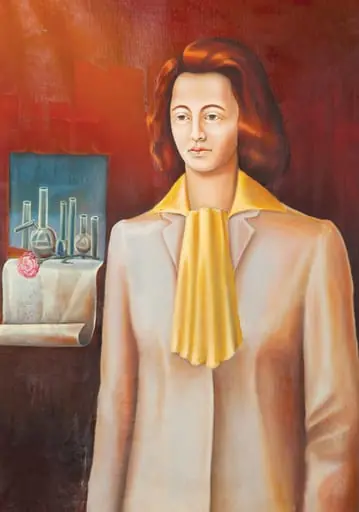 Tablou, ulei pe pânză, portret Elena Ceaușescu, nesemnat, nedatat. Elena Ceaușescu este reprezentată alături de recipiente folosite în laboratoare, alături de o diplomă și o garoafă roz. Comandat și oferit de Comitetul Județean de Partid Caraș Severin, 6 ianuarie 1979.