Artwork
Bivouack Between Erzeroom and Tehran
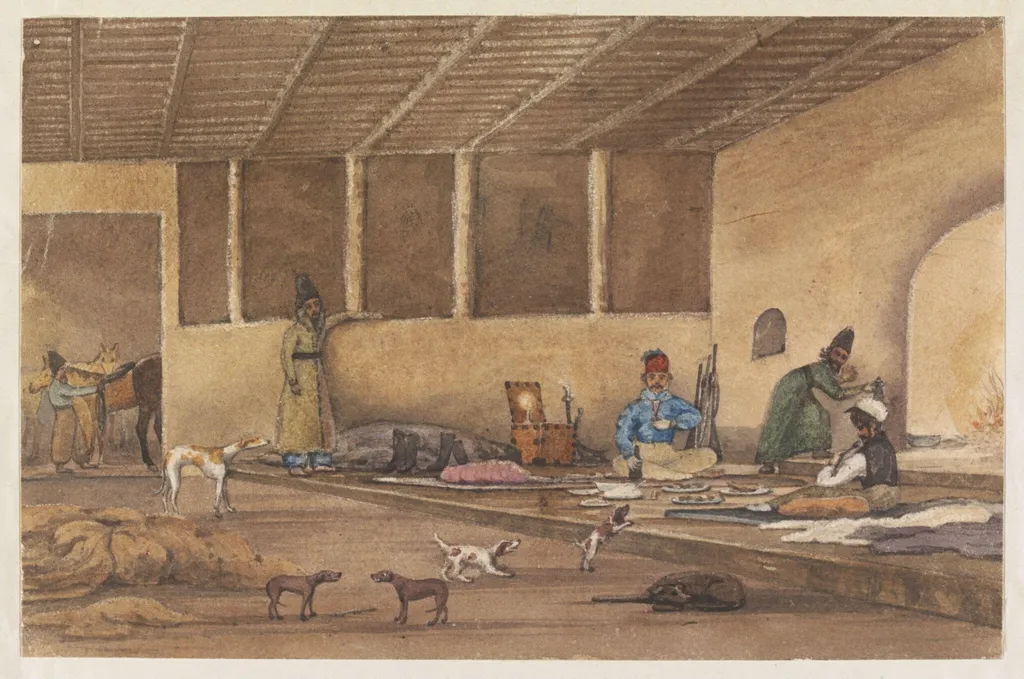
Bivouack Between Erzeroom and Tehran is a watercolor work on paper by the Romanticist artist Godfrey Thomas Vigne. It dates from 1833 and is held in the collection of the Victoria and Albert Museum.
About this work
Overview
Godfrey Thomas Vigne’s watercolour captures a temporary camp set up while traveling between Erzurum and Tehran. The scene presents a modest courtyard where people and animals pause during a long journey, offering a glimpse into the everyday realities of 19th‑century travel across the region.
Subject & Meaning
The composition focuses on ordinary activity rather than dramatic landscape. A man in a blue robe arranges flat objects on the ground while another figure holds a staff; dogs wander, and a tethered donkey stands nearby. The sparse architecture—plain walls, three unadorned windows, and exposed wooden beams—underscores the utilitarian nature of the stopover.
Technique & Style
Executed in loose watercolour washes, the work relies on earthy hues and swift brushstrokes that convey immediacy. The handling of light through the dimly lit windows and the suggestion of texture in the courtyard’s dust and timber give the drawing a spontaneous, documentary quality, as if the artist recorded a fleeting moment.
History & Provenance
The drawing forms part of Vigne’s broader visual record accompanying his travel writings, notably an 1839 article in the Journal of the Royal Geographical Society and his 1842 volume Travels in Kashmir. It entered the museum’s holdings in 1971, purchased from Vigne’s great‑nephew, Henry D’Olier Vigne, together with other items from the family collection.
Artist & collection


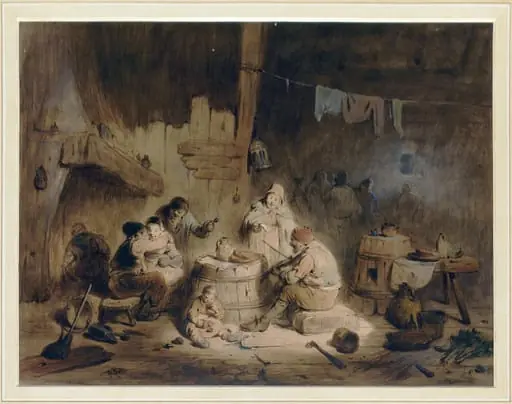 Boors in a beer shop
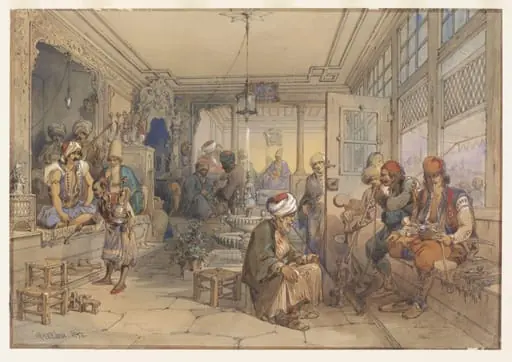 A Turkish Coffee-House, Constantinople
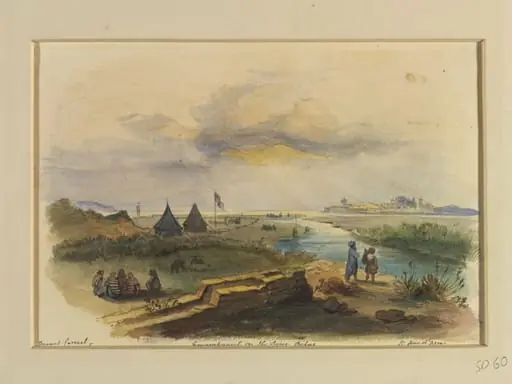 Encampment on the River Belus
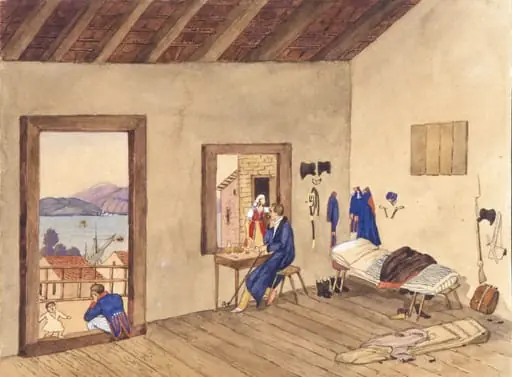 Το δωμάτιο του L. Kollnberger στη Ναύπακτο
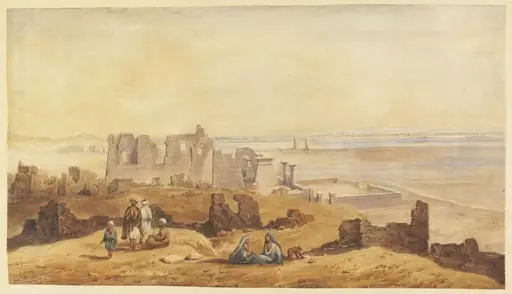 Luxor: the West Bank, with the Temple of Ramesses III at Madinat Habu; looking east towards the Nile
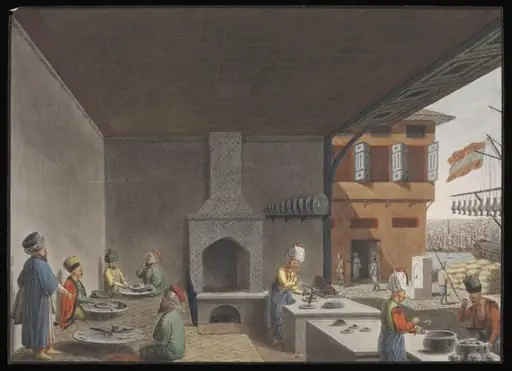 A kebab shop near the Yeni Cami
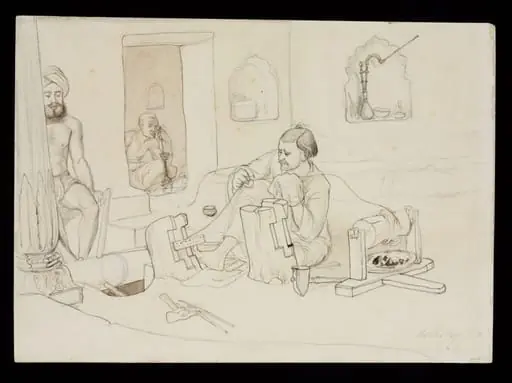 Three men in a workshop producing silver gilt wire
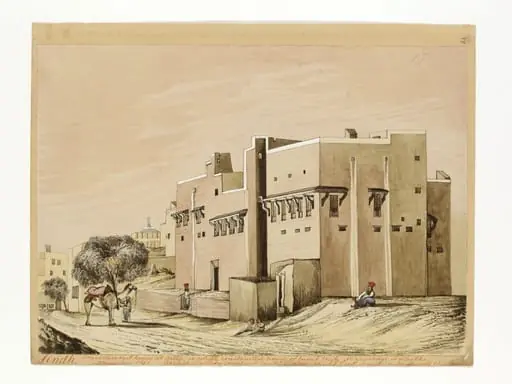 Exterior of the traveller's rest house, formerly the East India Company's Factory, Tatta
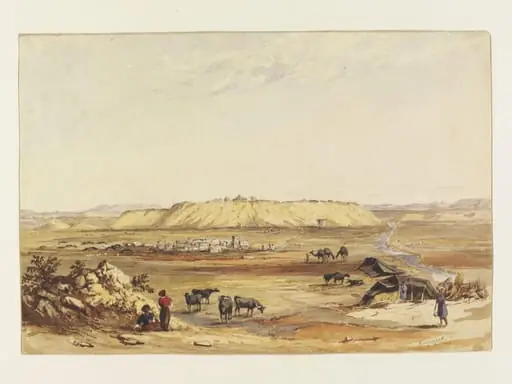 Kouyunjick
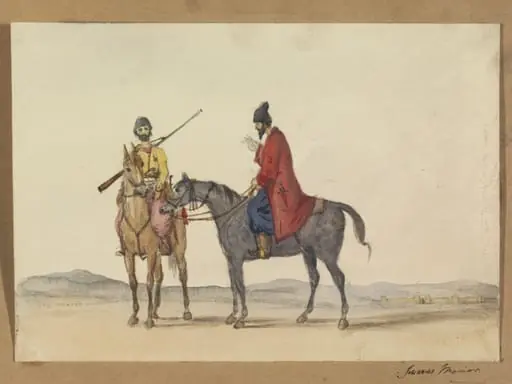 Two Persian Horsemen
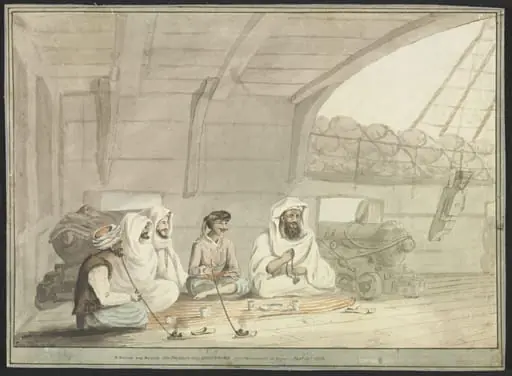 A Scene on board His Majesty's Ship Swiftsure. off Alexandria in Egypt - Sepr. 10th 1798
 Persian Village