Artwork
Abraham Aurelius, Minister of the French Church in London
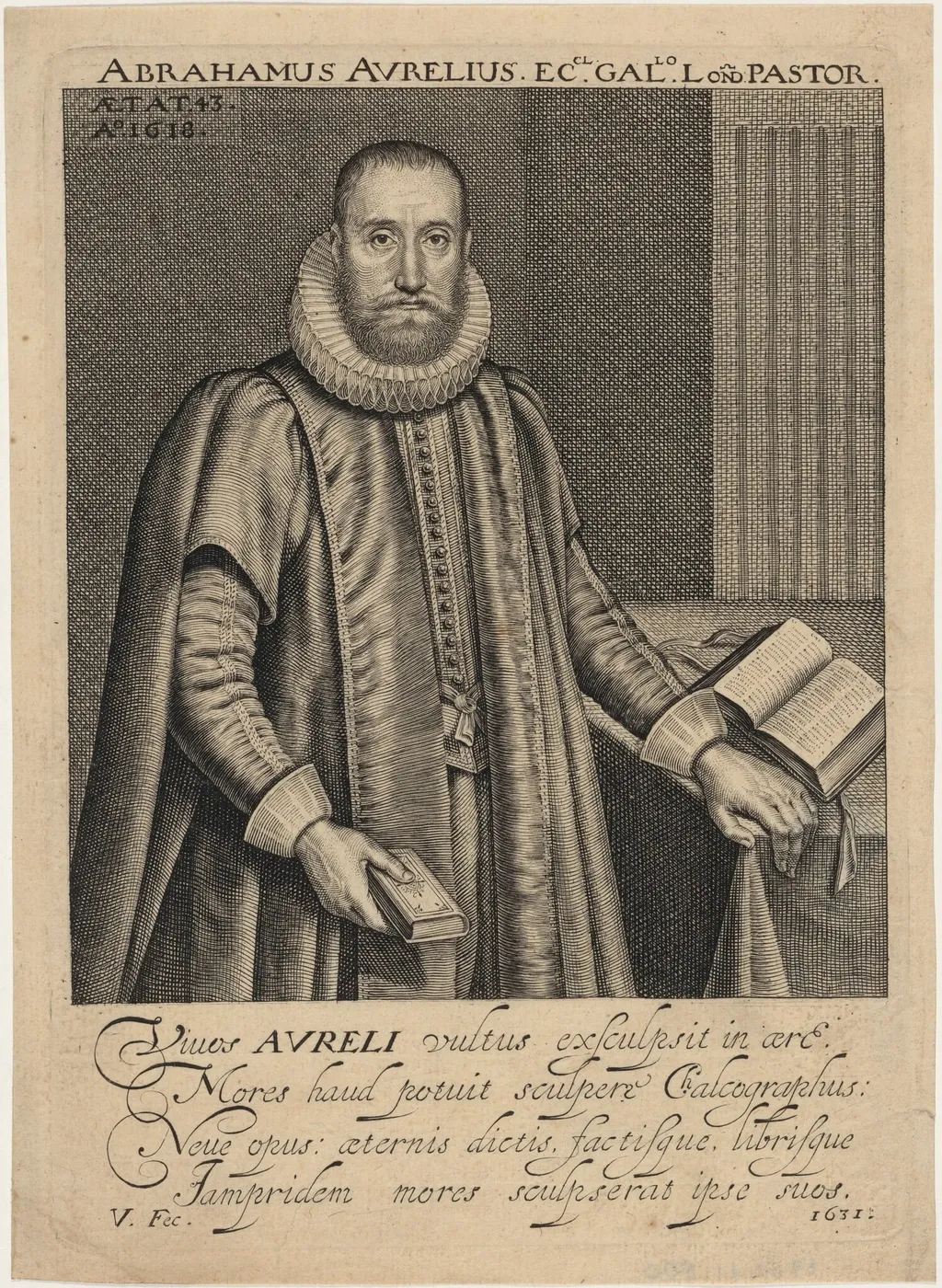
Abraham Aurelius, Minister of the French Church in London is an ink print by the Baroque artist Robert van Voerst. It dates from 1631 and is held in the collection of the National Gallery of Art.
About this work
Overview
Rendered in monochrome through fine etched lines, the portrait captures the subject in formal attire typical of early 17th-century clergy.
This 1631 engraving by Robert van Voerst depicts Abraham Aurelius, a minister serving the French Protestant community in London. Rendered in monochrome through fine etched lines, the portrait captures the subject in formal attire typical of early 17th-century clergy. The image was produced as a printed impression, allowing multiple copies to circulate, reflecting the era’s use of print for documenting religious and civic figures.
Subject & Meaning
Abraham Aurelius is portrayed with solemn dignity, emphasizing his role as a spiritual leader. The open book in his right hand suggests devotion to scripture, while the chain and small object in his left may signify authority or ecclesiastical office. The Latin inscription below honors his service, reinforcing the portrait’s function as both likeness and tribute to his public standing within the Huguenot community.
Technique & Style
Van Voerst employed engraving, a method involving incised lines on a metal plate inked and pressed onto paper. The fine, controlled strokes define texture in the ruff, fabric folds, and facial features with precision. The absence of color and reliance on line and tone reflect the print’s functional purpose: clarity and reproducibility over decorative flourish, aligning with Protestant values of restraint.
History & Provenance
Created in 1631, the engraving likely served to commemorate Aurelius’s leadership among London’s French refugees. As a minister in a community displaced by religious persecution, his image would have held symbolic weight. The print’s survival suggests it was preserved by congregants or collectors interested in Huguenot history, though its early ownership remains undocumented.
Context
In early 17th-century London, French Huguenots formed a distinct religious minority. Their ministers, like Aurelius, played vital roles in maintaining cultural and spiritual identity. Portraits such as this were uncommon among non-elite Protestants, making this engraving a rare example of how religious leaders were visually recognized within diaspora communities outside formal court or aristocratic circles.
Legacy
The engraving stands as a quiet testament to the presence and organization of French Protestants in England. It contributes to the visual record of religious minorities in early modern Britain, illustrating how print technology enabled the dissemination of identity and authority beyond traditional patronage systems. Its historical value lies in its specificity and sober documentation of a marginalized clergyman’s role.
Artist & collection