Artwork
Untitled
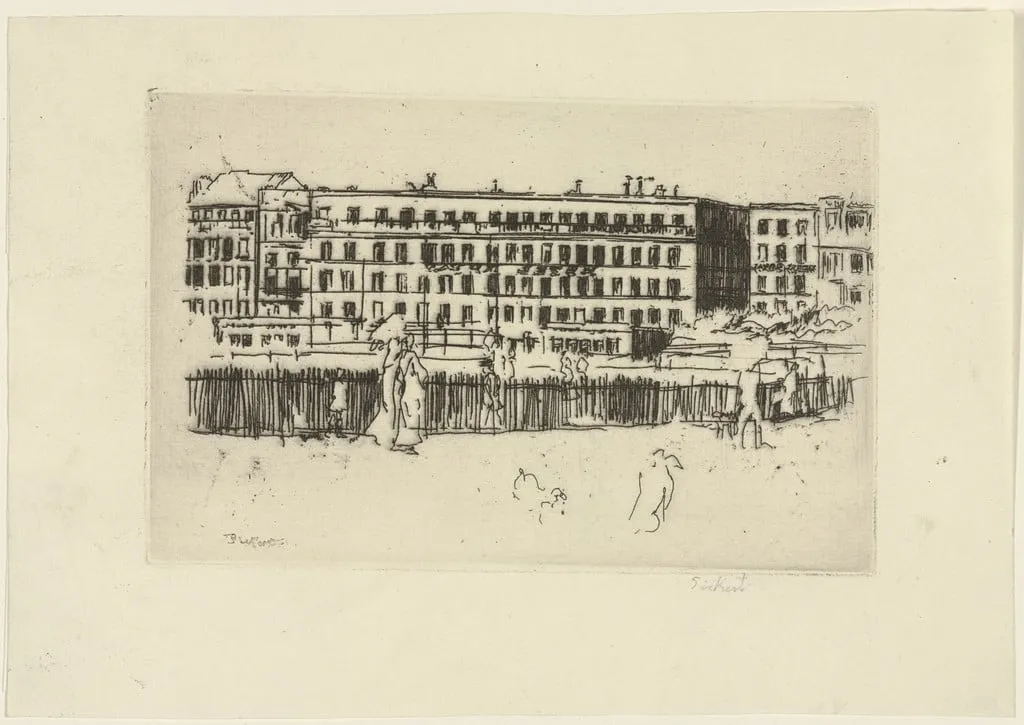
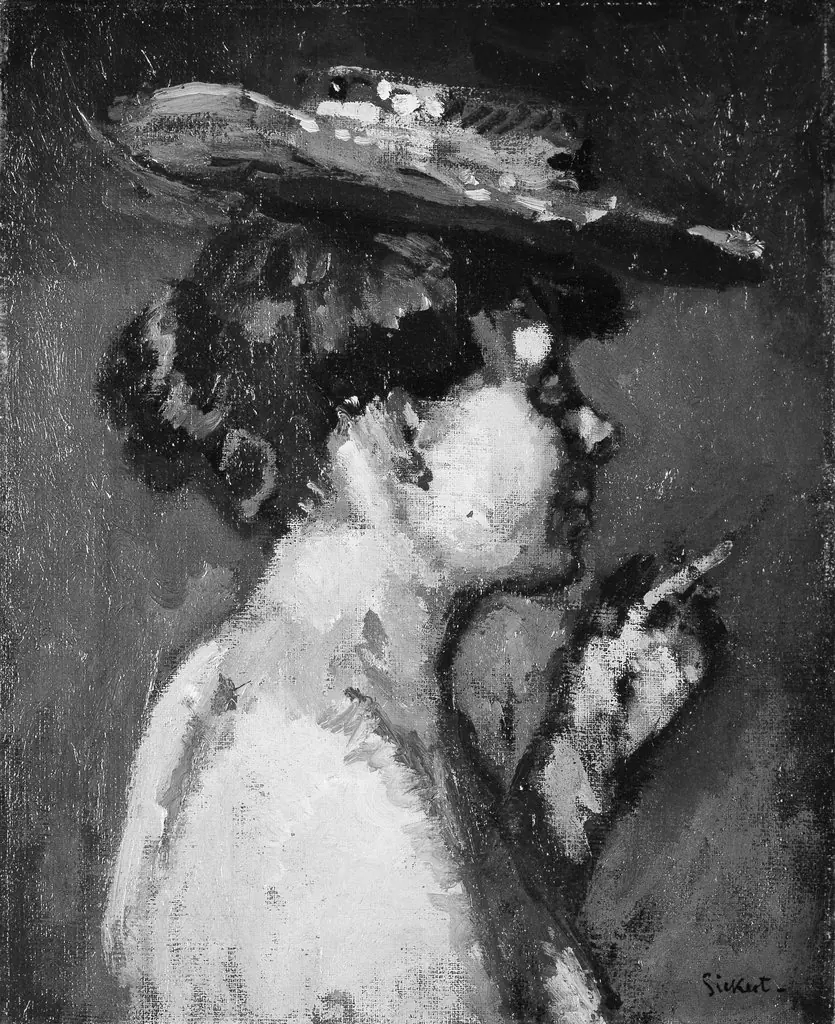
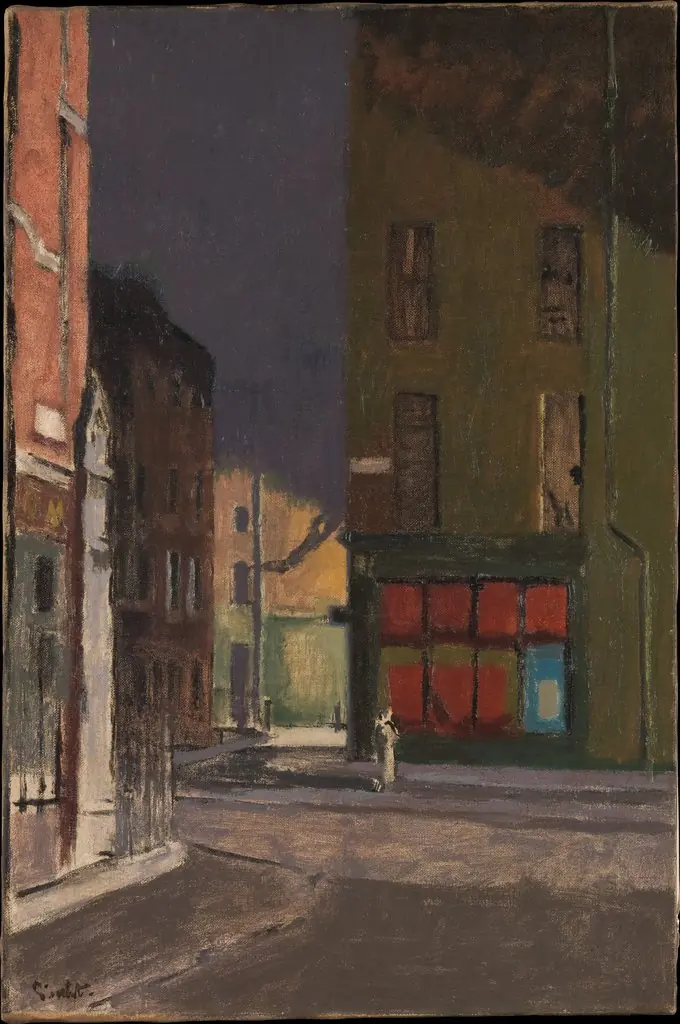
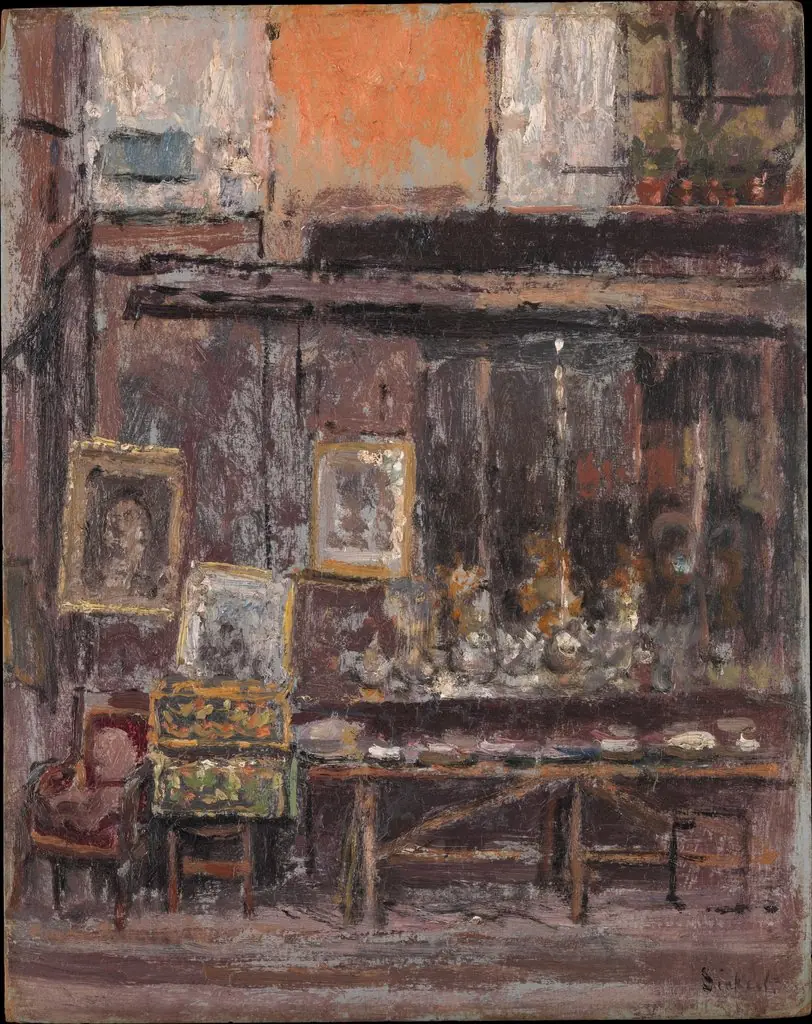
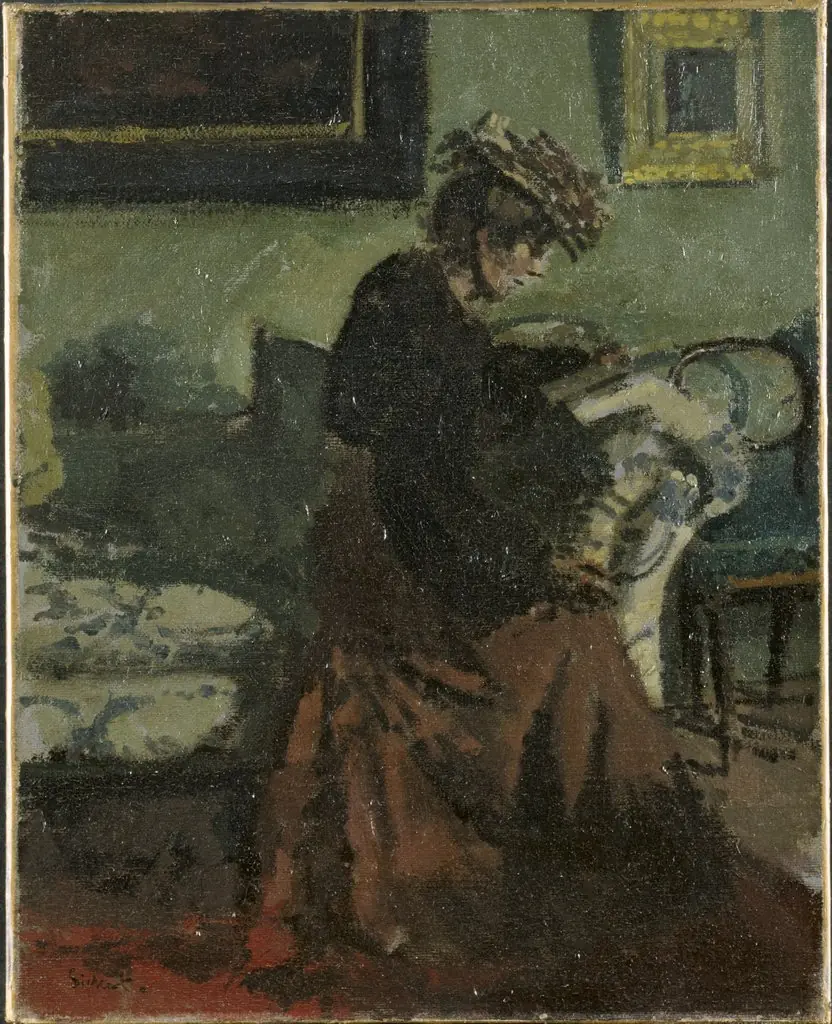
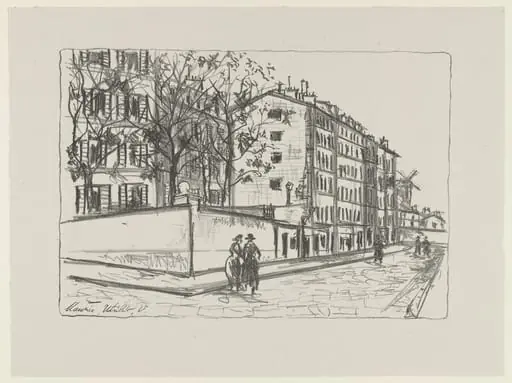
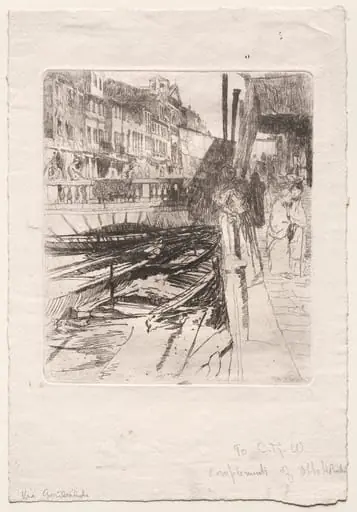
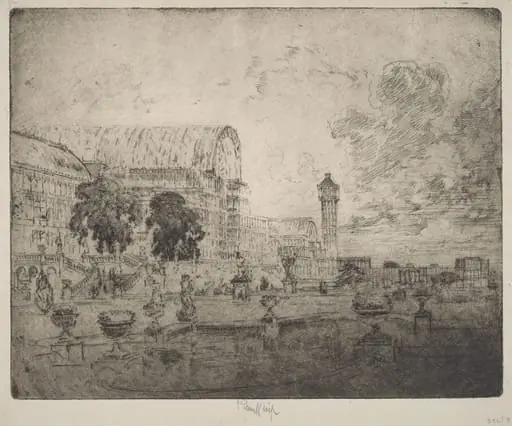
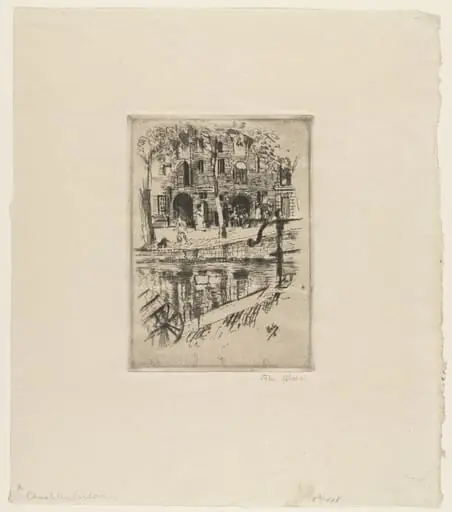
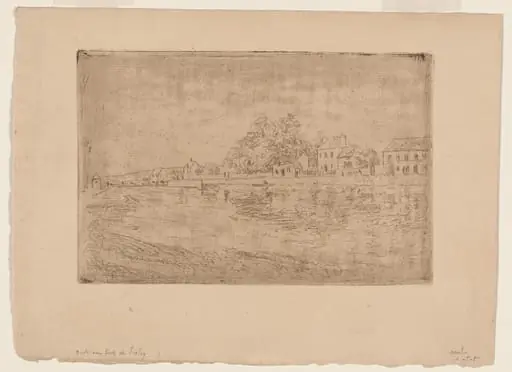
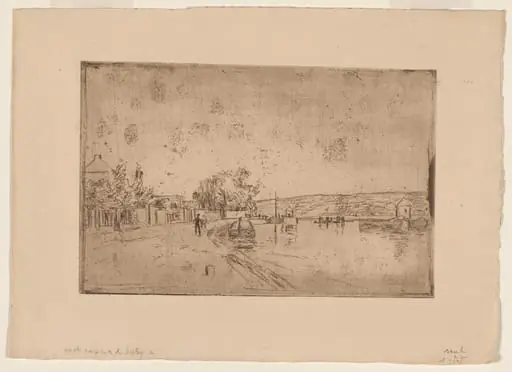
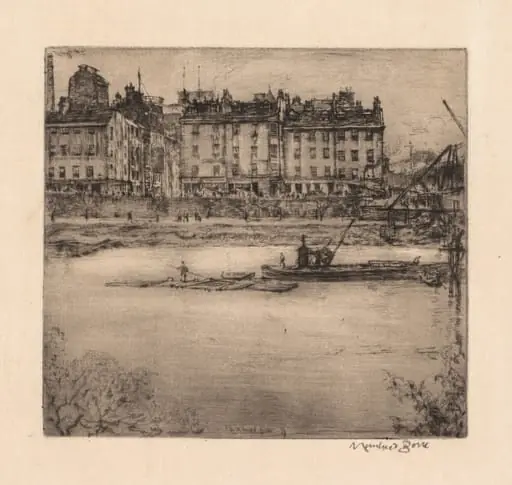
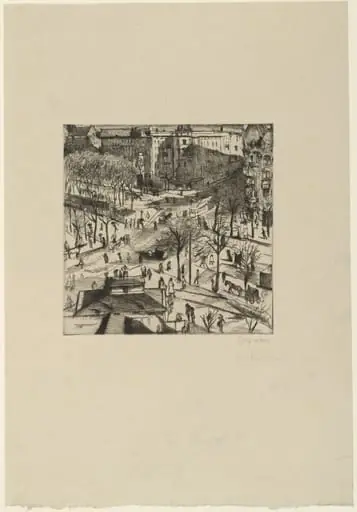
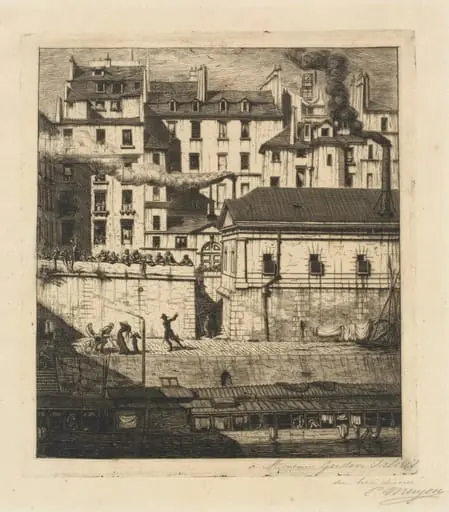
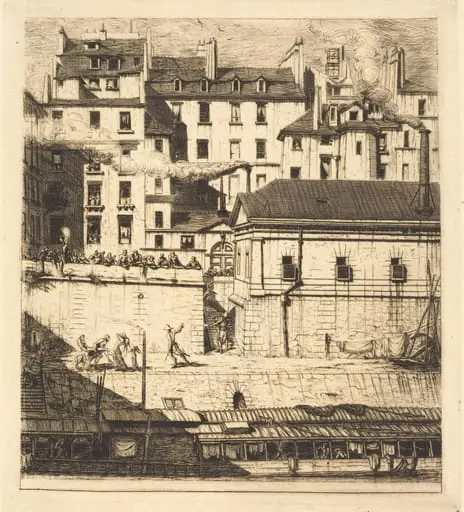
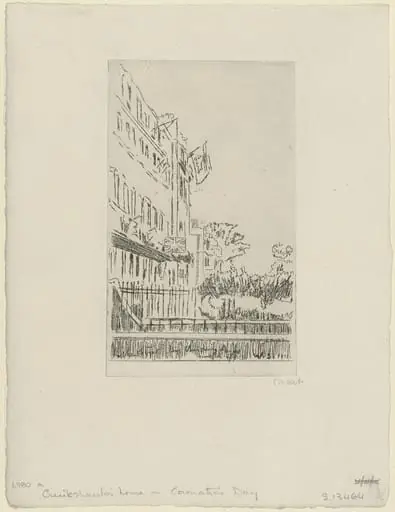
Untitled is an ink print by the Impressionist artist Walter Sickert. It dates from 1894 and is held in the collection of the Museum of Modern Art. Created around 1894, this etching by Walter Richard Sickert captures a quiet urban streetscape in London.
About this work
Overview
Created around 1894, this etching by Walter Richard Sickert captures a quiet urban streetscape in London. As a printmaker deeply engaged with everyday life, Sickert used the etching technique to translate observed moments into intimate, atmospheric compositions. The work reflects his interest in the rhythms of ordinary existence, rendered without idealization or dramatic flourish.
Subject & Meaning
A few figures—among them a woman in a long dress, others seated or standing—move through the space with quiet solitude.
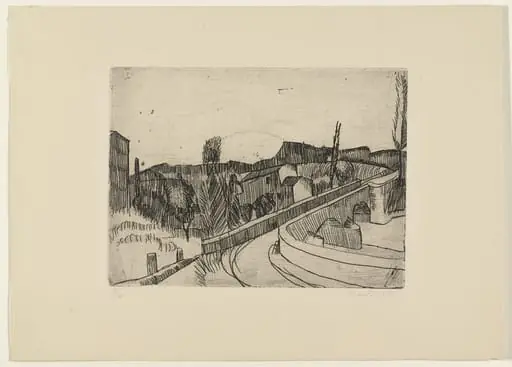
The scene depicts a row of modest, densely windowed buildings with a fence separating the sidewalk from the street. A few figures—among them a woman in a long dress, others seated or standing—move through the space with quiet solitude. A dog and a cart introduce subtle motion, but the overall tone is still, almost contemplative. The absence of narrative detail invites focus on the quiet dignity of urban routine.
Technique & Style
Sickert employed rapid, incised lines typical of etching to suggest texture and depth without heavy shading. The buildings are rendered with careful attention to architectural details—shutters, chimneys, and window frames—while the figures are abbreviated, almost ghostly. The roughness of the lines conveys immediacy, aligning with the spontaneous observation characteristic of late 19th-century printmaking practices.
History & Provenance
This work belongs to Sickert’s early period, before his formal association with the Camden Town Group, yet it anticipates their focus on urban realism. Likely produced during his time in London’s residential neighborhoods, it reflects his habit of drawing from direct observation rather than studio composition. Its survival as a single print underscores its status as a working study rather than a commercial product.
Context
In the 1890s, London’s expanding suburbs provided rich material for artists interested in modern life beyond the grand or picturesque. Etching, once dominated by ornamental styles, was being revived by artists seeking direct, unembellished expression. Sickert’s work contributed to this shift, aligning with broader European trends that valued the mundane as worthy of artistic attention.
Legacy
Though unsigned and untitled, this etching exemplifies Sickert’s enduring influence on British printmaking. His commitment to depicting ordinary scenes with psychological nuance paved the way for later generations of realist artists. The work remains a quiet testament to the value of attentive observation in an era of rapid urban transformation.
Artist & collection
Artist
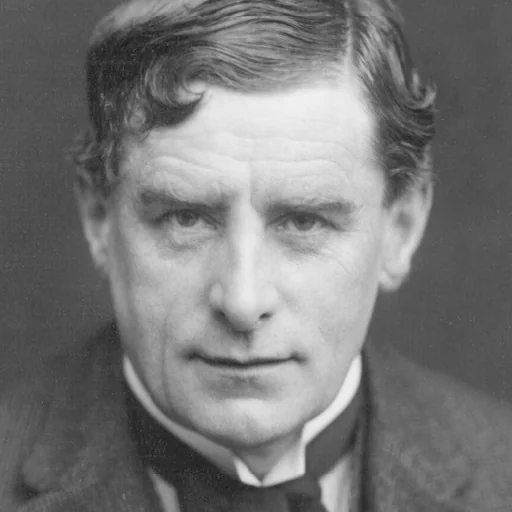
Walter Richard Sickert (31 May 1860 – 22 January 1942) was a German-born British painter and printmaker who was a member of the Camden Town Group of Post-Impressionist artists in early 20th-century London.