Artwork
Moses and Aaron before the Pharaoh
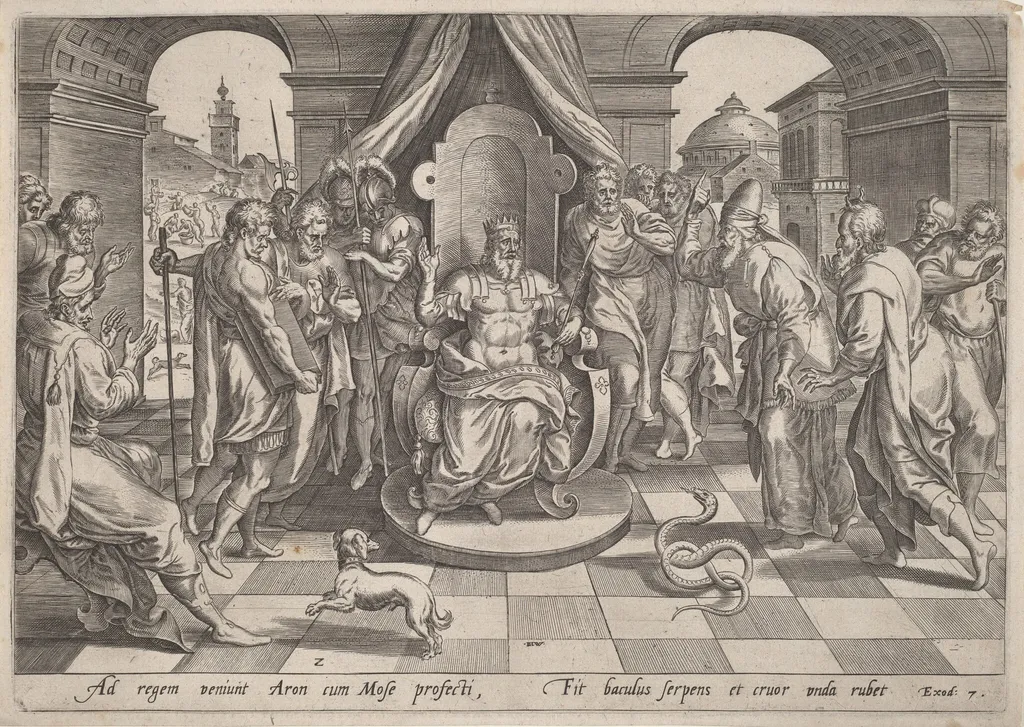
Moses and Aaron before the Pharaoh is an ink print by the Renaissance artist Johan Wierix. It dates from 1585 and is held in the collection of the National Gallery of Art.
About this work
Overview
Moses and Aaron before the Pharaoh is a 16th-century engraving by Johan Wierix, dated to around 1585. The work depicts a pivotal biblical scene on laid paper.
Subject & Meaning
The engraving illustrates Moses and Aaron standing before Pharaoh in a grand, open chamber, accompanied by symbolic elements: a coiled snake (alluding to the miracle of Aaron's rod) and a dog (possibly signifying faithfulness or a spectator). The composition conveys the tense confrontation between religious leaders and royal authority.
Technique & Style
Wierix employed intricate cross-hatching to achieve depth and texture. Strategic use of light and shadow enhances the dramatic tension of the encounter, characteristic of Renaissance artistic principles.
History & Provenance
Created circa 1585, the engraving is now part of the collection at the National Gallery of Art in Washington, D.C.
Context
This work reflects the Renaissance interest in biblical narratives and the technical advancements in engraving during this period, allowing for widespread dissemination of religious themes.
Legacy
As a well-preserved example of late Renaissance engraving, it contributes to the understanding of 16th-century artistic techniques and religious art themes.
Artist & collection


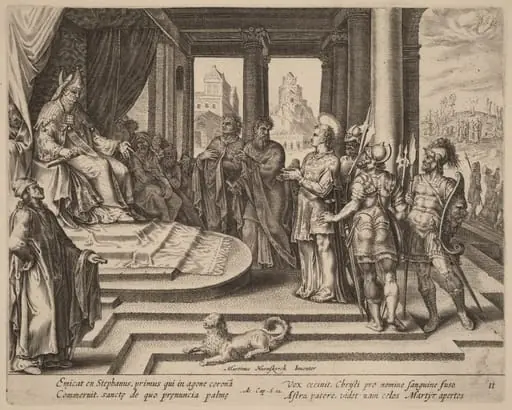 Saint Stephen before the Council
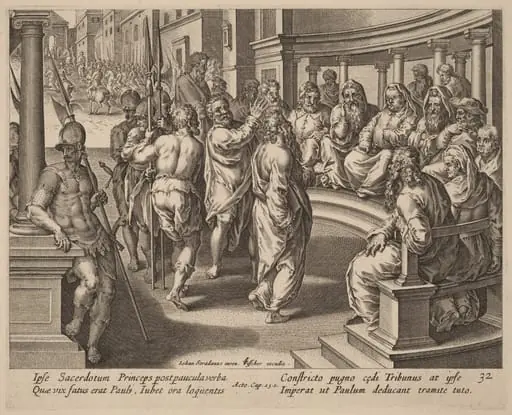 Saint Paul before the High Priest
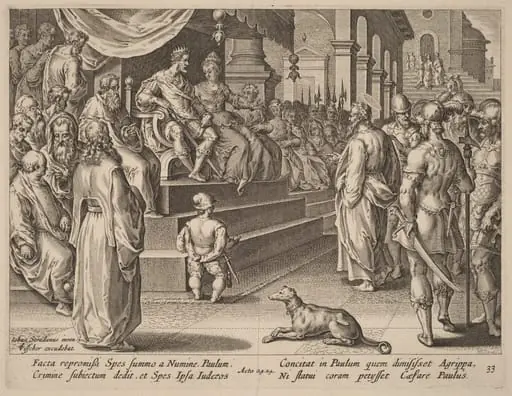 Saint Paul before Festus and Agrippa
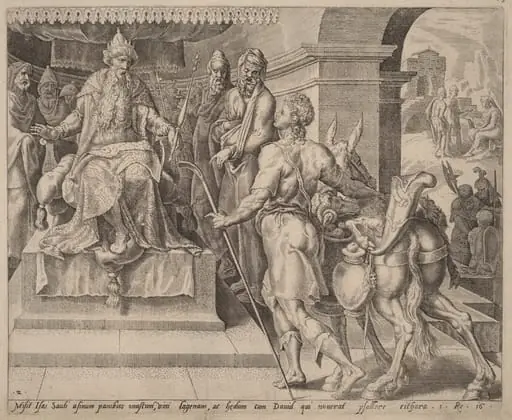 David Bringing Presents from His Father to Saul
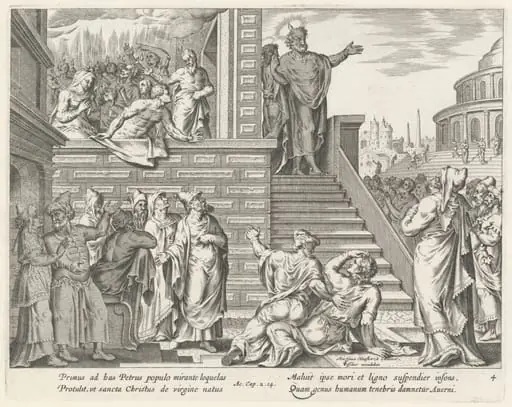 Saint Peter Speaks to the People about Christ
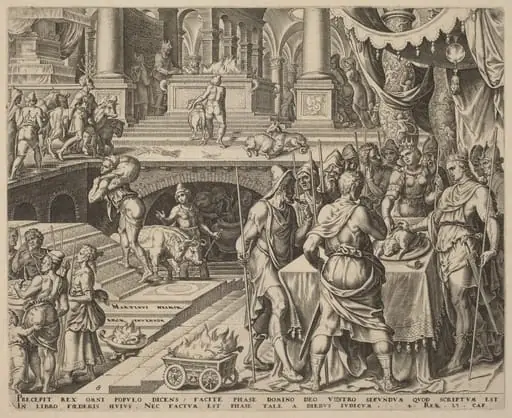 Josiah Celebrating Passover
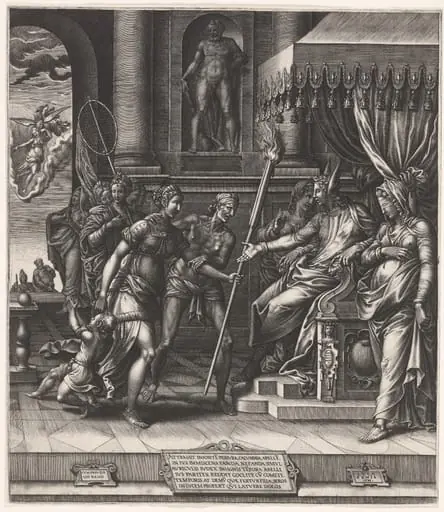 The Calumny of Apelles
 David Playing the Harp before Saul
 David Playing the Harp before Saul