Artwork
孫悟空|The Monkey King Songokū, from the Chinese novel Journey to the West
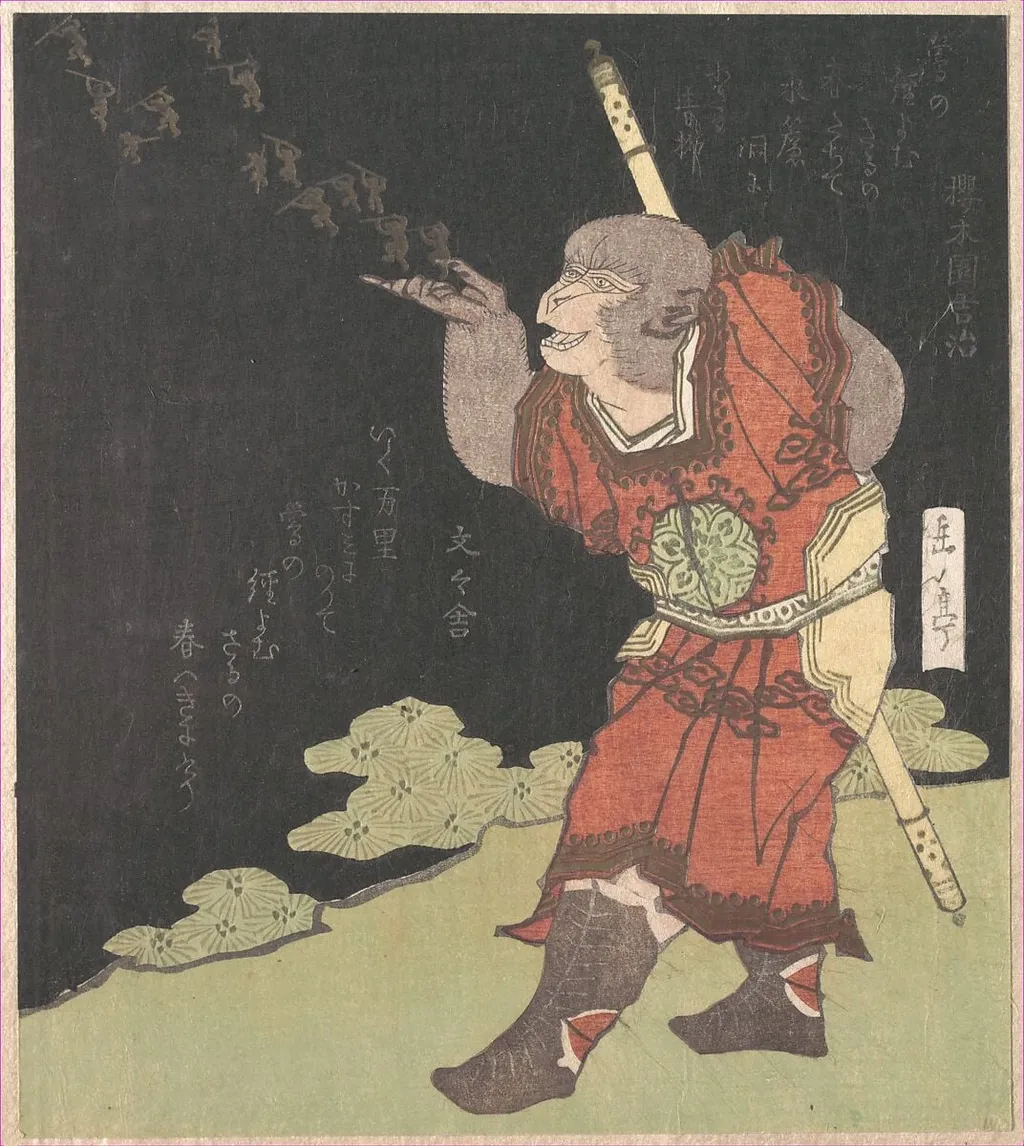
孫悟空|The Monkey King Songokū, from the Chinese novel Journey to the West is an ink print by the Romanticist artist Yashima Gakutei. It dates from 1824 and is held in the collection of the Metropolitan Museum of Art.
About this work
Overview
This surimono woodblock print, created around 1824 by Yashima Gakutei, portrays Sun Wukong, the legendary Monkey King from the Chinese epic Journey to the West.
This surimono woodblock print, created around 1824 by Yashima Gakutei, portrays Sun Wukong, the legendary Monkey King from the Chinese epic Journey to the West. Executed in ink and color on paper, it belongs to a niche category of privately commissioned prints often paired with poetic verses. Gakutei, trained under Hokkei and Hokusai, brought literary and artistic refinement to the genre, blending narrative intensity with delicate craftsmanship.
Subject & Meaning
The print captures Sun Wukong in a moment of sudden alertness, sword in one hand, arm raised as if responding to an unseen force. His wild hair, exaggerated features, and fierce expression convey his untamed nature and supernatural vitality. Scattered leaves and watching animals suggest a forest setting, reinforcing his role as a trickster spirit of nature. The image evokes his mythic duality—both divine and chaotic, warrior and trickster.
Technique & Style
Gakutei employed fine linework and layered pigments typical of surimono, emphasizing texture and movement. The red robe with gold accents contrasts sharply against muted backgrounds, drawing focus to the figure’s dynamic pose. Delicate cross-hatching defines fabric folds and fur, while the wild hair is rendered with energetic, irregular strokes. The composition balances asymmetry and tension, enhancing the sense of arrested motion.
History & Provenance
Produced in the early 19th century during Japan’s Edo period, this print was likely commissioned by a literary circle interested in Chinese classics and kyōka poetry. Surimono were not mass-produced but circulated among elites, often as New Year gifts or artistic tokens. Gakutei’s association with poetry groups ensured his prints carried cultural weight beyond mere illustration, linking visual art with literary tradition.
Context
During the Edo period, Chinese literature, especially Journey to the West, fascinated Japanese intellectuals and artists. Sun Wukong’s rebellious spirit resonated with themes of individualism and transcendence valued in Edo culture. Gakutei’s interpretation reflects this cross-cultural exchange, adapting a Chinese myth through Japanese print aesthetics, merging Chinese narrative with Japanese visual conventions of drama and detail.
Legacy
Gakutei’s Sun Wukong remains a notable example of how Edo-period artists reinterpreted foreign myths through local techniques. While surimono were never widely distributed, such works influenced later ukiyo-e artists and preserved the literary imagination of the time. Today, the print stands as a quiet testament to the blending of Chinese storytelling and Japanese printmaking in a refined, intimate artistic form.
Artist & collection
Artist
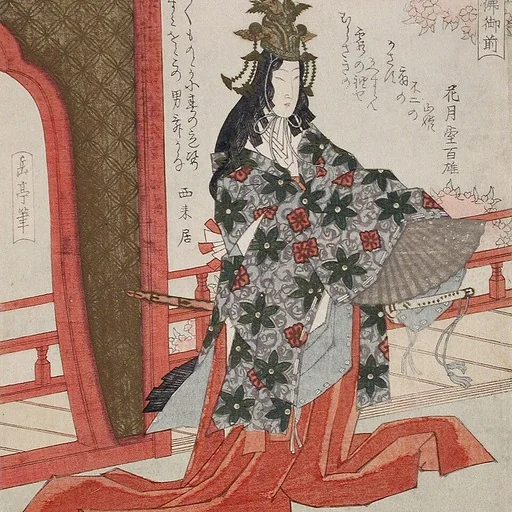
Yashima Gakutei (Japanese: 八島岳亭; c. 1786 – 1868) was a Japanese artist and poet who was a pupil of both Totoya Hokkei and Hokusai. Gakutei is best known for his kyōka poetry and surimono works.

 Untitled
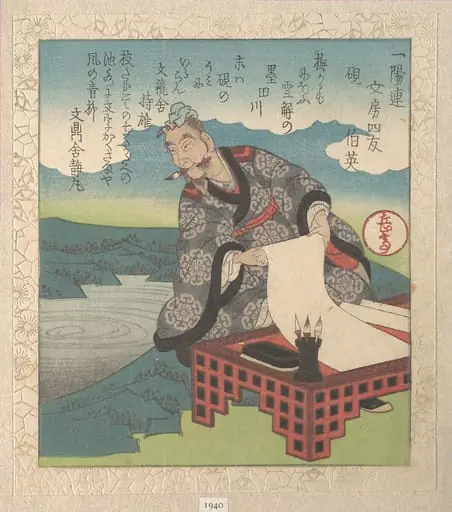 「一陽連文房四友 硯 伯英」『春雨集』 摺物帖|The Chinese Calligrapher Boying (Japanese: Hakuei; also known as the “Sage of Cursive Script”); “Inkstone” (Suzuri), from Four Friends of the Writing Table for the Ichiyō Poetry Circle (Ichiyō-ren Bunbō shiyū) From the Spring Rain Collection (Harusame shū), vol. 1
 Untitled
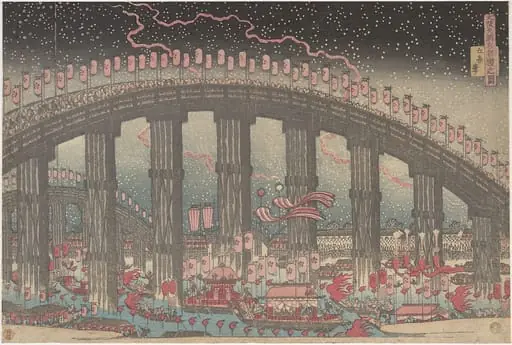 Osaka Tenmangu sairei no zu|The Tenmangu Festival at Osaka
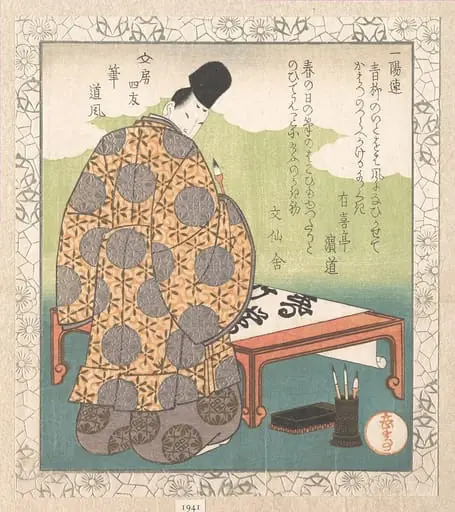 「一陽連文房四友 筆 道風」『春雨集』 摺物帖|The Heian Court Calligrapher Ono no Tōfū (894–966); “Calligraphy Brush” (Fude), from Four Friends of the Writing Table for the Ichiyō Poetry Circle (Ichiyō-ren Bunbō shiyū)From the Spring Rain Collection (Harusame shū), vol. 1
 Untitled
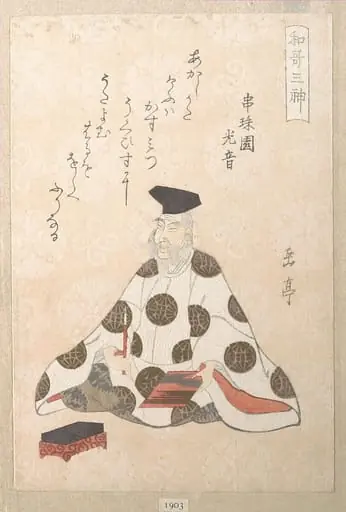 『和歌三神』 柿本人麻呂|Kakinomoto no Hitomaro (ca. 662–710), One of the Three Gods of PoetryFrom the Spring Rain Collection (Harusame shū), vol. 1
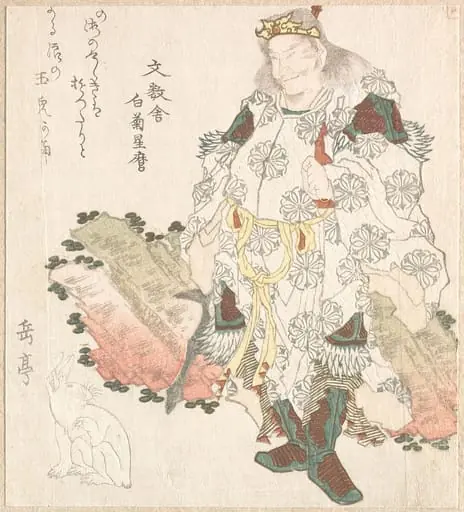 Untitled
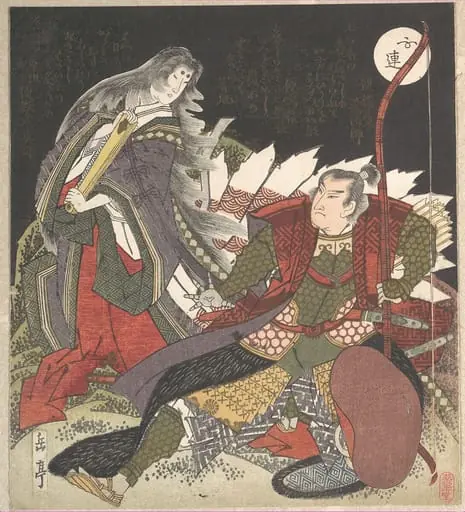 玉藻前と三浦介|The Warrior Miura-no-suke Confronting the Court Lady Tamamo-no-mae as She Turns into an Evil Fox with Nine Tails
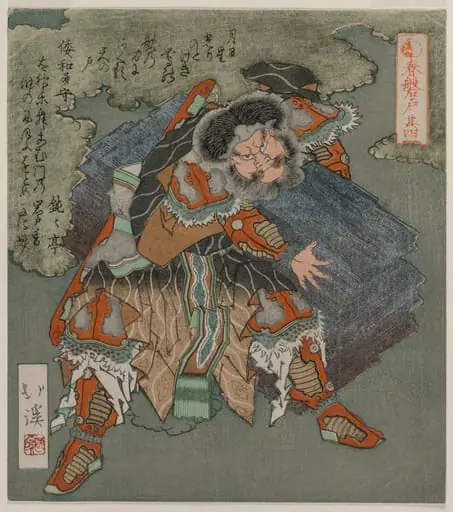 Ama no Tajikara no Mikoto from The Cave Door of Spring
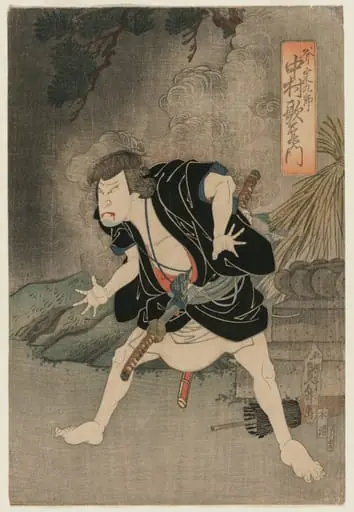 Nakamura Utaemon IV as Ono Sadakuro in Act Five of Kanadehon Chushingura, Naka Theater
 Untitled
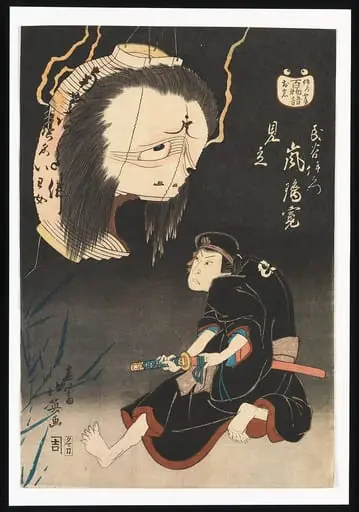 春江斎北英画 二代目嵐璃寛 見立 「百物語」|Kabuki Actor Arashi Rikan II as Iemon Confronted by an Image of His Murdered Wife, Oiwa, on a Broken Lantern, Referring to Katsushika Hokusai’s Hyaku monogatari (One Hundred Ghost Stories)
 Untitled
 Untitled
 Untitled
 Untitled
 Untitled
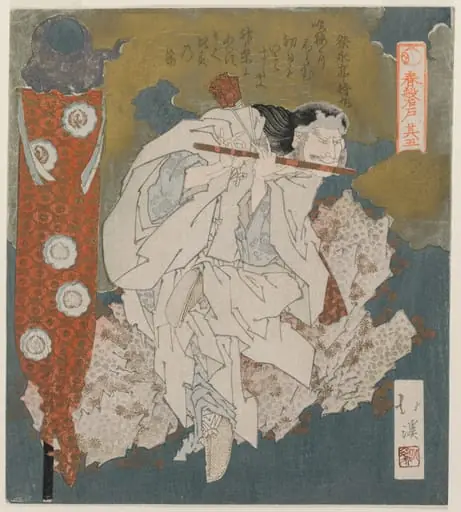 Flautist from The Cave Door of Spring
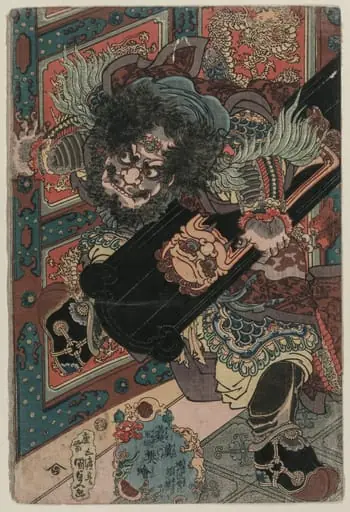 The Military Tales of Han and Chu: Fan Kuai of the Han