Artwork
Roan Duck
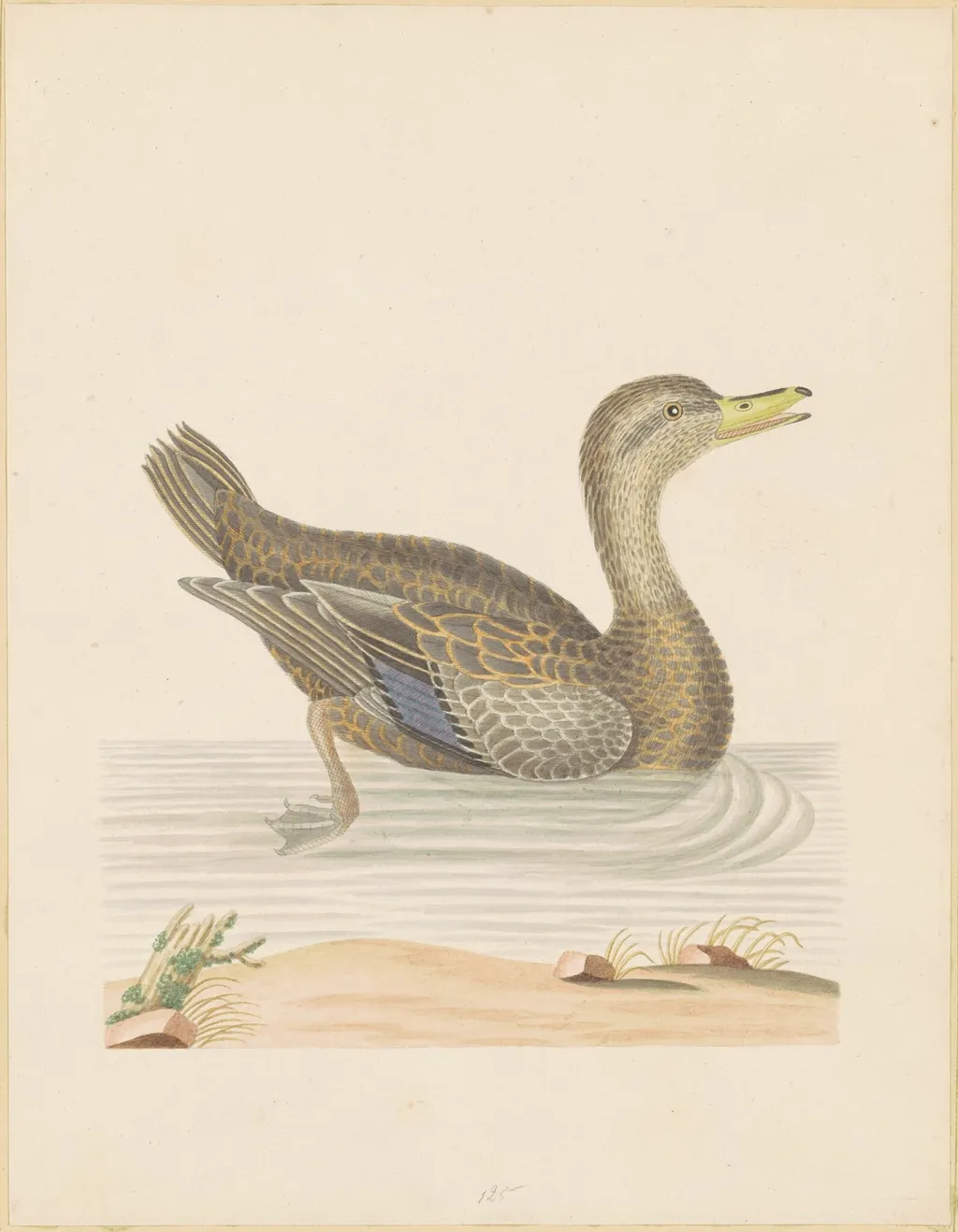
Roan Duck is a graphite drawing by the Romanticist artist John Abbot. It dates from 1790 and is held in the collection of the National Gallery of Art.
About this work
Overview
Roan Duck is a late 18th-century drawing by John Abbot, executed in watercolor and graphite on wove paper, now laid down. Created circa 1790, it depicts a solitary roan duck in a serene marsh environment.
Subject & Meaning
The subject, a roan duck standing on one leg, conveys a sense of quiet naturalism. The artist's attention to the duck's soft, realistic feathers and the calm, transparent water suggests a focus on observational accuracy and the beauty of everyday birdlife.
Technique & Style
Abbot combined watercolor and graphite to achieve detailed, realistic renderings of both the duck and its aquatic habitat. This mixed-media approach allowed for subtle texture and depth, particularly in capturing the softness of the feathers.
History & Provenance
Though Abbot was based in America, his work on Roan Duck reflects influences or studies potentially conducted during time spent in England, where he would have had access to a wider variety of bird species for observation.
Context
Roan Duck sits within the broader context of late 18th-century natural history illustration, characterized by precise, lifelike depictions of flora and fauna. Abbot's work bridges American and British artistic and scientific interests of the time.
Legacy
Roan Duck is part of a collection of Abbot's works housed at the National Gallery of Art in Washington, D.C., contributing to the institution's holdings of early American and natural history art.
Own this work as a print
Artist & collection


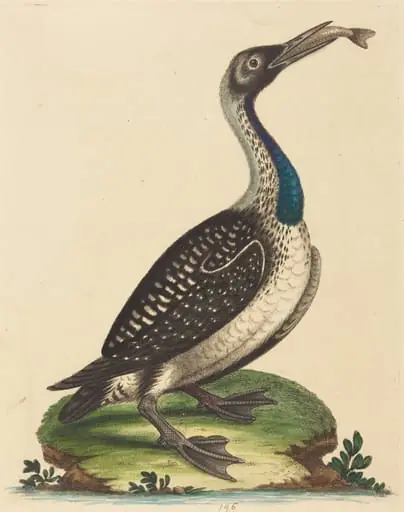 Black and White Water-Fowl with Blue Throat
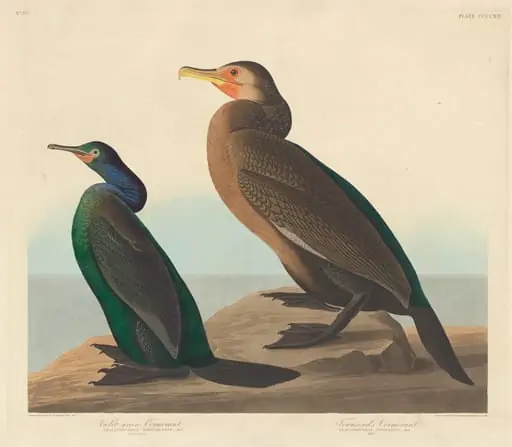 Violet-green Cormorant and Townsend's Cormorant
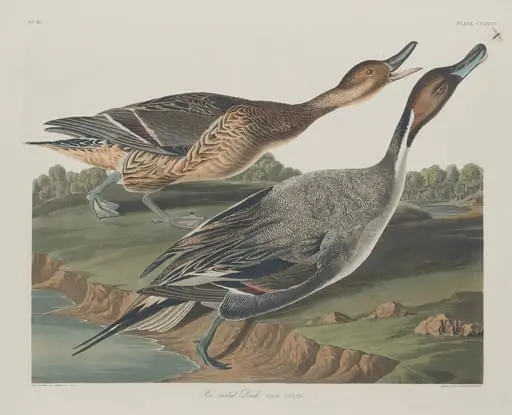 Pin-Tailed Duck
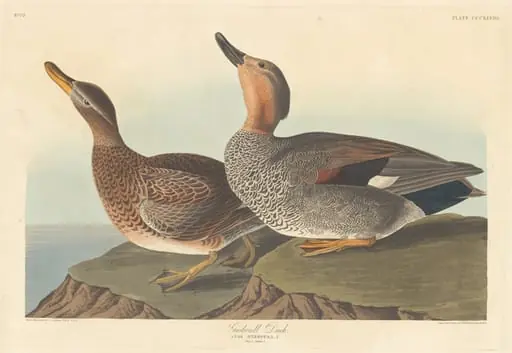 Gadwall Duck
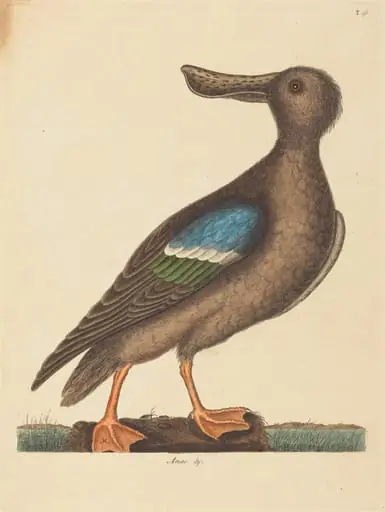 The Blue Winged Shoveler (Anas clypeata foemina)
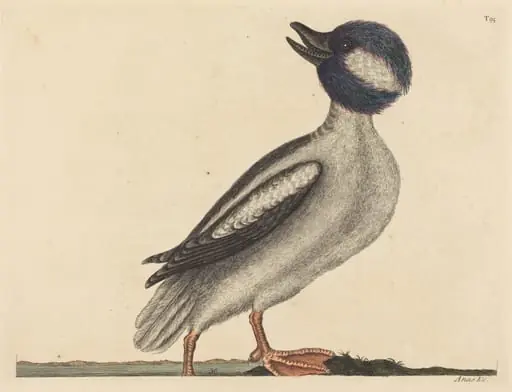 The Buffel's Head Duck (Anas bucephala)
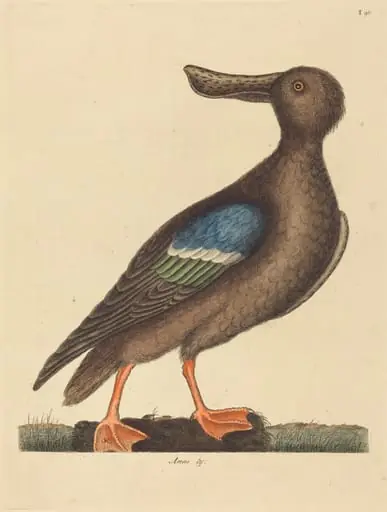 The Blue Winged Shoveler (Anas clypeata foemina)
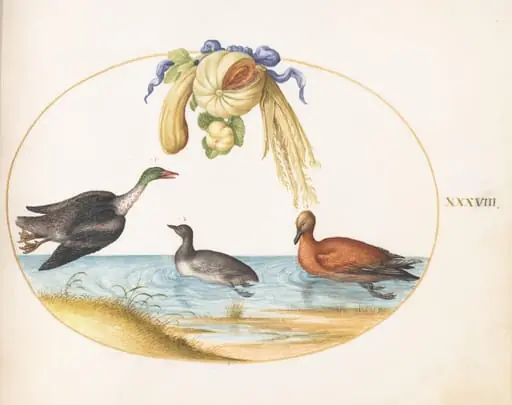 Plate 38: Merganser with Two Other Waterfowl and a Garland of Melons and Gourds