Artwork
Gadwall Duck
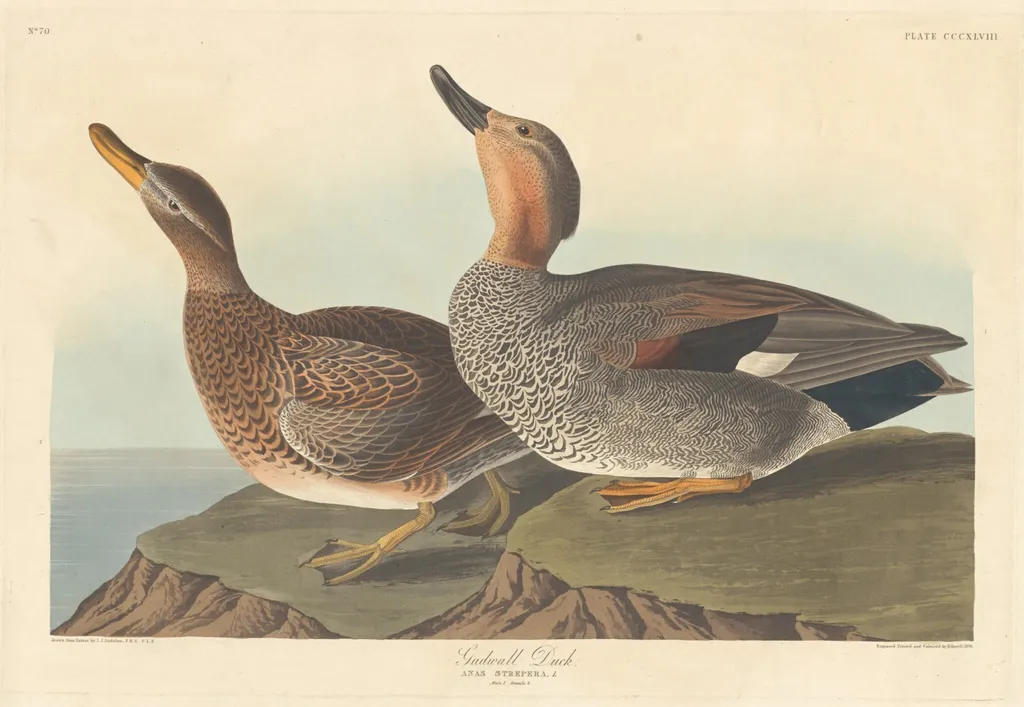
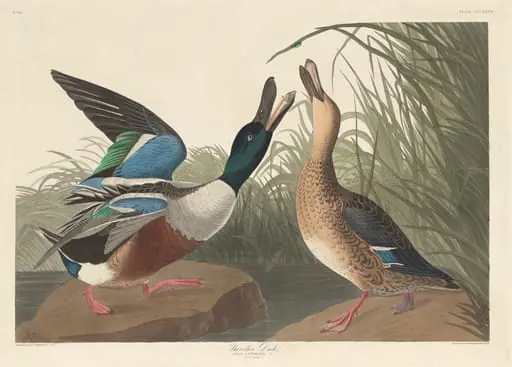
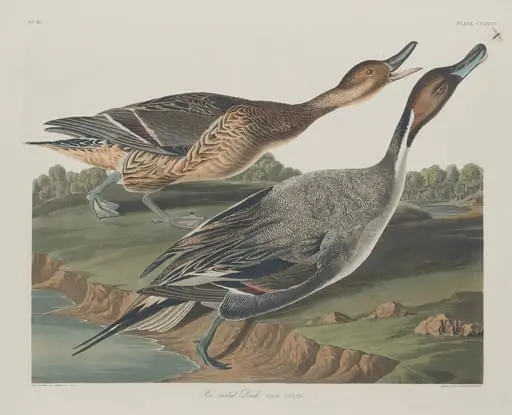
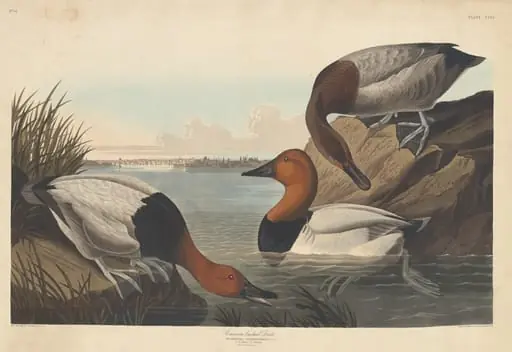
Gadwall Duck is an ink print by the Romanticist artist Robert Havell Jr.. It dates from 1836 and is held in the collection of the National Gallery of Art.
About this work
Overview
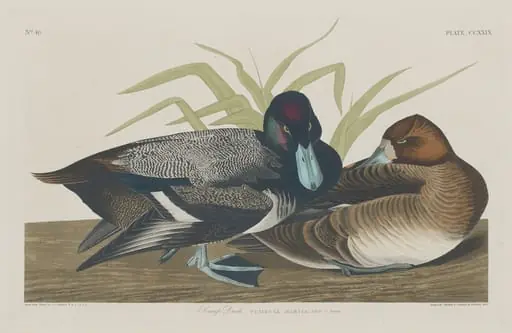
Robert Havell Jr.’s 1836 print titled *Gadwall Duck* presents a solitary gadwall poised in tranquil water, its muted gray‑brown plumage and dark tail contrasting with surrounding green reeds. The bird tilts its head, seemingly attentive to activity near the shore, while subtle ripples convey the wetness of its feathers and the calm surface of the water.
Subject & Meaning
The work captures a moment of natural observation, emphasizing the gadwall’s quiet vigilance within its habitat. By focusing on a single waterfowl, Havell highlights the delicate interplay between animal and environment, inviting viewers to consider the nuanced behavior and coloration of the species in a realistic setting.
Technique & Style
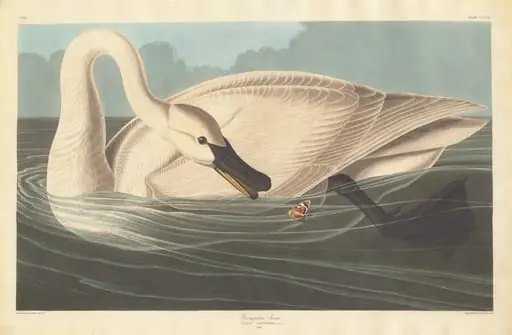
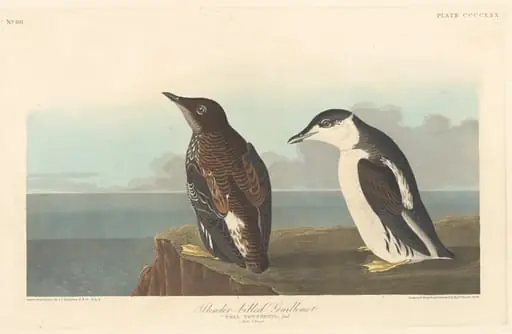
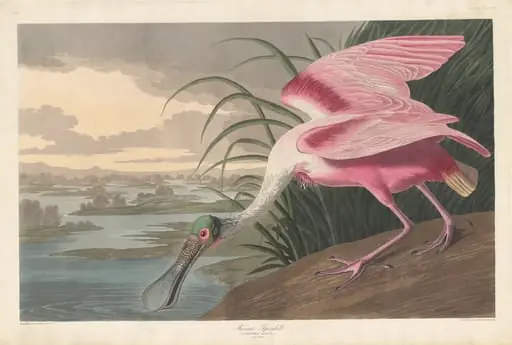
Executed on Whatman wove paper, the image combines hand‑colored engraving with aquatint, allowing fine line work to define the bird’s form and delicate water ripples. The hand‑applied pigments enhance the tonal range, while the aquatint provides soft, atmospheric washes that suggest depth and the reflective quality of the water.
History & Provenance
Robert Havell Jr., a member of the prominent Havell family of engravers from Reading, Berkshire, produced the print within a lineage established by his father, Robert Havell the Elder, and his uncle Luke Havell. The family’s long‑standing involvement with aquatint and interest in Indian art informed their technical expertise, situating this work within the broader 19th‑century English tradition of natural history illustration.
Artist & collection

Artist
The Havell family of Reading, Berkshire, England, included a number of notable engravers, etchers and painters, as well as writers, publishers, educators, and musicians.