Artwork
Portrait of Sultan Mahmud II of Turkey
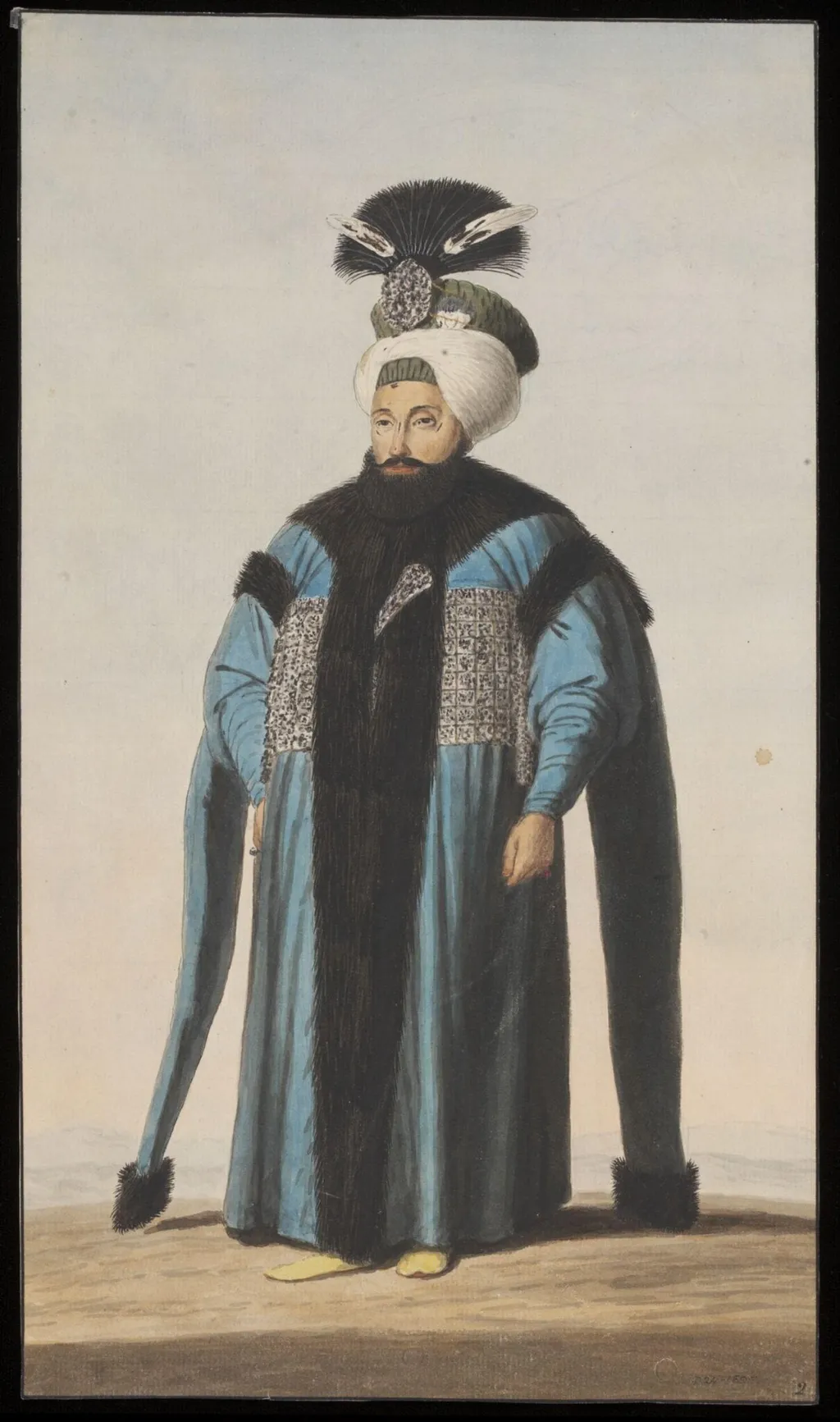
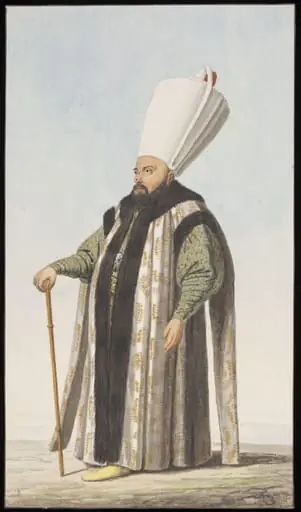
Portrait of Sultan Mahmud II of Turkey is a watercolor work on paper by the Orientalist artist Anonymous Greek artist. It dates from 1809 and is held in the collection of the Victoria and Albert Museum. This watercolour portrait depicts Sultan Mahmud II, ruler of the Ottoman Empire from 1808 to 1839.
About this work
Overview
The series served as a visual record of Ottoman life, observed and documented by a foreign official with deep institutional curiosity.
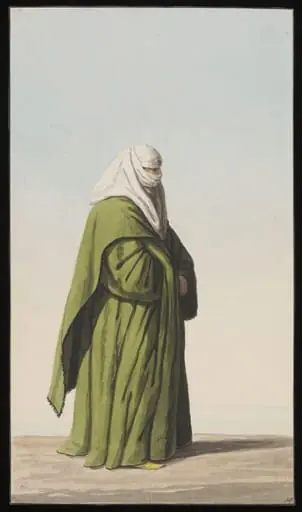
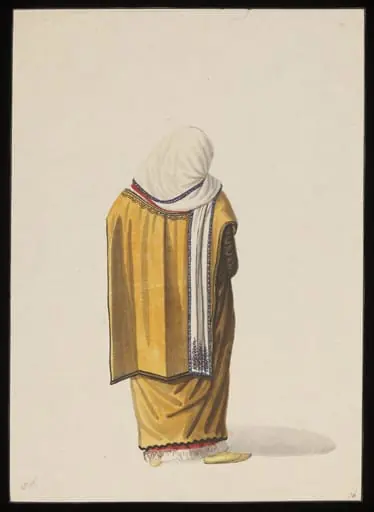
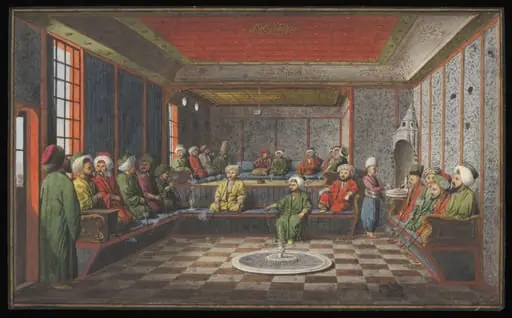
This watercolour portrait depicts Sultan Mahmud II, ruler of the Ottoman Empire from 1808 to 1839. It belongs to a larger collection of images commissioned by British diplomat Stratford Canning during his time in Istanbul. The works were created by an anonymous Greek artist working within the Ottoman artistic tradition, blending local techniques with emerging European approaches to representation. The series served as a visual record of Ottoman life, observed and documented by a foreign official with deep institutional curiosity.
Subject & Meaning
Sultan Mahmud II is portrayed with formal dignity, reflecting his role as a reformer who dismantled the Janissary corps in 1826 to modernize the empire’s military and administration. The portrait does not emphasize grandeur or divine authority but instead presents a controlled, human presence. It aligns with Canning’s broader interest in documenting the Sultan’s authority and the changing nature of Ottoman governance, offering a visual counterpart to diplomatic reports and personal observations.
Technique & Style
The artist employed watercolour and bodycolour with the rich layering typical of Ottoman miniaturists, yet incorporated European spatial depth and naturalistic lighting. The rendering of fabric, facial structure, and posture shows an awareness of Western portraiture without abandoning local conventions. This hybrid style suggests a trained artisan familiar with both Ottoman manuscript traditions and the visual language introduced by European envoys and artists in Istanbul during the early 19th century.
History & Provenance
Commissioned by Stratford Canning during his diplomatic posting in Istanbul, the portrait was part of a systematic visual archive of Ottoman institutions. The artist’s identity remains unconfirmed, though scholars link the work to the circle of Konstantin Kapidagli. British architect Charles Cockerell, who visited Istanbul in 1810, encountered the artist and made copies of his architectural studies—now held in the British Museum. The portrait eventually entered the Victoria and Albert Museum’s collection, preserving its role as a cultural document.
Context
Created during a period of intense reform under Mahmud II, the portrait emerged alongside growing European interest in Ottoman society. Canning’s commission reflects a broader trend among diplomats and travelers to visually catalog the empire’s institutions, not merely as exotic curiosities but as subjects of political and cultural study. The artist’s Greek identity underscores the multicultural environment of Istanbul’s artistic community, where Ottoman, Byzantine, and Western influences intersected.
Legacy
The portrait stands as a rare example of early 19th-century Ottoman portraiture produced for a Western patron, bridging two visual traditions. Its survival in a major European collection highlights its value as a historical record rather than a decorative object. Though the artist remains anonymous, the work contributes to understanding how Ottoman subjects were perceived and represented during a pivotal era of transformation, offering insight beyond official state imagery.
Artist & collection

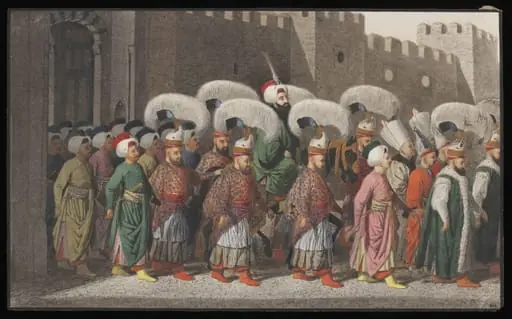
![A Pasha travelling with his escort[?], by Anonymous Greek artist](https://artifactworldgallery.com/img/anonymous-greek-artist--a-pasha-travelling-with-his-escort--01de32b8fcf30843-w320.webp)
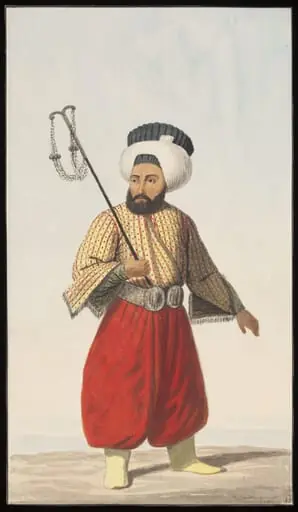
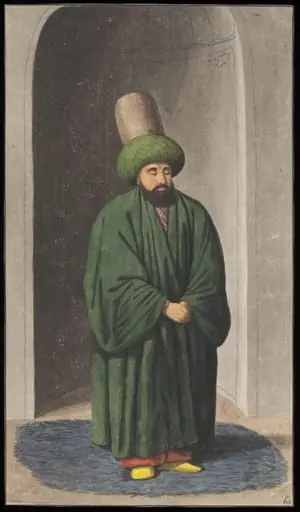
![A Dervish[?], by Anonymous Greek artist](https://artifactworldgallery.com/img/anonymous-greek-artist--a-dervish--3c8916f5a95abb6a-w320.webp) A Dervish[?]
A Dervish[?]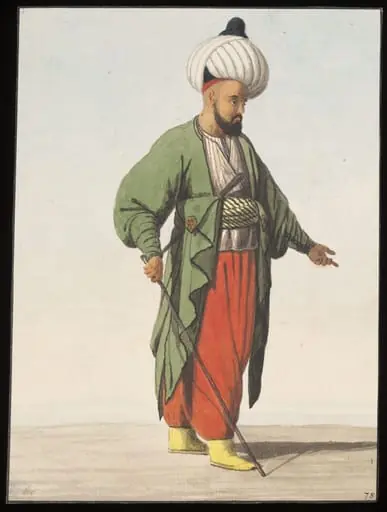 A Turkish official
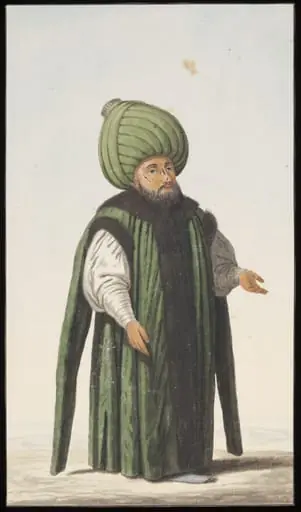 A senior Ottoman official
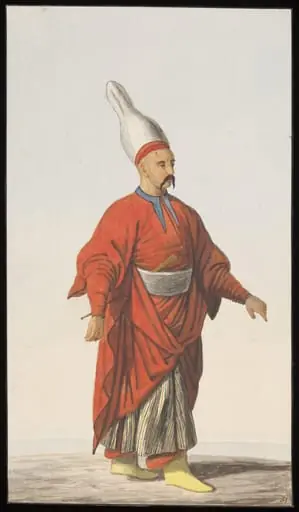 Kozbekçisi, or Steward of the Sultan's Wardrobe
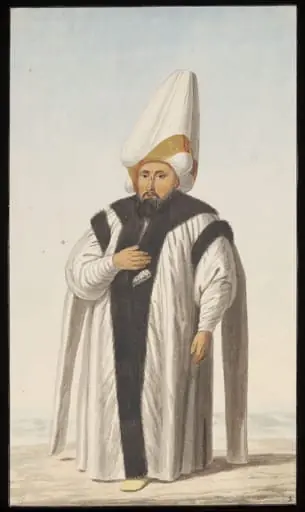 Sadrazam or Grand Vizier
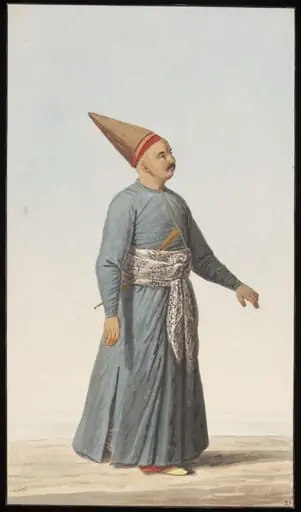 An official in the Sultan's palace
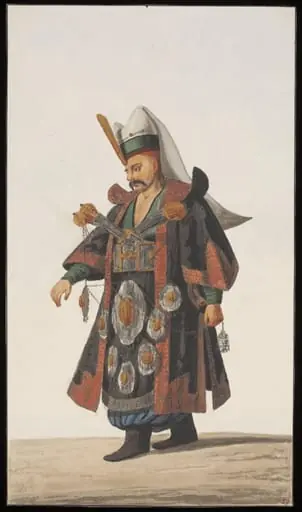 Ascibasi, or Commander of the Janisseries in ceremonial dress
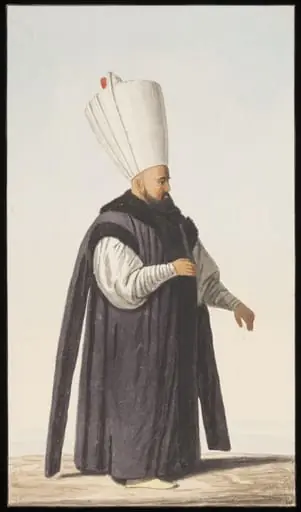
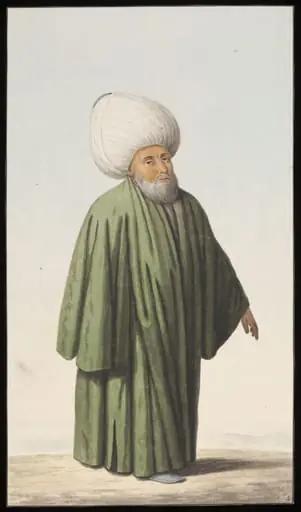 An Ottoman cleric, possibly the Nakibulesraf, or the representative at Istanbul of the Sherif of Mecca
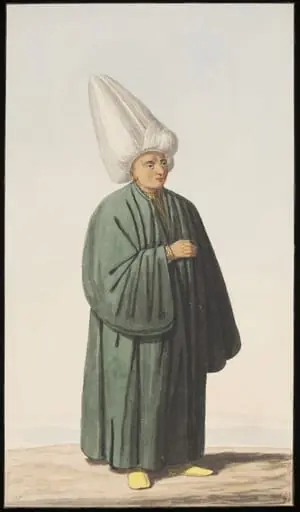 Sarayoglan, or page to the Sultan
 An Ottoman official, possibly a Miri Alem, or leader of troops