Artwork
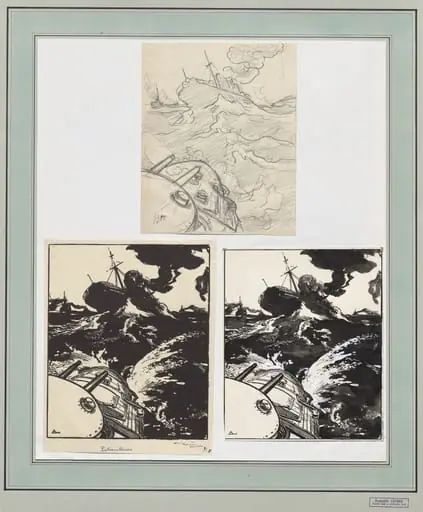
À bord d'un cruiseur anglais
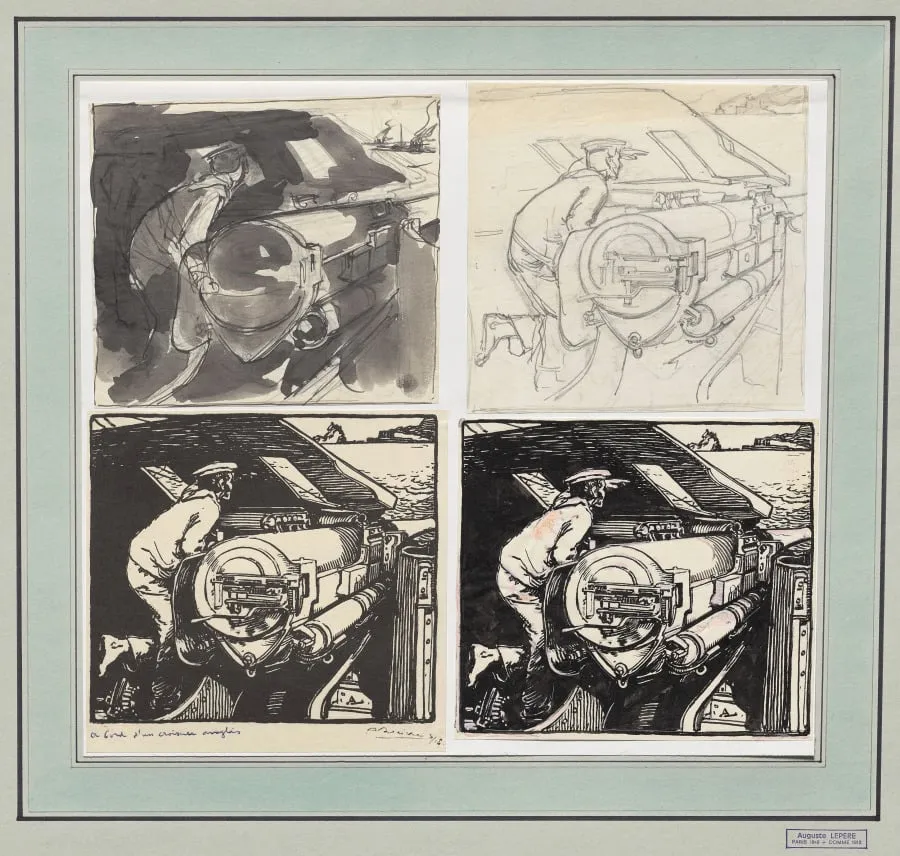
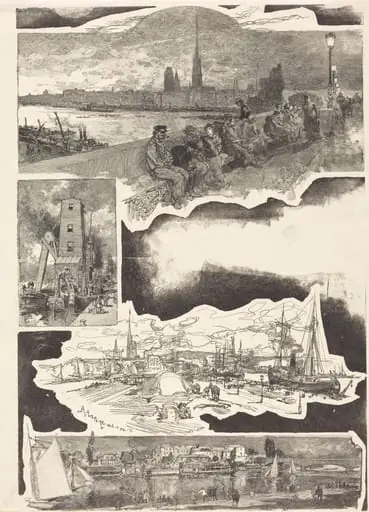
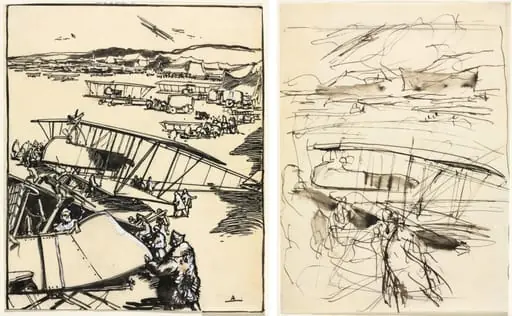
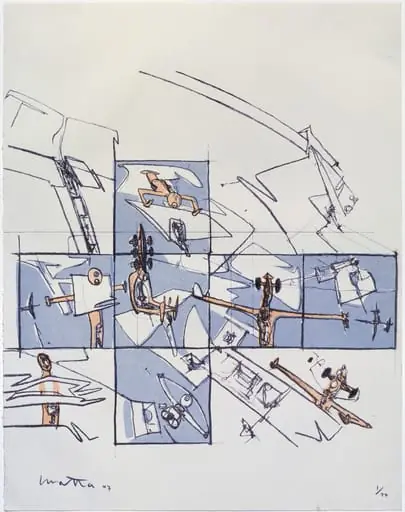
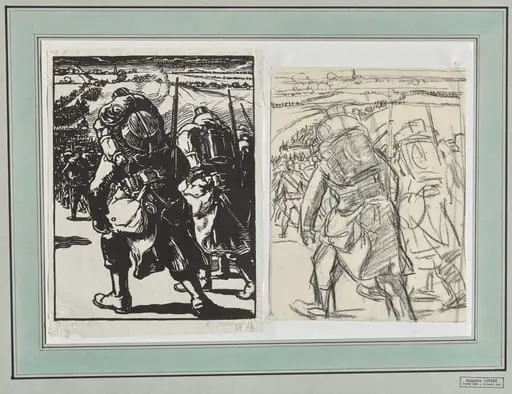
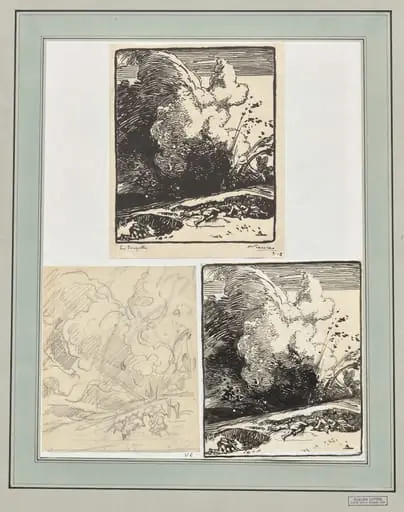
À bord d'un cruiseur anglais is a drawing by Auguste Lepère. It dates from 1914 and is held in the collection of the Cleveland Museum of Art.
About this work
Overview
Executed in watercolor, ink, and woodcut techniques, the work reflects Lepère’s interest in mechanical forms and his engagement with printmaking revival.
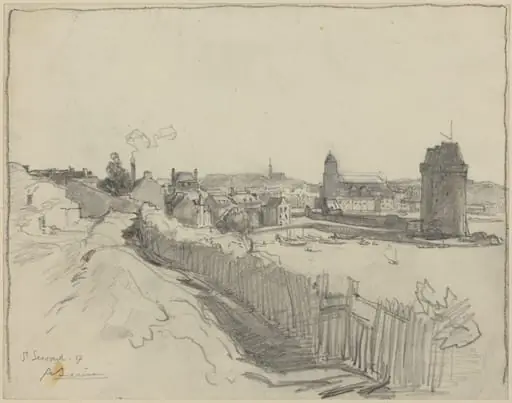
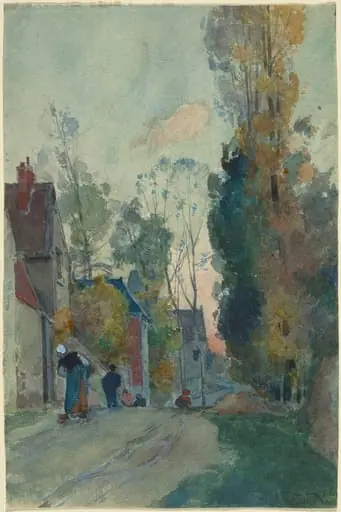
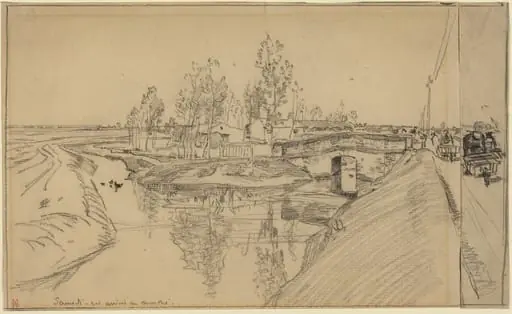
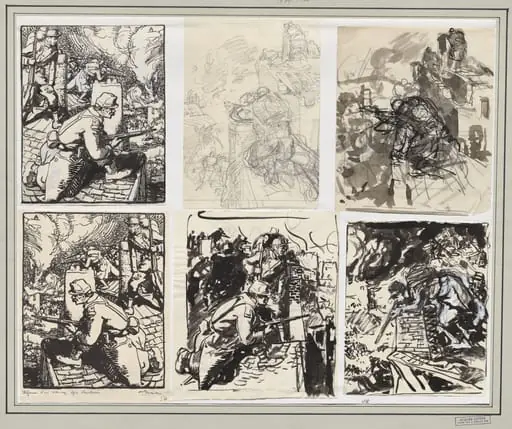
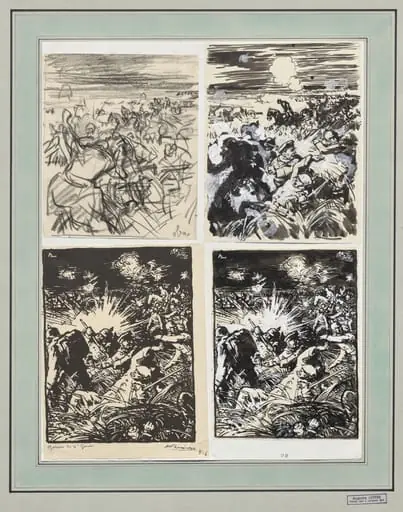
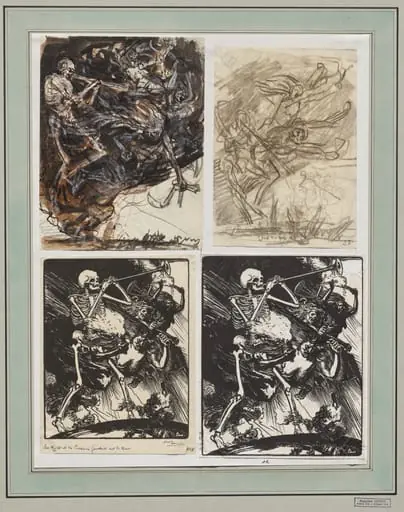
Created in 1914 by French artist Auguste Louis Lepère, this drawing captures the interior of an English cruiser’s engine room through four distinct visual studies. Executed in watercolor, ink, and woodcut techniques, the work reflects Lepère’s interest in mechanical forms and his engagement with printmaking revival. It resides in the collection of The Cleveland Museum of Art, where it exemplifies his experimental approach to depicting industrial spaces.
Subject & Meaning
The four panels portray the engine room’s complex machinery—gears, pipes, and a large central wheel—rendered with attention to their physical presence and movement. A human arm appears in each, suggesting labor within the machinery’s rhythm. Rather than glorifying the vessel, the work emphasizes the raw, intimate interaction between worker and machine, evoking the quiet intensity of industrial labor without overt narrative.
Technique & Style
Lepère employed varied methods across the panels: loose watercolor for atmospheric steam, sparse ink lines for structural clarity, and bold woodcut prints with minimal red accents to heighten contrast. The woodcut sections exhibit a graphic, almost typographic quality, resembling industrial stamps. The interplay of dark and light, particularly in the prints, uses chiaroscuro to define form and depth, transforming mechanical parts into sculptural masses.
History & Provenance
Lepère, a key figure in early 20th-century printmaking, produced this work during a period of renewed interest in wood engraving as a fine art medium. The drawing remained in private hands until acquired by The Cleveland Museum of Art, where it entered the collection as part of a broader effort to document modern European graphic art. Its survival in near-original condition underscores its significance as a study in technique and observation.
Context
Created on the eve of World War I, the drawing reflects a broader European fascination with industrial modernity. While many artists depicted war or urban life, Lepère turned to the hidden machinery of naval power—silent, functional, and human-scaled. His focus on the engine room aligns with contemporary shifts in art toward documenting labor and technology, away from idealized subjects toward the tangible realities of the machine age.
Legacy
Lepère’s work contributed to the legitimization of wood engraving as a medium for serious artistic expression. This drawing, with its hybrid techniques and unromantic subject, influenced later artists exploring industrial themes through print. Though not widely exhibited, it remains a quiet testament to his commitment to observing and translating mechanical environments with precision and respect.
Artist & collection
Artist
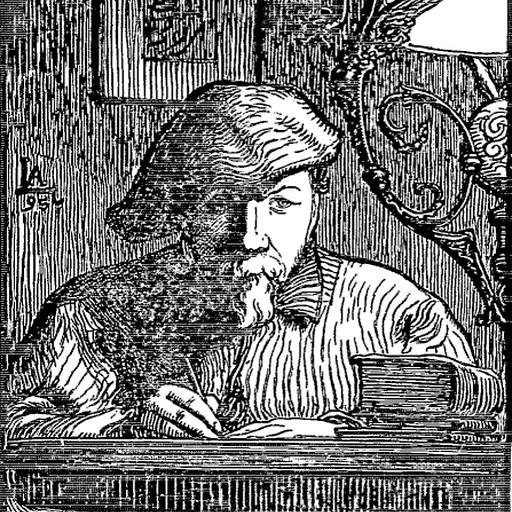
Louis-Auguste Lepère (30 November 1849 – 20 November 1918) was a French painter and etcher. Lepère is also considered a leader in the creative revival of wood engraving in Europe.