Artwork
View of the Hotel Colbert
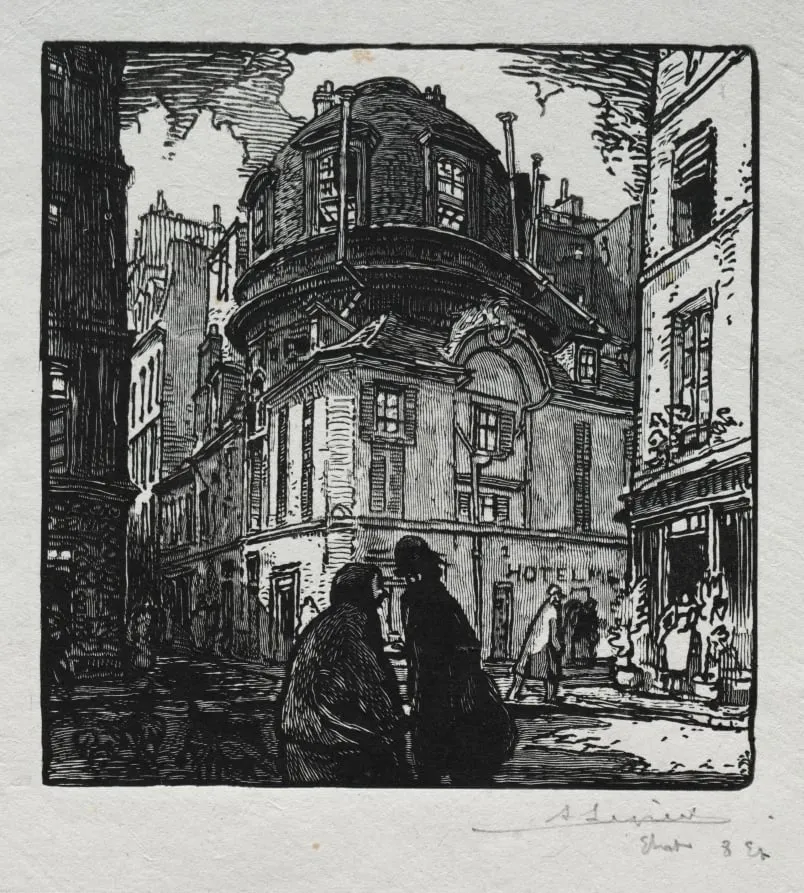
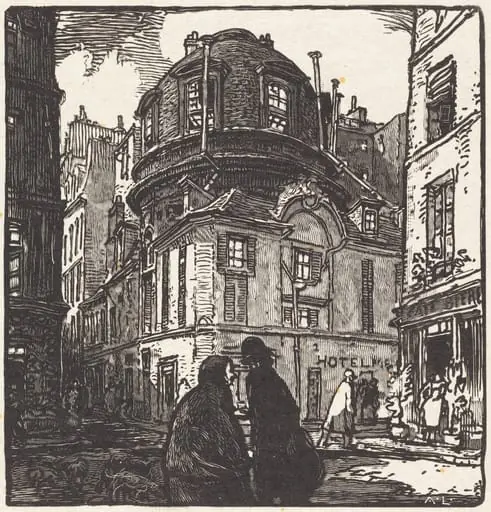
View of the Hotel Colbert is a print by Auguste Lepère. It dates from 1901 and is held in the collection of the Cleveland Museum of Art. Created in 1901 by French artist Auguste Louis Lepère, this wood engraving captures a nocturnal urban scene in Paris.
About this work
Overview
The print is part of the Cleveland Museum of Art’s collection and exemplifies his commitment to the technical rigor of traditional printmaking methods.
Created in 1901 by French artist Auguste Louis Lepère, this wood engraving captures a nocturnal urban scene in Paris. Lepère, instrumental in the revival of wood engraving as a fine art medium, rendered the view of the Hotel Colbert with precise, incised lines. The print is part of the Cleveland Museum of Art’s collection and exemplifies his commitment to the technical rigor of traditional printmaking methods.
Subject & Meaning
The scene depicts a quiet, dimly lit street at night, centered on the curved facade of the Hotel Colbert with its faintly illuminated windows. Two figures, cloaked and facing away, stand near the foreground, their presence amplifying the stillness. The empty street and distant silhouettes suggest solitude, evoking the quiet rhythm of urban life after hours. The visible 'HOTEL' sign anchors the location without overt narrative, inviting contemplation rather than storytelling.
Technique & Style
Lepère employed fine, controlled incisions in wood to achieve sharp contrasts between deep shadows and subtle highlights. The use of chiaroscuro enhances spatial depth, transforming the street into a stage-like composition. Buildings are rendered with meticulous detail, while the night air is suggested through gradations of tone rather than color. The technique emphasizes texture and form, reflecting the influence of Japanese woodblock prints and 19th-century revivalist print traditions.
History & Provenance
The print was made during a period when Lepère was actively promoting wood engraving as a serious artistic medium in Europe, moving beyond commercial reproduction. It entered the Cleveland Museum of Art’s collection in the 20th century, likely through acquisitions focused on modern European prints. Its preservation reflects institutional interest in the technical innovations of late 19th- and early 20th-century printmakers.
Context
Lepère’s work emerged amid a broader European revival of hand-printed techniques, reacting against industrialized reproduction. Parisian cityscapes were a common subject among printmakers of the era, capturing the transformation of urban life. The Hotel Colbert, a real building near the Louvre, symbolized the quiet elegance of Parisian architecture, contrasting with the city’s growing modernity and bustling daytime activity.
Legacy
Lepère’s prints, including this one, helped reestablish wood engraving as a vehicle for artistic expression rather than mere illustration. His precise technique influenced subsequent generations of printmakers interested in tonal subtlety and structural clarity. Though not widely known today, his contributions remain significant in the history of printmaking’s evolution in modern art.
Artist & collection
Artist
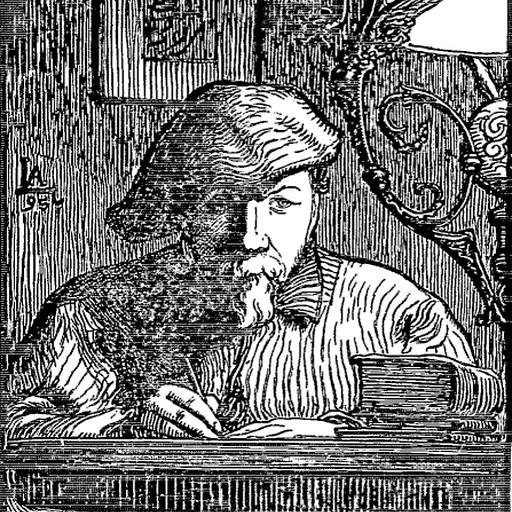
Louis-Auguste Lepère (30 November 1849 – 20 November 1918) was a French painter and etcher. Lepère is also considered a leader in the creative revival of wood engraving in Europe.

 L'ancienne academie de medecine
 Rue des Marmousets (Old Paris)
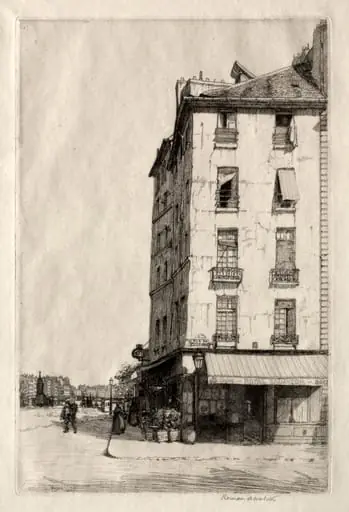 Quay Montebello
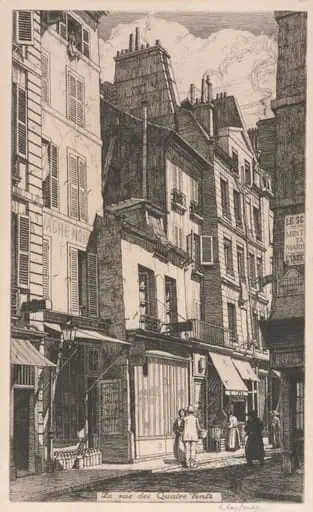 La rue des Quatre Vents
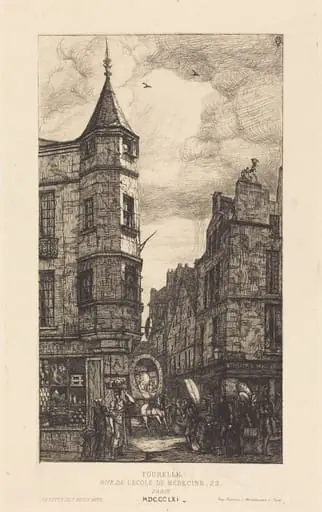 Tourelle, Rue de l'École de Médecine, 22, Paris
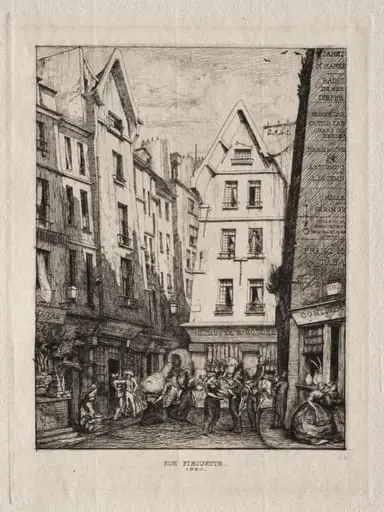 Pirouette Street, near the Markets, Paris
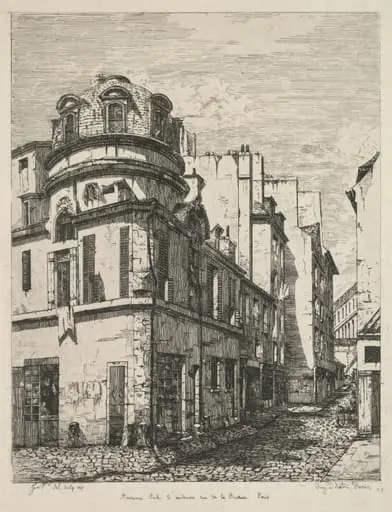 Eaux-Fortes sur le Vieux Paris: Ancienne école de médecine rue de la Bûcherie (Etchings of Old Paris: Former Medical School, rue de la Bucherie)
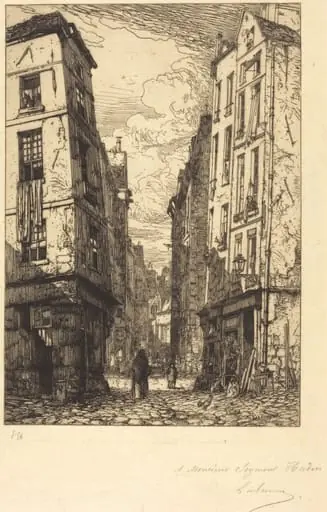 Rue des Marmousets (Quartier de la cite, vieux Paris)
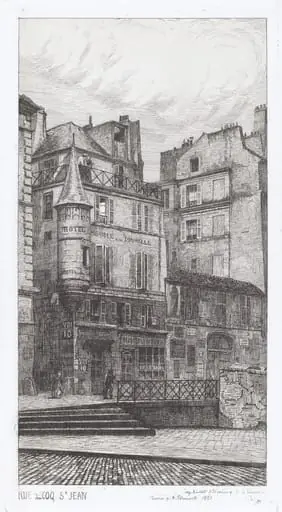 Rue du Coq St. Jean
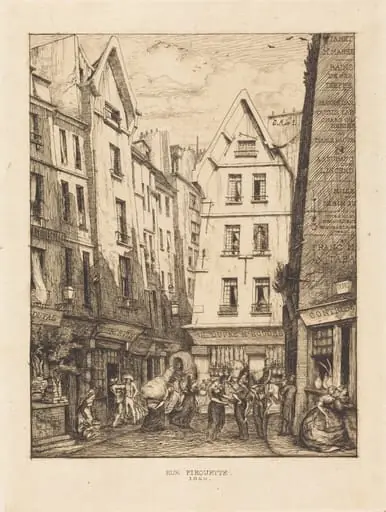 La Rue Pirouette aux halles, Paris (Pirouette Street, Near the Markets, Paris)
 House with a Turret, rue de la Tixéranderie, Paris
 Paris Street Scene