Artwork
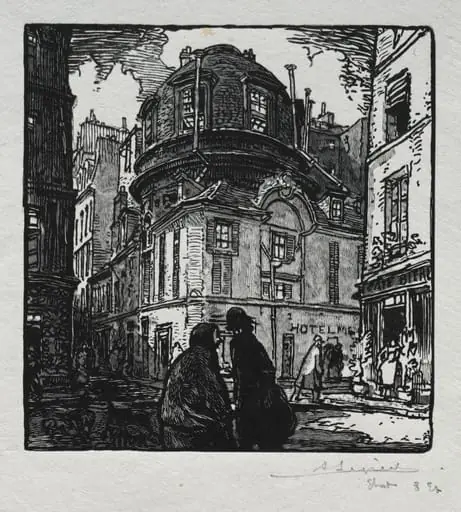
L'ancienne academie de medecine
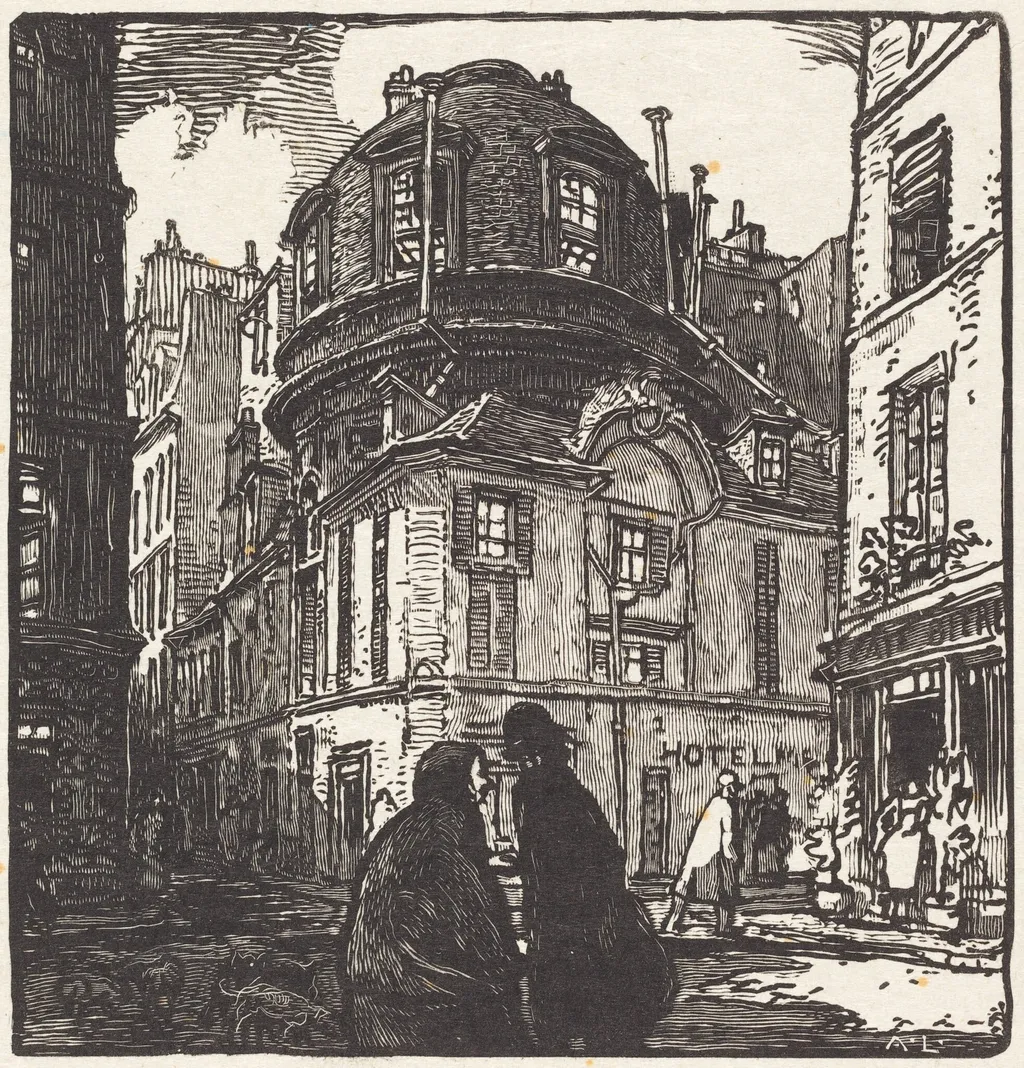
L'ancienne academie de medecine is an ink print by Auguste Lepère. It dates from 1901 and is held in the collection of the National Gallery of Art.
About this work
Overview
The work belongs to a series documenting historic Parisian buildings, reflecting his interest in preserving urban heritage through printmaking.
Created in 1901 by French artist Auguste Lepère, this wood engraving captures the former Academy of Medicine in Paris. Lepère, known for revitalizing wood engraving as a fine art medium in late 19th-century Europe, employed precise hand-carved lines to render architectural detail. The work belongs to a series documenting historic Parisian buildings, reflecting his interest in preserving urban heritage through printmaking.
Subject & Meaning
The engraving portrays the imposing structure of the old Academy of Medicine, a symbol of institutional medical authority in pre-modern Paris. Flanked by surrounding buildings and punctuated by chimneys, the scene suggests a lived urban environment rather than a sterile institution. Two figures in the foreground and a third walking nearby imply daily activity, grounding the building in the rhythm of city life rather than elevating it as a monument.
Technique & Style
Lepère used hand-carved wood blocks to achieve fine, controlled lines and dense tonal gradations. The intricate patterning of brickwork, roof tiles, and window frames demonstrates mastery of the medium’s capacity for detail. Shading is achieved through cross-hatching and varying line density, creating depth without wash or tone. The composition balances architectural solidity with subtle human presence, emphasizing texture over dramatic lighting.
History & Provenance
The Academy of Medicine, originally located on the Left Bank, was demolished in the late 19th century. Lepère’s engraving, made in 1901, serves as a documentary record of the building before its disappearance. The print was likely produced for a private or scholarly audience interested in Parisian architectural history, and examples survive in institutional collections, including the Bibliothèque nationale de France.
Context
Lepère worked during a period of rapid urban transformation in Paris, when historic structures were being replaced by modern infrastructure. His wood engravings of demolished or altered buildings formed part of a broader cultural effort to preserve visual memory of the city’s past. This work aligns with contemporaneous movements in France that valued craftsmanship and historical documentation over industrial progress.
Legacy
Lepère’s engravings, including this one, helped reestablish wood engraving as a serious artistic medium in Europe, distinct from commercial illustration. His meticulous approach influenced later printmakers interested in architectural subjects and historical preservation. Though not widely exhibited today, his works remain important references for scholars studying late 19th-century French print culture and urban memory.
Artist & collection
Artist
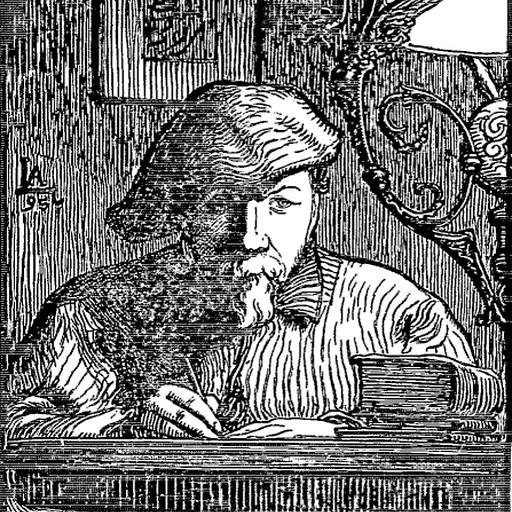
Louis-Auguste Lepère (30 November 1849 – 20 November 1918) was a French painter and etcher. Lepère is also considered a leader in the creative revival of wood engraving in Europe.

 View of the Hotel Colbert
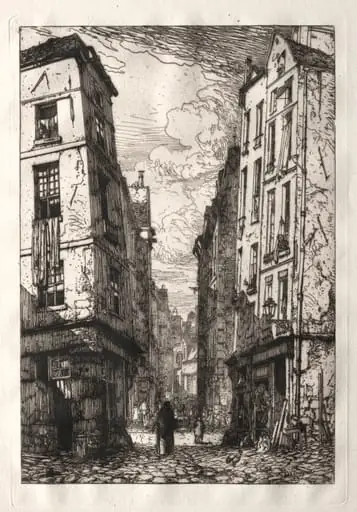 Rue des Marmousets (Old Paris)
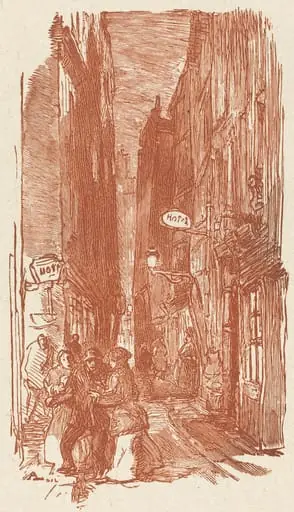 Rue Saint-Severin
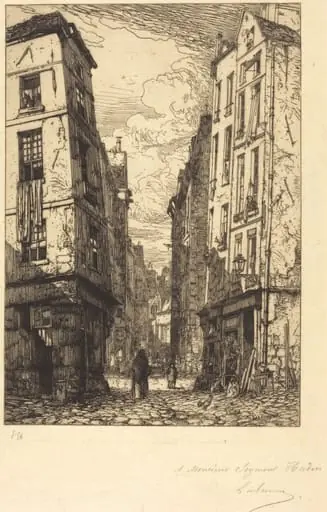 Rue des Marmousets (Quartier de la cite, vieux Paris)
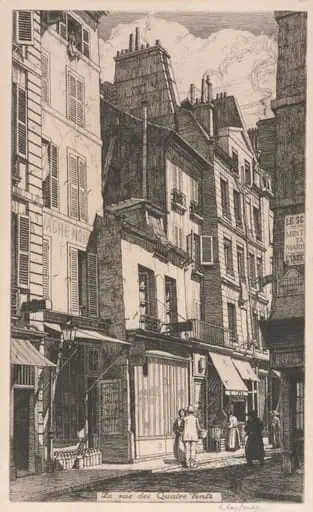 La rue des Quatre Vents
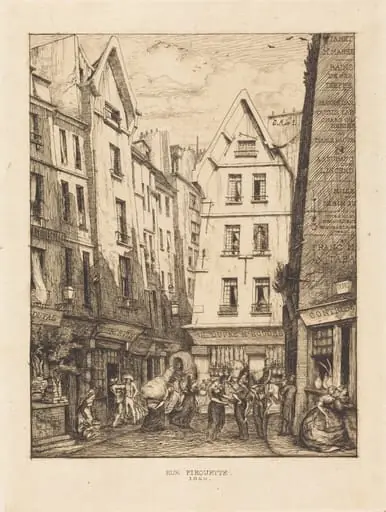 La Rue Pirouette aux halles, Paris (Pirouette Street, Near the Markets, Paris)
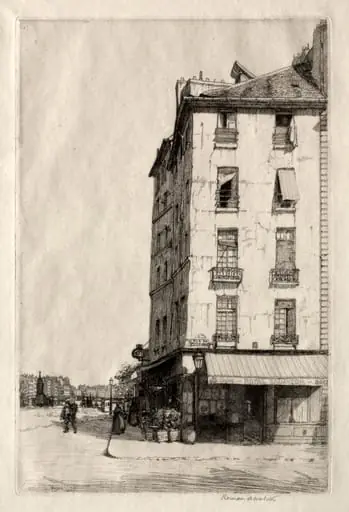 Quay Montebello
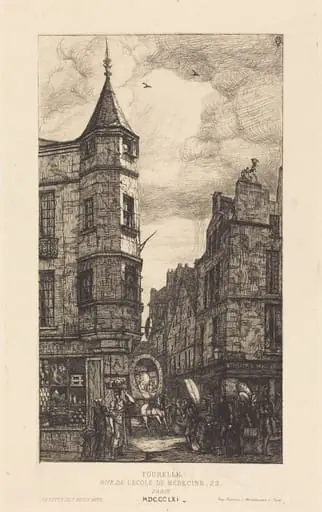 Tourelle, Rue de l'École de Médecine, 22, Paris
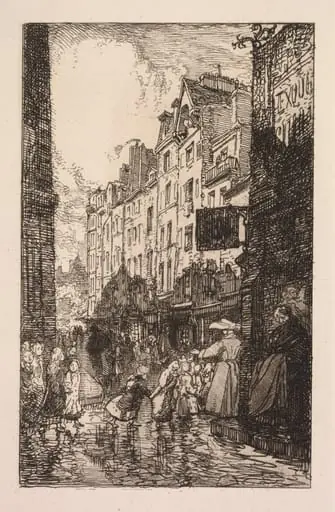 La Biévre, Les Gobelins, Saint-Séverin: Le Quartier Saint-Séverin: La Rue des Prêtres Saint-Séverin
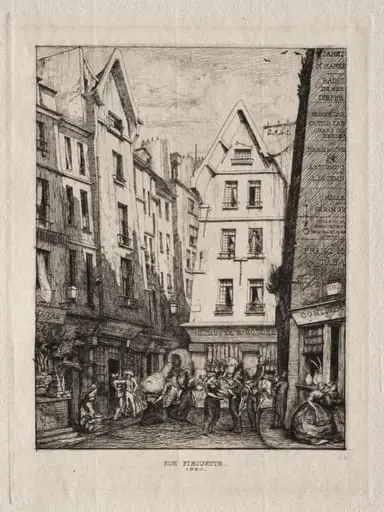 Pirouette Street, near the Markets, Paris
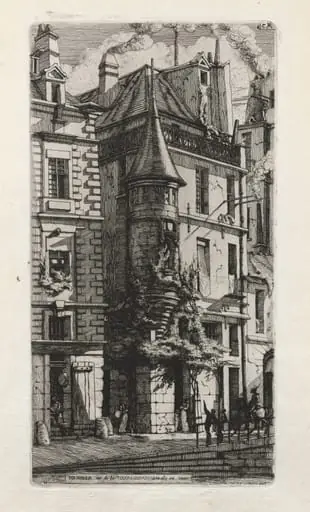 House with a Turret, rue de la Tixéranderie, Paris
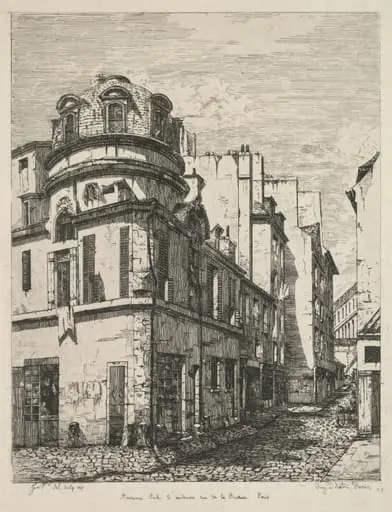 Eaux-Fortes sur le Vieux Paris: Ancienne école de médecine rue de la Bûcherie (Etchings of Old Paris: Former Medical School, rue de la Bucherie)