Artwork
The Seconda Macchina for the Chinea of 1776: A Palace with a Loggia for the Lottery Draw
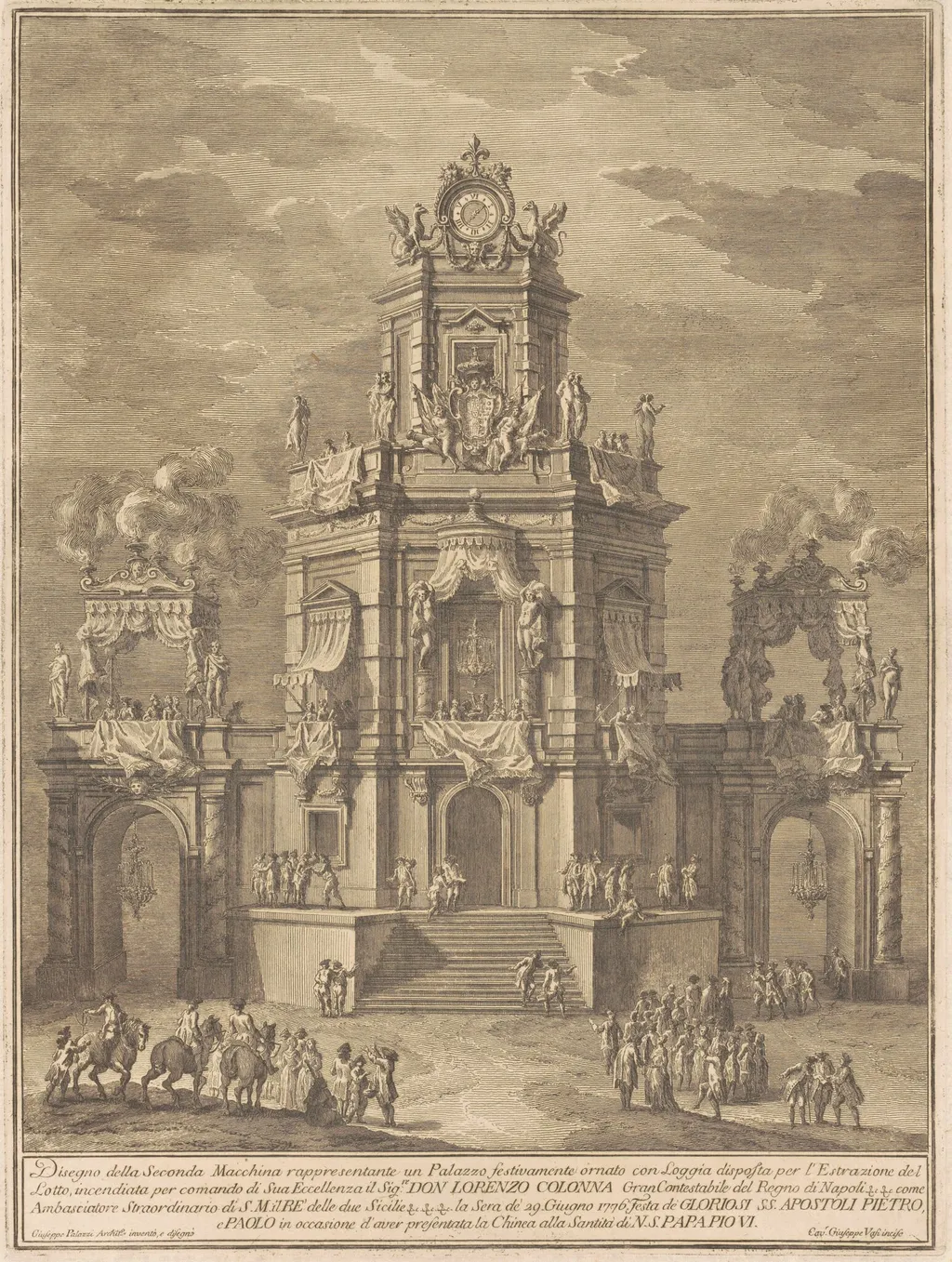
The Seconda Macchina for the Chinea of 1776: A Palace with a Loggia for the Lottery Draw is an ink print by the Romanticist artist Giuseppe Vasi. It dates from 1776 and is held in the collection of the National Gallery of Art.
About this work
Overview
Giuseppe Vasi’s 1776 etching, titled The Seconda Macchina for the Chinea, depicts a lavish palace with a loggia used for a public lottery drawing. The composition centers on a clock tower flanked by ornate façades, while a bustling crowd gathers on the steps and in the surrounding streets.
Subject & Meaning
The work records a ceremonial event linked to the Chinea lottery, a charitable fundraising tradition. Figures in period dress, including riders and pedestrians, populate the scene, emphasizing the communal nature of the occasion and the civic pride associated with the building’s public function.
Technique & Style
Executed in fine‑line etching, Vasi renders architectural detail and textile folds with meticulous precision. The delicate incisions create a sense of depth, allowing the viewer to discern individual statues, roof ornaments, and the multitude of tiny figures that animate the composition.
History & Provenance
Created in 1776, the print was originally produced to commemorate the second machine (Seconda Macchina) employed in the Chinea lottery. It circulated as a printed record of the event, though its later ownership history remains sparsely documented.
Context
The etching belongs to a period when Vasi documented Rome’s urban landscape and public spectacles. The Chinea lottery, tied to papal charity, was a prominent civic ritual, and the palace’s loggia served as the official venue for the draw, reflecting the intertwining of architecture and public ceremony in 18th‑century Rome.
Artist & collection

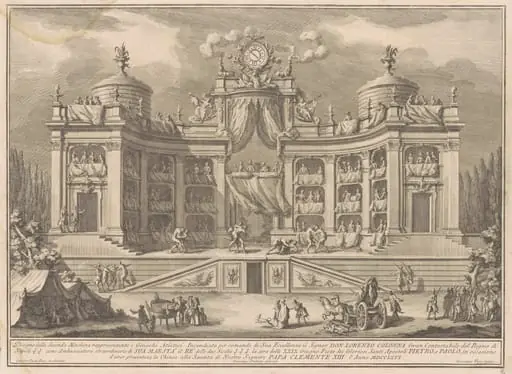 The Seconda Macchina for the Chinea of 1766: A Theater for Athletic Games
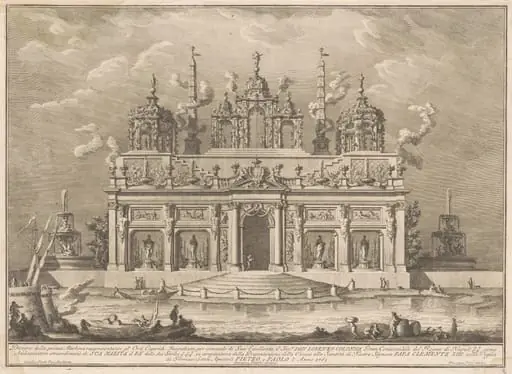 The Prima Macchina for the Chinea of 1765: The Garden of the Hesperides
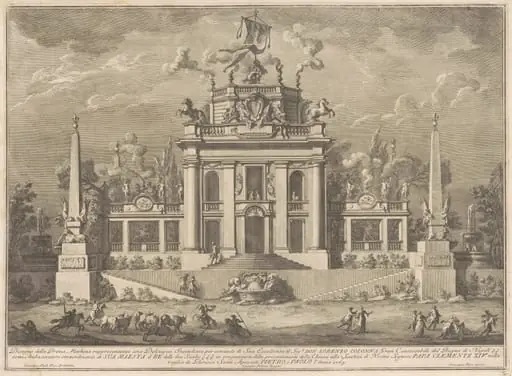 The Prima Macchina for the Chinea of 1769: A "Deliziosa"
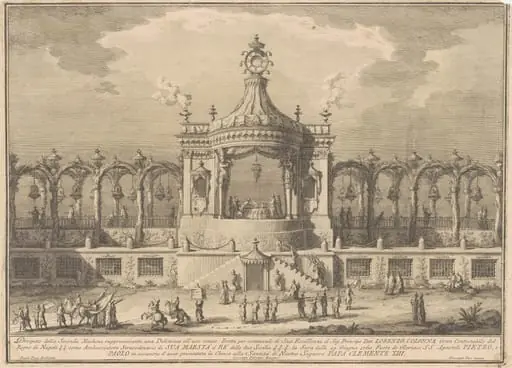 The Seconda Macchina for the Chinea of 1760: A Chinoiserie Pavilion
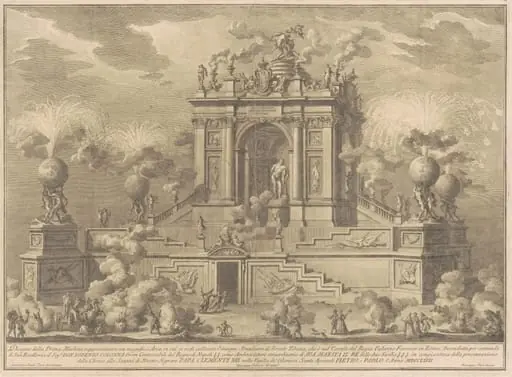 The Prima Macchina for the Chinea of 1767: A Triumphal Arch with the Farnese Hercules
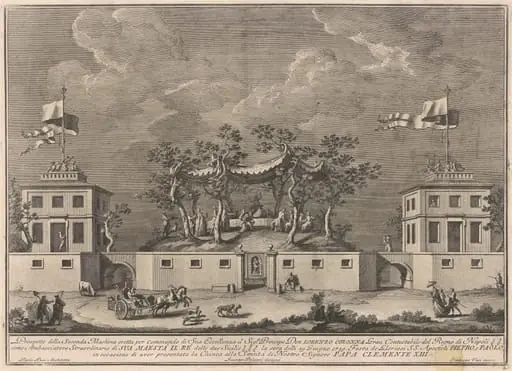 The Seconda Macchina for the Chinea of 1759: A "Deliziosa" with a Bacchanal
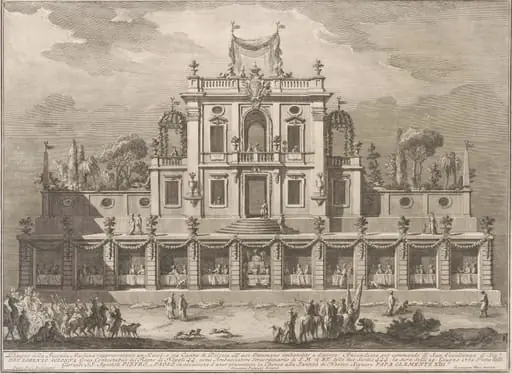 The Seconda Macchina for the Chinea of 1762: A Kiosk, or Pleasure-House in Ottoman Style
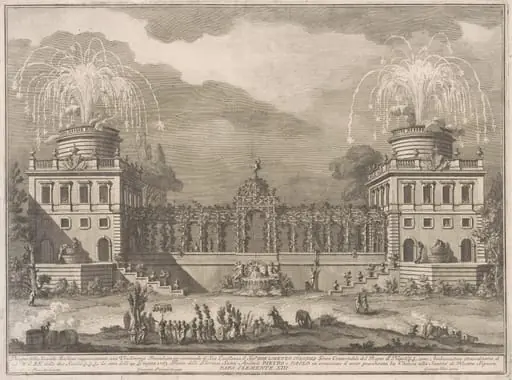 The Seconda Macchina for the Chinea of 1763: The Grape Harvest
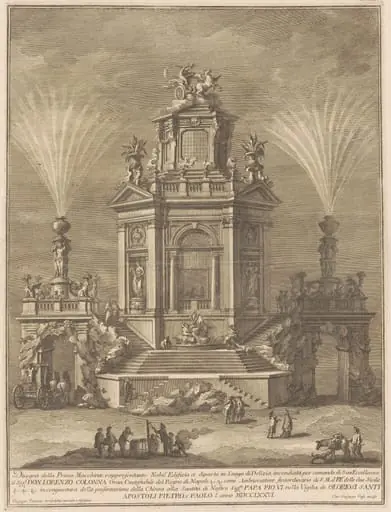 The Prima Macchina for the Chinea of 1776: A Pleasure Palace
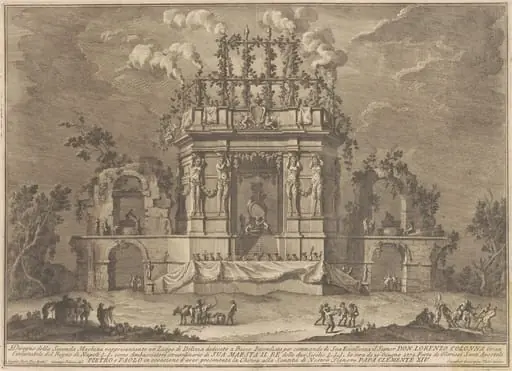 The Seconda Macchina for the Chinea of 1771: A Pleasure Palace Dedicated to Bacchus
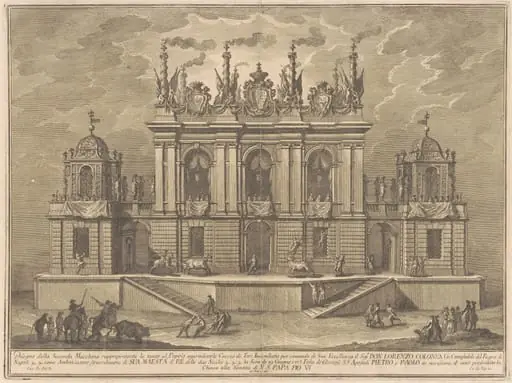 The Seconda Macchina for the Chinea of 1775: A Bull-fight
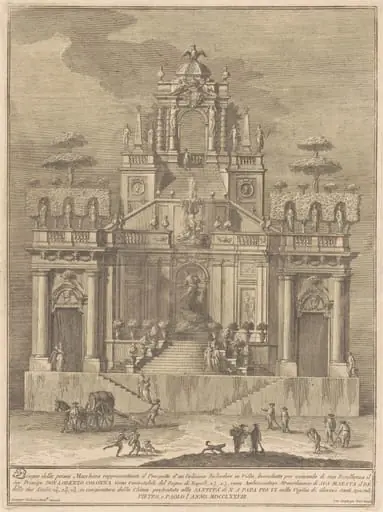 The Prima Macchina for the Chinea of 1778: A Countryside Belevedere with Hercules and Antaeus
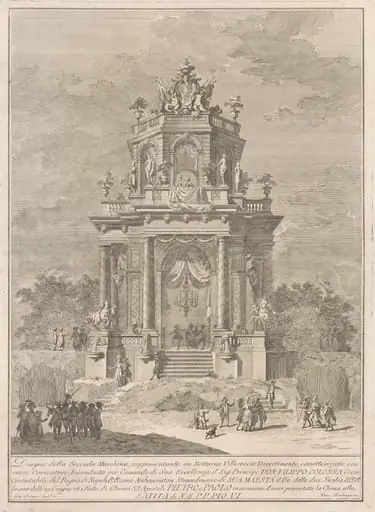 The Seconda Macchina for the Chinea of 1782: A Countryside Festival at Night
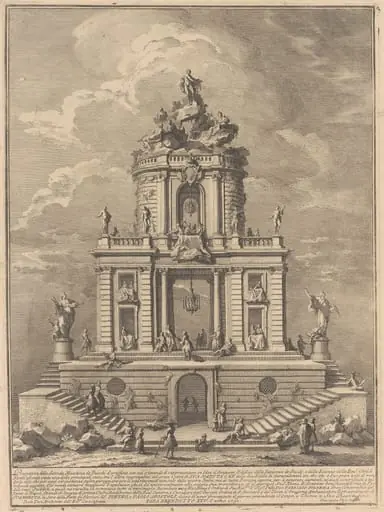 The Seconda Macchina for the Chinea of 1751: The Palace of Wisdom, Studies, and the Sciences
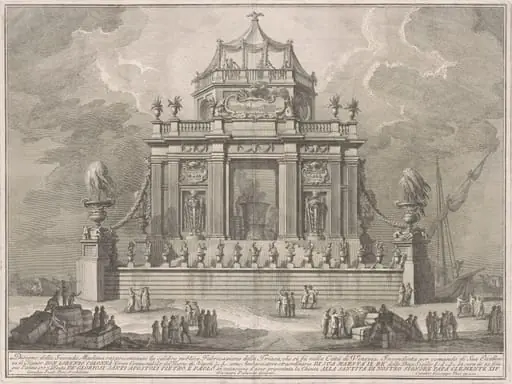 The Seconda Macchina for the Chinea of 1773: The Preparation of Theriac in Venice
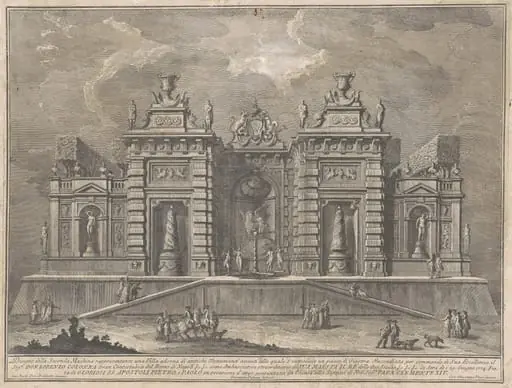 The Seconda Macchina for the Chinea of 1774: A Villa with Ancient Monuments and a Game of "Giostra"
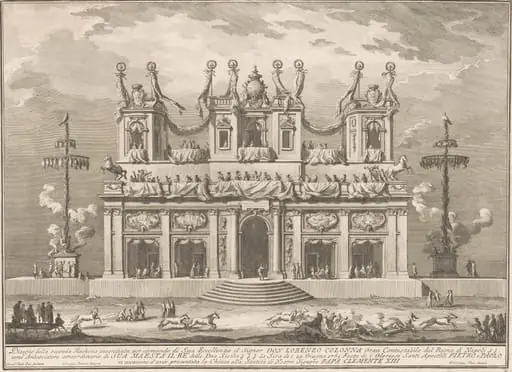 The Seconda Macchina for the Chinea of 1765: A Decorated Building with Cockaigne Poles
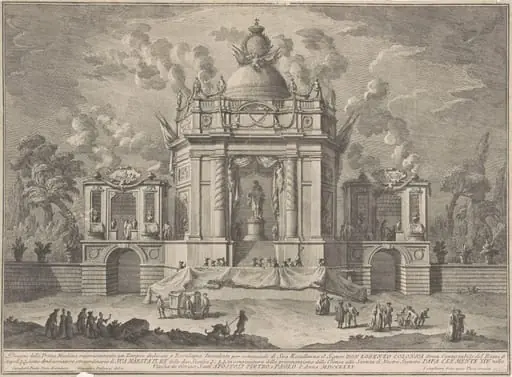 The Prima Macchina for the Chinea of 1771: The Temple of Asclepius
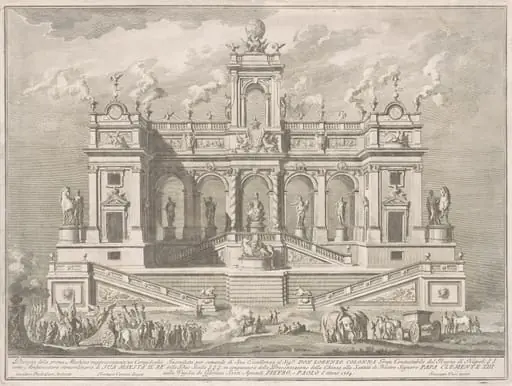 The Prima Macchina for the Chinea of 1764: A Capitol Building