Artwork
Untitled
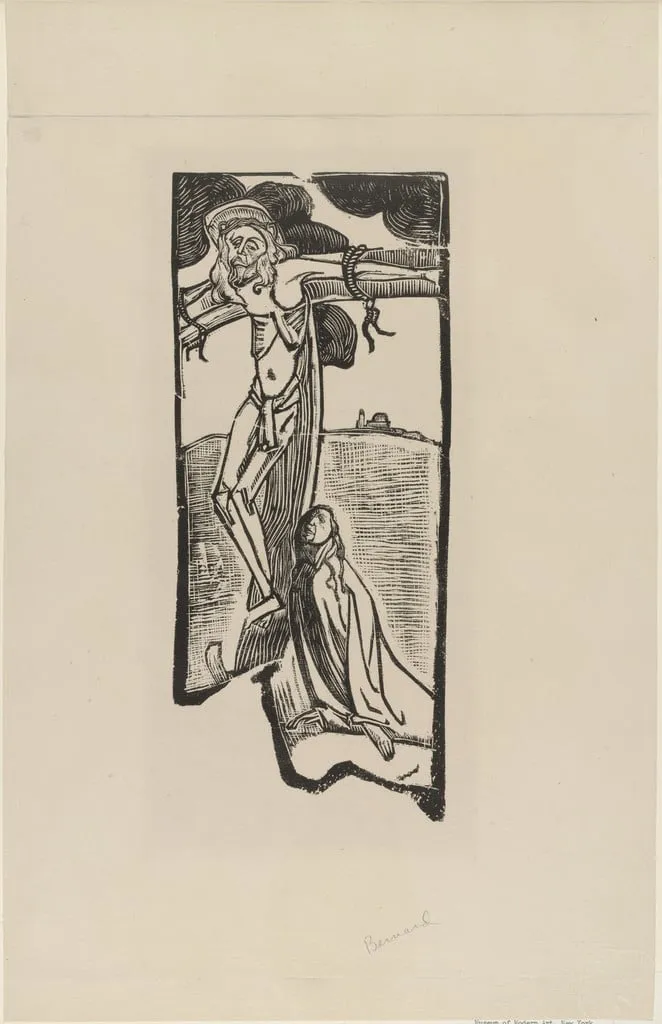
Untitled is an ink print by the Impressionist artist Émile Bernard. It dates from 1890 and is held in the collection of the Museum of Modern Art.
About this work
Overview
It belongs to a small portfolio that challenged prevailing notions of print as a mechanical medium.
Created around 1890, this woodcut by French artist Émile Bernard is one of several prints produced during a period when he sought to elevate printmaking as an independent art form. Rather than serving as a reproduction, the work was intended as an original expression, using the directness of carved wood to convey emotional and formal intensity. It belongs to a small portfolio that challenged prevailing notions of print as a mechanical medium.
Subject & Meaning
The figure is a solitary, bearded man with hands clasped, standing upright in a simplified, almost hieratic pose. The absence of context or narrative detail shifts focus to the figure’s stillness and inwardness. Bernard’s choice of a generic, contemplative male form aligns with Synthetist ideals—reducing reality to essential forms to evoke spiritual or emotional resonance rather than depict a specific person or scene.
Technique & Style
The image is executed in a rough, hand-carved woodcut style, with jagged lines and uneven ink application that emphasize the artist’s physical engagement with the block. Bold, unmodulated contours enclose flat planes of black and white, reflecting Cloisonnist principles. The crude texture and deliberate lack of refinement underscore Bernard’s interest in raw, immediate expression over polished technique.
History & Provenance
Bernard produced this print during his time in Brittany, where he collaborated closely with Paul Gauguin and other artists exploring non-naturalistic forms. It was included in a limited series of prints circulated among avant-garde circles, intended to demonstrate the artistic potential of woodcut beyond commercial reproduction. Its early circulation helped establish Bernard’s reputation as a printmaker committed to experimental methods.
Context
In the late 1880s and early 1890s, artists in France rejected academic realism in favor of symbolic and decorative approaches. Bernard’s woodcut emerged alongside broader efforts to revive handcrafted printmaking as a vehicle for personal vision. His work responded to Japanese ukiyo-e prints and medieval woodcuts, merging their formal clarity with contemporary spiritual concerns in post-Impressionist art.
Legacy
Bernard’s woodcut contributed to the redefinition of printmaking in modern art, influencing later Expressionist and Nabi artists who valued directness and emotional economy. Its unpolished aesthetic challenged the hierarchy between fine art and craft, helping to legitimize woodcut as a medium for serious artistic inquiry rather than mere illustration or reproduction.
Artist & collection
Artist
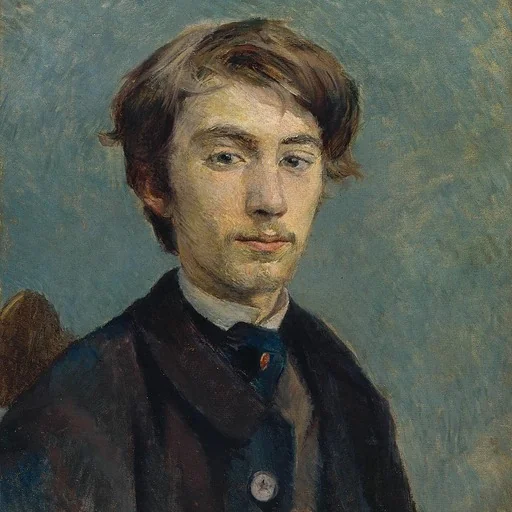
Émile Henri Bernard (French pronunciation: ; 28 April 1868 – 16 April 1941) was a French Post-Impressionist painter and writer, who had artistic friendships with Vincent van Gogh, Paul Gauguin and Eugène Boch, and at a later time, Paul…

 Christ
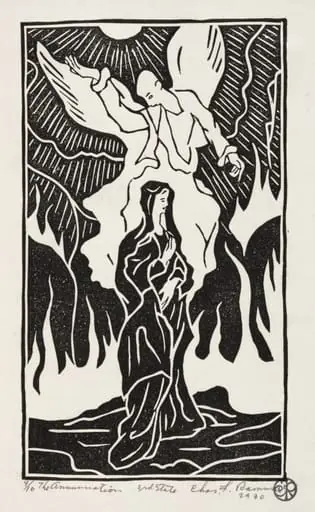 The Annunciation, Christmas Card for 1929
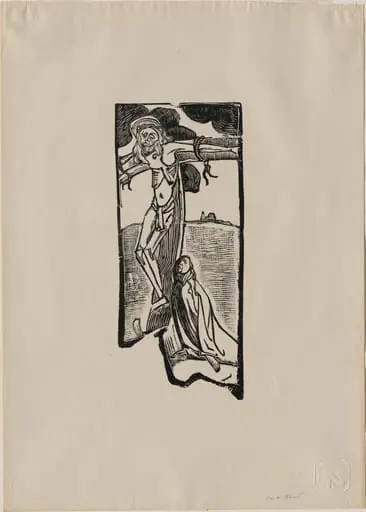
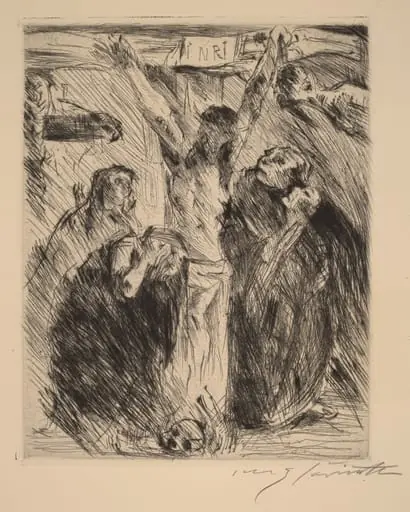 Kreuzigung, nach dem Altarbild in Tölz (Crucifixion, after the Altarpiece at Tölz)
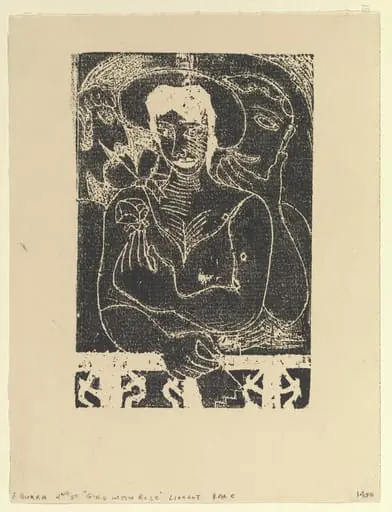 Untitled
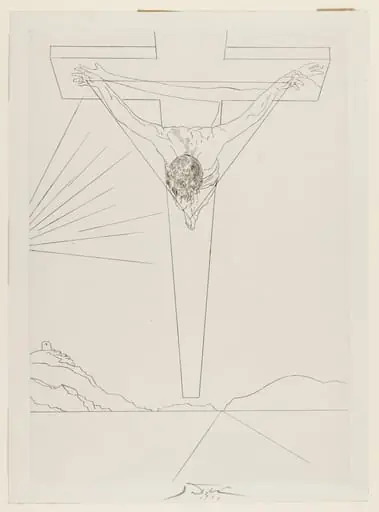 Untitled
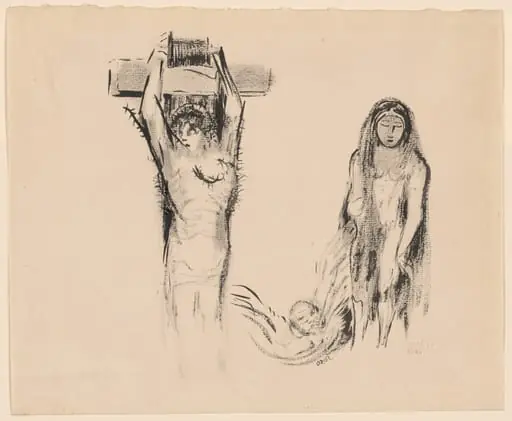 Saint Anthony and the Two Temptresses (Saint Antoine et deux Tentatrices)
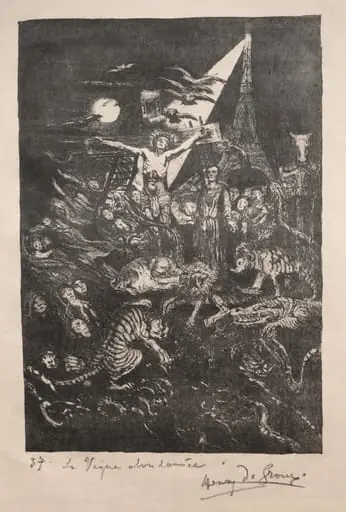 The Vintages!: The Abandoned Vine
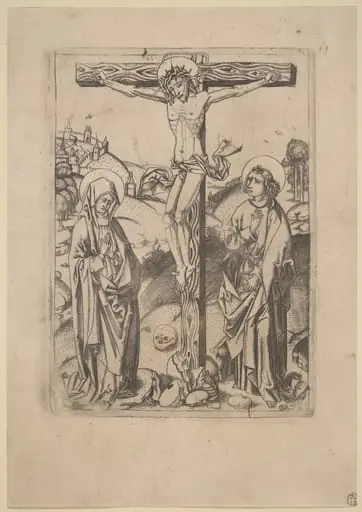 The Crucifixion
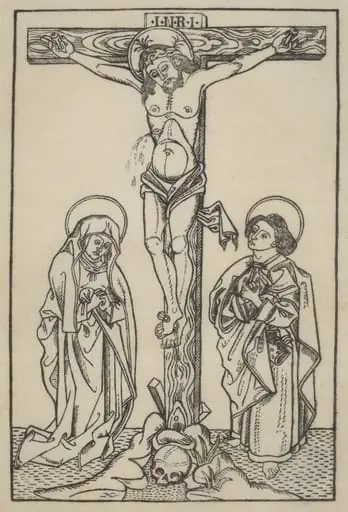 Christ on the Cross
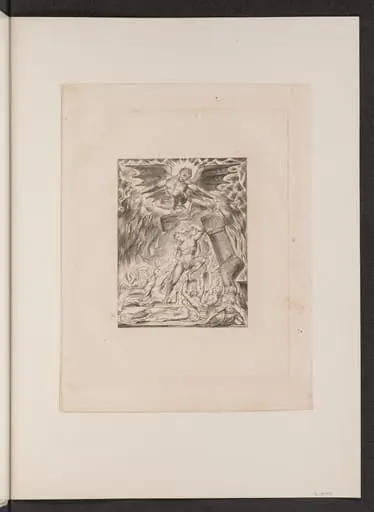 Job's Sons and Daughters Overwhelmed by Satan
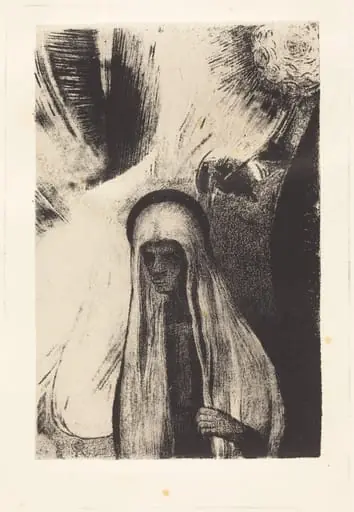 La Vieille: Que Crains-tu? Un large trou Noir! Il est vide peut-etre? (What are you afraid of? A wide black hole! It is empty, perhaps!)
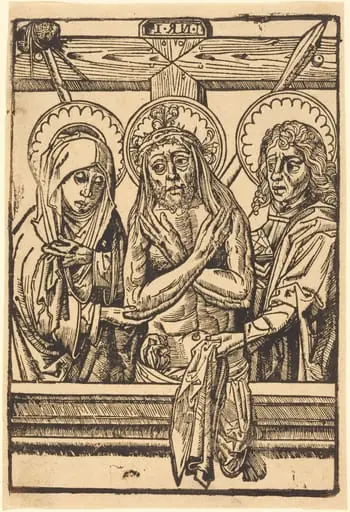 Christ between Maria and John