Artwork
Begraef-plaets der Joden, buyten Amsteldam (Jewish Cemetery outside Amsterdam)
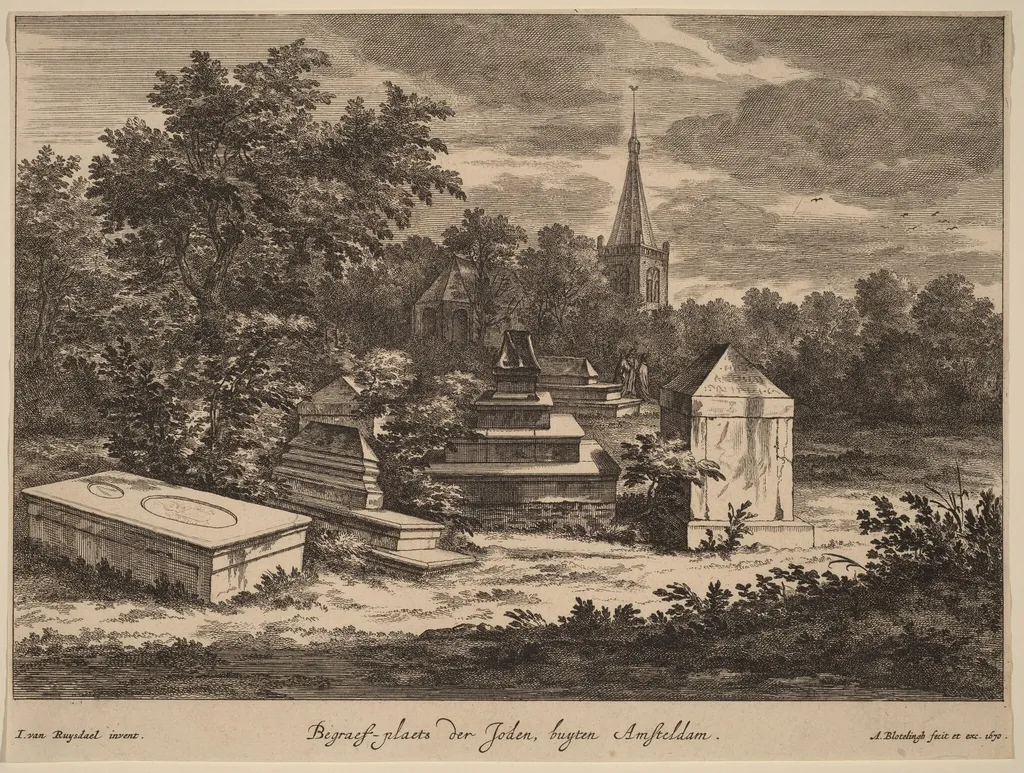
Begraef-plaets der Joden, buyten Amsteldam (Jewish Cemetery outside Amsterdam) is an ink print by the Baroque artist Abraham Blooteling. It dates from 1670 and is held in the collection of the National Gallery of Art.
About this work
Overview
Abraham Blooteling’s 1670 etching, titled *Begraef-plaets der Joden, buyten Amsteldam*, depicts a Jewish burial ground situated beyond the walls of Amsterdam. Executed on laid paper, the monochrome image presents a landscape of uneven terrain dotted with a variety of tombstones, some lying flat, others piled in modest stacks, all under a distant church steeple framed by trees.
Subject & Meaning
The work records a specific communal space: a cemetery used by Amsterdam’s Jewish population in the seventeenth century. By foregrounding the modest gravestones and the surrounding natural environment, Blocheling conveys both the humility of the burial site and its integration into the broader urban‑rural fringe, hinting at the coexistence of religious communities within the city’s periphery.
Technique & Style
Created through traditional copper‑plate etching, the print relies on fine incised lines and delicate hatching to render texture and depth. The artist’s control of line weight produces subtle gradations of tone, allowing the uneven ground, foliage, and architectural details of the distant steeple to emerge with clarity despite the limited palette of black on white.
History & Provenance
The etching was produced in 1670, a period when Dutch printmakers frequently documented local topography and social settings. While the original plate’s whereabouts are unknown, surviving impressions have appeared in several nineteenth‑century collections of Dutch prints, indicating the image’s continued relevance as a visual record of Amsterdam’s historic Jewish quarter.
Artist & collection

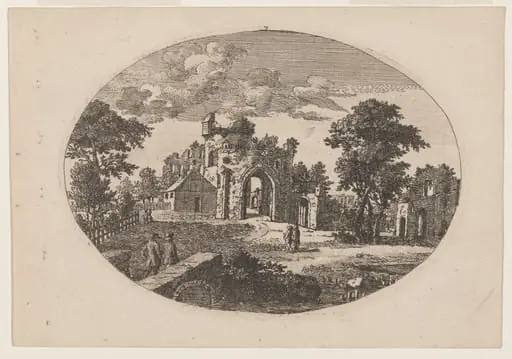 Ruins near a Stream, a Distant Building at the Foot of a Mountain
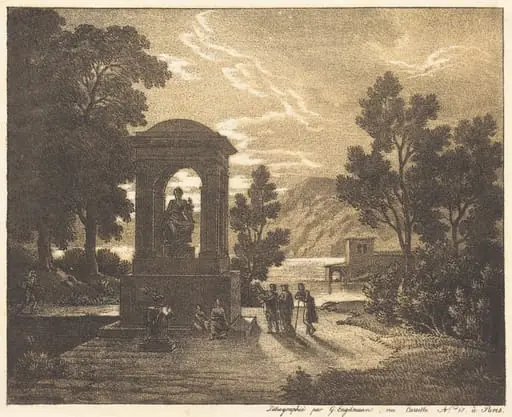 Classical Landscape
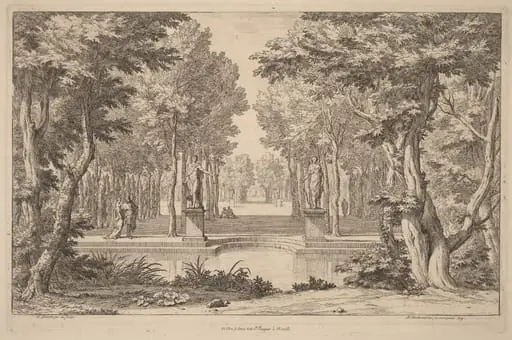 The Two Statues
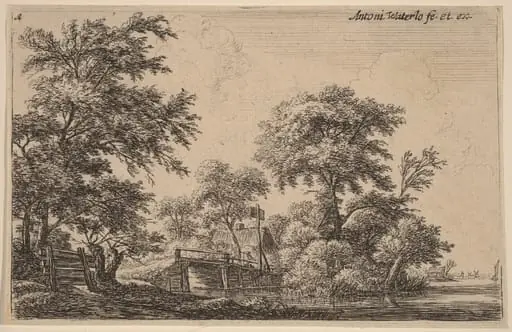 Planks Attached to Four Trees
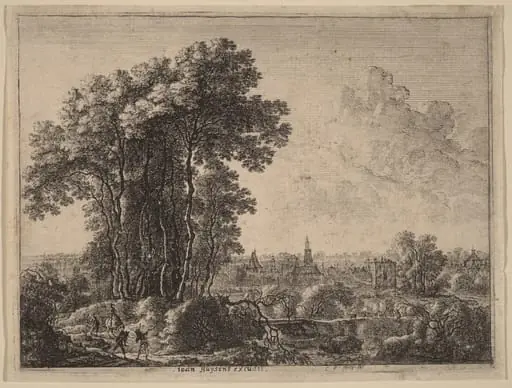 Landscape with Horseman and Three Travelers
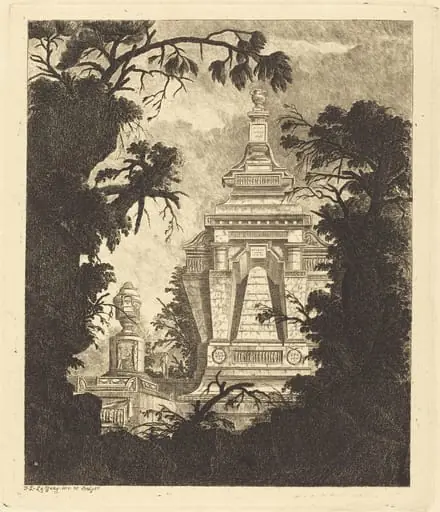 Tomb with Funerary Urn
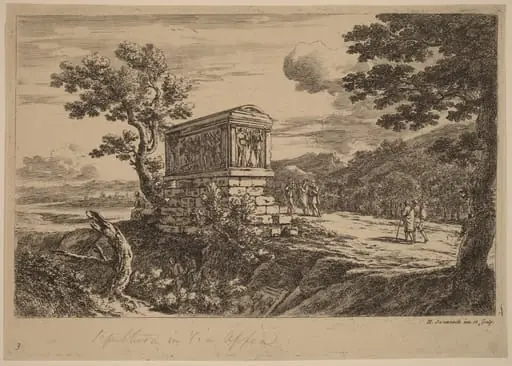 The Antique Sarcophagus
 Monastery in a Landscape
 Jardin du Cardinal Montalte
 Title Page
 Near Albury
 Camera sepolcrale