Artwork
Ornament
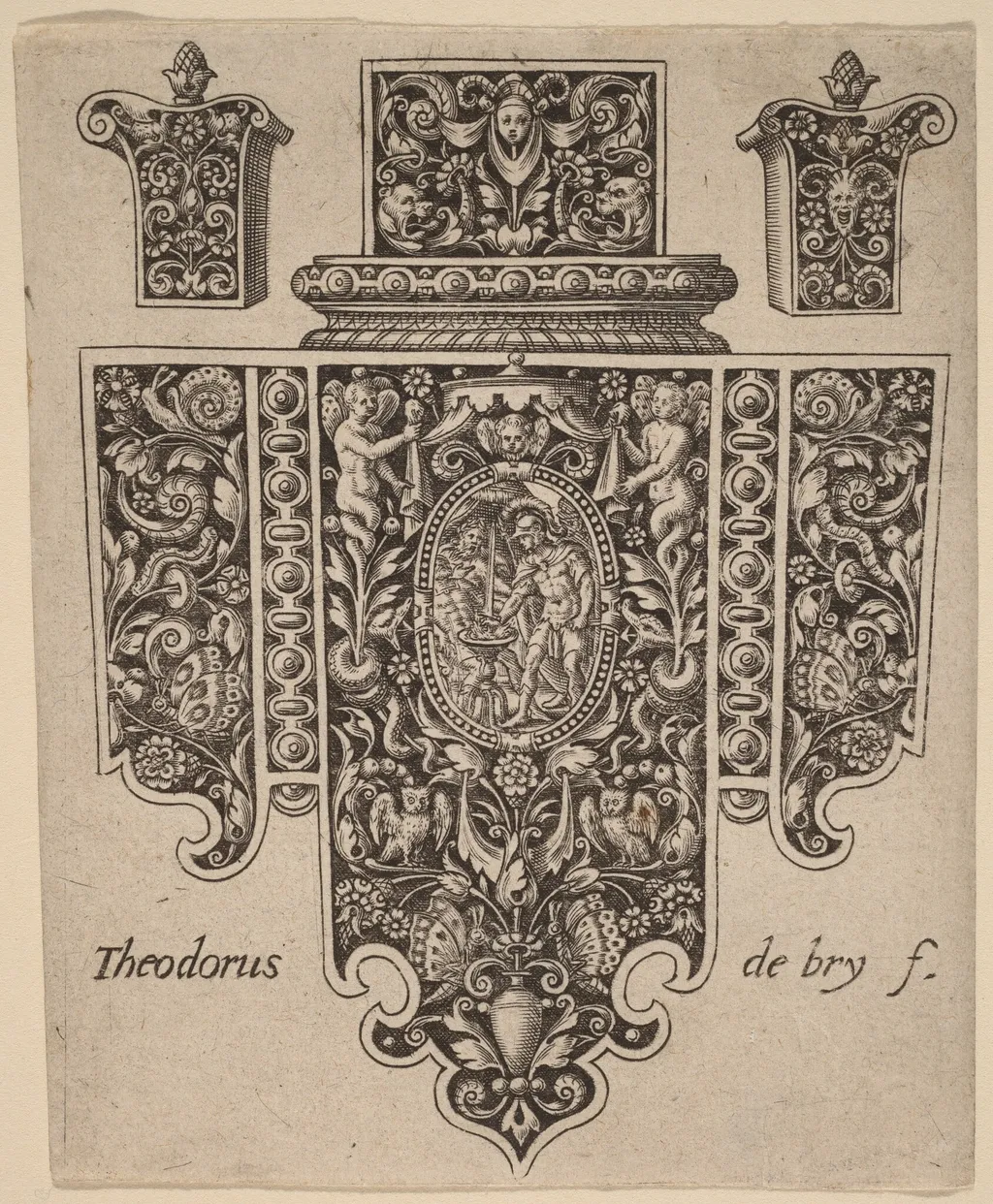
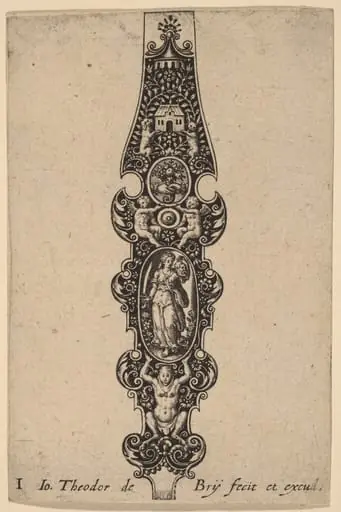
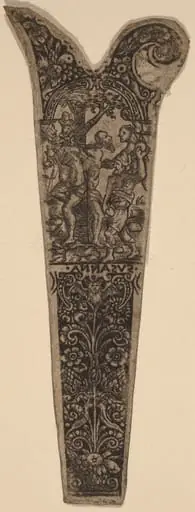
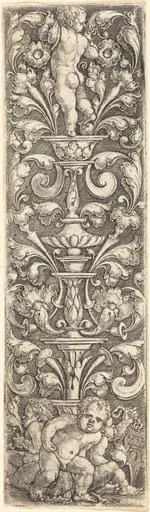
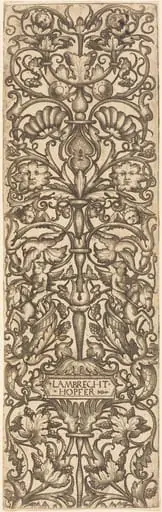
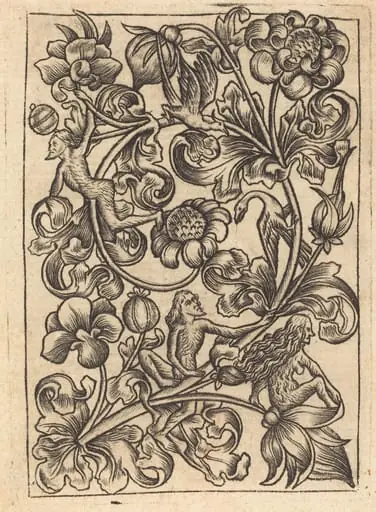
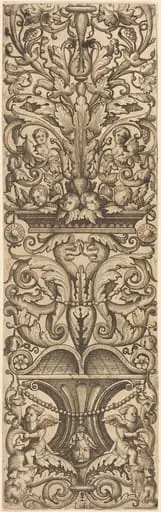
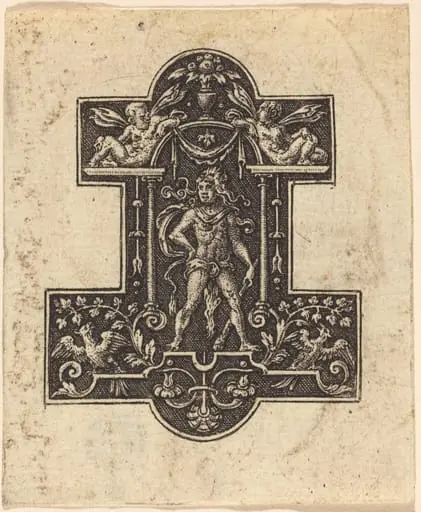
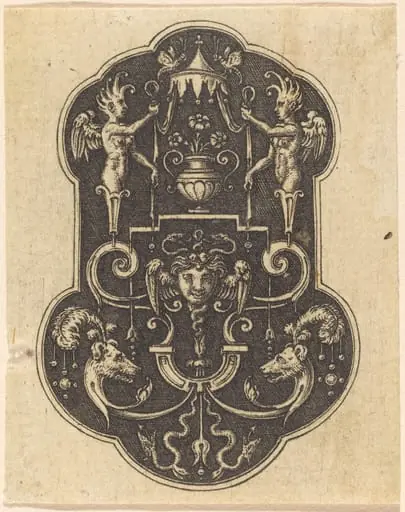
Ornament is an ink print by the Renaissance artist Theodor de Bry. It dates from 1563 and is held in the collection of the National Gallery of Art.
About this work
Overview
This piece exemplifies his technical precision and engagement with decorative arts, distinct from his later ethnographic illustrations.
Created in 1563 by Theodor de Bry, *Ornament* is an engraving produced during his years in Frankfurt, following his exile from the Spanish-controlled Southern Netherlands. As a Protestant artisan, de Bry’s migration shaped his career, leading him to specialize in detailed graphic work for publishers. This piece exemplifies his technical precision and engagement with decorative arts, distinct from his later ethnographic illustrations.
Subject & Meaning
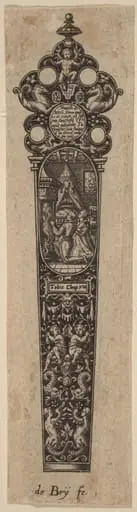
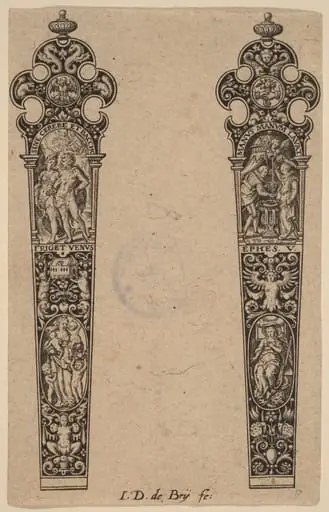
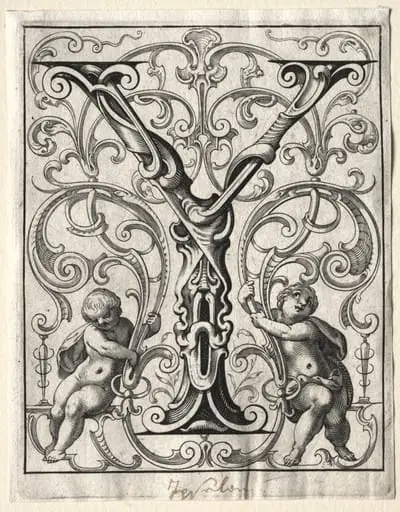
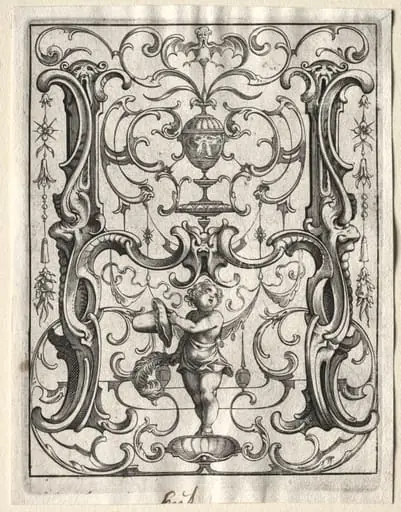
The composition presents an elaborate border of scrolling vines, foliage, and miniature human faces, framing a central medallion filled with intricate figures. Unlike narrative prints, this work serves no explicit story but functions as a decorative motif, likely intended for book frontispieces or architectural designs. The repetition of stylized forms reflects Renaissance ideals of harmony and ornamentation as expressions of intellectual refinement.
Technique & Style
Executed in fine black lines on a light ground, the engraving demonstrates de Bry’s mastery of the burin, a tool used to incise metal plates for printing. The density of cross-hatching and delicate contouring creates depth and texture, while the uniformity of line weight suggests meticulous planning. The signature 'Theodorus de Bry f.' confirms his role as both designer and craftsman, typical of artisan-printmakers of the era.
History & Provenance
De Bry produced this work after relocating from Liège to Strasbourg, Antwerp, and London, finally settling in Frankfurt—a hub for Protestant publishing. *Ornament* dates from his early period in Frankfurt, before his famous voyages to the Americas. It was likely printed for commercial use in books or as a standalone decorative sheet, circulating among printers and craftsmen seeking models for embellishment.
Context
In mid-16th-century Europe, engraved ornaments were essential for book design, architectural drawings, and metalwork templates. De Bry’s work aligned with a broader trend of revival in classical and Mannerist decorative motifs. His training as a goldsmith informed his precision, and his exile placed him within networks of Protestant intellectuals who valued printed imagery as both art and utility.
Legacy
Though less known than his colonial illustrations, *Ornament* represents de Bry’s foundational skill in graphic reproduction. His decorative engravings influenced contemporary printers and contributed to the standardization of visual motifs in Northern European publishing. The piece endures as evidence of the artisan’s adaptability and the central role of print culture in disseminating aesthetic forms across borders.
Artist & collection
Artist
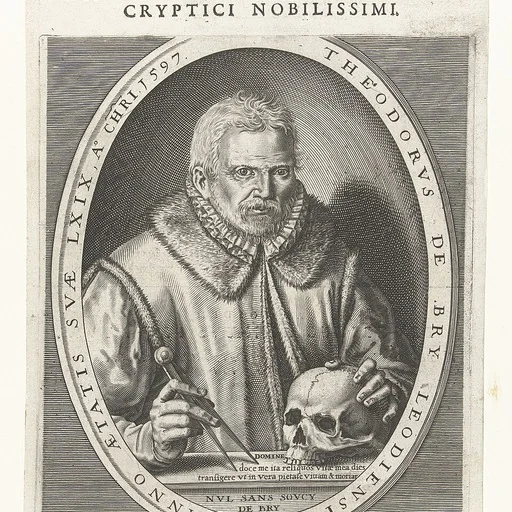
Theodor de Bry (also Theodorus de Bry; 1528 – 27 March 1598) was a Walloon engraver, goldsmith, editor and publisher, famous for his depictions of early European expeditions to the Americas.