Artwork
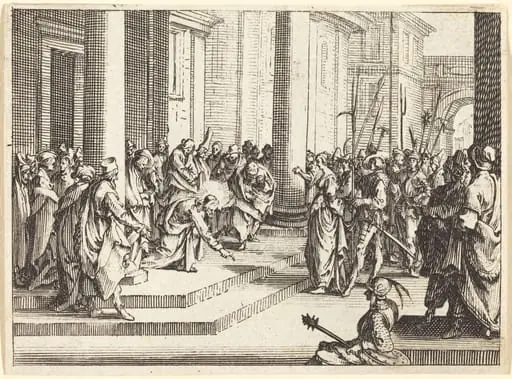
The King Forgiving His Servant His Debt
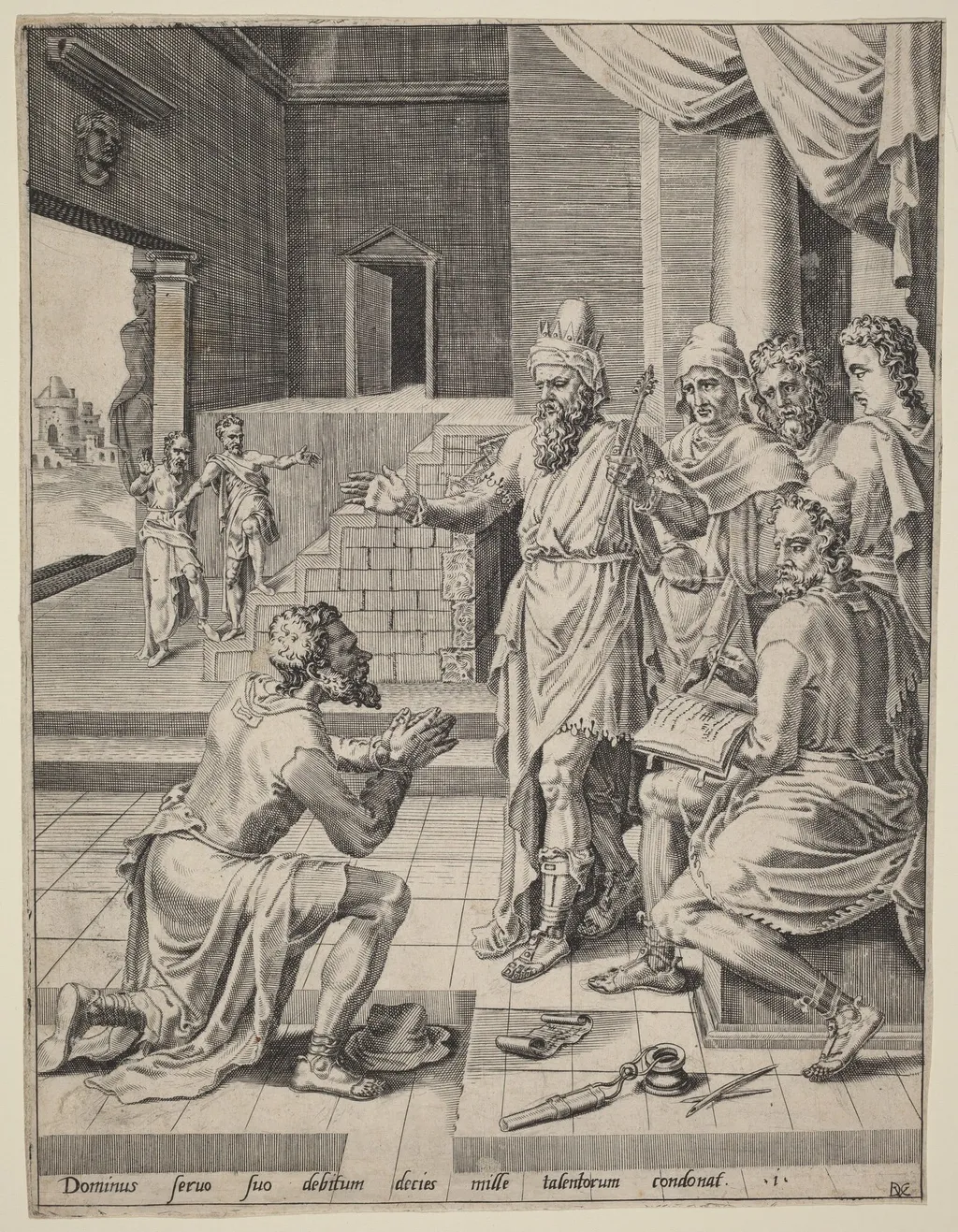
The King Forgiving His Servant His Debt is an ink print by the Renaissance artist Dirck Volckertz Coornhert. It dates from 1554 and is held in the collection of the National Gallery of Art.
About this work
Overview
Created in 1554 by Dirck Volckertz Coornhert, this black-and-white print combines engraving and etching on laid paper to depict a biblical parable of mercy.
Created in 1554 by Dirck Volckertz Coornhert, this black-and-white print combines engraving and etching on laid paper to depict a biblical parable of mercy. The scene captures a moment of moral reckoning: a monarch, dressed in elaborate attire, extends his hand toward a kneeling servant, while onlookers observe in silence. The setting is a modest stone chamber with tiled flooring and a distant doorway, grounding the spiritual narrative in a tangible, earthly space.
Subject & Meaning
The image illustrates the parable of the unforgiving servant from the Gospel of Matthew, in which a ruler cancels a vast debt owed by a subordinate. The servant’s posture and the king’s outstretched hand convey absolution, while the surrounding figures suggest varied reactions—some attentive, others apprehensive. Scattered tools and a book hint at the servant’s worldly occupation, reinforcing the contrast between material obligation and divine grace.
Technique & Style
Coornhert employed fine linear engraving and delicate etching to render texture and depth with precision. The stone walls, tiled floor, and folds of fabric are rendered with controlled hatching, while the figures are rendered with restrained elegance. The composition directs focus to the central gesture through spatial clarity and minimal background detail, reflecting Northern Renaissance conventions of narrative clarity over ornamental excess.
History & Provenance
Produced during the mid-16th century, the print emerged from a Dutch intellectual climate increasingly engaged with biblical humanism. Coornhert, a philosopher and translator, often used visual art to disseminate moral teachings. Though specific early ownership records are sparse, the work aligns with the broader circulation of religious prints in Protestant regions, where imagery served as a tool for ethical instruction.
Context
This print reflects the Reformation-era emphasis on personal morality and divine forgiveness, themes central to Dutch humanist thought. Coornhert’s engagement with Latin texts and biblical parables positioned his work within a network of reform-minded artists and writers. The inclusion of Latin inscriptions, though not fully legible today, underscores the print’s intended audience: literate, religiously engaged viewers seeking moral guidance.
Legacy
Coornhert’s print contributed to a tradition of didactic imagery in Northern Europe, where biblical stories were rendered in accessible, domestic settings. While not widely reproduced, its quiet intensity influenced later moral allegories in printmaking. The work remains a quiet example of how visual art could convey theological concepts with restraint, avoiding spectacle in favor of contemplative clarity.
Artist & collection


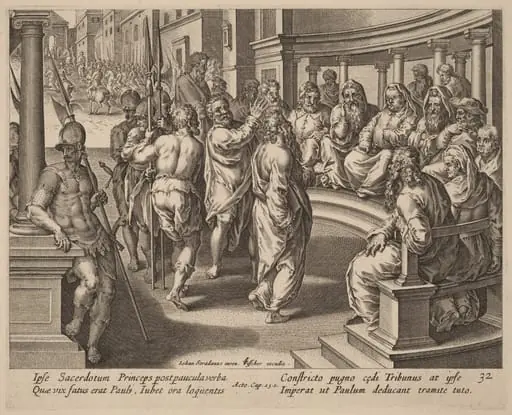 Saint Paul before the High Priest
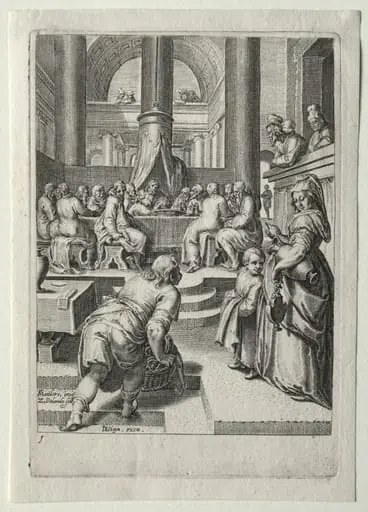 Life of Christ: The Last Supper
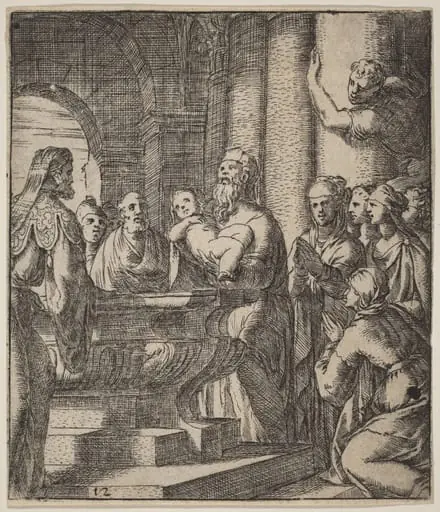 The Baptism of Christ
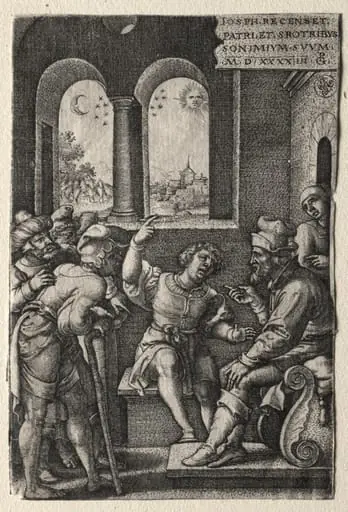 The Story of Joseph: Joseph Recounting his Dreams to his Father
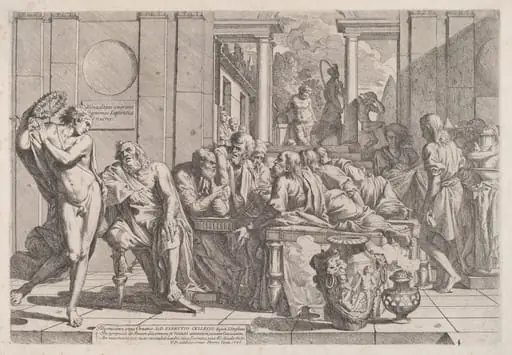 The Symposium
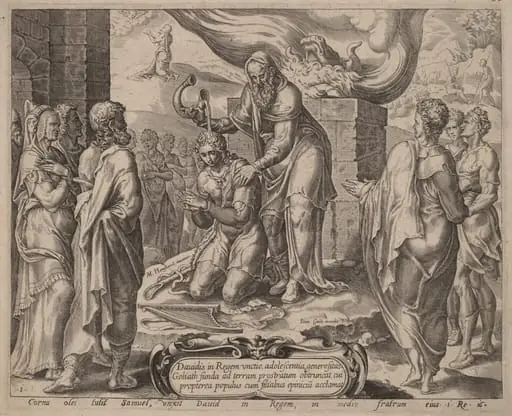 Samuel Anointing David
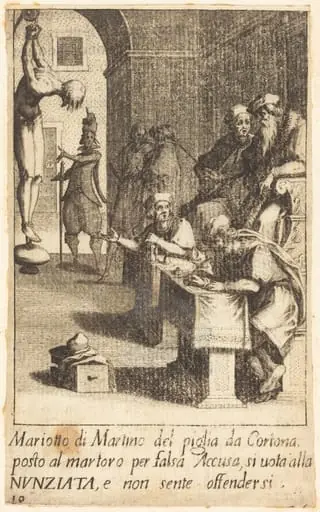 Mariotto di Martino
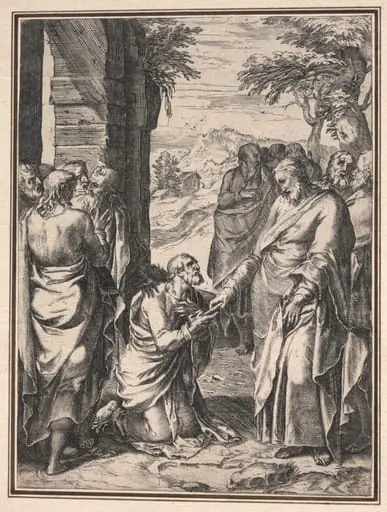 Copy of Cornelis Cort: Christ Giving the Key of the Church to Saint Peter
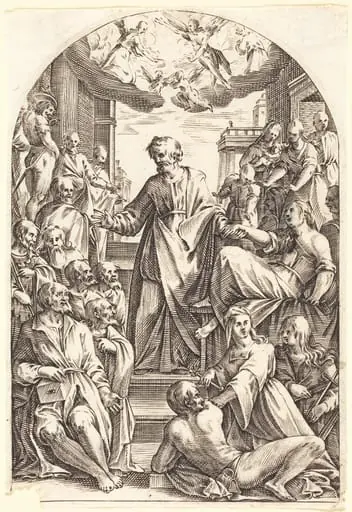 Peter Raising Tabitha
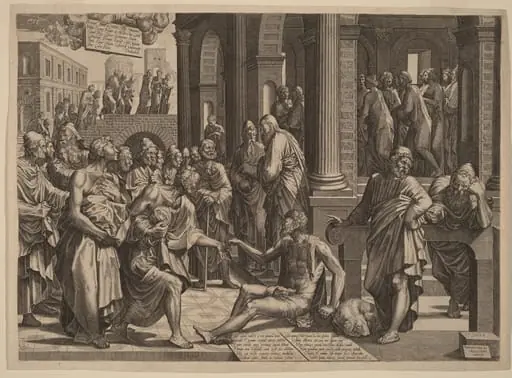 Apostles Peter and John Healing the Paralytic
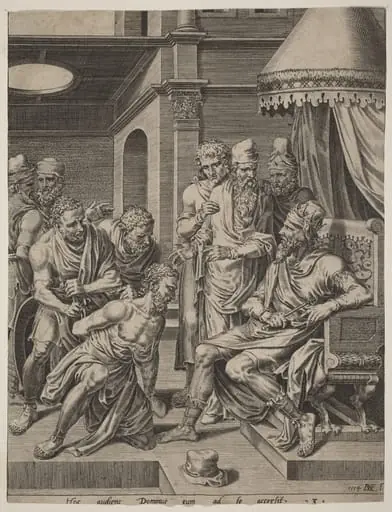 The Unmerciful Servant Brought before the King
 Christ and the Woman Taken in Adultery