Artwork
The Triumph of Tobias
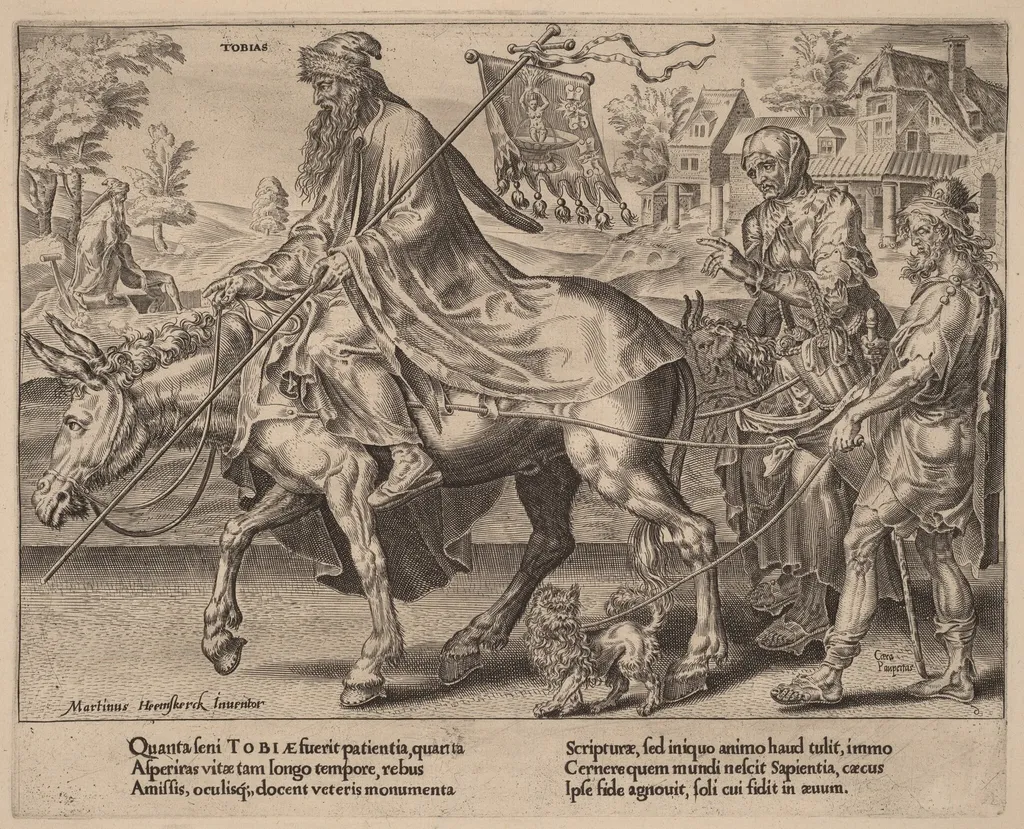
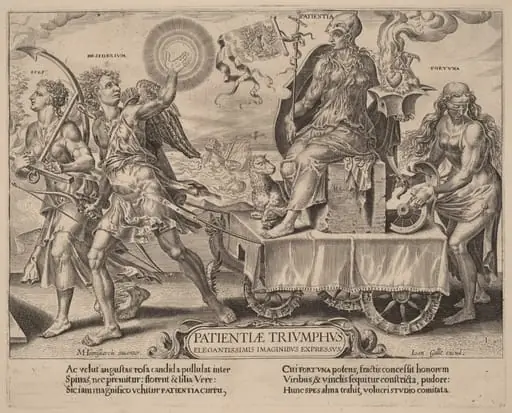
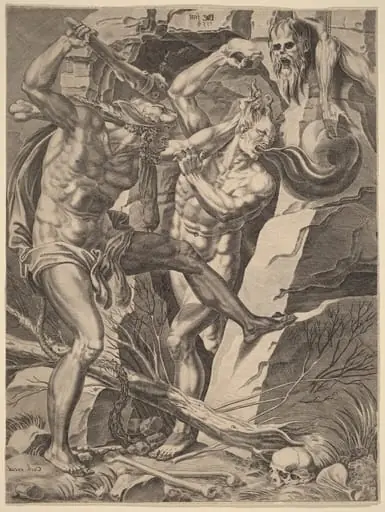
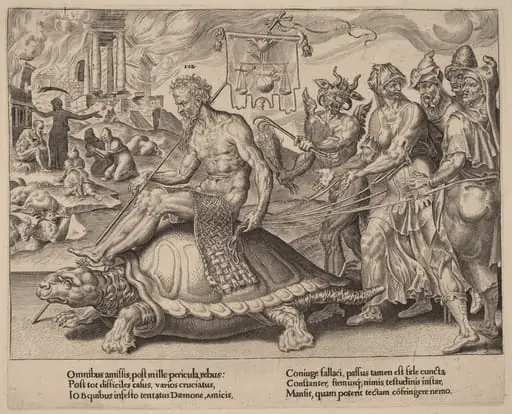
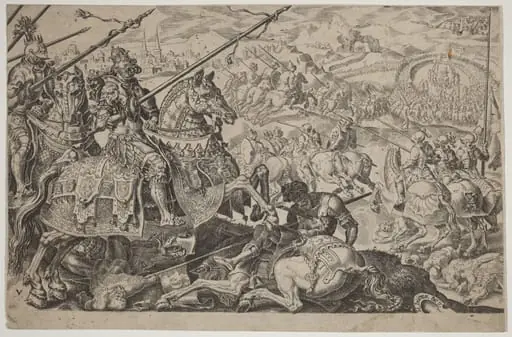
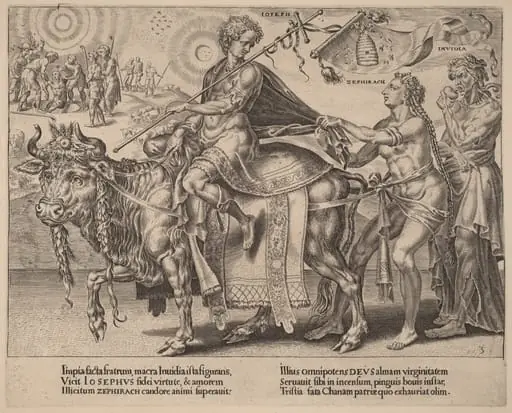
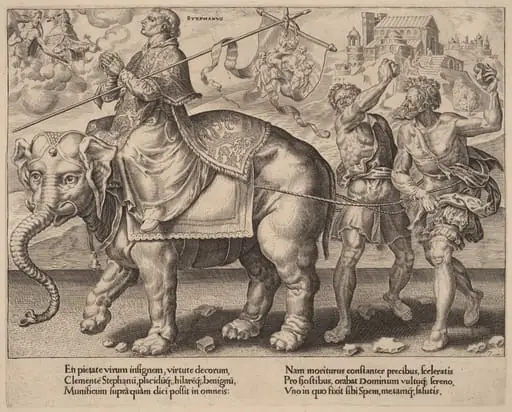
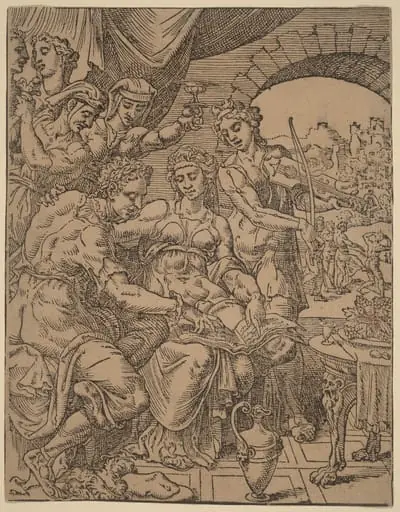
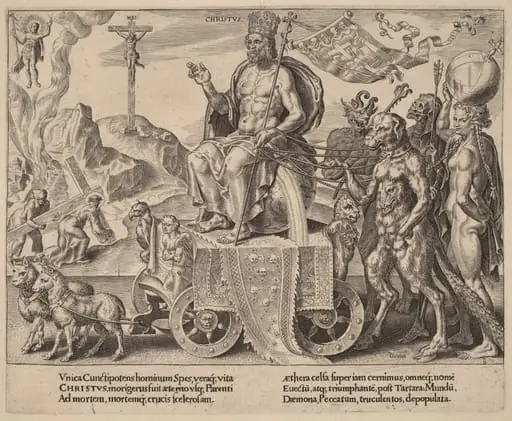
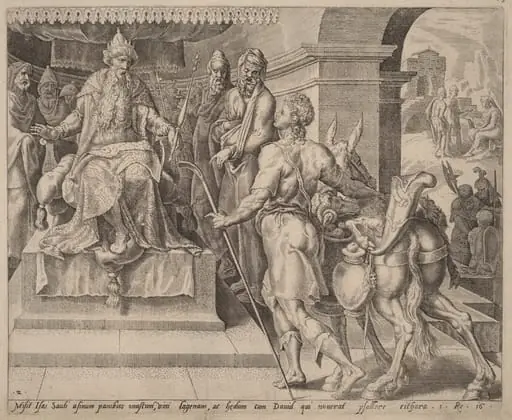
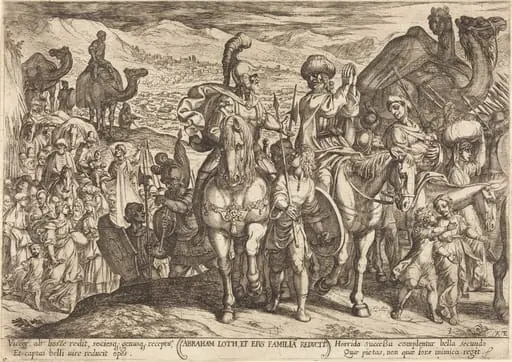
The Triumph of Tobias is an ink print by the Renaissance artist Dirck Volckertz Coornhert. It dates from 1559 and is held in the collection of the National Gallery of Art.
About this work
Overview
Created in 1559 by Dirck Volckertz Coornhert, this engraving and etching on laid paper depicts a narrative scene drawn from the Book of Tobit.
Created in 1559 by Dirck Volckertz Coornhert, this engraving and etching on laid paper depicts a narrative scene drawn from the Book of Tobit. The composition is densely populated with figures, animals, and architectural elements, arranged to suggest movement and layered storytelling. The work reflects the Northern Renaissance tradition of combining biblical themes with detailed, everyday settings, using fine linear techniques to convey both action and symbolism.
Subject & Meaning
The scene illustrates Tobias’s journey, guided by the archangel Raphael in disguise, as he retrieves a healing fish from the Tigris River. The bearded man, Tobias, carries the fish and a staff, while a dog and lion accompany him—symbols of loyalty and divine protection. Figures gesturing upward may reference divine intervention, and the shield, though unexplained in the source, likely alludes to spiritual or moral defense, reinforcing the tale’s themes of faith and deliverance.
Technique & Style
Coornhert employed fine engraving and etching lines to render texture and depth, characteristic of Northern European printmaking of the mid-16th century. The intricate detailing of clothing, foliage, and architecture suggests meticulous craftsmanship. The composition avoids clear focal points, instead guiding the viewer’s eye through a network of interactions, enhancing the sense of a living, unfolding narrative rather than a static illustration.
History & Provenance
The print was produced in the Netherlands during a period of religious upheaval and growing interest in biblical humanism. Coornhert, a philosopher and printer, often infused his works with moral and theological messages. While specific early ownership records are not documented, the print’s survival in institutional collections indicates its recognition among collectors of humanist prints in the centuries following its creation.
Context
This work emerged during the Protestant Reformation, when biblical stories were frequently reinterpreted for lay audiences through visual media. Coornhert’s integration of secular details—village life, varied attire, naturalistic animals—reflects a broader trend of humanist art that sought to ground sacred narratives in recognizable, earthly environments, making them more accessible and morally resonant.
Legacy
Though not widely reproduced in popular culture, the engraving remains a significant example of Dutch humanist printmaking. It demonstrates how religious subjects were visually expanded beyond liturgical use into complex, layered narratives. Its presence in major collections underscores its value as a historical artifact that bridges theological discourse and artistic innovation in 16th-century Northern Europe.
Artist & collection