Artwork
The Woman Clothed with the Sun
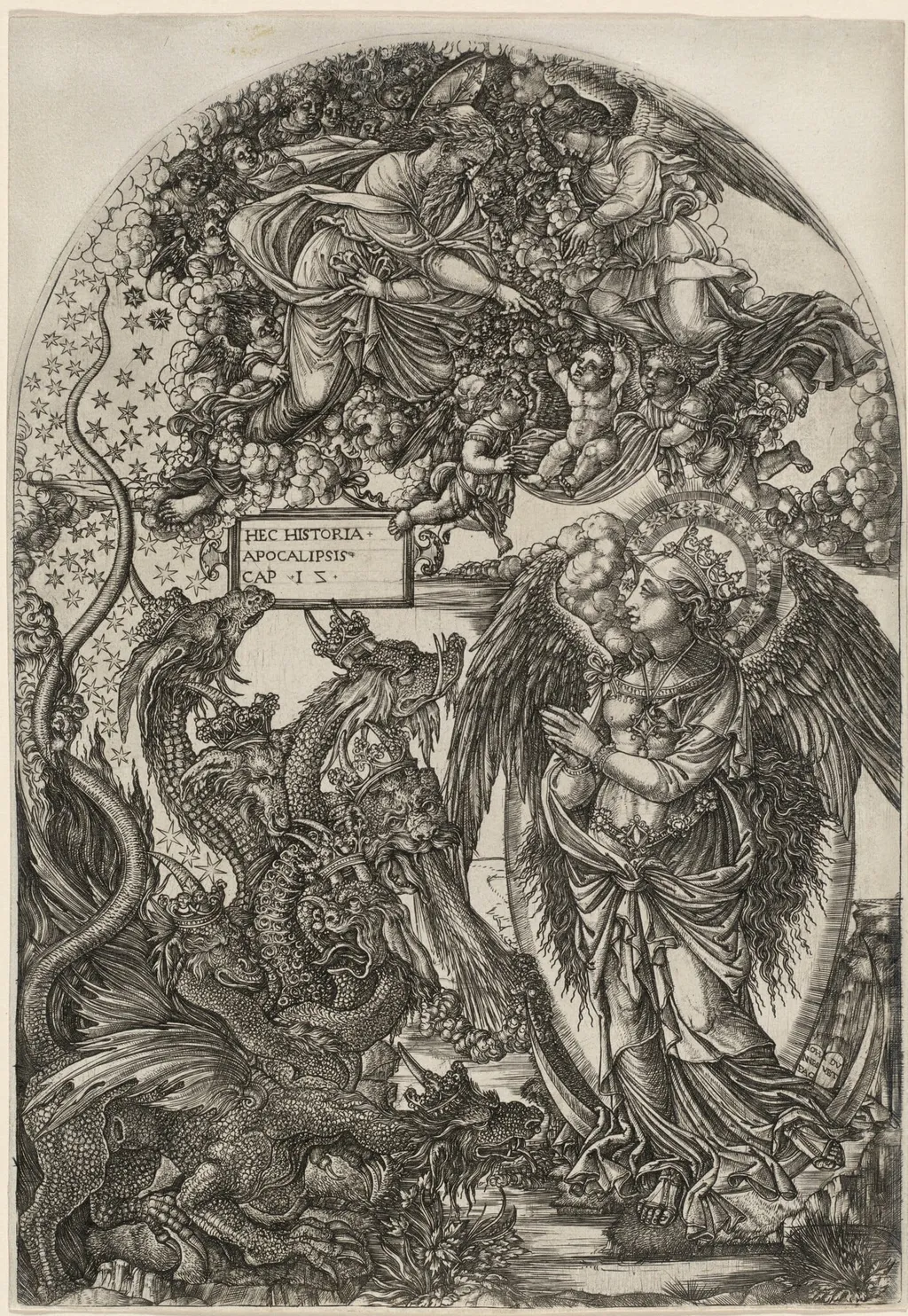
The Woman Clothed with the Sun is an ink print by the Renaissance artist Jean Duvet. It dates from 1551 and is held in the collection of the National Gallery of Art.
About this work
Overview
Created in 1551 by Jean Duvet, this engraving on laid paper is one of approximately 73 known plates by the French artist, who worked primarily as a goldsmith.
Created in 1551 by Jean Duvet, this engraving on laid paper is one of approximately 73 known plates by the French artist, who worked primarily as a goldsmith. Duvet’s prints stand apart in Renaissance printmaking for their dense, visionary compositions and emotional intensity. Unlike contemporaries who favored classical harmony, he embraced a personal, almost mystical style, using fine linear detail to build complex, otherworldly scenes rooted in biblical narrative.
Subject & Meaning
The image illustrates Revelation 12:1–2, depicting a woman clothed with the sun, standing on the moon, crowned with stars, and holding a child. Below her, a seven-headed dragon coils, symbolizing evil. Surrounding figures suggest celestial beings, while a banner in Latin identifies the scene as from the Book of Revelation. Duvet’s rendering merges literal scriptural imagery with symbolic intensity, reflecting his deep engagement with apocalyptic theology and personal spiritual vision.
Technique & Style
Duvet employed fine, controlled engraving lines to model form and depth, creating dramatic contrasts between light and shadow. The composition is densely packed, with swirling clouds, stars, and figures layered without spatial clarity, enhancing the visionary quality. His technique prioritizes expressive power over naturalism, using repetitive, rhythmic strokes to animate the supernatural elements, resulting in a tactile, almost hallucinatory surface.
History & Provenance
Duvet produced this print during his mature period in France, likely for a private or devotional audience. Few of his prints were widely distributed, and most surviving impressions are held in institutional collections. The work’s Latin inscription confirms its intended theological purpose. While not commercially prominent in his lifetime, Duvet’s prints gained retrospective attention for their idiosyncratic vision and technical precision.
Context
In mid-16th-century France, religious imagery was shaped by both Catholic orthodoxy and emerging Reformation tensions. Duvet’s work, though rooted in Catholic tradition, diverged from mainstream Renaissance ideals by rejecting classical balance in favor of emotional immediacy. His prints reflect a personal, almost mystical interpretation of scripture, aligning more with late medieval visionary traditions than with the humanist trends of his era.
Legacy
Though largely overlooked during his lifetime, Duvet’s prints were later recognized for their unique fusion of craftsmanship and visionary intensity. His work influenced 19th-century artists drawn to symbolic and spiritual themes, notably William Blake, whose own apocalyptic imagery echoes Duvet’s compositional density and emotional gravity. Today, his engravings are studied as rare examples of individualistic expression within the rigid conventions of Renaissance printmaking.
Artist & collection

Artist
Jean Duvet (1485 – after 1562) was a French Renaissance goldsmith and engraver, now best known for his engravings.

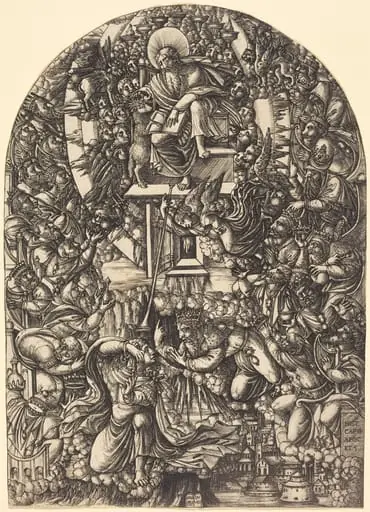
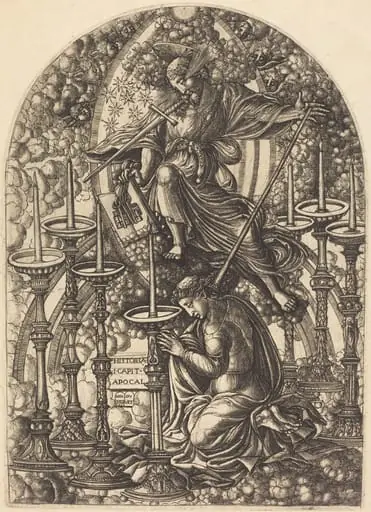
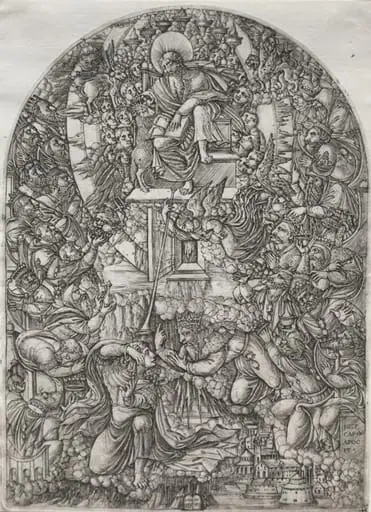 The Apocalpse: St. John Summoned to Heaven
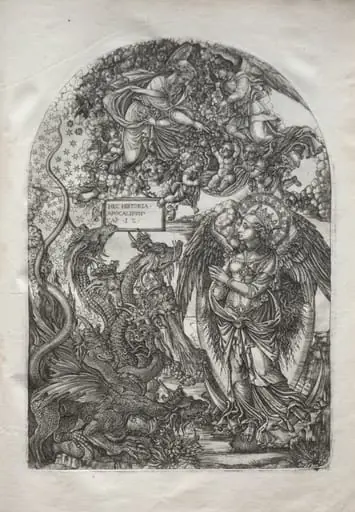 The Apocalypse: St. Michael and the Dragon
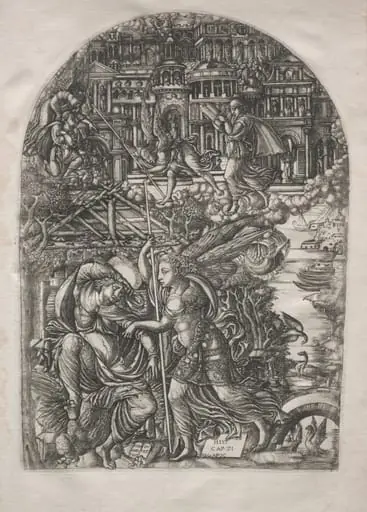 The Apocalypse: The Angel Shows St. John the New Jerusalem
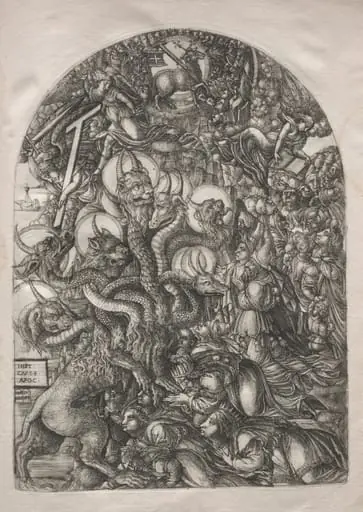 The Apocalypse: The Beast with Seven Heads and Ten Horns
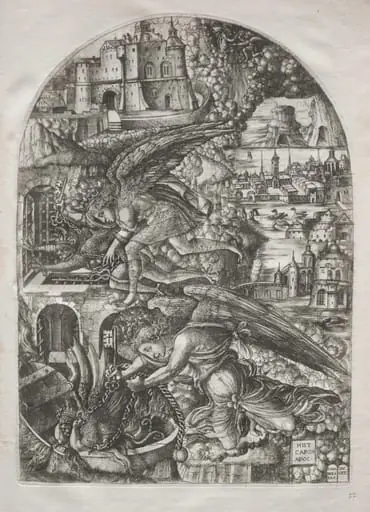 The Apocalypse: Satan Bound for a Thousand Years
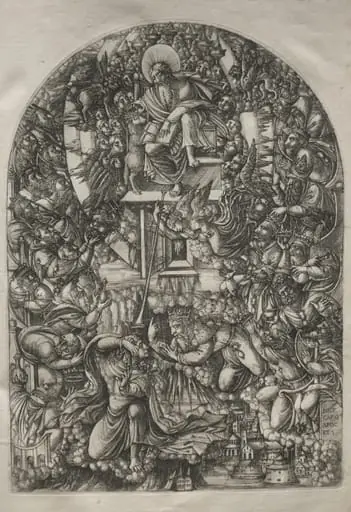 The Apocalypse: St. John Summoned to Heaven
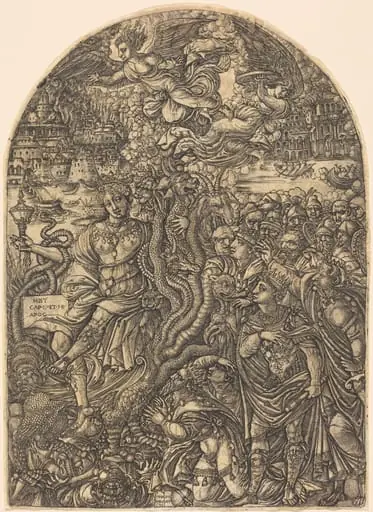 The Babylon Harlot
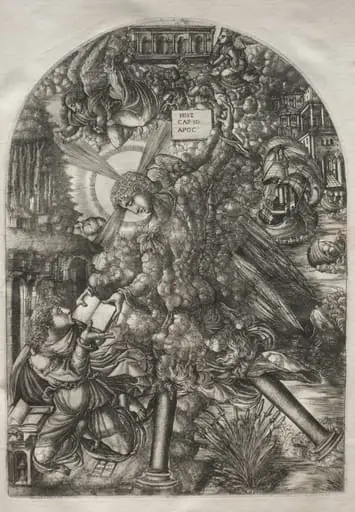 The Apocalypse: The Angel Gives St. John the Book to Eat
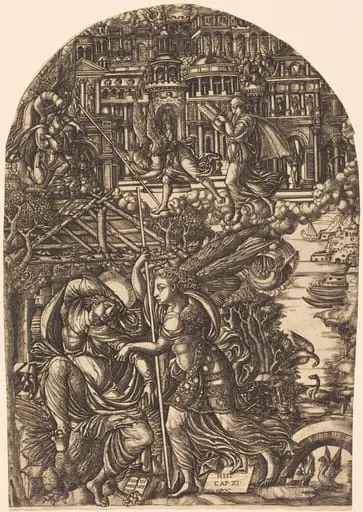 The Angel Shows Saint John the New Jerusalem
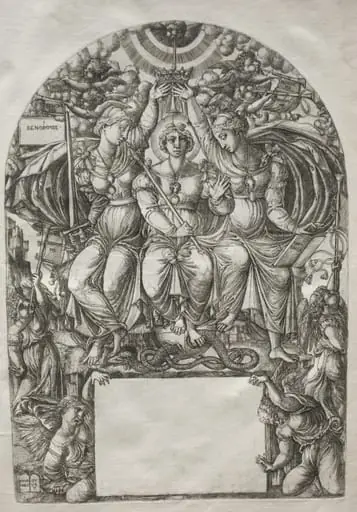 The Royal Majesty
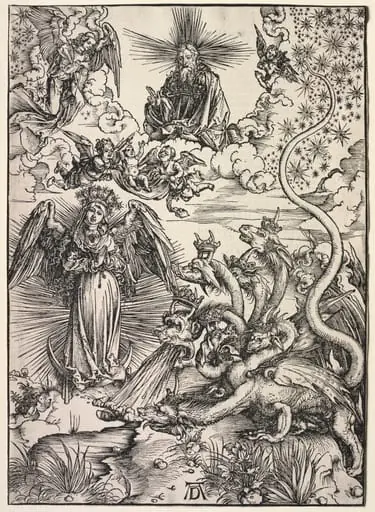 Revelation of St. John: The Woman Clothed with the Sun