Artwork
The Prima Macchina for the Chinea of 1722: The Temple of Janus
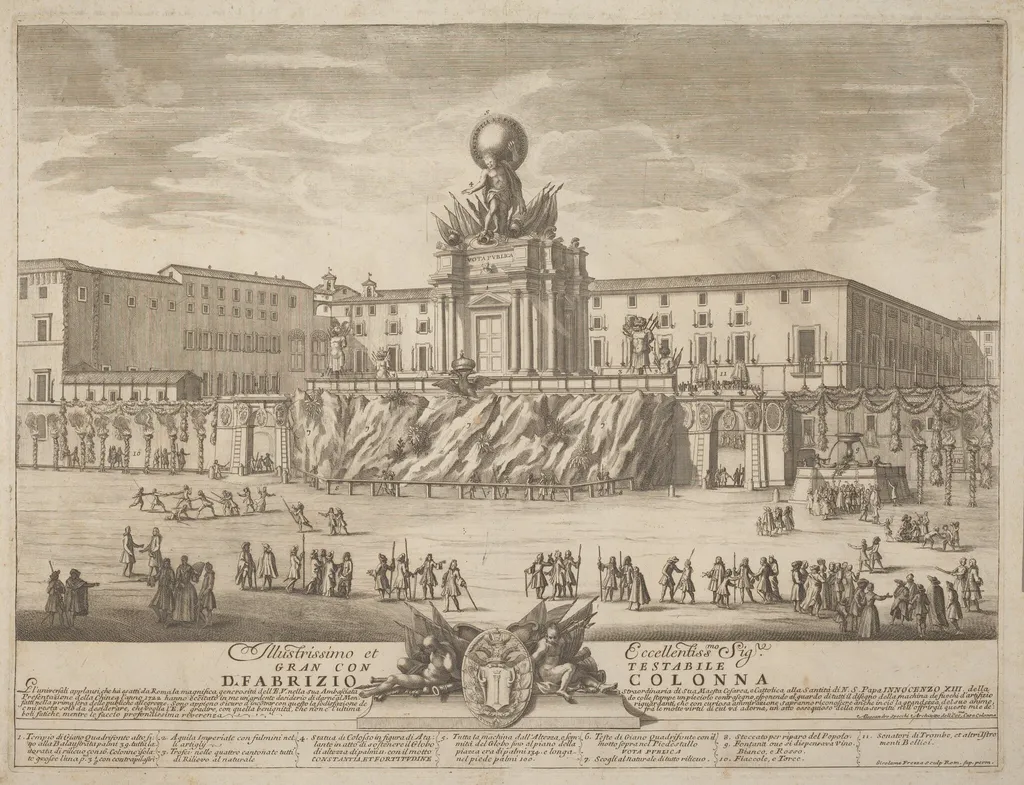
The Prima Macchina for the Chinea of 1722: The Temple of Janus is an ink print by the Baroque artist Giovanni Girolamo Frezza. It dates from 1722 and is held in the collection of the National Gallery of Art.
About this work
Overview
The Prima Macchina for the Chinea of 1722: The Temple of Janus is a 1722 engraving by Giovanni Girolamo Frezza, depicting an elaborate stage set designed as a temple.
Subject & Meaning
The engraving centers on a prominent statue of Janus, situated on a pedestal surrounded by wings and flames, set amidst a lively scene of people in period attire observing the spectacle within a backdrop of ornate, columned palaces.
Technique & Style
Frezza employed intricate cross-hatching to achieve detailed shading, evident in the textured rendering of the crowd, architectural elements, and the statue, showcasing mastery of line work to convey depth and dimensionality.
History & Provenance
Created in 1722 for the Chinea ceremony, the engraving's specific commission context and subsequent ownership history are not detailed in available information.
Context
The work reflects the ceremonial and artistic traditions of its time, particularly the Chinea, a significant event that would have showcased such elaborate temporary structures in 18th-century Rome.
Legacy
While the engraving provides valuable insight into 18th-century stage design and engraving techniques, its broader influence or presence in major art historical narratives is not prominently documented.
Artist & collection


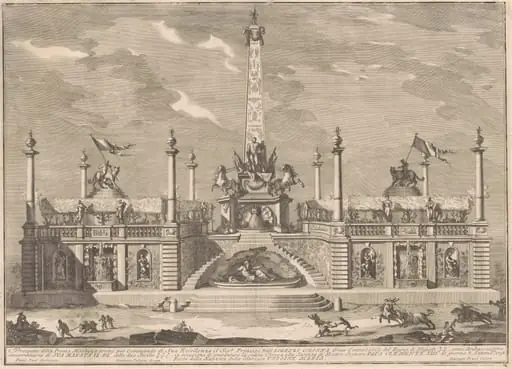 The Prima Macchina for the Chinea of 1758: A "Deliziosa" with Hanging Gardens
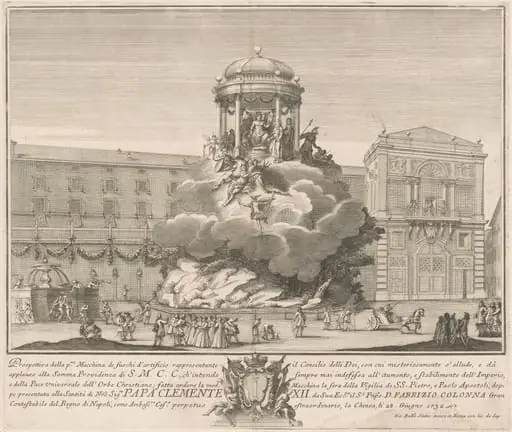 The Prima Macchina for the Chinea of 1732: The Council of the Gods
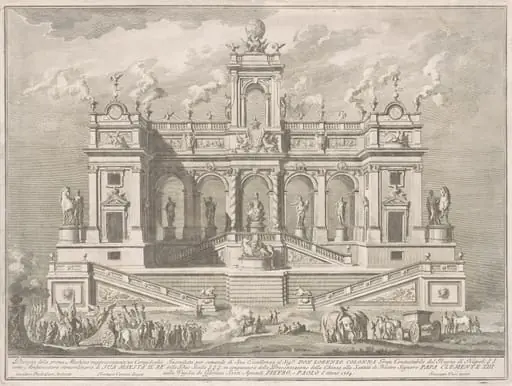 The Prima Macchina for the Chinea of 1764: A Capitol Building
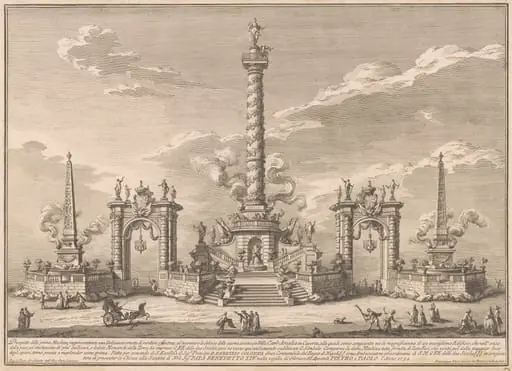 The Prima Macchina for the Chinea of 1752: A "Deliziosa" Alluding to Villa Carl'Amalia in Caserta
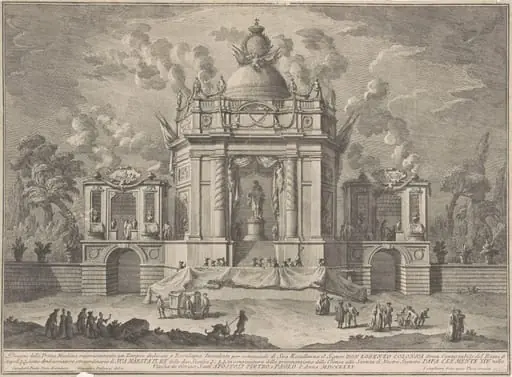 The Prima Macchina for the Chinea of 1771: The Temple of Asclepius
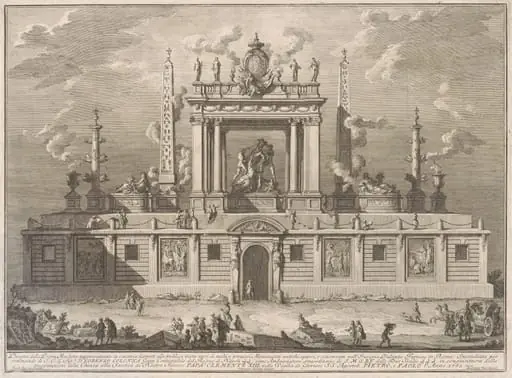 The Prima Macchina for the Chinea of 1762: The Farnese Bull and Other Antiquities from Palazzo Farnese
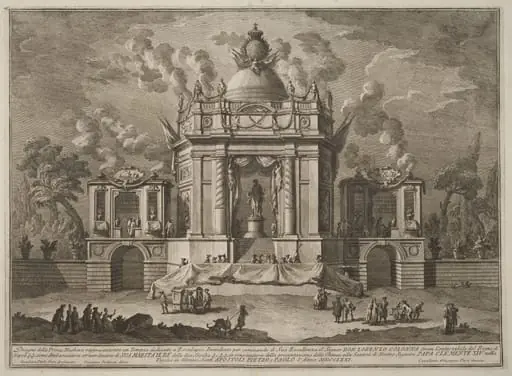 The Prima Macchina for the Chinea of 1771: The Temple of Asclepius
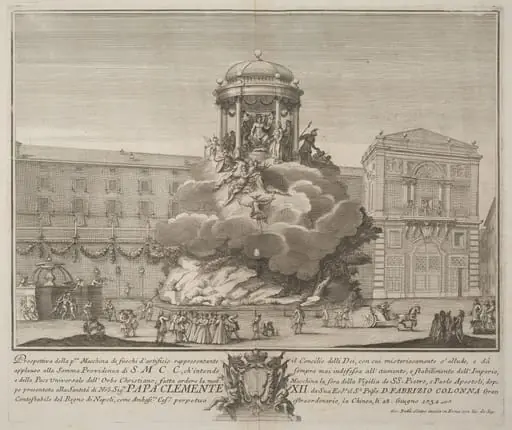 The Prima Macchina for the Chinea of 1732: The Council of the Gods
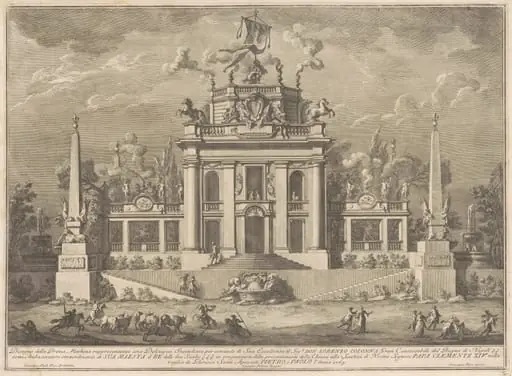 The Prima Macchina for the Chinea of 1769: A "Deliziosa"
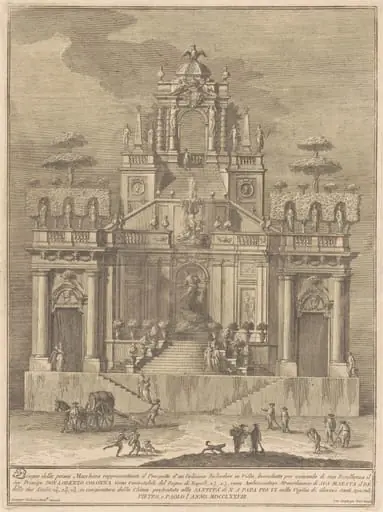 The Prima Macchina for the Chinea of 1778: A Countryside Belevedere with Hercules and Antaeus
![Trajan's Column from "Prospectus Locurum Urbis Romae Insign[ium], by Lievin Cruyl](https://artifactworldgallery.com/img/lievin-cruyl--trajan-s-column-from-prospectus-locurum-urbis-romae-insign-i--c73234b8c33c621b-w320.webp) Trajan's Column from "Prospectus Locurum Urbis Romae Insign[ium]
Trajan's Column from "Prospectus Locurum Urbis Romae Insign[ium]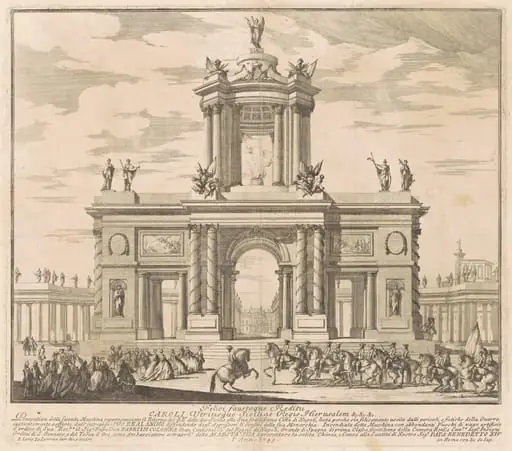 The Seconda Macchina for the Chinea of 1745: Triumphal Arch for the Return of King Charles of Bourbon to Naples
![S. Giovanni in Laterano from "Prospectus Locurum Urbis Romae Insign[ium]", by Lievin Cruyl](https://artifactworldgallery.com/img/lievin-cruyl--s-giovanni-in-laterano-from-prospectus-locurum-urbis-romae-i--f90e4b21a3cc4a52-w320.webp) S. Giovanni in Laterano from "Prospectus Locurum Urbis Romae Insign[ium]"
S. Giovanni in Laterano from "Prospectus Locurum Urbis Romae Insign[ium]"![Piazza del Popolo from "Prospectus Locurum Urbis Romae Insign[ium]", by Lievin Cruyl](https://artifactworldgallery.com/img/lievin-cruyl--piazza-del-popolo-from-prospectus-locurum-urbis-romae-insign--f9ac7057c7d8e5e8-w320.webp) Piazza del Popolo from "Prospectus Locurum Urbis Romae Insign[ium]"
Piazza del Popolo from "Prospectus Locurum Urbis Romae Insign[ium]"![Piazza Navona from "Prospectus Locurum Urbis Romae Insign[ium], by Lievin Cruyl](https://artifactworldgallery.com/img/lievin-cruyl--piazza-navona-from-prospectus-locurum-urbis-romae-insign-ium--d113d99e439c18eb-w320.webp) Piazza Navona from "Prospectus Locurum Urbis Romae Insign[ium]
Piazza Navona from "Prospectus Locurum Urbis Romae Insign[ium]![Areae et Palatii Pontificii Vaticani Topographia [A Papal Blessing in Saint Peter Square], by Étienne Dupérac](https://artifactworldgallery.com/img/etienne-duperac--areae-et-palatii-pontificii-vaticani-topographia-a-papal-ble--d33d6f094b73f039-w320.webp) Areae et Palatii Pontificii Vaticani Topographia [A Papal Blessing in Saint Peter Square]
Areae et Palatii Pontificii Vaticani Topographia [A Papal Blessing in Saint Peter Square]![Piazza Colonna from "Prospectus Locurum Urbis Romae Insign[ium]", by Lievin Cruyl](https://artifactworldgallery.com/img/lievin-cruyl--piazza-colonna-from-prospectus-locurum-urbis-romae-insign-iu--4b674f0f1b994d08-w320.webp) Piazza Colonna from "Prospectus Locurum Urbis Romae Insign[ium]"
Piazza Colonna from "Prospectus Locurum Urbis Romae Insign[ium]"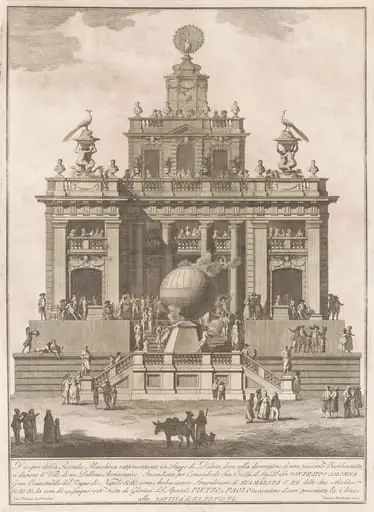 The Seconda Macchina for the Chinea of 1785: A Pleasure Palace with an Air Balloon