Artwork
The Prima Macchina for the Chinea of 1732: The Council of the Gods
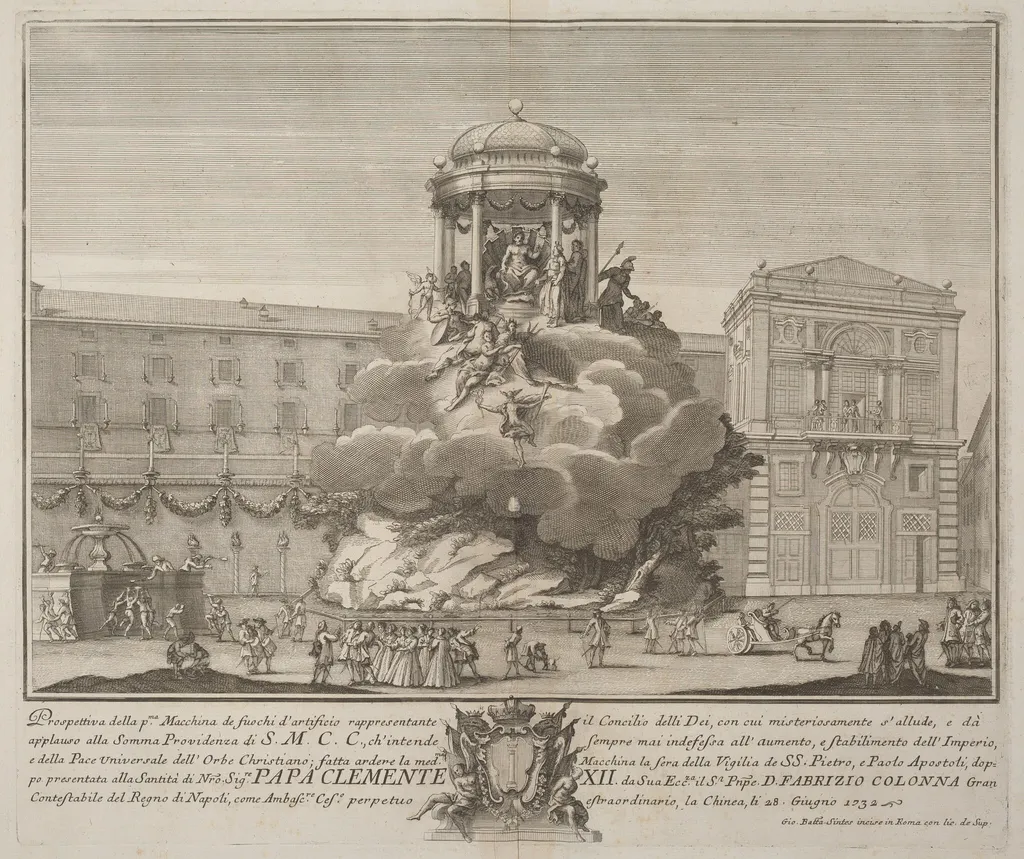
The Prima Macchina for the Chinea of 1732: The Council of the Gods is an ink print by the Baroque artist Giovanni Battista Sintes. It dates from 1732 and is held in the collection of the National Gallery of Art.
About this work
Overview
The print titled *The Prima Macchina for the Chinea of 1732: The Council of the Gods* is an etching and engraving on laid paper executed by Giovanni Battista Sintes in 1732. It presents a theatrical assembly of deities framed by an elaborate architectural setting, rendered in a dense network of lines that convey both scale and movement.
Subject & Meaning
At the composition’s heart stands a cloud‑shaped platform populated by a pantheon of gods and goddesses, suggesting a mythological council.
At the composition’s heart stands a cloud‑shaped platform populated by a pantheon of gods and goddesses, suggesting a mythological council. Below, a multitude of figures—presumably mortals or attendants—gaze upward, emphasizing the hierarchy between the divine and the earthly. The inclusion of a domed building in the distance reinforces the notion of an ordered, celestial order presiding over human affairs.
Technique & Style
Sintes employed a combination of etching and engraving, allowing for fine hatching alongside deeper, more decisive lines. The contrast between delicate tonal gradations and bold outlines creates a layered sense of depth, while the intricate textures on the cloud platform and surrounding crowd demonstrate the artist’s command of the medium’s capacity for detail and drama.
History & Provenance
Produced as the first plate (prima macchina) for the 1732 Chinea—a ceremonial tribute from the Kingdom of Naples to the Pope—the work functioned as a visual record of the event’s splendor. Though the original commission was tied to a specific diplomatic occasion, the print has survived in several collections, attesting to its continued relevance as a document of 18th‑century courtly pageantry.
Artist & collection


 The Prima Macchina for the Chinea of 1732: The Council of the Gods
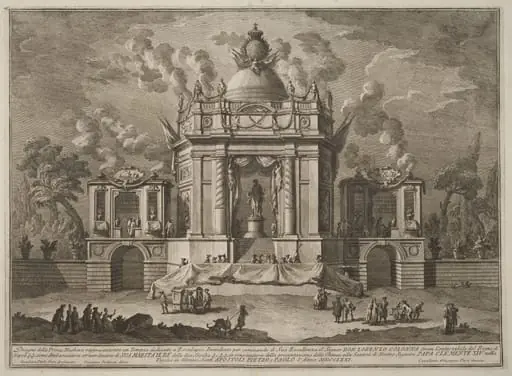 The Prima Macchina for the Chinea of 1771: The Temple of Asclepius
 The Prima Macchina for the Chinea of 1771: The Temple of Asclepius
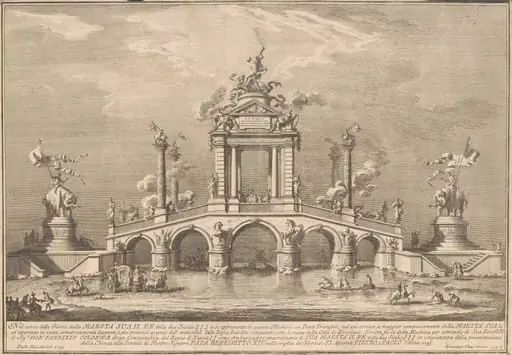 The Prima Macchina for the Chinea of 1755: A Triumphal Bridge with Antiquities from Herculaneum
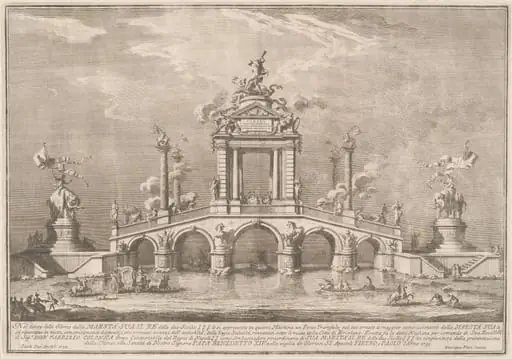 The Prima Macchina for the Chinea of 1755: A Triumphal Bridge with Antiquities from Herculaneum
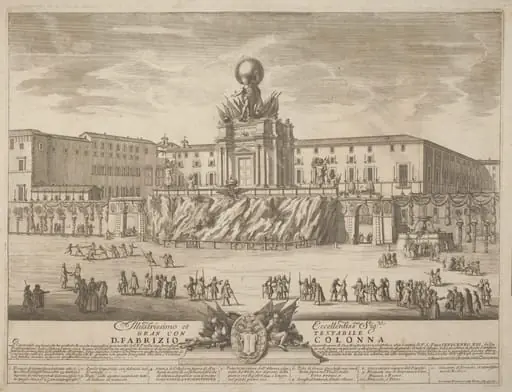 The Prima Macchina for the Chinea of 1722: The Temple of Janus
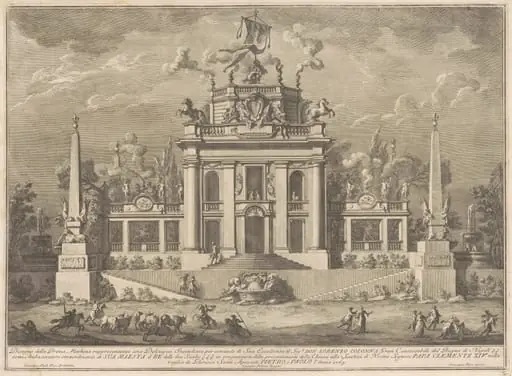 The Prima Macchina for the Chinea of 1769: A "Deliziosa"
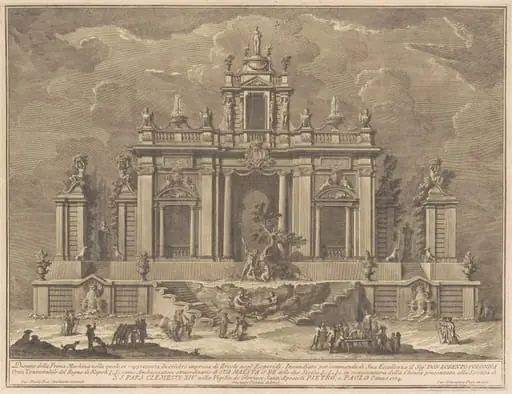 The Prima Macchina for the Chinea of 1774: Hercules and the Dragon in the Garden of the Hesperides
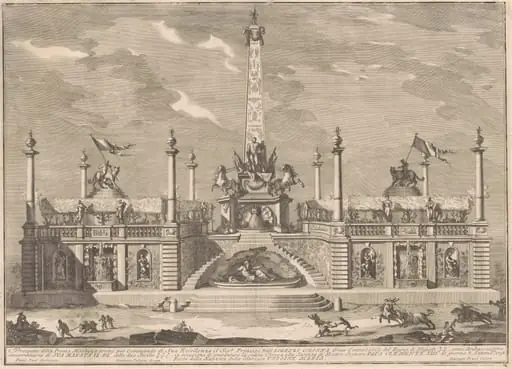 The Prima Macchina for the Chinea of 1758: A "Deliziosa" with Hanging Gardens
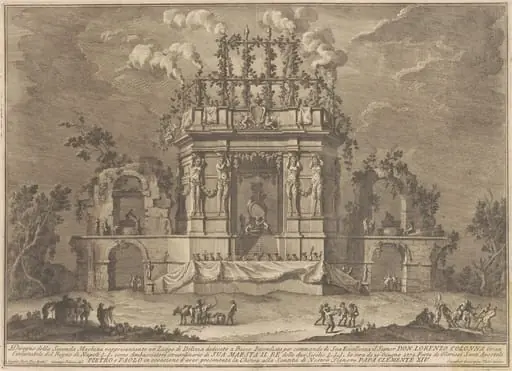 The Seconda Macchina for the Chinea of 1771: A Pleasure Palace Dedicated to Bacchus
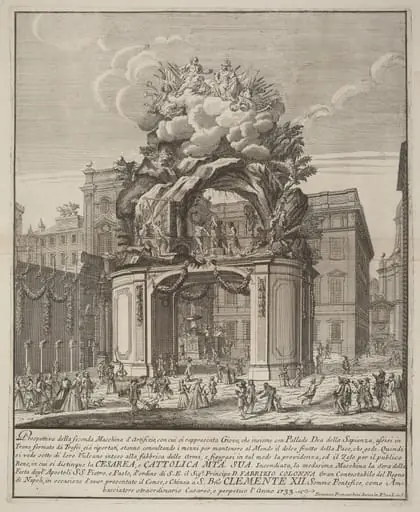 The Seconda Macchina for the Chinea of 1733: Jupiter and Minerva and the Forge of Vulcan
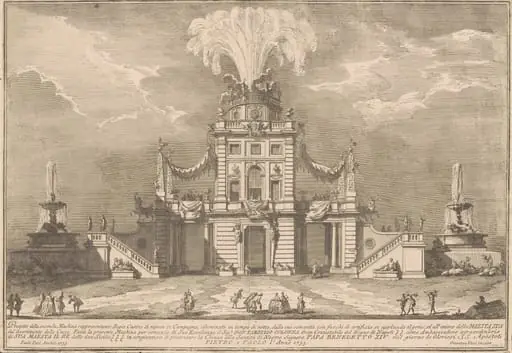 The Seconda Macchina for the Chinea of 1755: A Royal Hunting Lodge
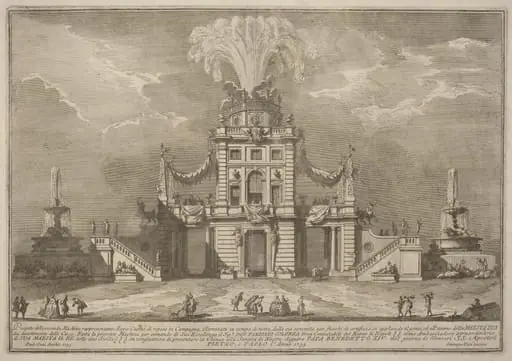 The Seconda Macchina for the Chinea of 1755: A Royal Hunting Lodge
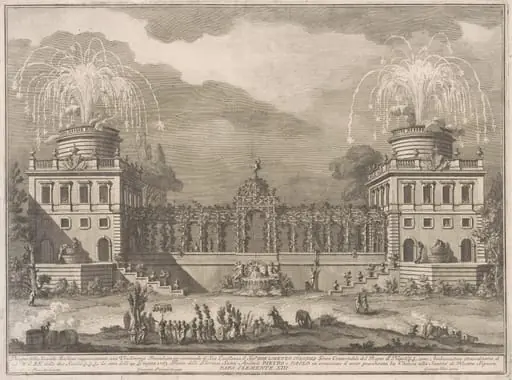 The Seconda Macchina for the Chinea of 1763: The Grape Harvest
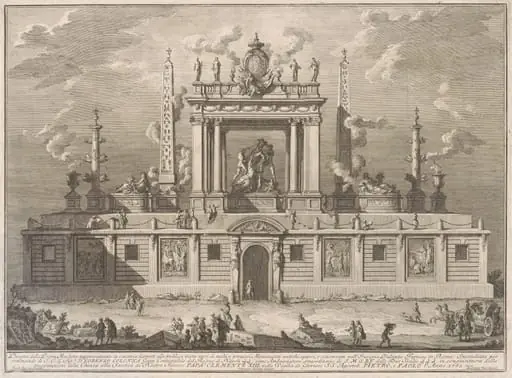 The Prima Macchina for the Chinea of 1762: The Farnese Bull and Other Antiquities from Palazzo Farnese