Artwork
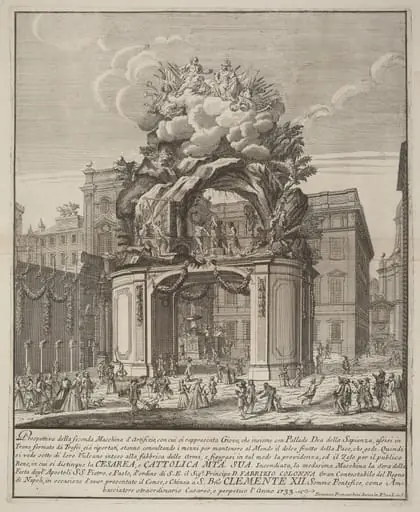
The Prima Macchina for the Chinea of 1732: The Council of the Gods
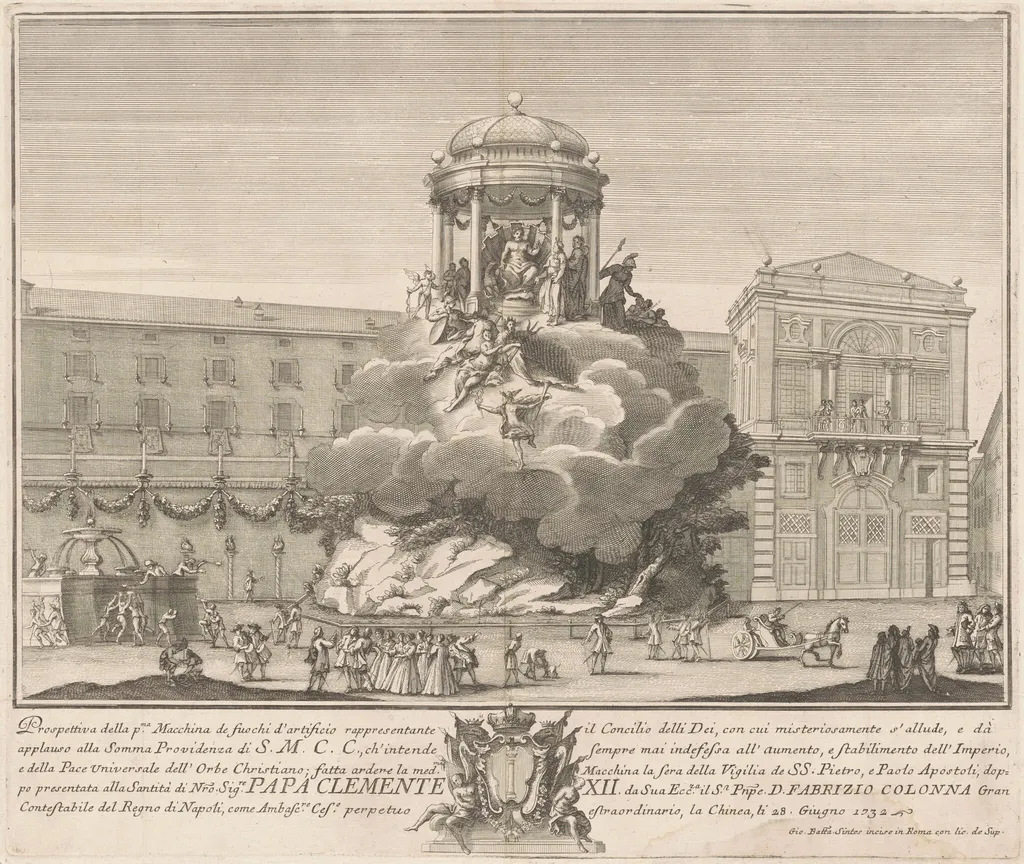
The Prima Macchina for the Chinea of 1732: The Council of the Gods is an ink print by the Baroque artist Giovanni Battista Sintes. It dates from 1732 and is held in the collection of the National Gallery of Art.
About this work
Overview
The work entitled *The Prima Macchina for the Chinea of 1732: The Council of the Gods* is an etching executed in 1732 by the Italian printmaker Giovanni Battista Sintes. It presents a densely populated scene that appears to depict a gathering of divine figures within an elaborate architectural space, rendered with a high degree of visual complexity.
Subject & Meaning
The composition suggests a mythological council, assembling a host of gods who are likely engaged in deliberation or ceremony. The arrangement of the figures, their gestures, and the surrounding setting evoke the conventions of allegorical representation common in 18th‑century Italian art, where divine assemblies symbolized political or cultural ideals.
Technique & Style
Created through the etching process, Sintes incised the design onto a metal plate, allowing for fine line work and subtle tonal variations. The print displays intricate detailing of drapery, architecture, and facial expressions, indicating a meticulous hand and considerable patience in rendering the complex scene.
History & Provenance
The piece was produced as part of the *Prima Macchina* series associated with the Chinea, an annual diplomatic tribute from the Kingdom of Naples to the Pope. Its 1732 date places it within the broader context of ceremonial prints that documented and celebrated such political exchanges.
Context
In the early 18th century, the Chinea tribute was a significant event in papal‑Neapolitan relations, and visual records like this etching served both as commemorative documentation and as propaganda, reinforcing the prestige of the participating courts through classical imagery.
Legacy
While not widely reproduced, the print exemplifies the intersection of printmaking, diplomatic ceremony, and mythological iconography in the period, offering scholars insight into the visual culture surrounding state rituals in Baroque Italy.
Artist & collection


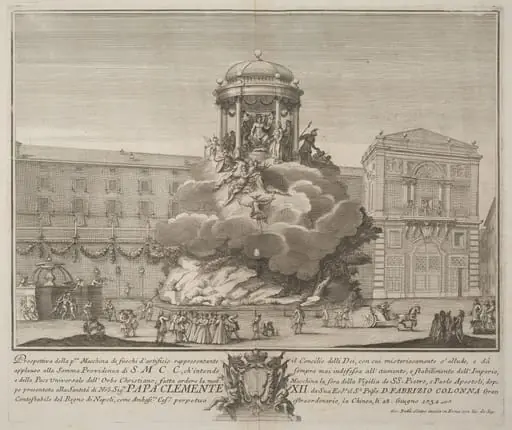 The Prima Macchina for the Chinea of 1732: The Council of the Gods
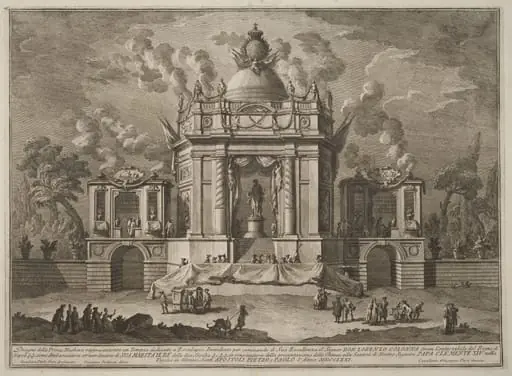 The Prima Macchina for the Chinea of 1771: The Temple of Asclepius
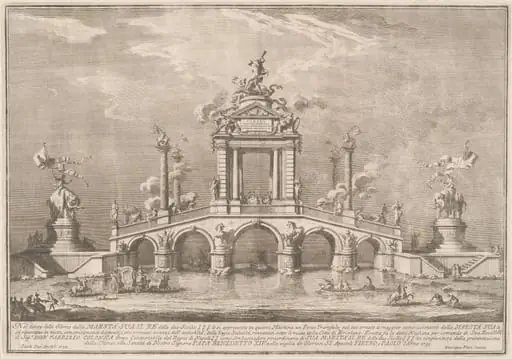 The Prima Macchina for the Chinea of 1755: A Triumphal Bridge with Antiquities from Herculaneum
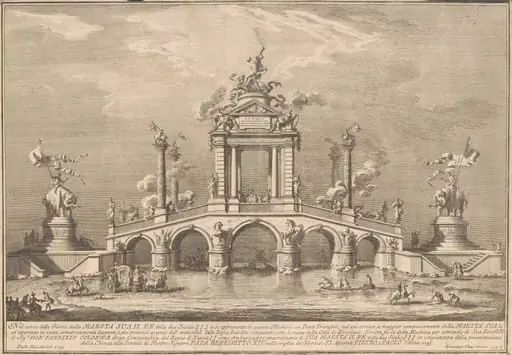 The Prima Macchina for the Chinea of 1755: A Triumphal Bridge with Antiquities from Herculaneum
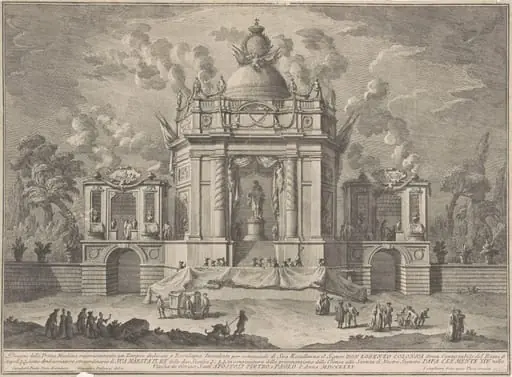 The Prima Macchina for the Chinea of 1771: The Temple of Asclepius
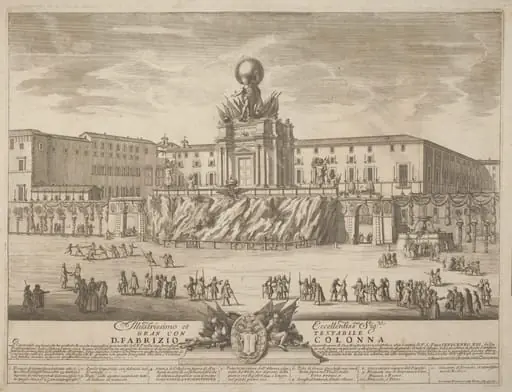 The Prima Macchina for the Chinea of 1722: The Temple of Janus
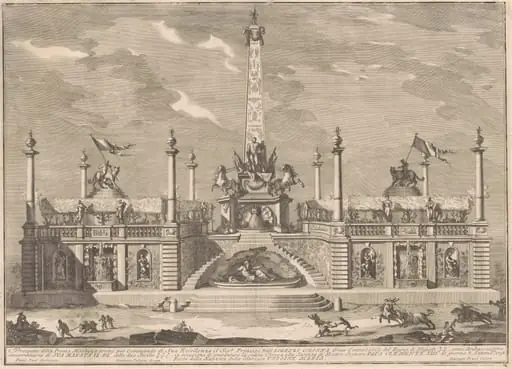 The Prima Macchina for the Chinea of 1758: A "Deliziosa" with Hanging Gardens
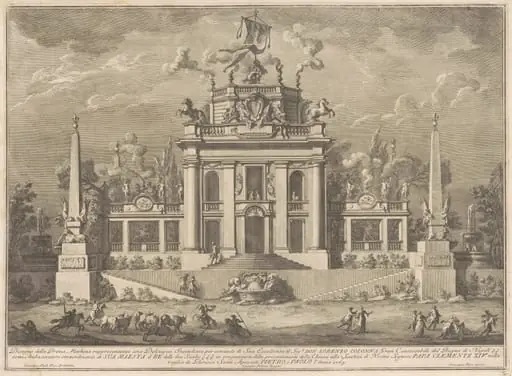 The Prima Macchina for the Chinea of 1769: A "Deliziosa"
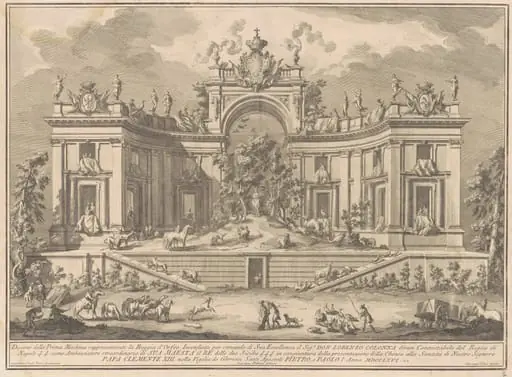 The Prima Macchina for the Chinea of 1766: The Palace of Orpheus
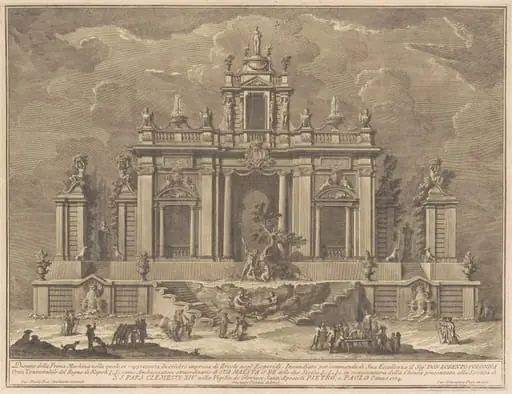 The Prima Macchina for the Chinea of 1774: Hercules and the Dragon in the Garden of the Hesperides
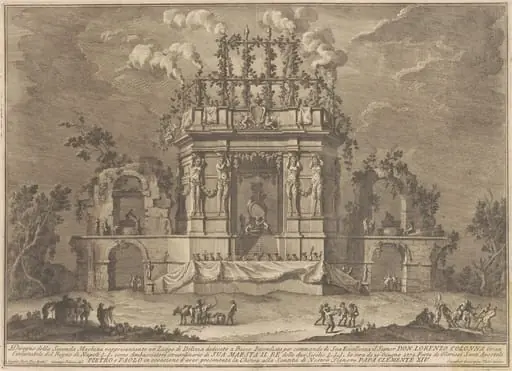 The Seconda Macchina for the Chinea of 1771: A Pleasure Palace Dedicated to Bacchus
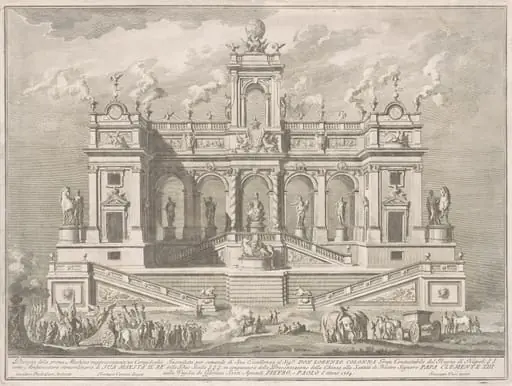 The Prima Macchina for the Chinea of 1764: A Capitol Building