Artwork
The Prima Macchina for the Chinea of 1752: A "Deliziosa" Alluding to Villa Carl'Amalia in Caserta
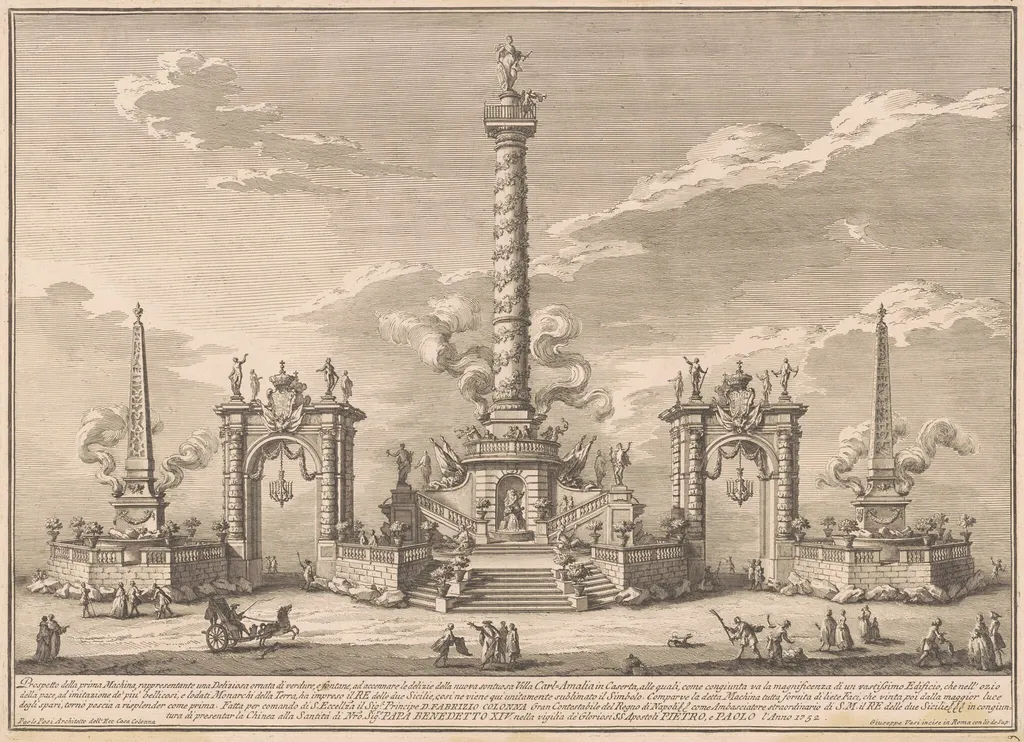
The Prima Macchina for the Chinea of 1752: A "Deliziosa" Alluding to Villa Carl'Amalia in Caserta is an ink print by the Romanticist artist Giuseppe Vasi. It dates from 1752 and is held in the collection of the National Gallery of Art.
About this work
The text at the bottom explains this was built for a special event in 1752, inspired by a real villa.
This drawing shows a grand, temporary stage set up like a palace. Tall columns with statues on top line a wide platform. Smoke curls from the top of the tallest column, and people below carry torches or watch from carts. The scene looks like a mix of a fountain and a building, with steps and arches leading up to it.
The text at the bottom explains this was built for a special event in 1752, inspired by a real villa. The artist used fine lines to create shadows and depth, making it look almost three-dimensional.
Check out how this was made using etching.
Overview
This 1752 etching by Giuseppe Vasi depicts the Prima Macchina, a temporary stage structure, designed for the Chinea event. The elaborate setup resembles a palace, incorporating architectural elements and dynamic activity.
Subject & Meaning
The etching illustrates a grand, ephemeral stage, blending fountain and building features, with a lively scene of people carrying torches or observing from carts amidst smoke and statues. The design alludes to Villa Carl'Amalia in Caserta.
Technique & Style
Vasi employed fine etching lines to achieve depth and shading, lending a near three-dimensional quality to the print. The technique emphasizes the interplay of light and shadow across the structure and figures.
History & Provenance
Created in 1752 for the Chinea event, this etching documents a specific, transient installation. The inspiration from Villa Carl'Amalia in Caserta reflects contemporary architectural influences.
Context
The Chinea was a notable event, and this etching serves as a visual record of the temporary, elaborate constructions characteristic of 18th-century festivities, highlighting the blend of art, architecture, and celebration.
Legacy
As a detailed, firsthand representation of a historical event's decor, the etching provides valuable insight into 18th-century Italian festival culture and architectural inspirations of the time.
Artist & collection

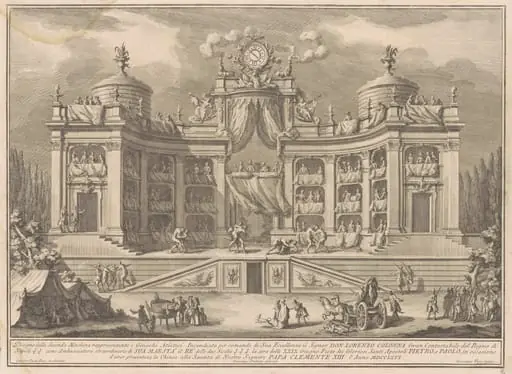 The Seconda Macchina for the Chinea of 1766: A Theater for Athletic Games
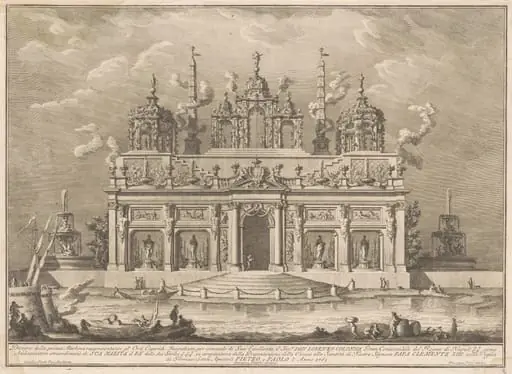 The Prima Macchina for the Chinea of 1765: The Garden of the Hesperides
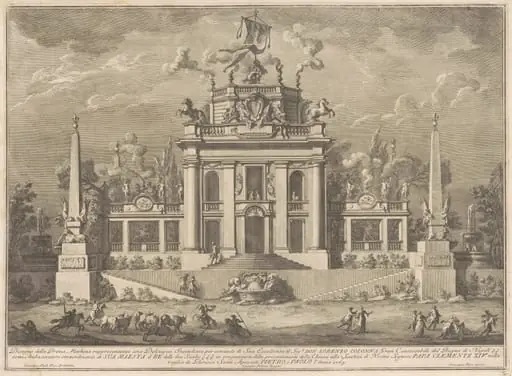 The Prima Macchina for the Chinea of 1769: A "Deliziosa"
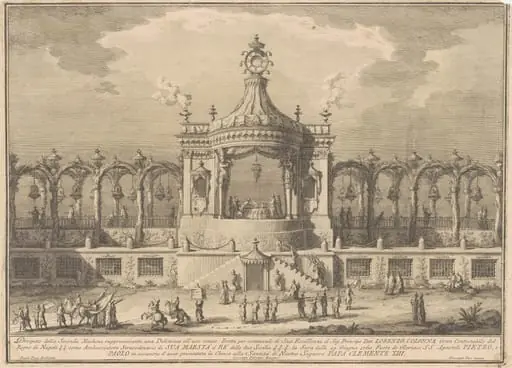 The Seconda Macchina for the Chinea of 1760: A Chinoiserie Pavilion
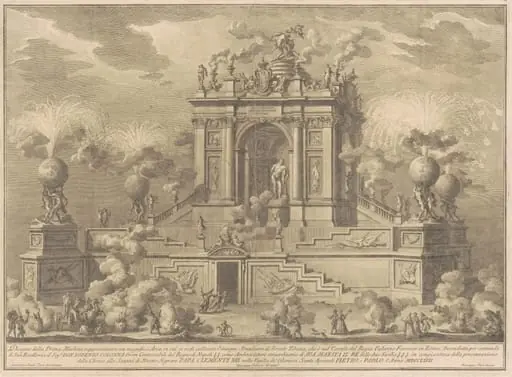 The Prima Macchina for the Chinea of 1767: A Triumphal Arch with the Farnese Hercules
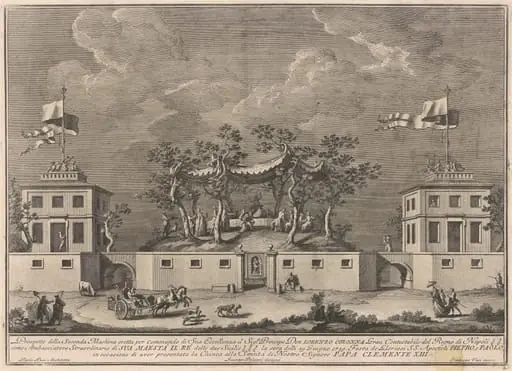 The Seconda Macchina for the Chinea of 1759: A "Deliziosa" with a Bacchanal
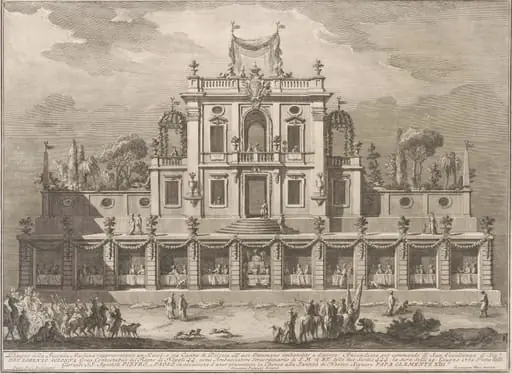 The Seconda Macchina for the Chinea of 1762: A Kiosk, or Pleasure-House in Ottoman Style
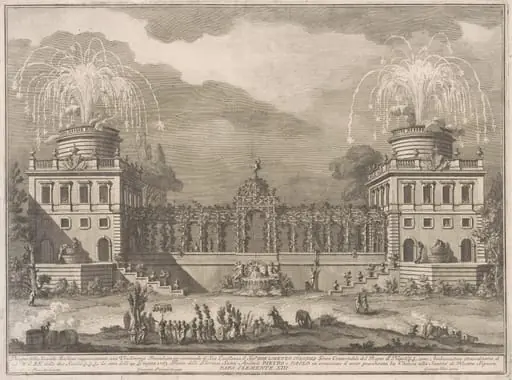 The Seconda Macchina for the Chinea of 1763: The Grape Harvest
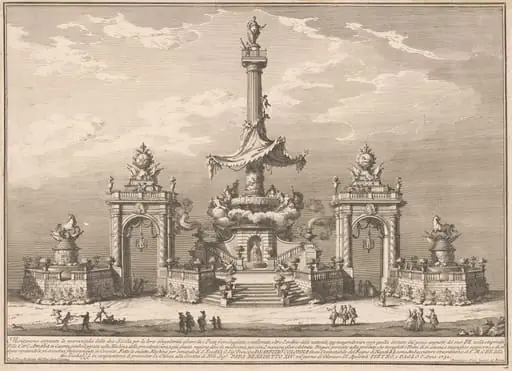 The Seconda Macchina for the Chinea of 1752: The Banquet of the Gods in Villa Carl'Amalia in Caserta
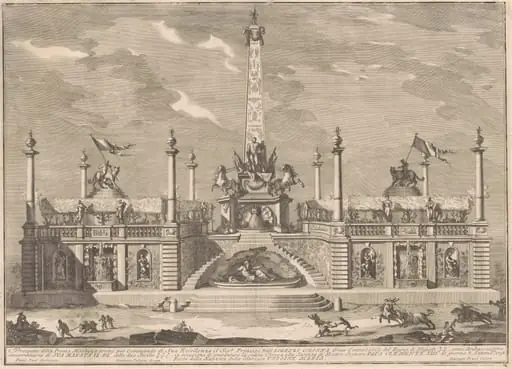 The Prima Macchina for the Chinea of 1758: A "Deliziosa" with Hanging Gardens
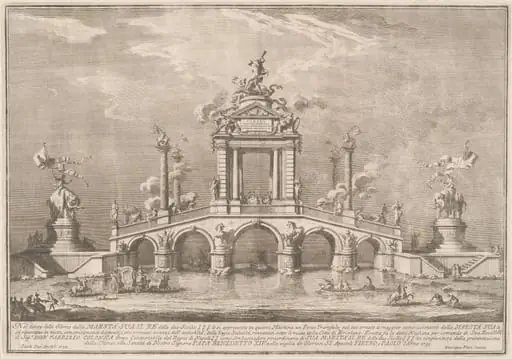 The Prima Macchina for the Chinea of 1755: A Triumphal Bridge with Antiquities from Herculaneum
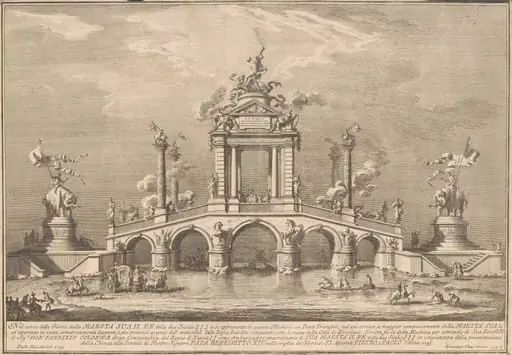 The Prima Macchina for the Chinea of 1755: A Triumphal Bridge with Antiquities from Herculaneum
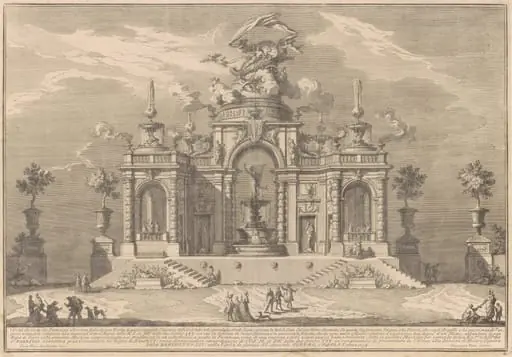 The Prima Macchina for the Chinea of 1754: The Palace of Venus in Cyprus
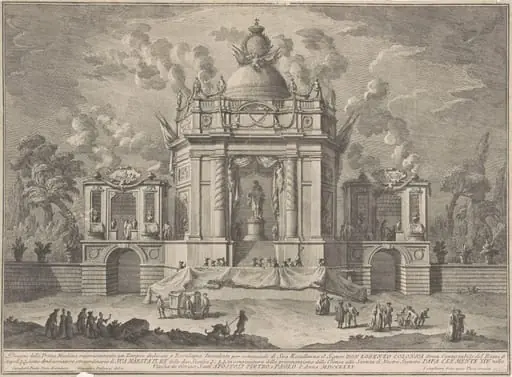 The Prima Macchina for the Chinea of 1771: The Temple of Asclepius
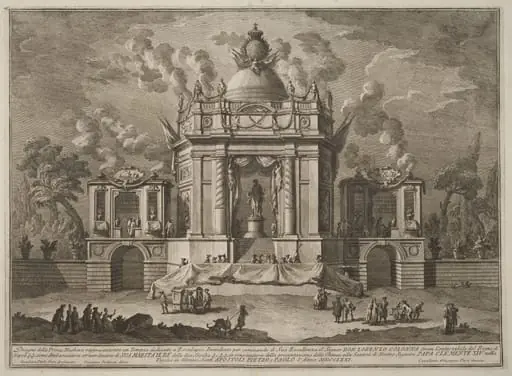 The Prima Macchina for the Chinea of 1771: The Temple of Asclepius
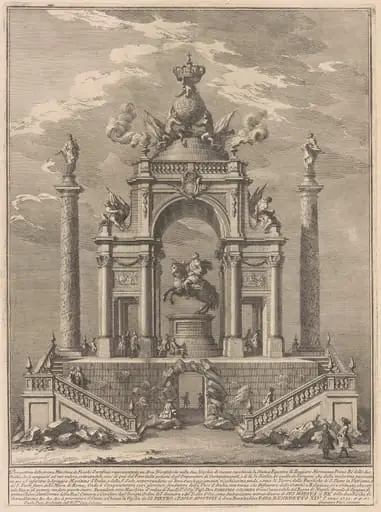 The Prima Macchina for the Chinea of 1751: Triumphal Arch for Roger I of Sicily
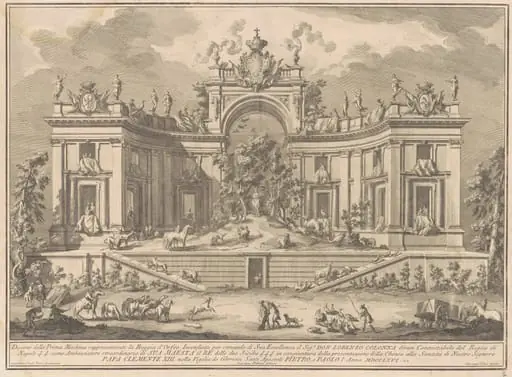 The Prima Macchina for the Chinea of 1766: The Palace of Orpheus
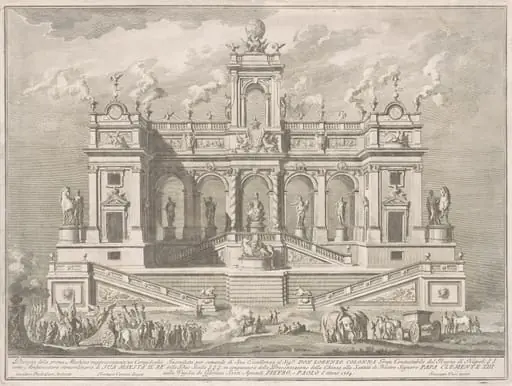 The Prima Macchina for the Chinea of 1764: A Capitol Building