Artwork
The First Guard
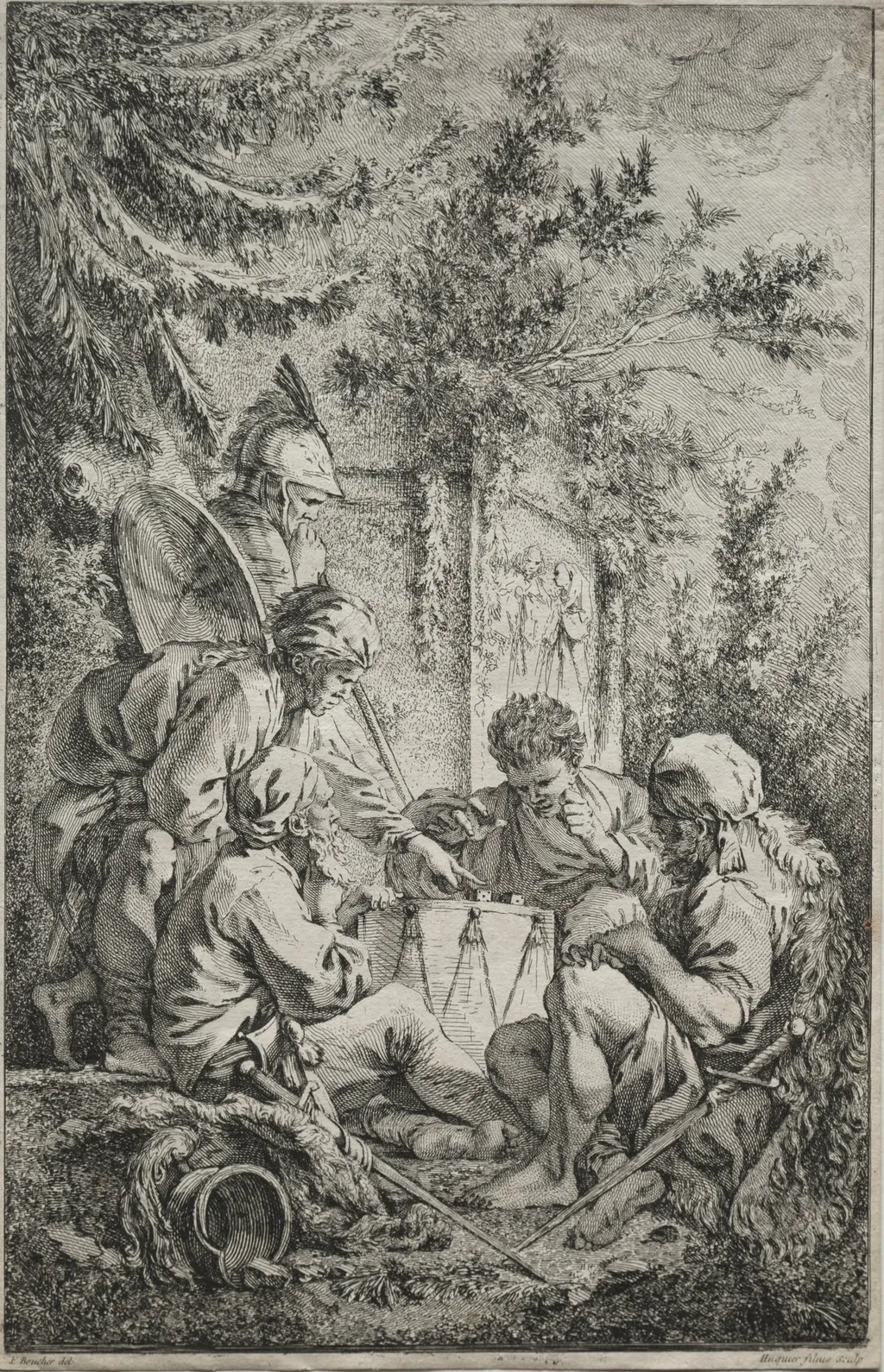
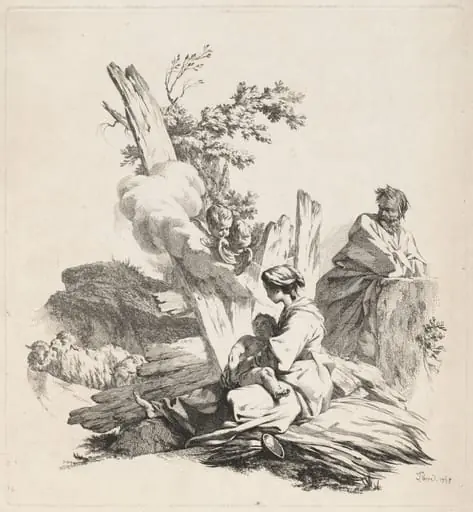
The First Guard is a print by the Baroque artist Gabriel Huquier. It dates from 1754 and is held in the collection of the Cleveland Museum of Art.
About this work
Overview
It belongs to a series of genre scenes that circulated widely in the mid-18th century, helping to disseminate the Rococo aesthetic beyond elite circles.
This print, titled The First Guard, is a reproductive work derived from a design by François Boucher and published by Gabriel Huquier. It belongs to a series of genre scenes that circulated widely in the mid-18th century, helping to disseminate the Rococo aesthetic beyond elite circles. The image captures a moment of quiet suspension among soldiers, transforming an ordinary pause into a composition of subtle emotional nuance.
Subject & Meaning
The scene portrays a group of aging and young soldiers, their armor and weapons set aside, engaged in a game of dice. Their weathered clothing and calloused hands suggest a life of service, not leisure. The tension in their postures and expressions conveys the weight of chance and uncertainty, grounding the Rococo style in human vulnerability rather than frivolity. It presents military life not as heroic spectacle, but as a series of fleeting, intimate pauses.
Technique & Style
Boucher’s composition balances naturalism with deliberate arrangement: figures are grouped to guide the eye through gestures and glances, while light falls softly to emphasize texture—rough wool, worn leather, the glint of bone dice. Huquier’s etching captures fine detail without overrefinement, preserving the sketch-like immediacy of the original. The line work is controlled yet fluid, avoiding theatricality in favor of quiet observation.
History & Provenance
The print was produced by Gabriel Huquier, a prominent publisher who collaborated with Boucher to translate his drawings into widely distributed engravings. These prints were sold to middle-class collectors and helped extend Boucher’s influence beyond courtly patronage. The work’s survival in multiple institutional collections suggests its popularity as both artistic artifact and social document of the period.
Context
While Rococo art often celebrated aristocratic leisure, this print diverges by focusing on the lives of common soldiers—a group rarely central to decorative arts. Its emergence coincided with growing public interest in everyday life, reflecting broader cultural shifts toward realism. The scene aligns with emerging genre traditions in France that valued authenticity over idealization, even within ornamental frameworks.
Legacy
The print exemplifies how Rococo imagery could accommodate psychological depth without abandoning elegance. Its circulation through Huquier’s workshop influenced later genre painters who sought to depict ordinary subjects with dignity. Though not overtly political, the work quietly expanded the scope of acceptable subjects in print culture, paving the way for more socially grounded imagery in the decades that followed.
Artist & collection

Artist
Gabriel Huquier (1695–1772) was an entrepreneurial French drawer (artist), engraver, printmaker, publisher, and art collector, who became a pivotal figure in the production of French 18th-century ornamental etchings and engravings

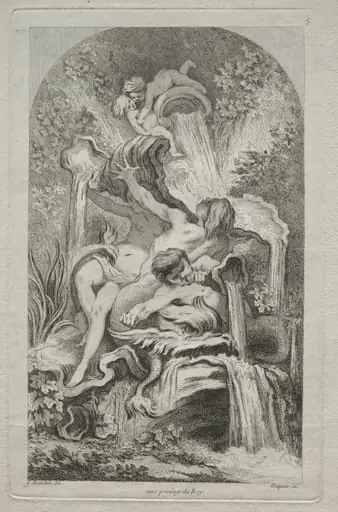 Book of Fountains: No. 5
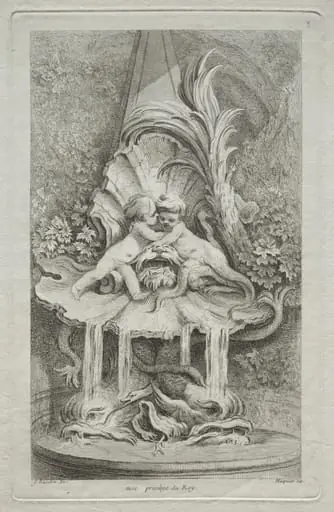 Book of Fountains: No. 3
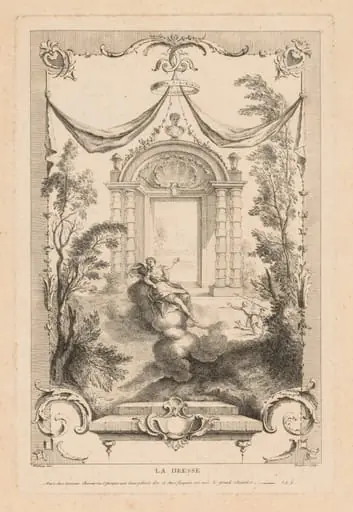 The Goddess, Diana on the Clouds
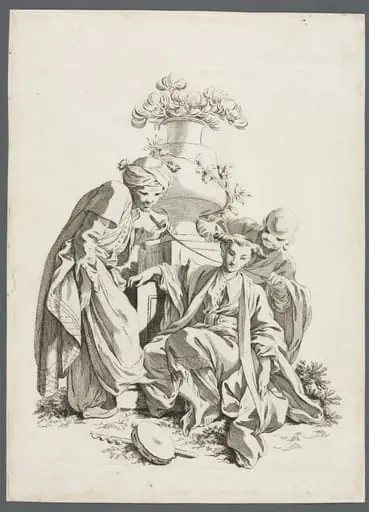 The Senses: Touch (after Boucher)
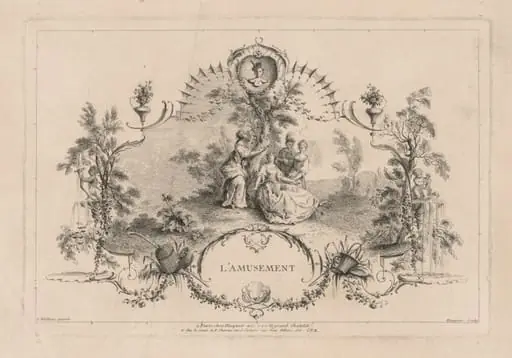 Amusement, Arabesque
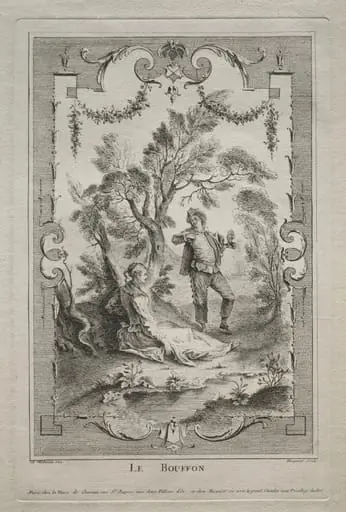 The Buffoon, Arabesque
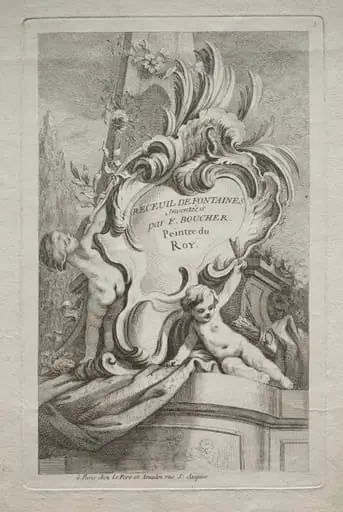 No. 1: Title Page
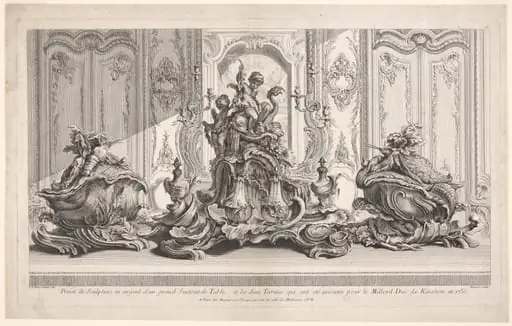 Silver Sculptural Project for a Large Centerpiece and Two Tureens Which Have Been Executed for His Lordship the Duke of Kingston, plate 115 from Works of Juste-Aurèle Meissonier (Oeuvre de Juste-Aurèle Meissonier)
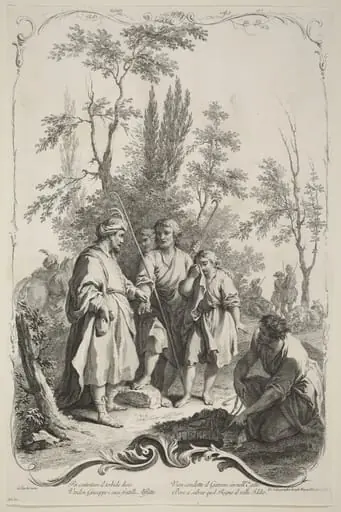 Joseph and His Brothers
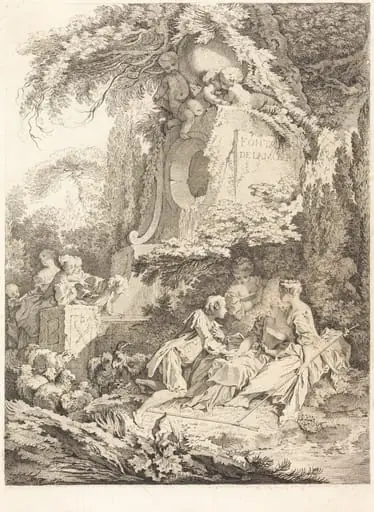 La Fontaine de l'Amour
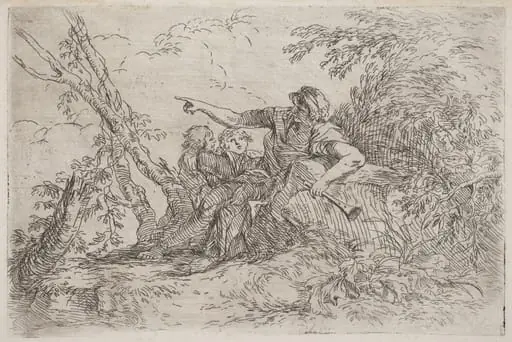 Shepherd in a Landscape
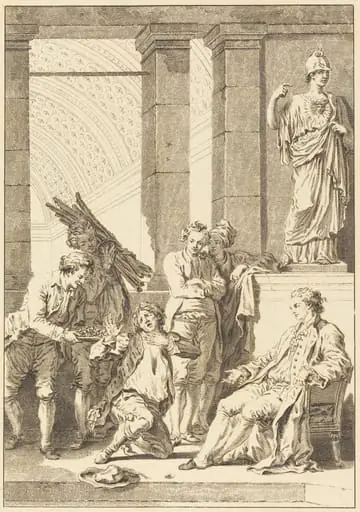 Le paysan
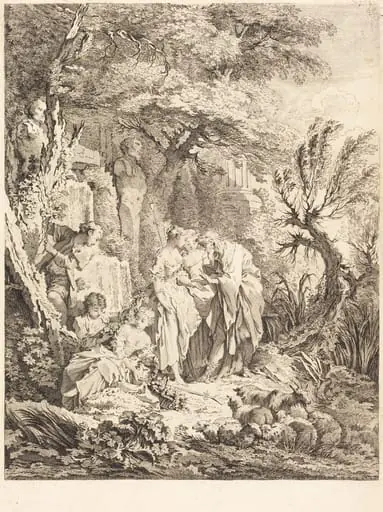 La Bonne Aventure
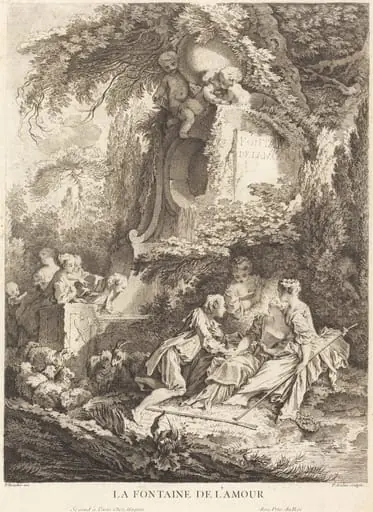 La Fontaine de l'Amour
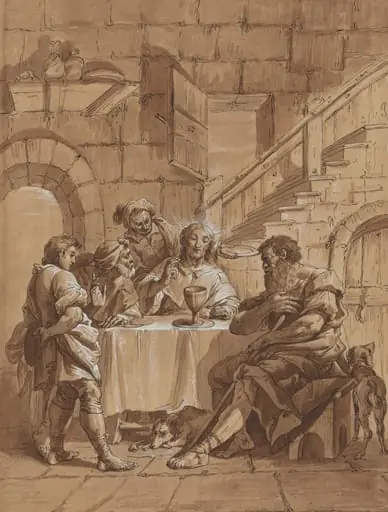 Supper at Emmaus
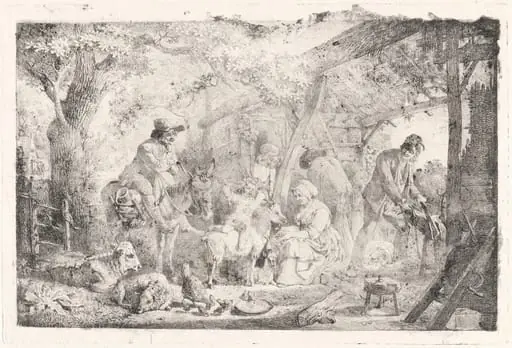 The Little Cavalier (Le Petit Cavalier)
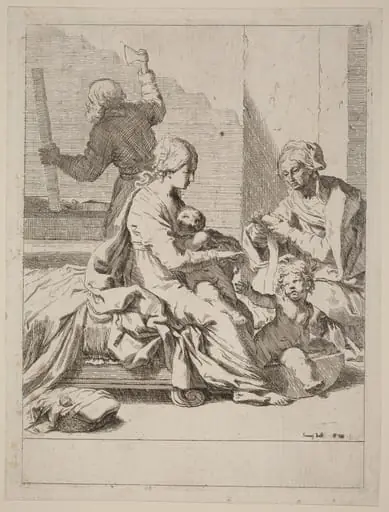 The Holy Family with Saint Elizabeth and Saint John the Baptist
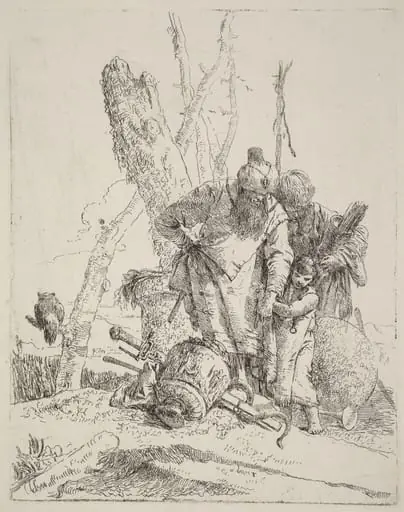 Two Turbaned Magicians and a Boy
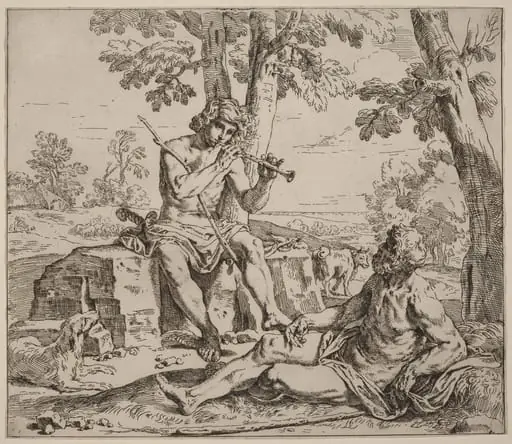 Mercury and Argus
 Rest on the Flight into Egypt