Artwork
Title Page for Cornelii Iansenii ... Avgvstinvs
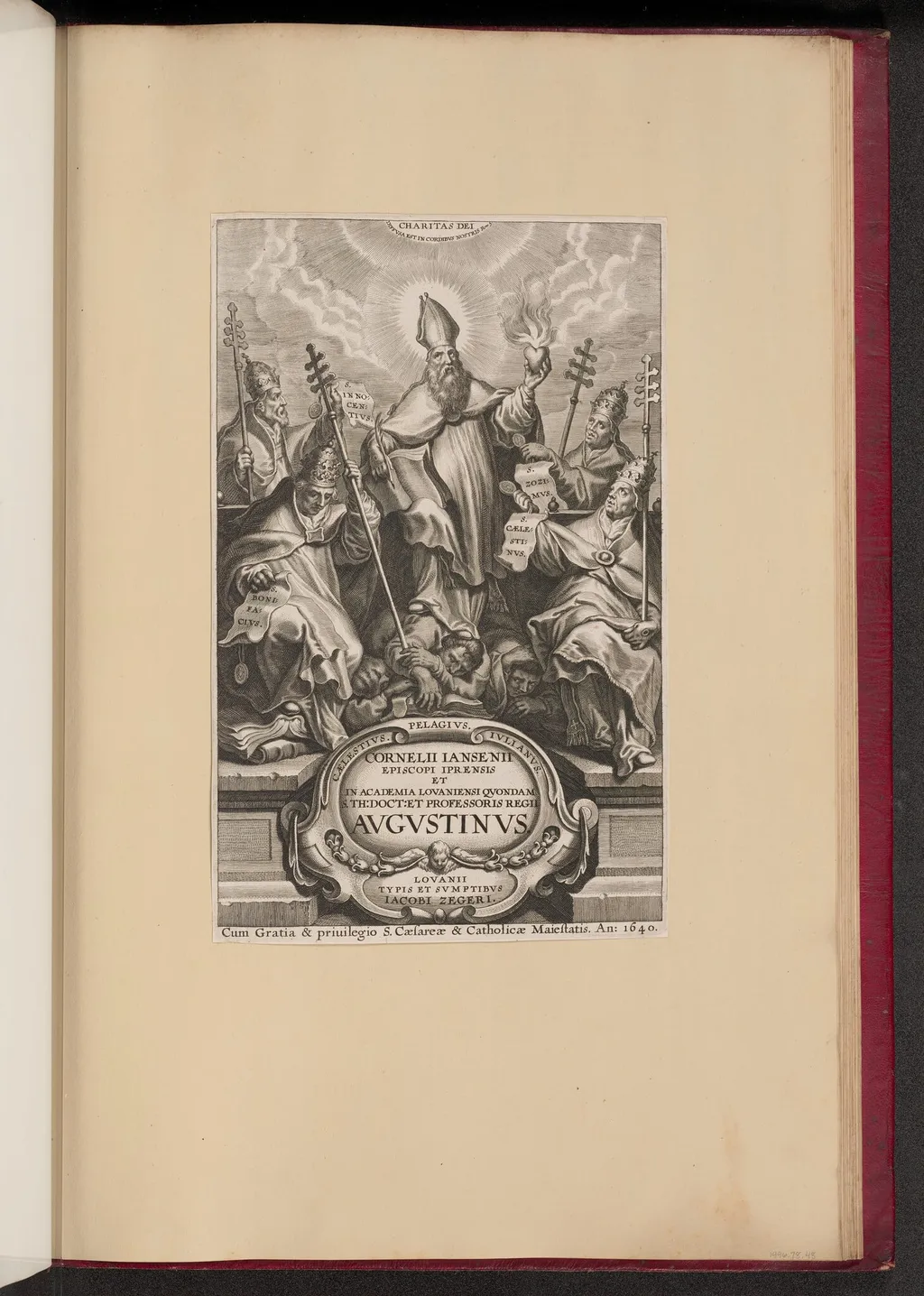
Title Page for Cornelii Iansenii ... Avgvstinvs is an ink print by the Baroque artist Cornelis Galle I. It dates from 1640 and is held in the collection of the National Gallery of Art. This 1640 engraving by Cornelis Galle the Elder serves as the title page for a publication on Augustine of Hippo.
About this work
This black-and-white print shows a group of robed men gathered around a central figure with a long beard and a bishop’s hat.
This black-and-white print shows a group of robed men gathered around a central figure with a long beard and a bishop’s hat. The central man holds a cross-high staff in one hand and a glowing orb in the other, while smaller figures kneel below. Around them, clouds and light stream from above, giving the scene a dramatic, heavenly glow.
The text at the bottom names this a title page for a book about Augustine, printed in 1640. The artist used fine lines to create depth, which makes the robes and faces look almost three-dimensional.
Next, look up engraving to see how artists like this one carved detailed images into metal plates.
Overview
This 1640 engraving by Cornelis Galle the Elder serves as the title page for a publication on Augustine of Hippo. Executed in fine lines on laid paper, the print combines religious symbolism with meticulous craftsmanship. Galle, trained in Antwerp and active in Rome, brought a refined technical approach to his work, balancing compositional clarity with atmospheric detail. The image functions both as a decorative frontispiece and a visual introduction to the theological content within.
Subject & Meaning
The central figure, identified as Augustine, is depicted with a bishop’s mitre and holding a crozier and a luminous orb, symbols of spiritual authority and divine knowledge. Surrounding him, robed figures kneel in reverence, while celestial light streams downward, suggesting heavenly endorsement. The composition elevates Augustine as a theological pillar, aligning his teachings with divine illumination. The scene reflects Counter-Reformation ideals, emphasizing the sanctity and enduring influence of early Church Fathers.
Technique & Style
Galle employed fine, controlled engraving lines to model volume and texture, particularly in the folds of robes and the contours of faces. The use of hatching and cross-hatching creates subtle gradations of light and shadow, lending a sculptural quality to the figures. The background is rendered with delicate, radiating lines to suggest divine light, contrasting with the solidity of the human forms. His technique reflects the precision of Northern Renaissance engraving traditions, refined through exposure to Italian artistic norms.
History & Provenance
Created in 1640, the print was produced in Antwerp, where Galle operated a successful printselling enterprise alongside his engraving work. It accompanied a scholarly edition of Augustine’s writings, likely commissioned by a religious publisher. Galle’s reputation as a skilled reproductive artist ensured wide circulation of such works among educated ecclesiastical circles. The print survives in several institutional collections, attesting to its role in disseminating theological imagery during the early 17th century.
Context
The engraving emerged during a period of renewed interest in Augustine’s writings, particularly within Catholic intellectual circles responding to Protestant Reformation debates. Visual representations of Church Fathers were used to reinforce doctrinal authority. Galle’s work fits within a broader tradition of religious book illustration, where imagery served to legitimize and elevate scholarly texts. His engagement with both Flemish and Italian styles reflects the transnational nature of print culture in the Habsburg Netherlands.
Legacy
Cornelis Galle the Elder’s title page exemplifies the role of engraving in shaping the visual identity of theological texts. His precise technique influenced later engravers working in religious and academic publishing. Though not widely known today outside specialist circles, his prints contributed to the standardization of iconographic conventions for Church Fathers. The work remains a document of how visual art mediated complex theological ideas for early modern readers.
Artist & collection

Artist
Cornelis Galle the Elder (1576 – 29 March 1650), a younger son of Philip Galle, was born at Antwerp in 1576, and was taught engraving by his father.

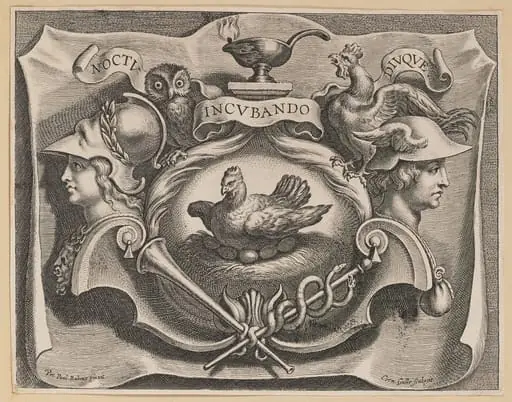 Vignette for the Title Page of Martinus Bonacina, Opera Omnia
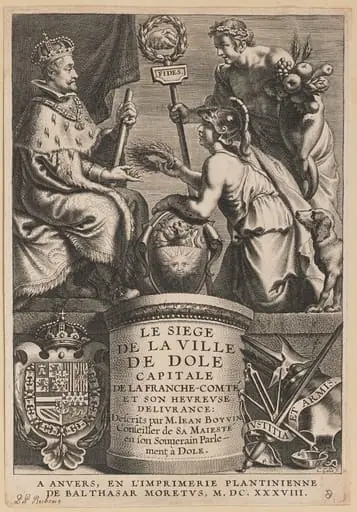 Title Page for Jean Boyvin, Le Siege de la Ville de Dole
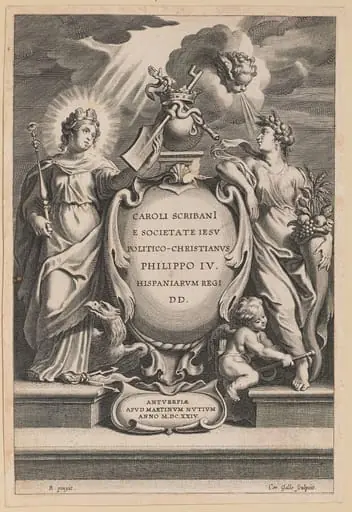 Title Page for Carolus Scribani, Politico-Christianus
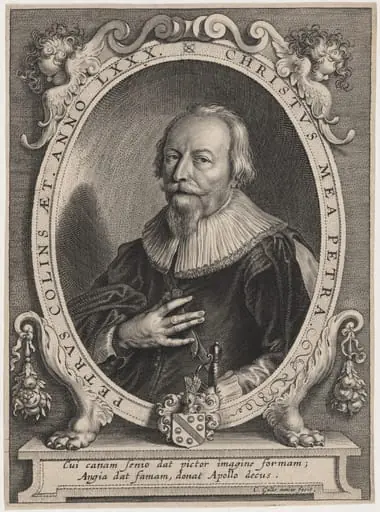 Petrus Collins
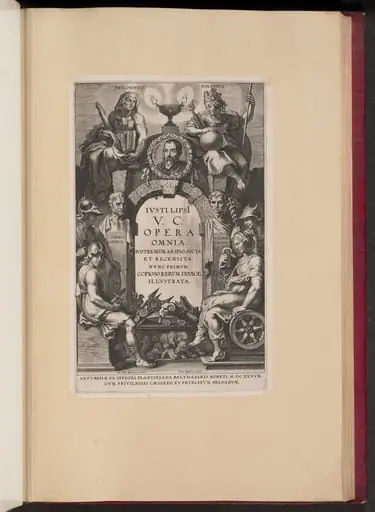 Title Page for Justus Lipsius, Opera Omnia, I
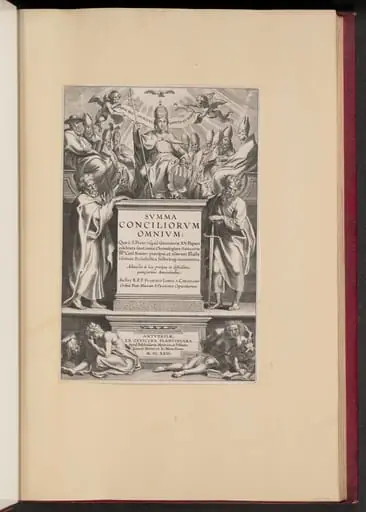 Title Page for F. Longo a Coriolano's "Svmma Conciliorvm Omnivm"
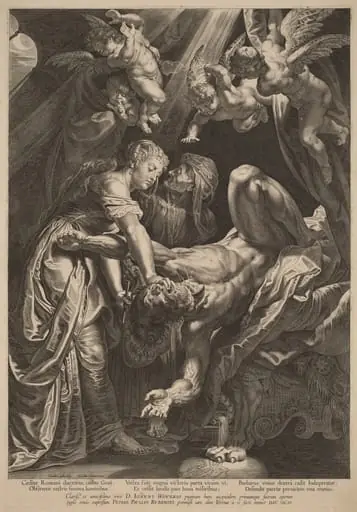 Judith Beheading Holofernes
 Title Page for Hubert Goltzius, Romanae et Graecae Antiqvitatis Monvmenta (Opera Omnia, I)
 Title Page for Ludovicus Blosius, Opera
 Title Page for Dommo Benedicto Haeftano's S. Benedictvs Illvstratvs
 Title Page for Balthasar Cordier's "Opera S. Dionysii Areopagitae, I"
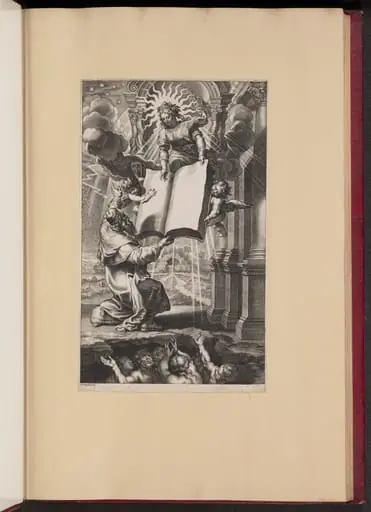 Title Page for Olivier Boonaerts' "In Ecclesiasticvm Commentarivs..."
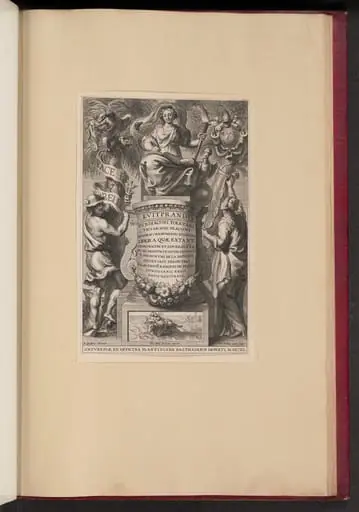 Title Page for Liutprand, Opera
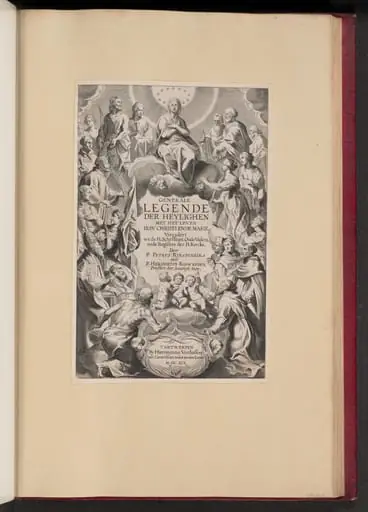 Title Page for Pedro de Ribadineira and Heribert Rosweyde, Generale Legende der Heylighen
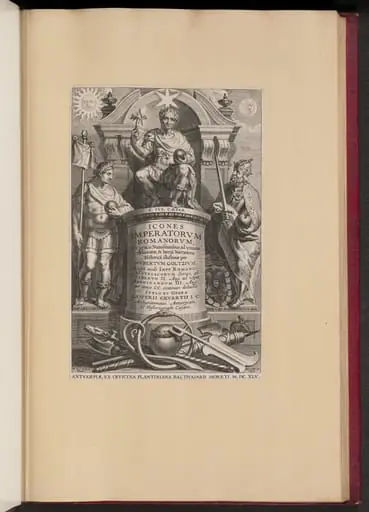 Title Page for Hubert Goltzius's Icones Imperatorvm Romanorvm (Opera Omnia, V)
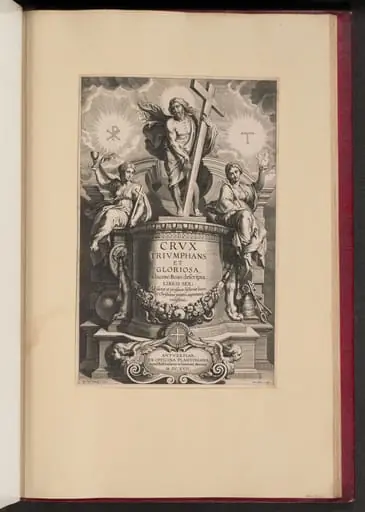 Title Page for Giacomo Bosio, Crux Triumphans et Gloriosa
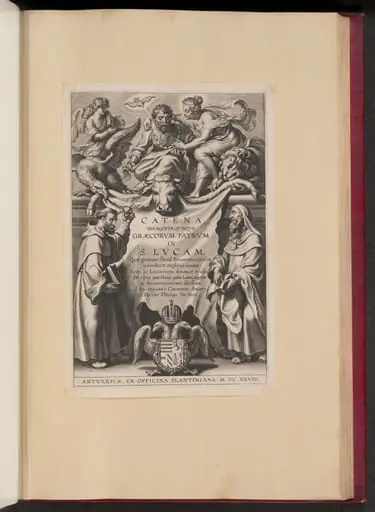 Title Page for Balthasar Cordier, Catena Sexaginta Qvinqve Graecorvm Patrvm in S. Lvcam...