Artwork
Justice
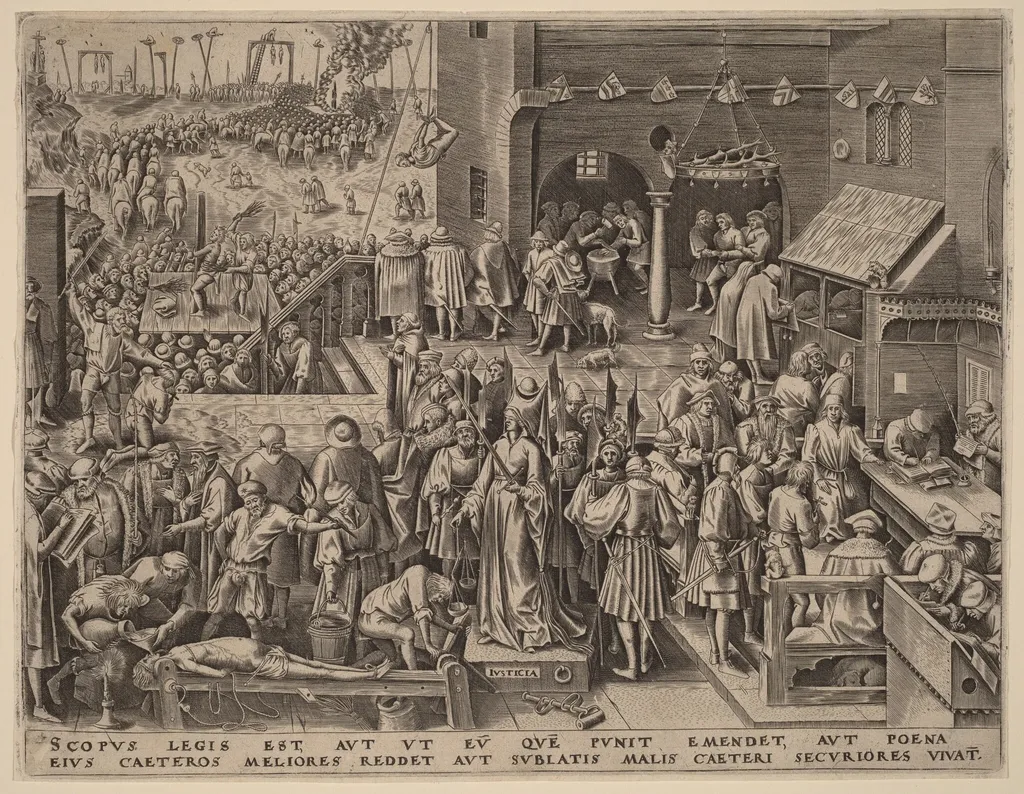
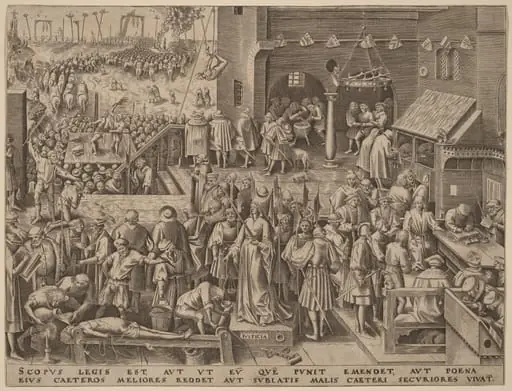
Justice is an ink print by the Renaissance artist Philip Galle. It dates from 1559 and is held in the collection of the National Gallery of Art.
About this work
Overview
This work belongs to a series of moral and civic personifications, reflecting the period’s interest in abstract virtues made tangible through imagery.
Philip Galle, a Dutch engraver active in Antwerp, produced this 1559 print as part of a broader engagement with allegorical subjects in Northern European print culture. Working within a thriving commercial print industry, Galle translated visual ideas into detailed engravings for wide circulation. This work belongs to a series of moral and civic personifications, reflecting the period’s interest in abstract virtues made tangible through imagery.
Subject & Meaning
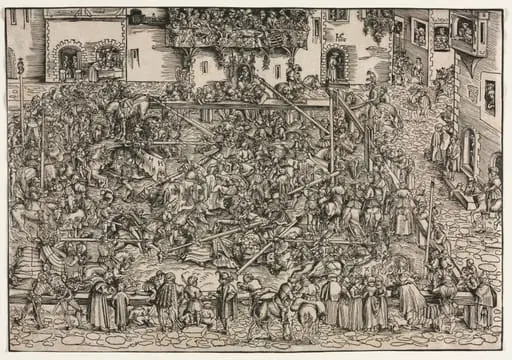
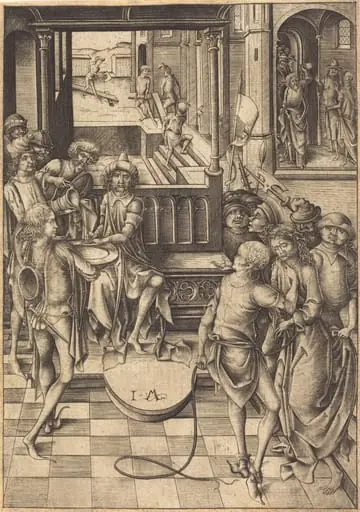
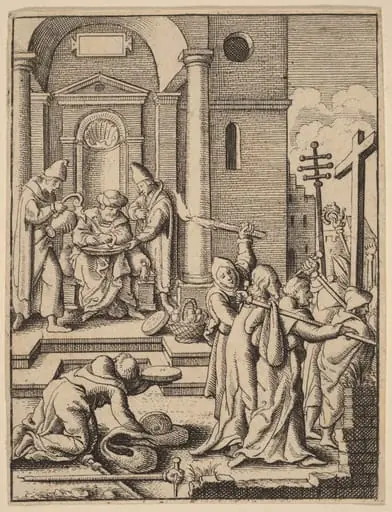
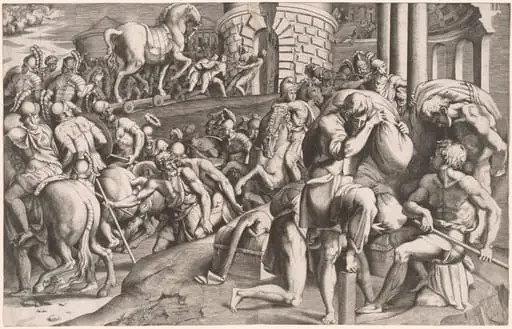
The print presents Justice as a seated female figure on a raised platform, surrounded by a bustling crowd engaged in legal and punitive acts. Figures below depict trials, punishments, and petitions, illustrating the social mechanics of justice. The inclusion of torture and disorder suggests a critique of institutional power, aligning with Renaissance humanist concerns about law’s corruption and the fragility of equity in practice.
Technique & Style
Galle employed fine, controlled lines typical of Northern Renaissance engraving to render dense architectural detail and varied human activity. The composition is tightly packed, with figures arranged in layered planes to suggest depth and movement. Shading and cross-hatching define texture and volume, while the absence of color emphasizes the graphic precision characteristic of the medium and its reproductive function.
History & Provenance
Created in Antwerp, a major hub for print distribution, the engraving was likely intended for collectors and civic institutions rather than private devotion. Galle’s workshop produced numerous similar works, often based on designs by other artists. While no early ownership records survive, its survival in multiple museum collections indicates its circulation across Europe in the late 16th and early 17th centuries.
Context
In mid-16th century Antwerp, prints like this served both educational and moral purposes, translating complex legal and philosophical ideas into accessible imagery. The depiction of justice as chaotic reflects broader anxieties about governance during the Reformation and Spanish rule. Similar themes appear in the works of Pieter Bruegel and other contemporaries who used everyday scenes to comment on societal structures.
Legacy
Galle’s engraving contributed to the visual vocabulary of justice in early modern Europe, influencing later emblem books and civic iconography. Though not widely attributed as original in design, its clarity and detail made it a reference for subsequent artists and printers. The work remains a document of how legal ideals were visually negotiated amid social unrest and institutional change.
Artist & collection
Artist
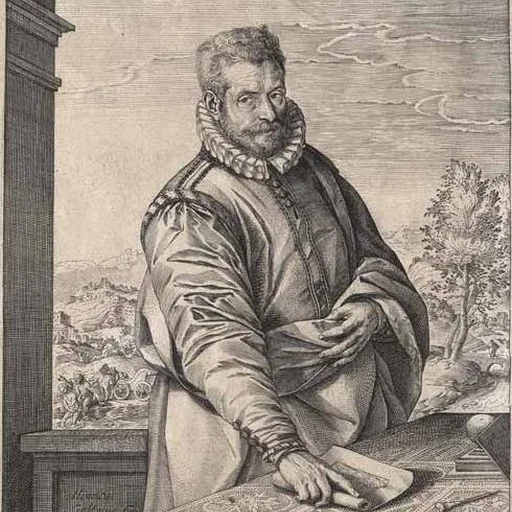
Philip (or Philips) Galle (1537 – March 1612) was a Dutch publisher, best known for publishing old master prints, which he also produced as designer and engraver. He is especially known for his reproductive engravings of paintings.

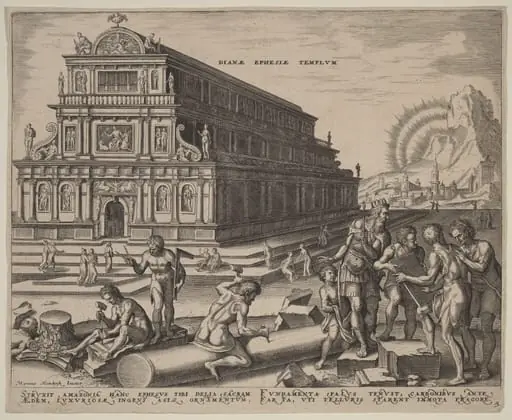 Dianae Ephesiae Templum (The Temple of Diana at Ephesus)
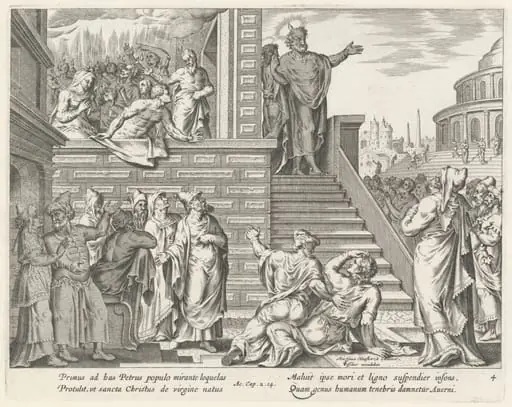 Saint Peter Speaks to the People about Christ
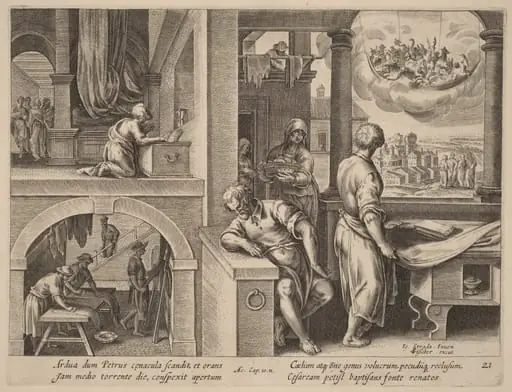 The Vision of Saint Peter
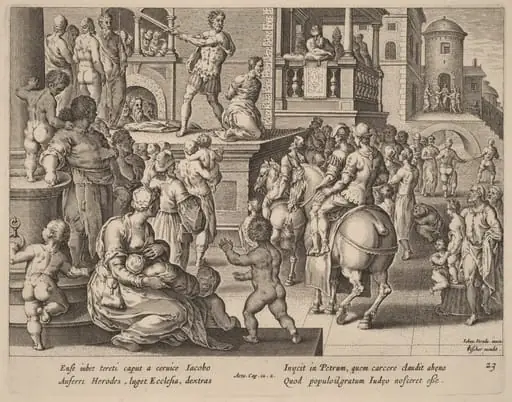 Beheading of Saint James
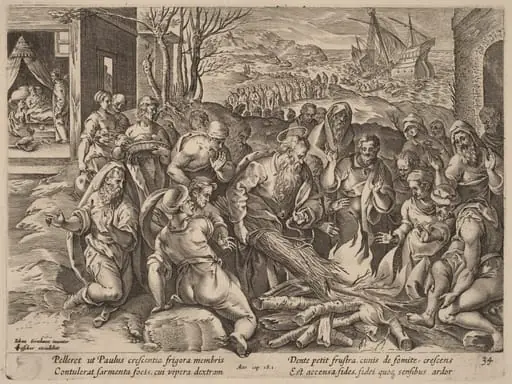 Saint Paul Shipwrecked on the Island of Melita
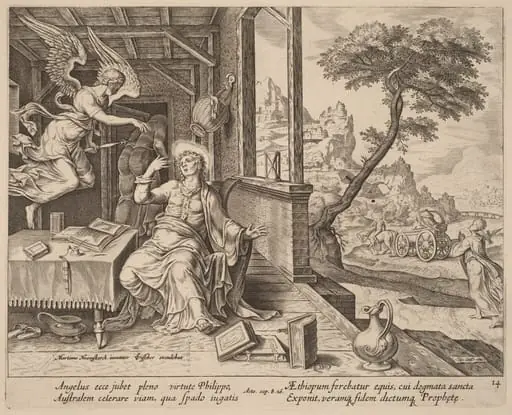 The Angel Orders Saint Philip to Accompany the Ethiopian Eunuch
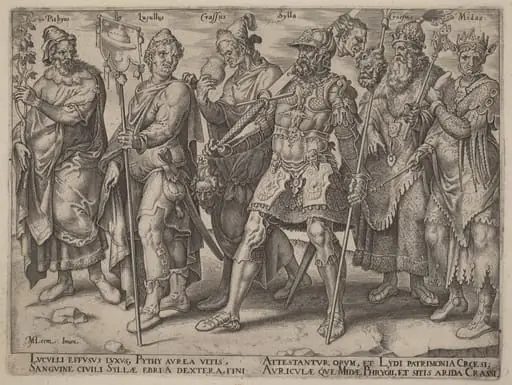 Notorious Examples of Wealth from Antiquity
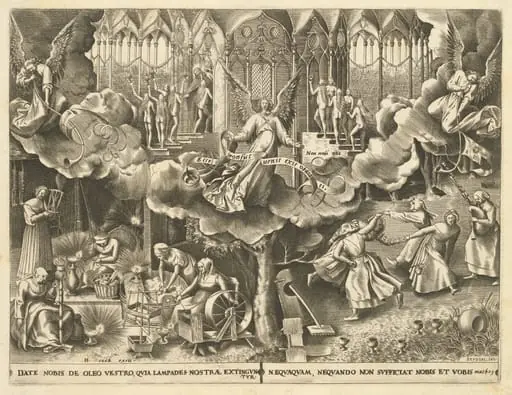 The Parable of the Wise and Foolish Virgins