Artwork
The Diligent Worker United with Christ after Death
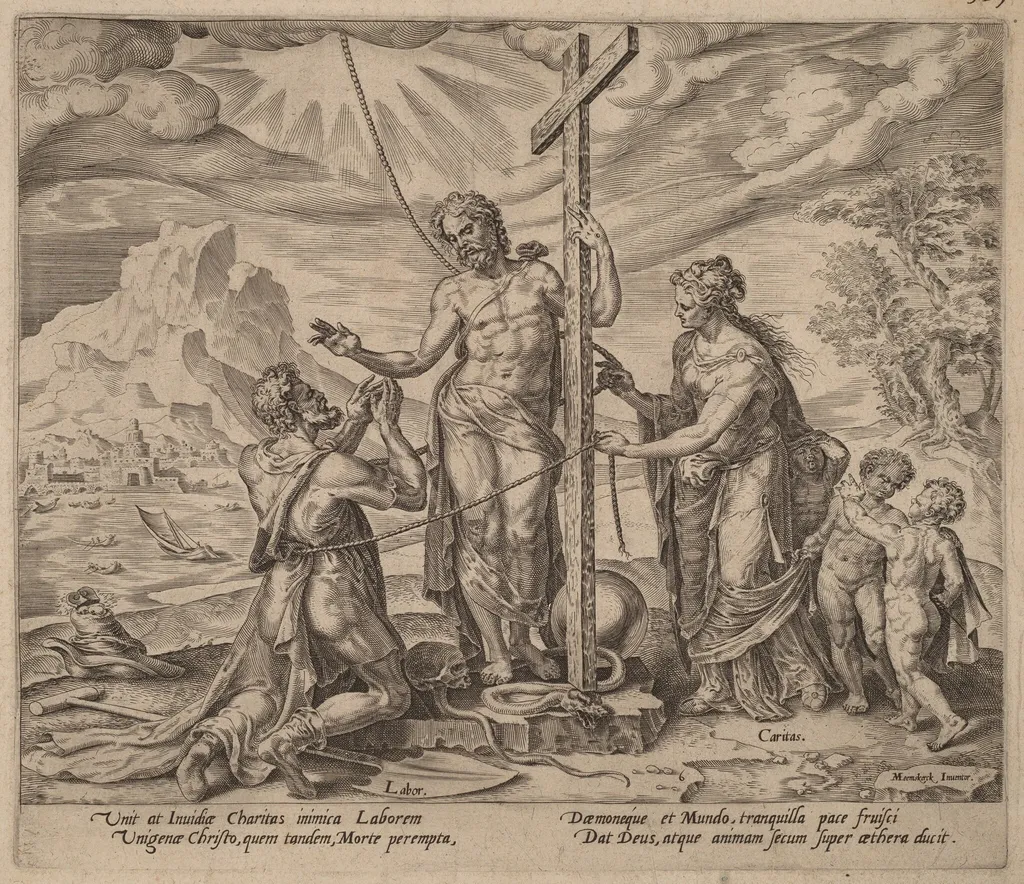
The Diligent Worker United with Christ after Death is an ink print by the Renaissance artist Philip Galle. It dates from 1572 and is held in the collection of the National Gallery of Art.
About this work
Overview
Galle, primarily known for reproducing paintings, here crafted an original composition aligned with Protestant moral themes of diligence and divine reward.
Created in 1572 by Dutch engraver Philip Galle, this print presents a devotional scene of a deceased laborer reunited with Christ. Executed in fine-line engraving, the work belongs to a broader tradition of religious prints produced for private contemplation. Galle, primarily known for reproducing paintings, here crafted an original composition aligned with Protestant moral themes of diligence and divine reward.
Subject & Meaning
The central figure, a robust man holding a cross, represents a faithful worker ascending to spiritual union with Christ after death. At his feet, a woman and two children kneel in supplication, suggesting familial grief and hope. The coastal setting, with distant ships and a town, evokes earthly toil, while the swirling clouds imply divine intervention. The inscription below reinforces the link between labor and eternal grace, common in Reformation-era moral imagery.
Technique & Style
Galle employed a burin to carve precise, interwoven lines that model form and texture without color. The folds of the woman’s robe, the rippling sea, and the rocky shore are rendered through controlled hatching and cross-hatching, creating depth through tonal variation. The figures are stylized with elongated proportions, typical of Northern Mannerist aesthetics, while the background landscape remains simplified to focus attention on the central spiritual moment.
History & Provenance
The engraving was produced during Galle’s active years in Haarlem, a hub for print distribution in the Low Countries. As a publisher and engraver, Galle circulated religious imagery widely, often adapting themes from contemporary sermons. This print likely reached domestic audiences seeking visual reinforcement of pious values, though no early ownership records are documented.
Context
In the wake of the Reformation, Protestant regions discouraged elaborate altarpieces but embraced prints for moral instruction. Scenes of virtuous labor and posthumous salvation resonated with emerging middle-class ideals. Galle’s work reflects this shift, replacing Catholic iconography with accessible narratives that linked daily effort to spiritual destiny, aligning with Calvinist teachings on vocation and grace.
Legacy
Though not widely reproduced in later centuries, the engraving exemplifies the role of printmaking in shaping Protestant devotional culture. Its emphasis on the dignity of labor and the afterlife influenced regional visual traditions, particularly in the Netherlands. Galle’s technical precision set a standard for reproductive and original prints, ensuring his influence endured even as stylistic trends evolved.
Artist & collection
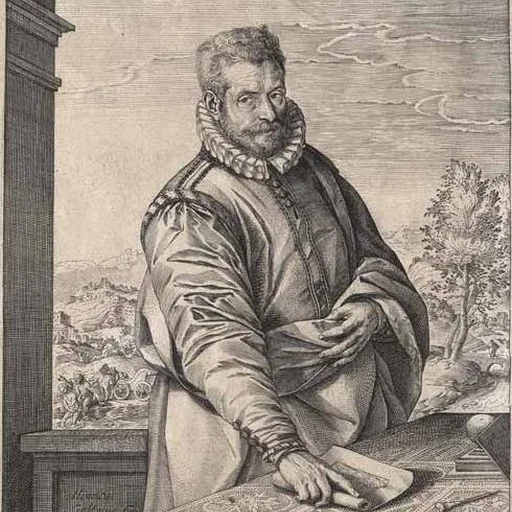
Artist
Philip (or Philips) Galle (1537 – March 1612) was a Dutch publisher, best known for publishing old master prints, which he also produced as designer and engraver. He is especially known for his reproductive engravings of paintings.

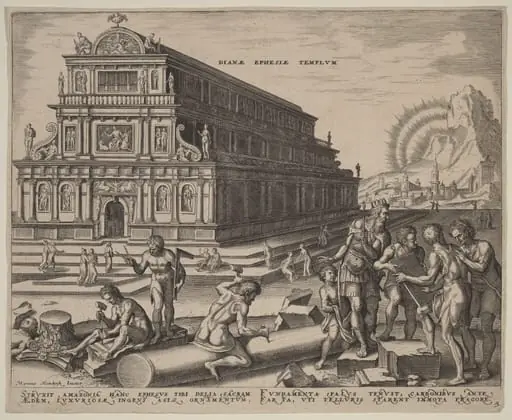 Dianae Ephesiae Templum (The Temple of Diana at Ephesus)
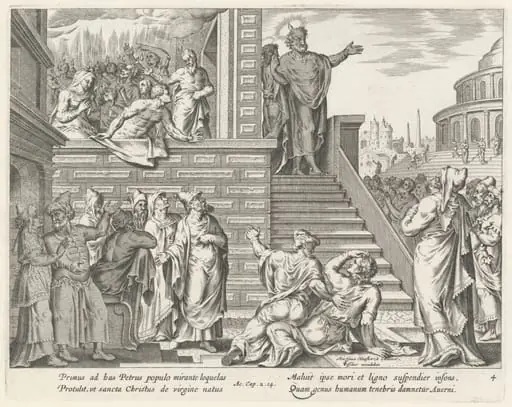 Saint Peter Speaks to the People about Christ
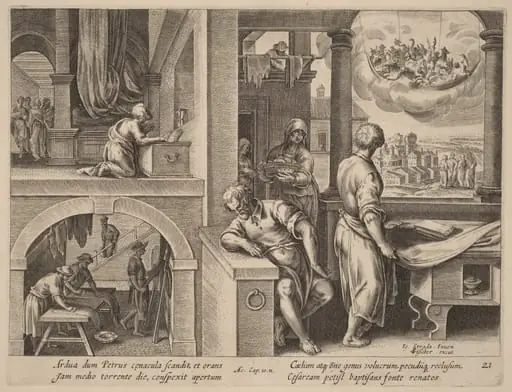 The Vision of Saint Peter
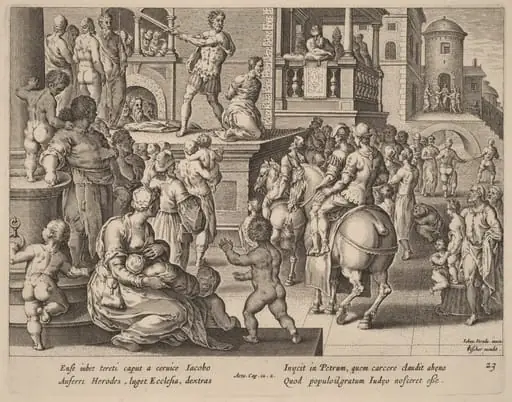 Beheading of Saint James
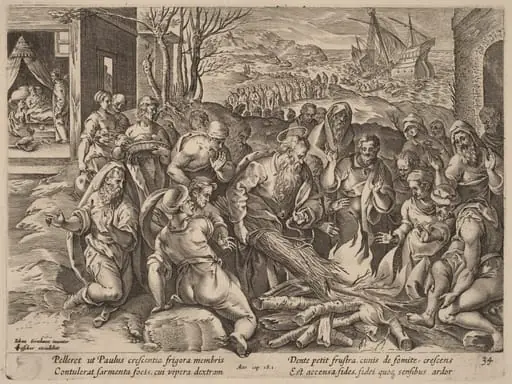 Saint Paul Shipwrecked on the Island of Melita
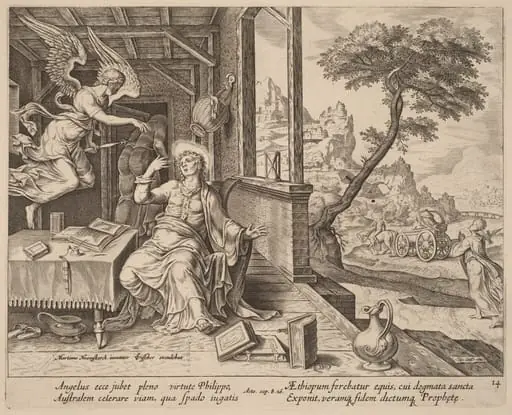 The Angel Orders Saint Philip to Accompany the Ethiopian Eunuch
 Notorious Examples of Wealth from Antiquity
 The Parable of the Wise and Foolish Virgins
 Christ is Given Vinegar to Drink
 The Descent from the Cross
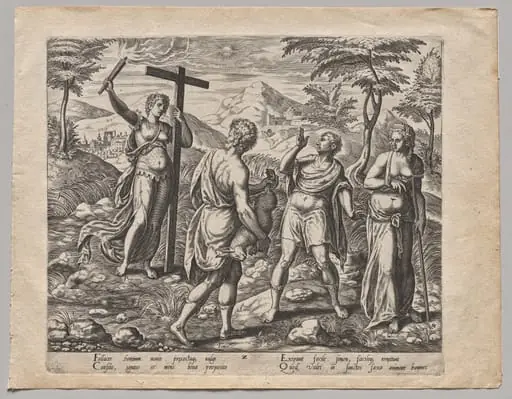 The Seed Falling among the Stones
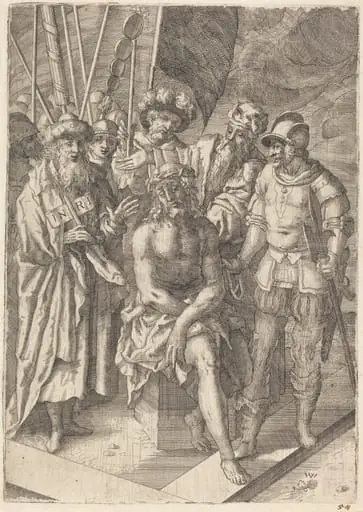 Ecce Homo
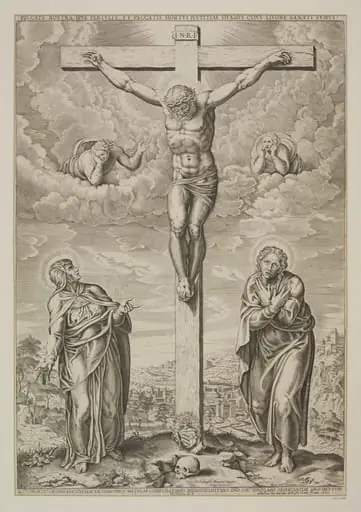 The Crucifixion and the Two Maries
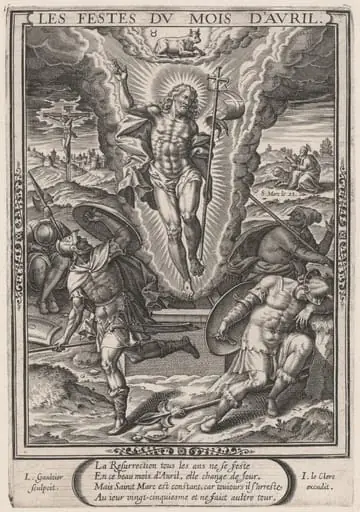 Les Festes du mois d'Avril (April: The Resurrection)
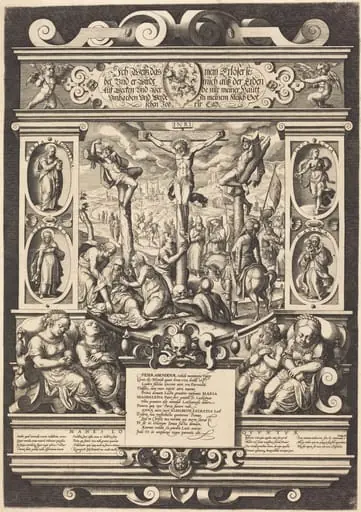 Funeral Monument to the Daughters of Feuerabend
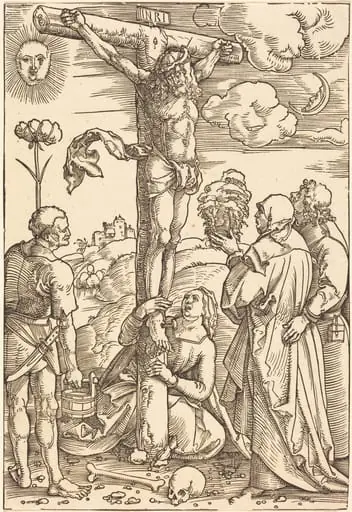 Christ on the Cross
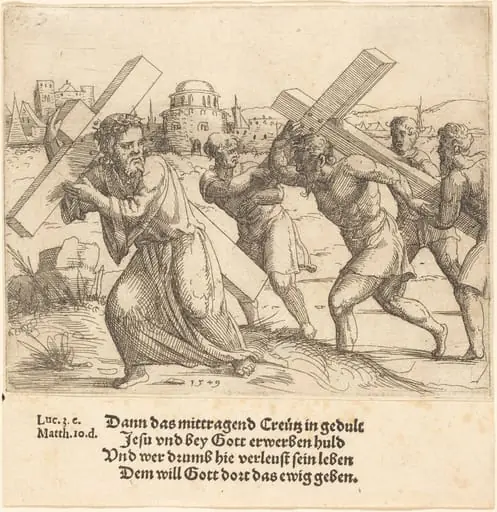 Man Carries the Cross after Christ
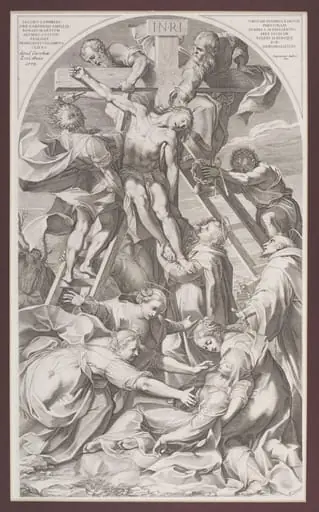 The Taking Down from the Cross
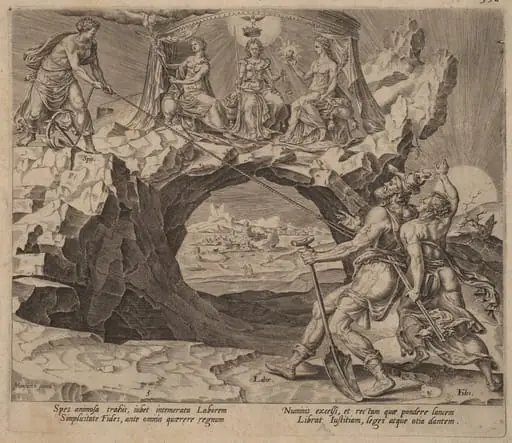 The Diligent Worker Aspiring to the Rightousness of the Lord
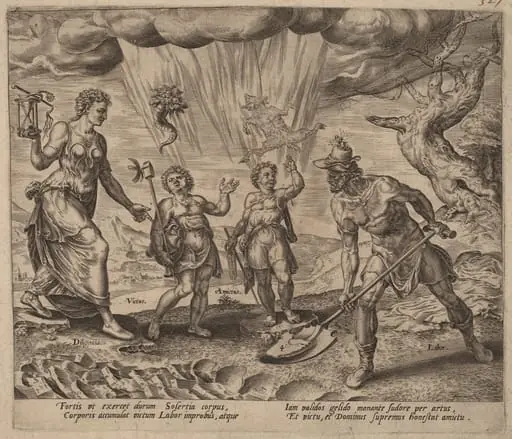 The Lord Endowing the Diligent Worker with Food and Clothing