Artwork
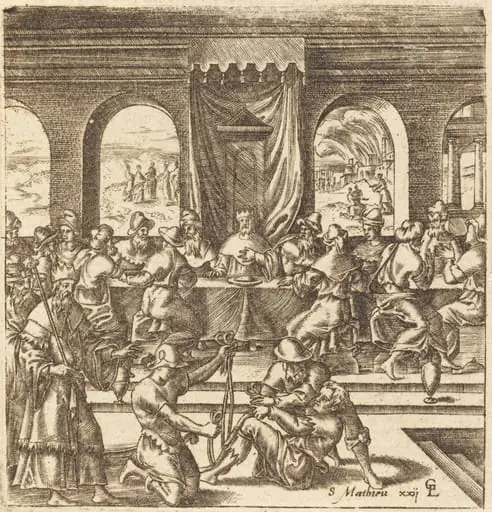
The Wedding at Cana (Christ Changes Water to Wine)
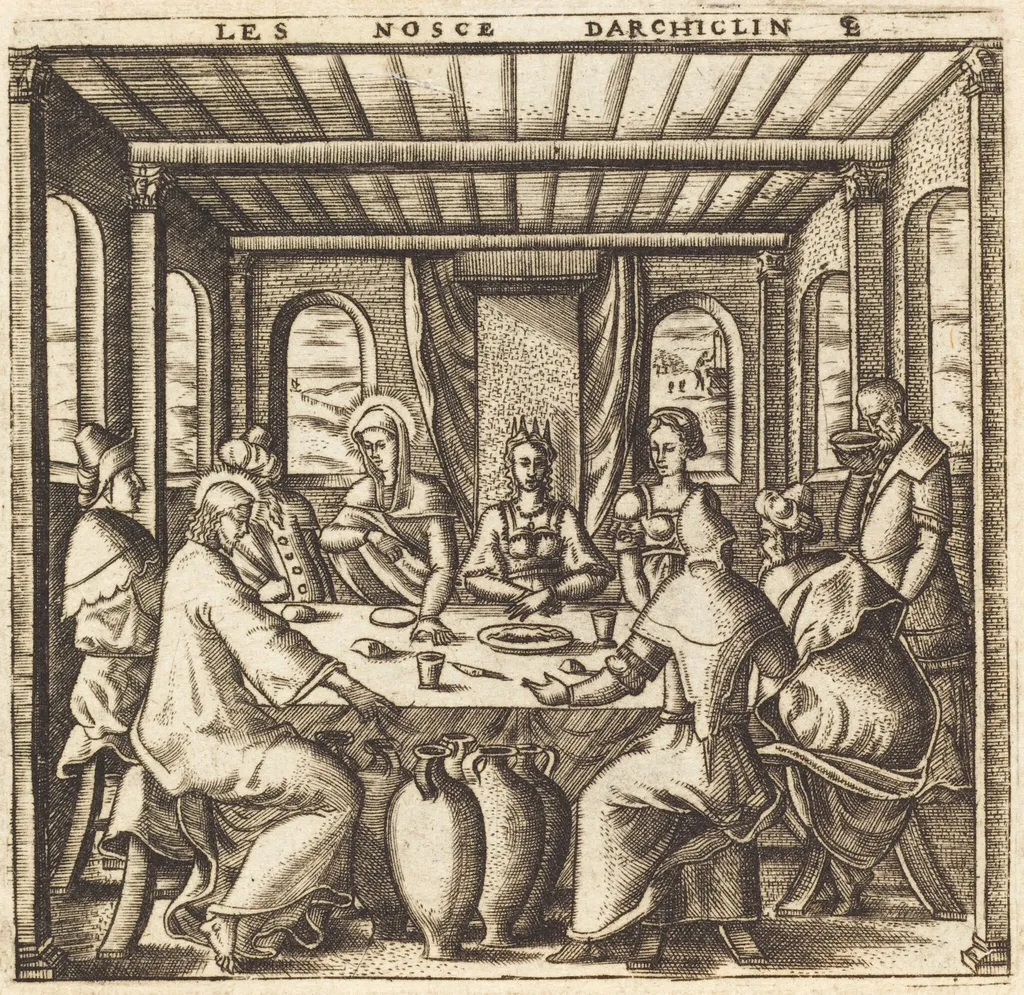
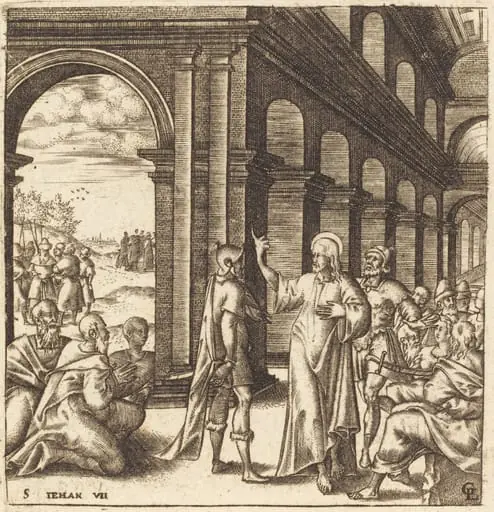
The Wedding at Cana (Christ Changes Water to Wine) is an ink print by the Renaissance artist Léonard Gaultier. It dates from 1578 and is held in the collection of the National Gallery of Art.
About this work
Overview
The Wedding at Cana (Christ Changes Water to Wine) is an engraving created by French artist Léonard Gaultier around 1578, exemplifying the religious genre prevalent during his time.
Subject & Meaning
The engraving illustrates Christ’s first miracle, as described in the Bible, where he transforms water into wine at a wedding feast, capturing a moment of divine intervention amidst a celebratory gathering.
Technique & Style
Gaultier executed the work entirely with a graver, characteristic of his precise and formally stiff style, aligning with contemporaries such as the Wierix brothers and Crispyn van de Passe. The piece is notable for its meticulous linework.
History & Provenance
Léonard Gaultier, born in Mainz around 1561 and active in Paris until his death in 1641, produced this engraving during his early career, around 1578. Specific provenance details are not provided.
Context
This engraving reflects the artistic and religious sentiments of late 16th-century Europe, where detailed, religious-themed prints were highly valued for both their aesthetic and devotional qualities.
Legacy
While the broader impact of *The Wedding at Cana* on subsequent art movements is not explicitly documented in the provided sources, Gaultier’s work, including this piece, contributes to the understanding of 16th-century French engraving techniques and the enduring depiction of biblical themes in art.
Artist & collection
Artist
Léonard Gaultier, or, as he sometimes signed himself, Galter, a French engraver, was born at Mainz about 1561, and died in Paris in 1641.