Artwork
Christ Washing the Feet of the Apostles
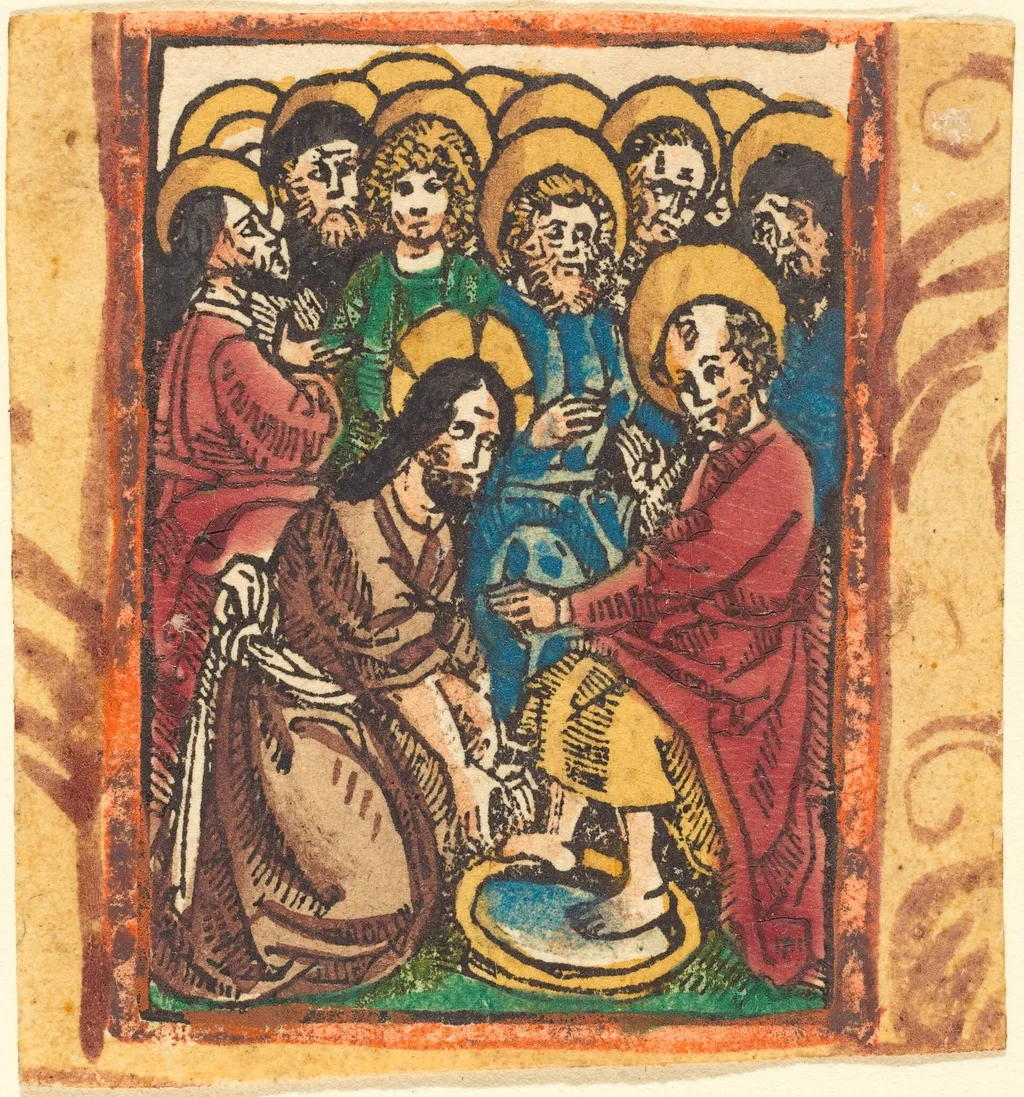
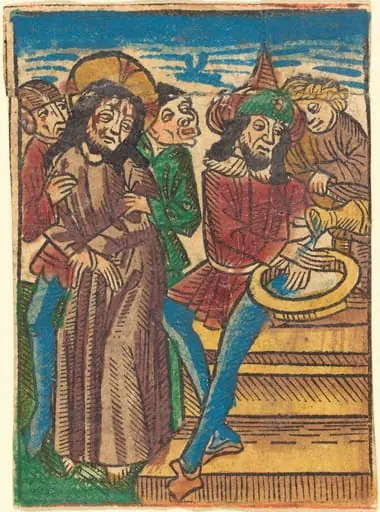
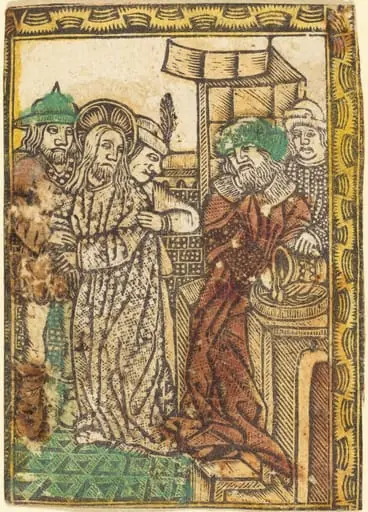
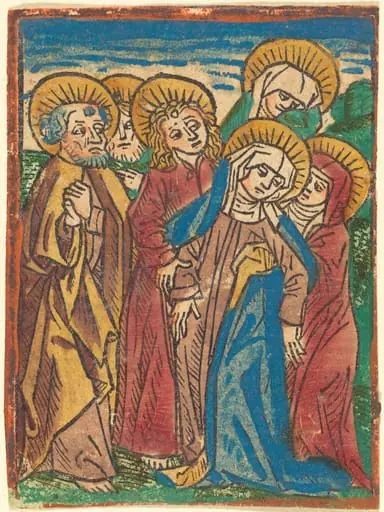
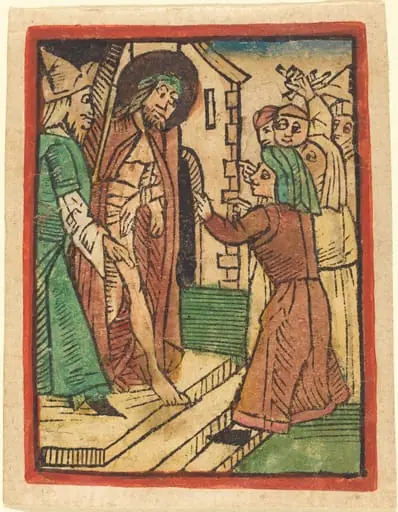
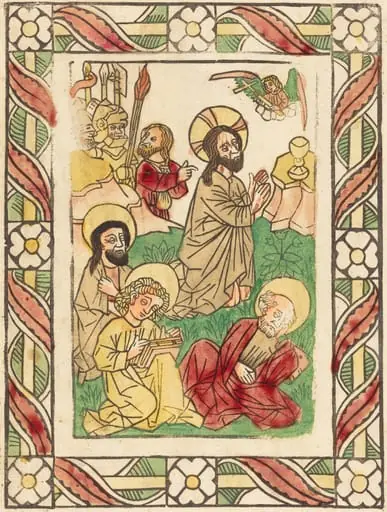
Christ Washing the Feet of the Apostles is an ink print by the Renaissance artist German 15th Century. It dates from 1495 and is held in the collection of the National Gallery of Art. This hand-colored woodcut depicts Christ washing the feet of one of his apostles, a moment from the Gospel of John.
About this work
Overview
The technique reflects early printmaking methods, where carved wooden blocks were inked and pressed onto paper, then manually tinted.
This hand-colored woodcut depicts Christ washing the feet of one of his apostles, a moment from the Gospel of John. The scene is rendered in bold, flat hues of red lake, dark blue, and lilac, applied after the inked impression was made. The figures are arranged in a tight group, their forms simplified and marked by halos, suggesting sacred status. The technique reflects early printmaking methods, where carved wooden blocks were inked and pressed onto paper, then manually tinted.
Subject & Meaning
The scene illustrates Christ’s act of humility before the Last Supper, a gesture meant to model service and equality among his followers. The apostles observe in varied postures—some with raised or clasped hands—conveying awe or contemplation. The halos around each head affirm their spiritual significance, while the central act transforms a domestic task into a sacred ritual. The composition emphasizes intimacy and moral instruction over narrative detail.
Technique & Style
Executed as a woodcut, the image was carved from a wooden block, with lines defining forms and contours. After printing, colors were applied by hand using pigments like red lake and lilac, a common practice before mechanized color printing. The flat, unmodulated colors and minimal shading reflect a devotional aesthetic prioritizing clarity and symbolic presence over naturalism. The bold outlines and simplified faces align with Northern European religious prints of the period.
History & Provenance
The print likely originated in the late 15th or early 16th century, a time when devotional woodcuts were widely distributed across Europe. Hand-coloring suggests it was intended for private or modest ecclesiastical use rather than mass sale. While its exact origin and early owners are undocumented, its style and palette are consistent with prints produced in German or Netherlandish workshops during the early Reformation era.
Context
This image emerged during a period when printed religious imagery played a key role in shaping personal piety. With rising literacy and the spread of printing, such woodcuts allowed laypeople to engage with biblical stories outside church rituals. The emphasis on Christ’s humility resonated with reformist ideals and monastic traditions that valued service. The use of color, though limited, enhanced emotional resonance without compromising accessibility.
Legacy
As a surviving example of early hand-colored printmaking, this work illustrates how religious narratives were visually disseminated before the dominance of oil painting or engraved copperplates. Its preservation offers insight into the material culture of devotion, where affordability and symbolic clarity outweighed artistic refinement. It stands as a quiet testament to the role of print in sustaining spiritual practice across social classes.
Artist & collection

Artist
This 15th-century German artist carved vivid religious scenes into metal and wood, then hand-painted them in bright, symbolic colors.

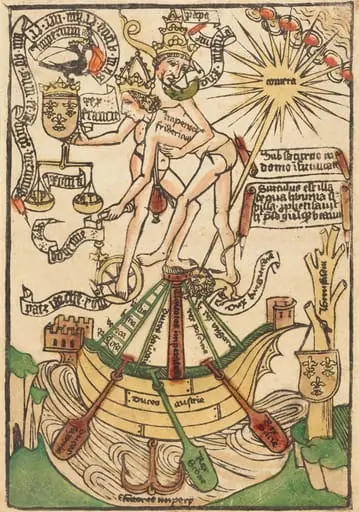 Allegory of the Meeting of Pope Paul II and Emperor Frederick III
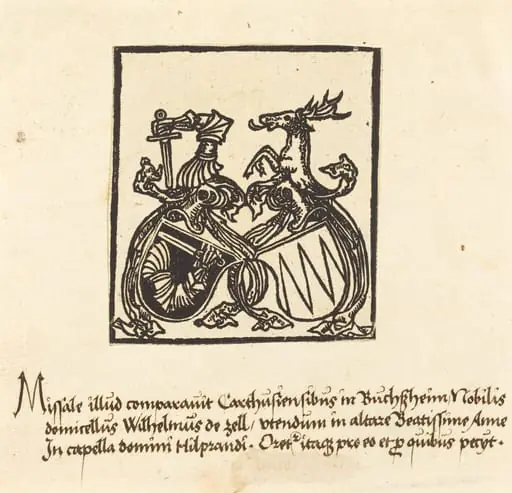 Bookplate of Wilhelm von Zell
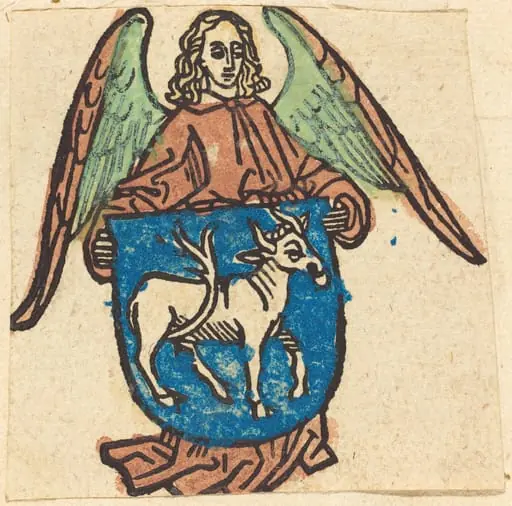 Bookplate of Hilprand Brandenburg of Bibrach
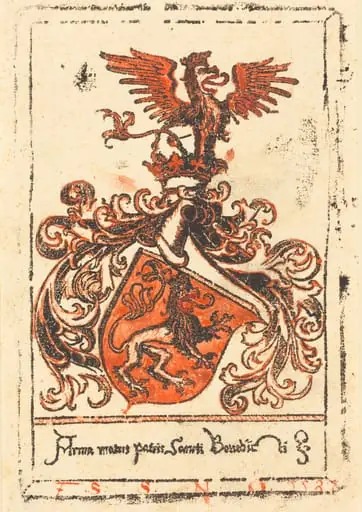 Bookplate of the Abbey of Ottobeuren
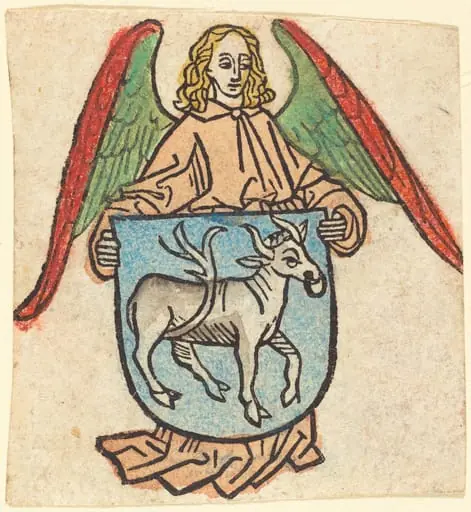 Bookplate of Hilprand Brandenburg of Bibrach
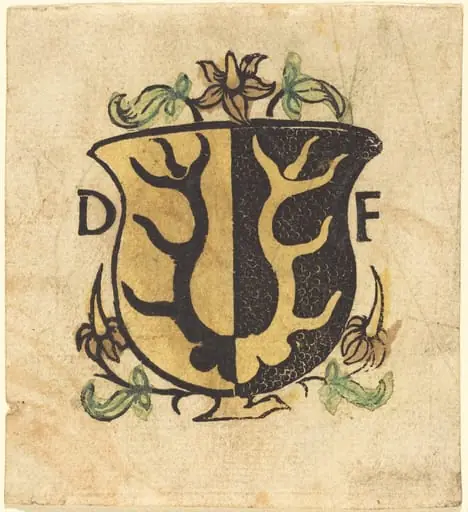 Bookplate of Dominicus Frauenfelder
![Studies for Six Figures (sheet from a model book) [recto], by German 15th Century](https://artifactworldgallery.com/img/german-15th-century--studies-for-six-figures-sheet-from-a-model-book-recto--4837429e0755bc3f-w320.webp) Studies for Six Figures (sheet from a model book) [recto]
Studies for Six Figures (sheet from a model book) [recto]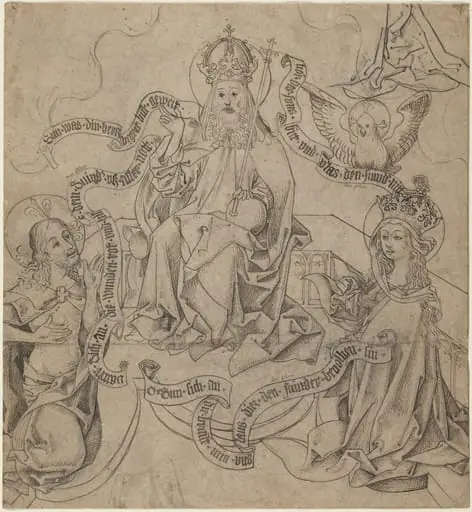 Christ and Mary Interceding with God the Father