Artwork
Saints Peter and Paul with the Sudarium
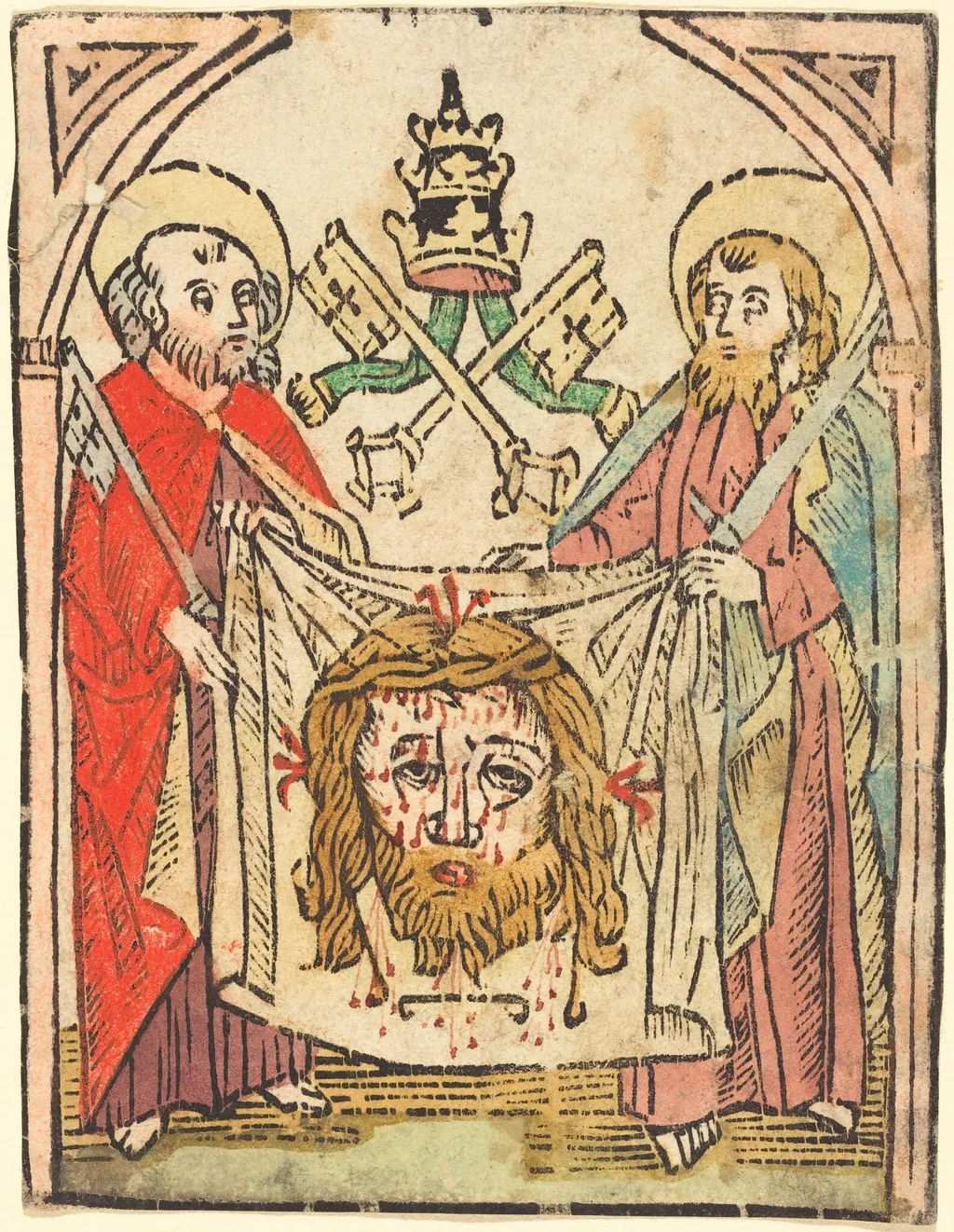
Saints Peter and Paul with the Sudarium is an ink print by the Renaissance artist German 15th Century. It dates from 1475 and is held in the collection of the National Gallery of Art. A hand-colored woodcut from 15th-century Germany depicts Saints Peter and Paul holding a sudarium, a cloth associated with Christ’s face.
About this work
You see two saints, Peter and Paul, with a cloth in a simple scene.
The saints are the main focus, but the colors used are also interesting. The artist used a range of colors, from bright red to deep blue, to make the scene stand out.
Check out the work of artist: German 15th Century to learn more about this style.
Overview
A hand-colored woodcut from 15th-century Germany depicts Saints Peter and Paul holding a sudarium, a cloth associated with Christ’s face. The image is composed with formal symmetry, emphasizing the saints’ presence over background detail. Colors—vermilion, blue, green, and others—are applied by hand, enhancing the devotional tone without overwhelming the linear clarity of the print.
Subject & Meaning
Saints Peter and Paul, foundational figures in Christian tradition, are shown together to signify the unity of the early Church. The sudarium they hold alludes to the Veil of Veronica, a relic believed to bear Christ’s likeness. Their inclusion together reinforces doctrinal themes of apostolic authority and divine witness, common in devotional imagery of the period.
Technique & Style
The image is produced through woodcut, a relief printing method common in late medieval Germany. Lines are bold and simplified, typical of the medium’s constraints. Hand-coloring with mineral pigments adds vibrancy, with each hue applied deliberately to distinguish garments and sacred objects, reflecting both craftsmanship and liturgical symbolism.
History & Provenance
Created in Germany during the late 1400s, this print likely served private devotion or ecclesiastical use. Few signed works from this era survive, and attribution remains general to the regional workshop tradition. Its survival in color suggests it was valued and carefully preserved, possibly within a monastic or affluent household collection.
Context
In 15th-century Germany, printed devotional images circulated widely alongside manuscripts and altarpieces. Woodcuts like this one met growing demand for accessible religious imagery, especially as literacy rose and personal piety expanded. The use of vivid color, though labor-intensive, aligned with the period’s emphasis on sensory engagement in worship.
Legacy
This print exemplifies the transition from manuscript illumination to mass-produced religious art. While overshadowed by later Renaissance innovations, such works preserved medieval iconographic conventions and influenced the visual language of Protestant and Catholic devotional prints well into the 16th century.
Artist & collection

Artist
This 15th-century German artist carved vivid religious scenes into metal and wood, then hand-painted them in bright, symbolic colors.

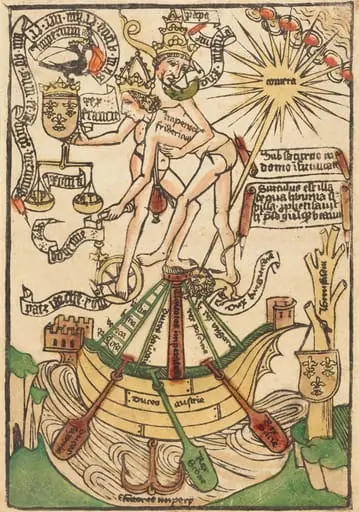 Allegory of the Meeting of Pope Paul II and Emperor Frederick III
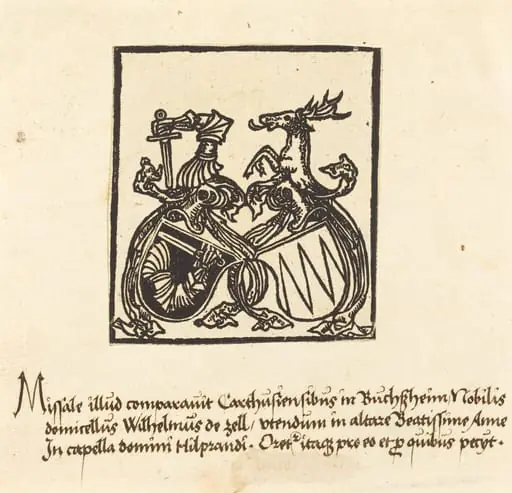 Bookplate of Wilhelm von Zell
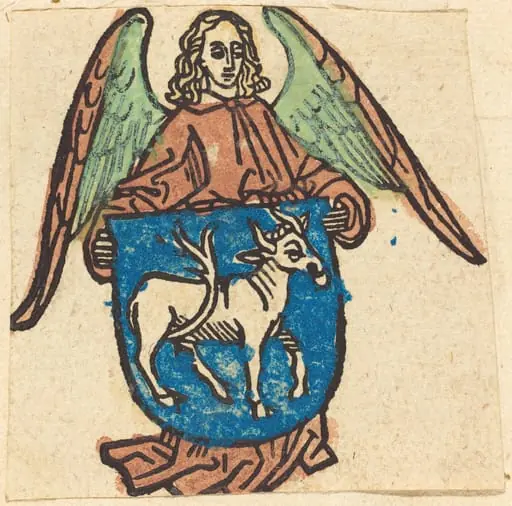 Bookplate of Hilprand Brandenburg of Bibrach
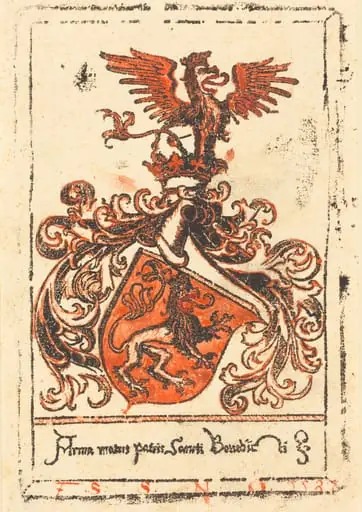 Bookplate of the Abbey of Ottobeuren
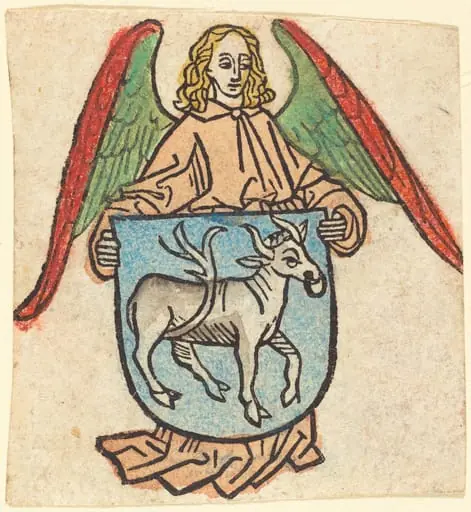 Bookplate of Hilprand Brandenburg of Bibrach
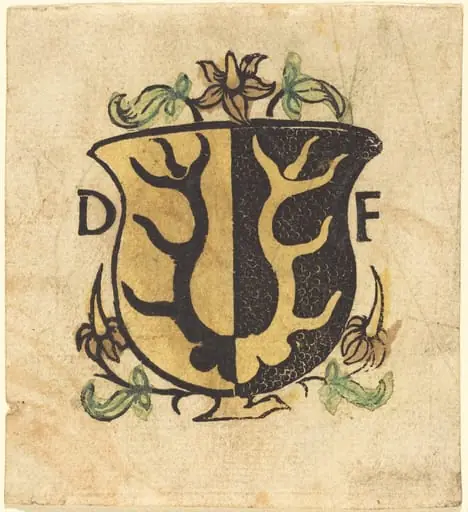 Bookplate of Dominicus Frauenfelder
![Studies for Six Figures (sheet from a model book) [recto], by German 15th Century](https://artifactworldgallery.com/img/german-15th-century--studies-for-six-figures-sheet-from-a-model-book-recto--4837429e0755bc3f-w320.webp) Studies for Six Figures (sheet from a model book) [recto]
Studies for Six Figures (sheet from a model book) [recto]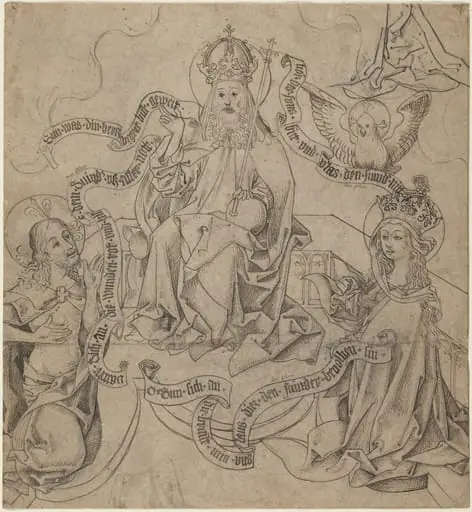 Christ and Mary Interceding with God the Father