Artwork
Battle against the inhabitants of Veii and Fidenae
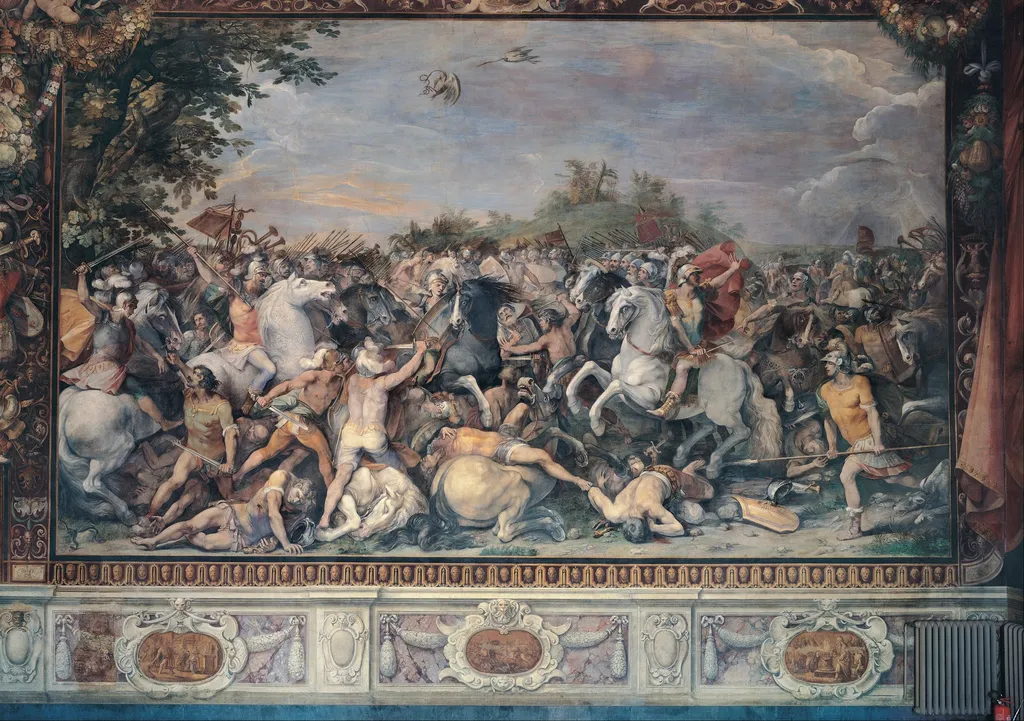
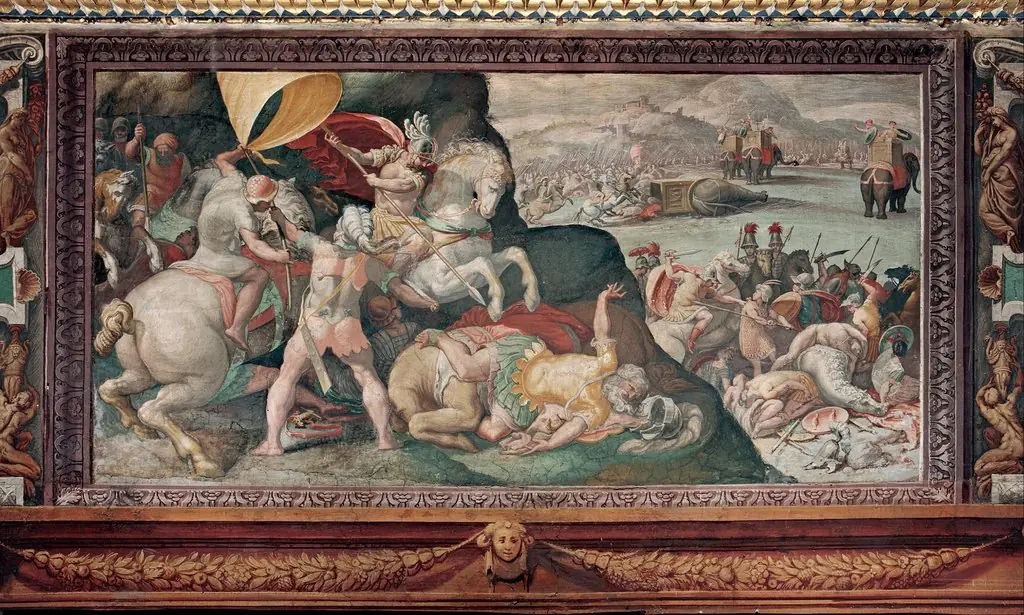
Battle against the inhabitants of Veii and Fidenae is a fresco painting by the Early Baroque Italian artist Giuseppe Cesari. It dates from 1600 and is held in the collection of the Capitoline Museums.
About this work
Overview
Giuseppe Cesari, known as Il Giuseppino or Cavaliere d’Arpino, executed the fresco *Battle against the inhabitants of Veii and Fidenae* in 1600. The work belongs to the Capitoline Museums and exemplifies the early Baroque approach to large‑scale historical narrative.
Subject & Meaning
The composition portrays a tumultuous clash between Roman forces and the peoples of Veii and Fidenae. Armored riders, infantry with shields and spears, and a mass of horses and onlookers fill the scene, conveying the chaos and vigor of ancient warfare.
Technique & Style
Rendered in true fresco, pigments were applied to freshly laid plaster, allowing the colors to become integral to the wall surface. Cesari’s handling shows the transition from Mannerist elongation to the more dynamic, dramatic gestures characteristic of early Baroque painting.
History & Provenance
Created during Cesari’s Roman period, the fresco reflects his close ties to papal patrons such as Clement VIII and Sixtus V. The artist later taught several younger painters, among them Caravaggio, before the work entered the Capitoline Museum collection.
Context
The battle depicted references early Roman conflicts with the neighboring Etruscan city of Veii and the Latin town of Fidenae, subjects frequently employed in Renaissance and Baroque art to celebrate Roman martial virtues and civic identity.
Artist & collection
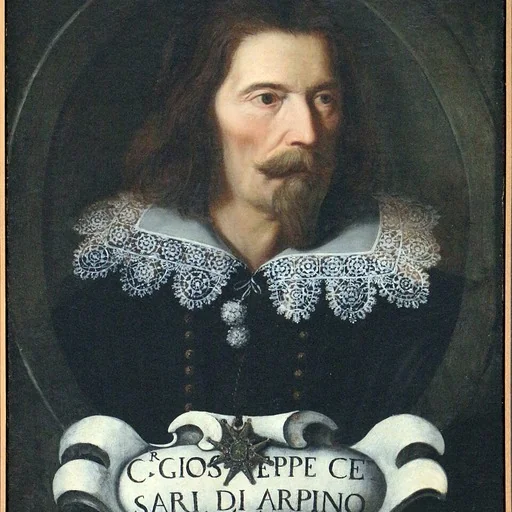
Artist
Giuseppe Cesari (14 February 1568 – 3 July 1640) was an Italian Mannerist painter, also named Il Giuseppino and called Cavaliere d'Arpino, because he was created Knight of the Supreme Order of Christ by his patron Pope Clement VIII.

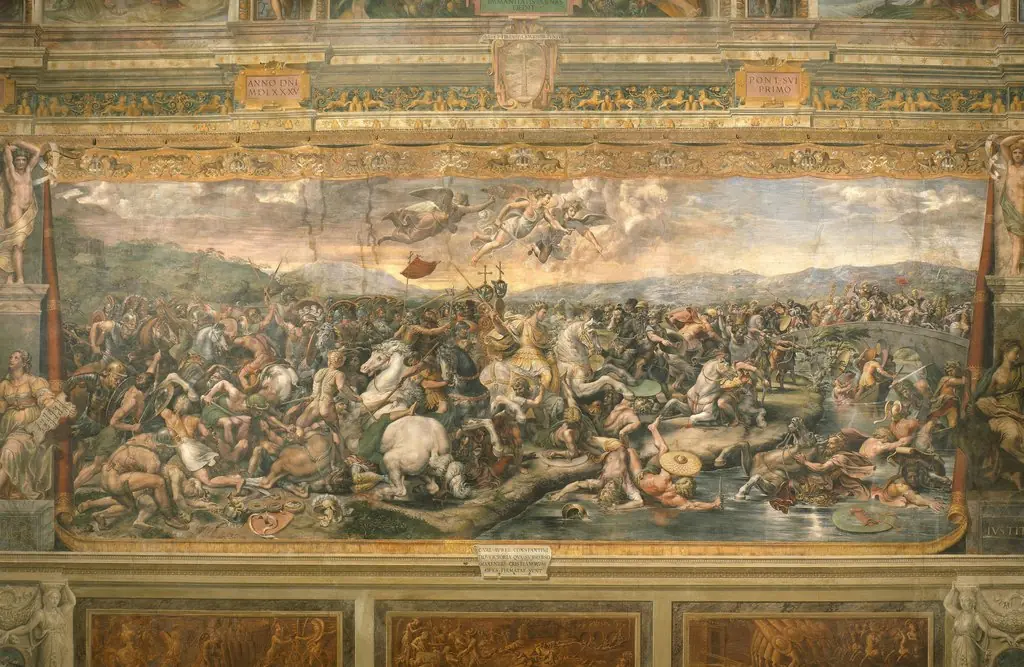 The Battle of the Milvian Bridge
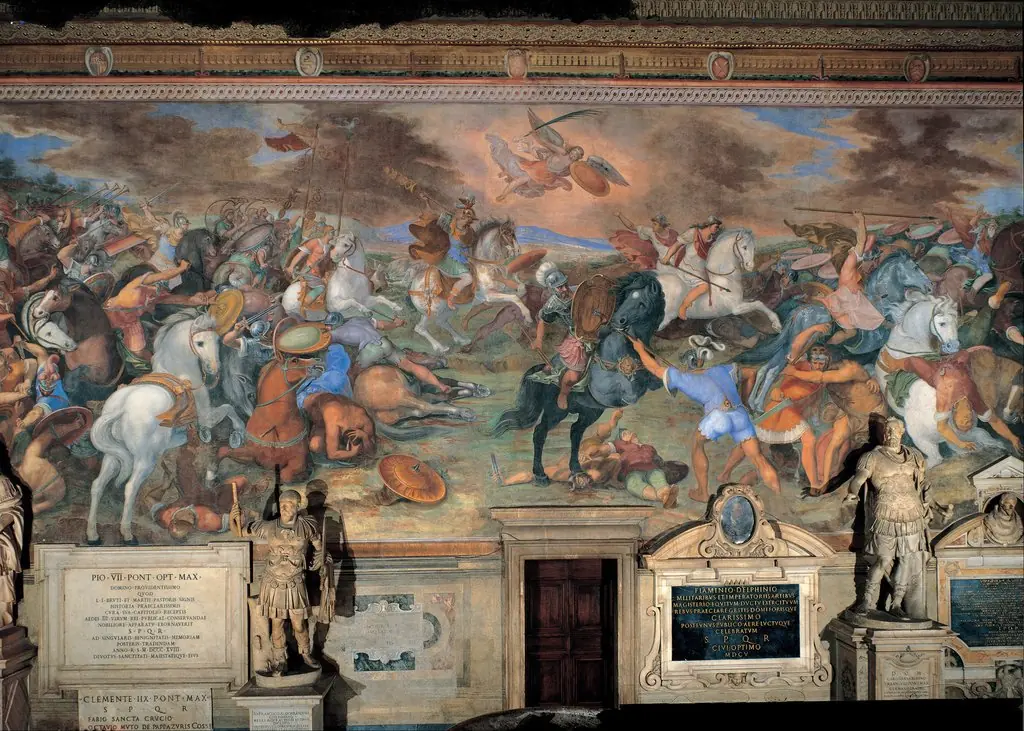 Battle of Lake Regillus
 Battle of Zama
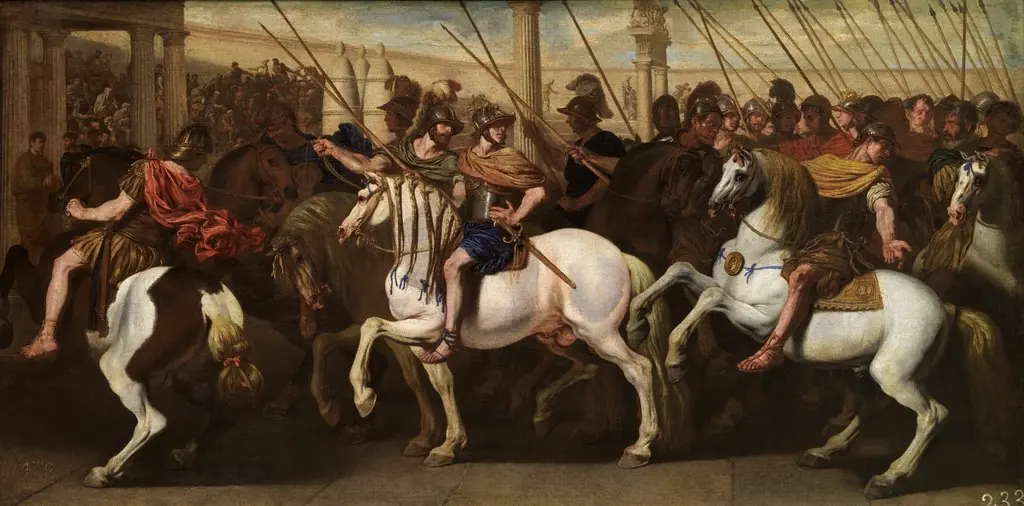 Roman Soldiers in the Circus
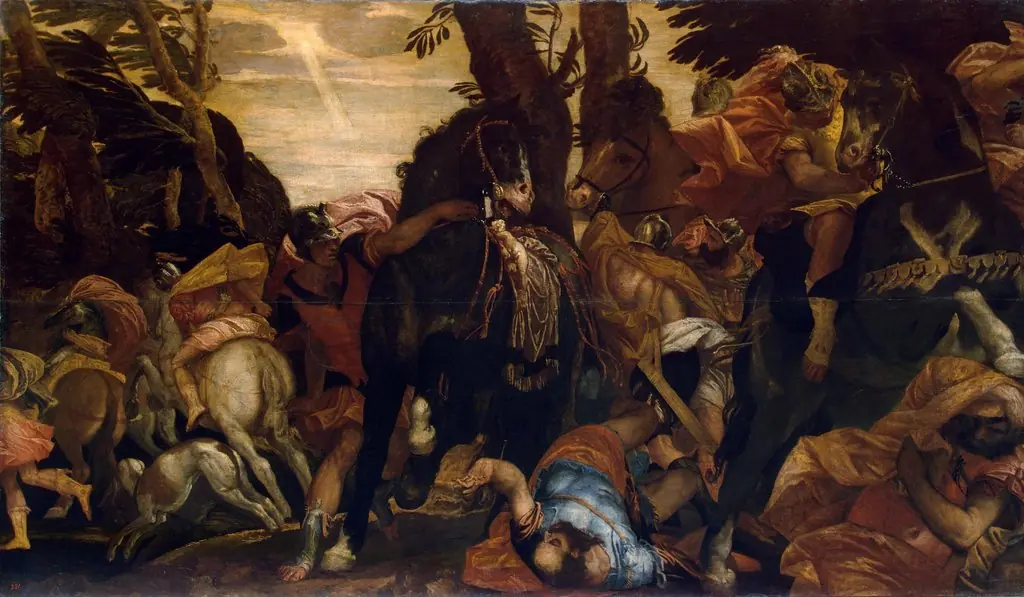 Conversion of Saul
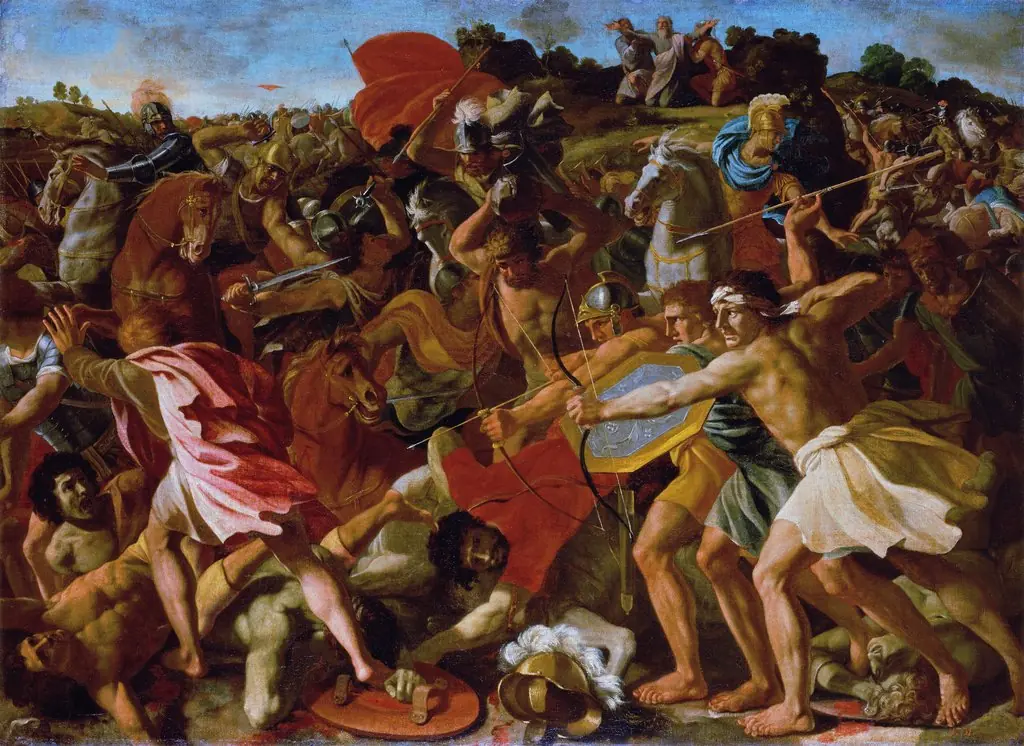 Victory of Joshua over the Amalekites
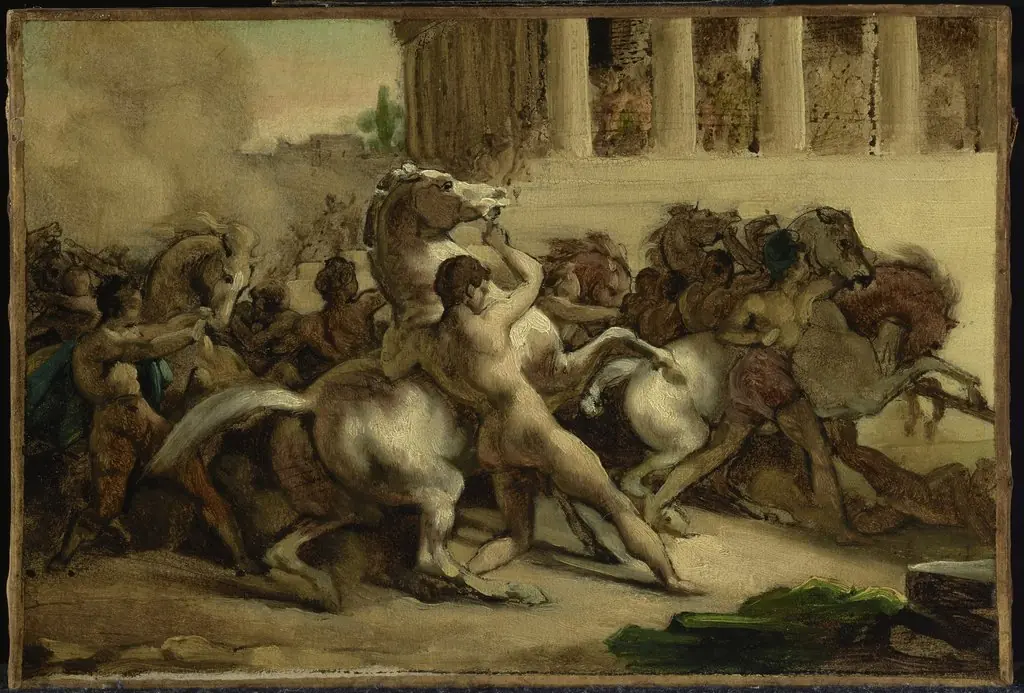 The Race of the Riderless Horses
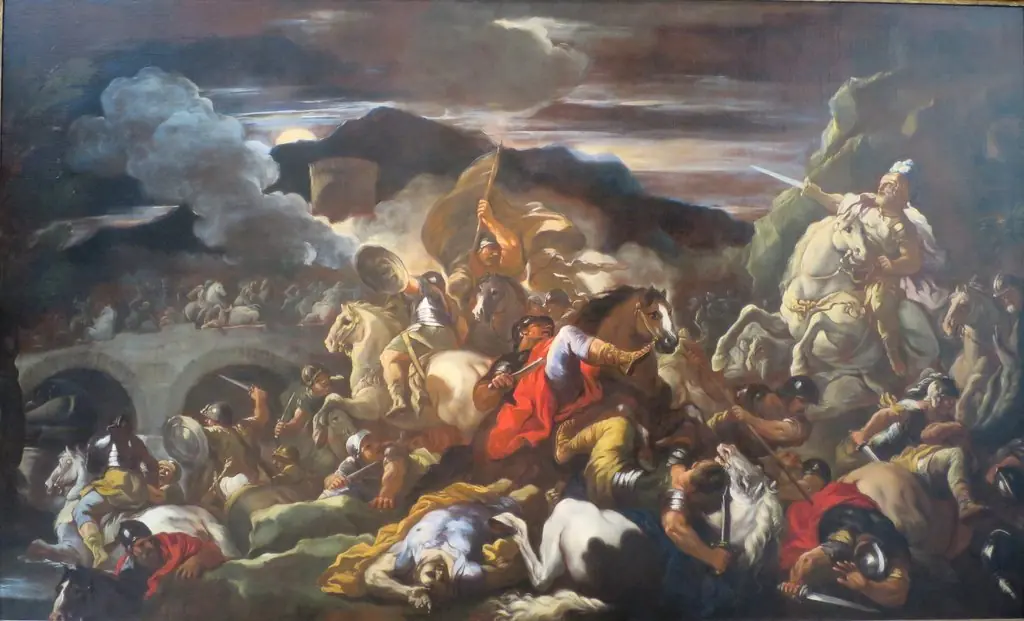 A Battle Scene
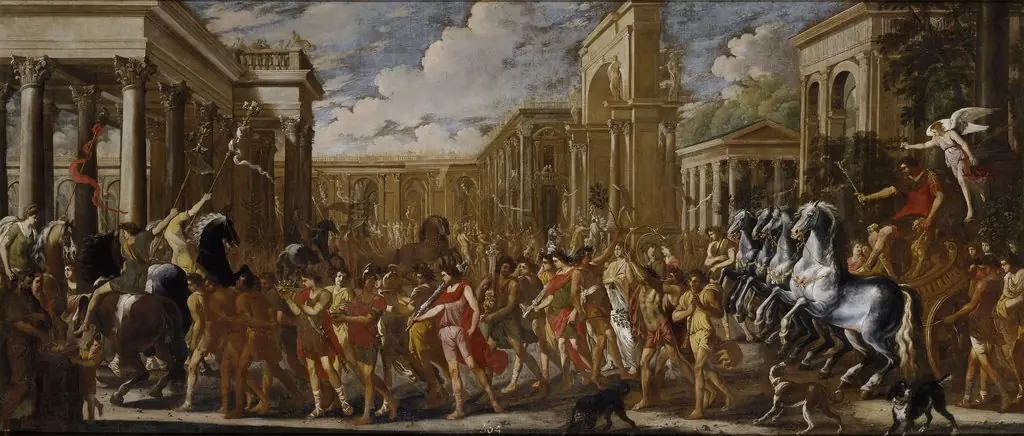 Triumphal Entry of Vespasian in Rome
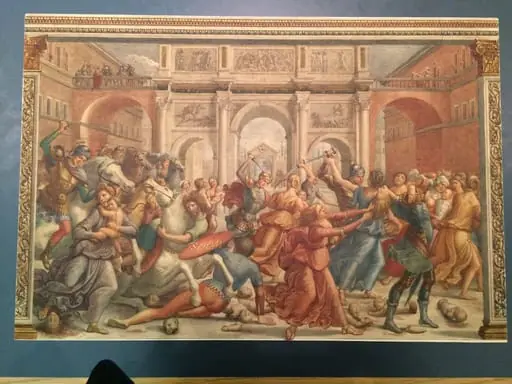 Watercolour, copy after the Massacre of the Innocents, Domenico Ghirlandaio in the Tornabuoni Chapel, Santa Maria Novella (Florence)