Artwork
American Crow
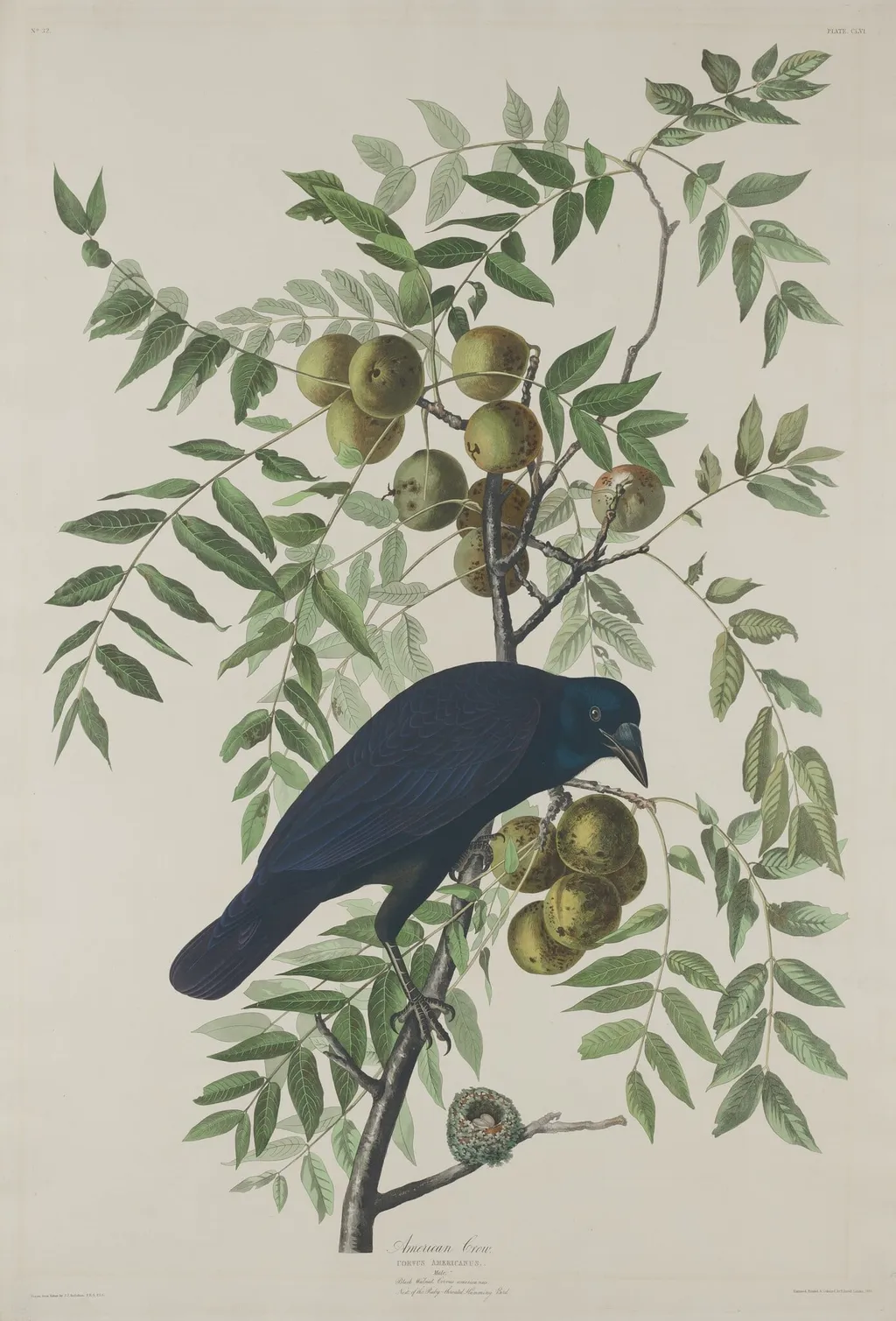
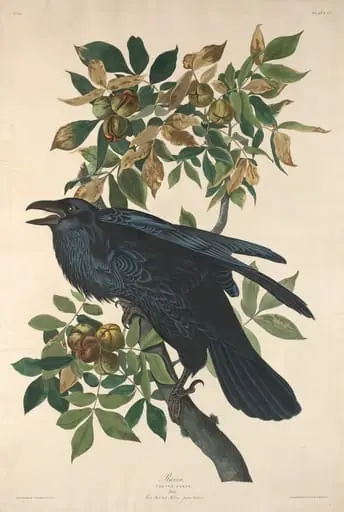
American Crow is an ink print by the Romanticist artist Robert Havell Jr.. It dates from 1833 and is held in the collection of the National Gallery of Art.
About this work
Overview
American Crow is a hand-colored engraving and aquatint print created by Robert Havell Jr. in 1833 on Whatman wove paper, a typical medium for high-quality engravings of its time.
Subject & Meaning
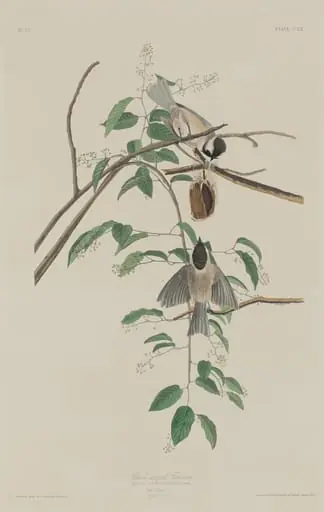
The print depicts a black crow perched on a branch, facing left, amidst green leaves and yellowish fruits. Below, a nest containing eggs rests on another branch, suggesting themes of nature, life cycle, or habitat.
Technique & Style
Havell employed fine lines to achieve detailed textures, notably in the crow’s feathers and the leaves. Soft, precise coloring contrasts the crow’s black plumage with lighter surrounding hues, showcasing the artist’s mastery of aquatint and engraving techniques.
History & Provenance
Robert Havell Jr., from a lineage of English engravers and artists with connections to Indian art, followed family traditions. His father, Robert Havell the Elder, and uncle, Luke Havell, were influential in his artistic path.
Context
Produced in 1833, American Crow reflects the period’s appreciation for detailed, hand-colored prints on quality paper like Whatman wove. It may also hint at broader interests in natural history illustration prevalent during the early 19th century.
Legacy
While specific lasting impacts of American Crow are not widely documented, it contributes to the broader legacy of the Havell family’s contributions to engraving and aquatint techniques in the 19th century.
Artist & collection

Artist
The Havell family of Reading, Berkshire, England, included a number of notable engravers, etchers and painters, as well as writers, publishers, educators, and musicians.