Artwork
Florida Jays
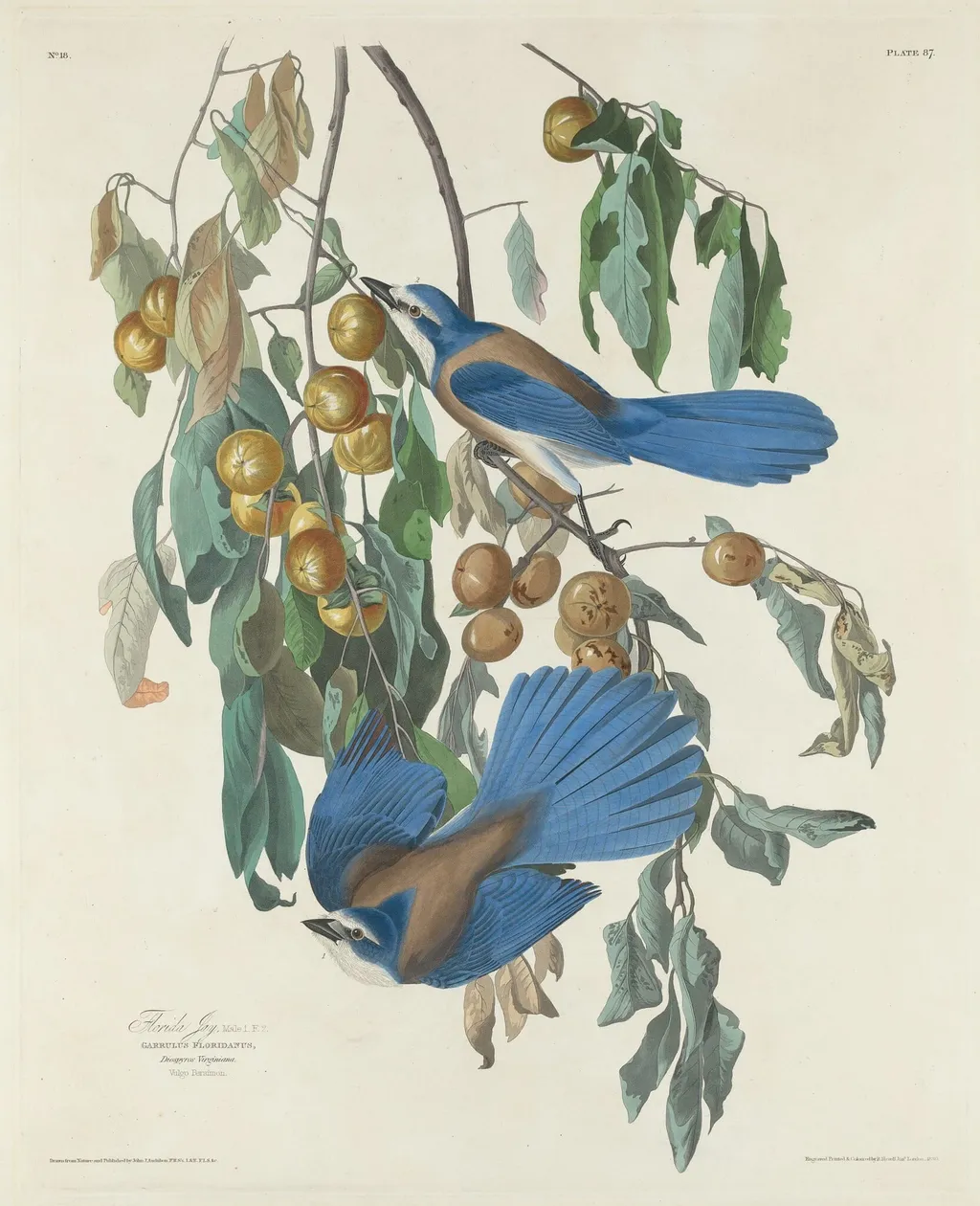
Florida Jays is an ink print by the Romanticist artist Robert Havell Jr.. It dates from 1830 and is held in the collection of the National Gallery of Art.
About this work
Overview
Produced in England, the work belongs to a series of ornithological prints that combined scientific observation with artistic precision.
Created in 1830 by Robert Havell Jr., *Florida Jays* is a hand-colored engraving and aquatint on Whatman wove paper. Produced in England, the work belongs to a series of ornithological prints that combined scientific observation with artistic precision. Havell’s family, known for their engraving practice in Reading, Berkshire, contributed significantly to natural history illustration during the early 19th century.
Subject & Meaning
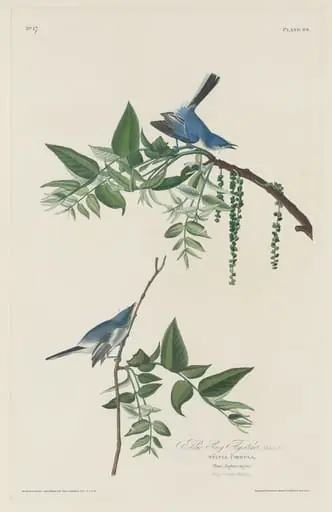
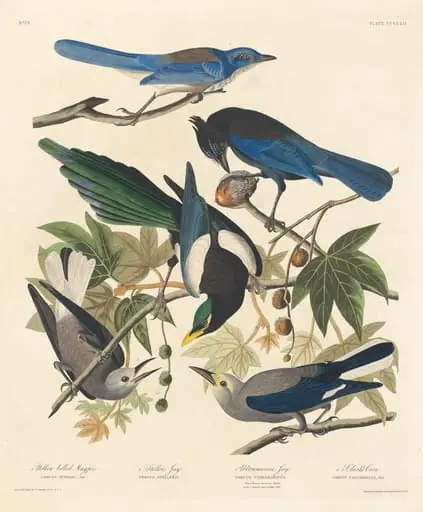
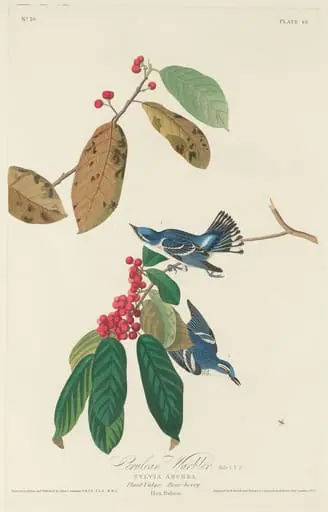
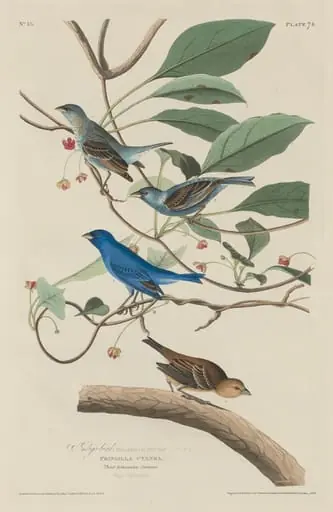
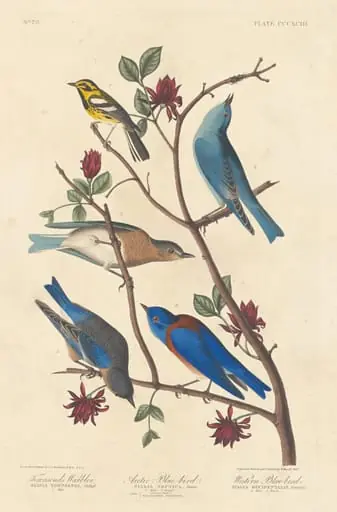
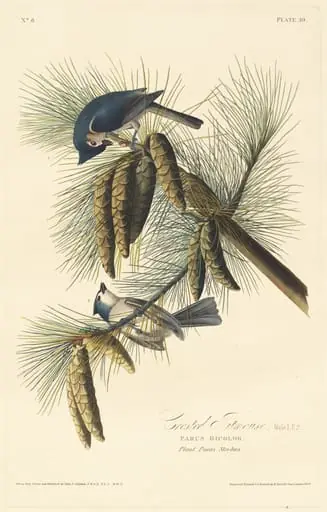
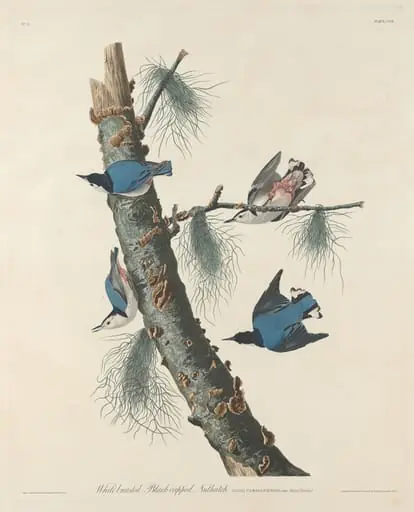
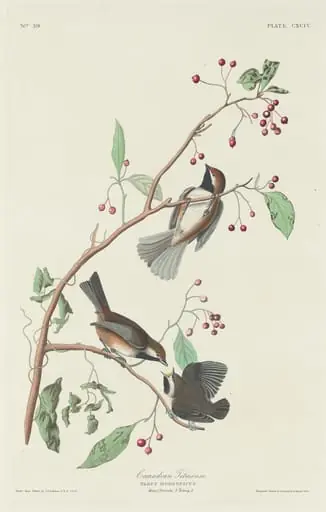
The print portrays two Florida jays perched on a slender branch adorned with clusters of small, yellowish-orange fruits. Their vivid blue plumage, white faces, and chestnut-brown backs are rendered with careful attention to species-specific detail. The absence of a detailed background focuses attention on the birds and their environment, suggesting a study rooted in naturalist observation rather than idealized composition.
Technique & Style
Havell employed engraving and aquatint to achieve fine texture and tonal depth. Cross-hatching defines the feathers and leaves, while hand-coloring enhances the birds’ natural hues. The delicate lines and subtle gradations in the foliage and fruit reflect a mastery of printmaking techniques used to replicate the complexity of organic forms, aligning with contemporary scientific illustration standards.
History & Provenance
Robert Havell Jr. came from a multi-generational family of engravers active in England since the late 18th century. His father, Robert Havell the Elder, and uncle Luke were established in the field, with the family later involved in illustrating Indian subjects. *Florida Jays* was produced during a period when natural history prints were in demand among European collectors and institutions seeking accurate visual records of New World fauna.
Context
The print emerged amid a surge in natural history documentation, fueled by colonial exploration and the rise of ornithology as a scientific discipline. While European artists often depicted American species from specimens or sketches, Havell’s work reflects an effort to convey biological accuracy. The choice of the Florida jay, a species native to the southeastern United States, aligns with broader interests in cataloging New World biodiversity.
Legacy
Havell’s prints, including *Florida Jays*, contributed to the visual record of North American birds during a formative period in ornithology. Though not widely known outside specialist circles, his technique influenced later natural history illustrators. The work remains a reference for the intersection of art and science in early 19th-century printmaking, valued for its fidelity and craftsmanship.
Artist & collection

Artist
The Havell family of Reading, Berkshire, England, included a number of notable engravers, etchers and painters, as well as writers, publishers, educators, and musicians.