Artwork
Black Guillemot
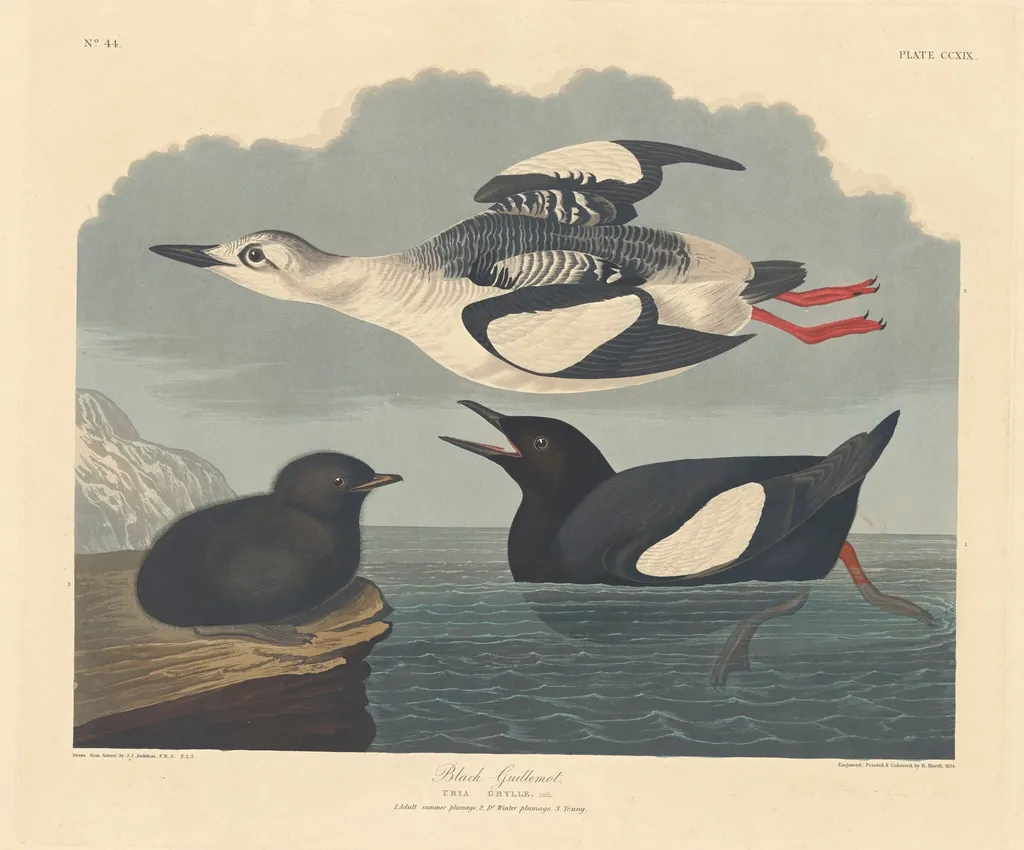
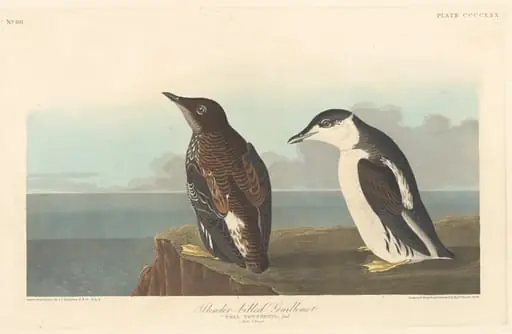
Black Guillemot is an ink print by the Romanticist artist Robert Havell Jr.. It dates from 1834 and is held in the collection of the National Gallery of Art.
About this work
Overview
Robert Havell Jr. produced a hand‑coloured engraving and aquatint titled *Black Guillemot* in 1834. Executed on Whatman wove paper, the print combines line engraving with the tonal possibilities of aquatint, a technique the Havell family had refined over generations.
Subject & Meaning
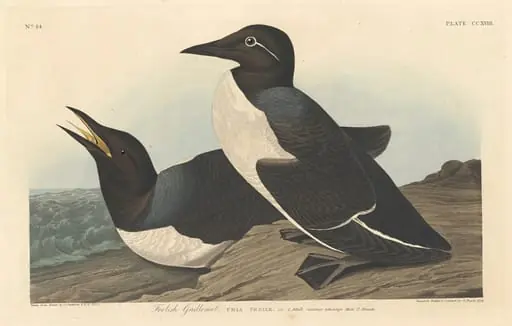
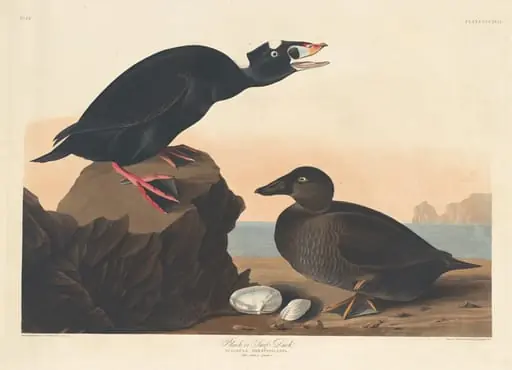
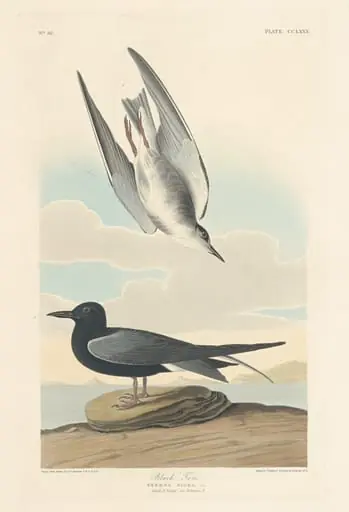
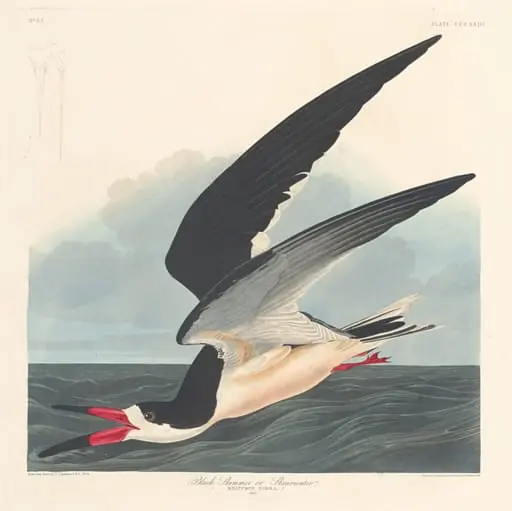
The image presents a black guillemot, a coastal seabird, in three distinct poses: perched on a rugged driftwood, swimming with an open beak, and soaring above the water. The composition emphasizes the bird’s natural environment—rocky cliffs, pale sky and blue‑green waves—highlighting its adaptability to both land and sea.
Technique & Style
Havell employed fine cross‑hatching for the engraved outlines and layered aquatint washes to achieve subtle gradations of tone. Hand‑applied colour accentuates the dark plumage and the lighter patches on the swimming bird, while the striped wings of the flying bird demonstrate the artist’s control of contrast within the medium.
History & Provenance
The Havell family, noted for their work in aquatint and connections to Indian artistic circles, included Robert Havell the Elder and Luke Havell, both established engravers and publishers. Robert Jr. continued this lineage, producing prints that were widely circulated in the early nineteenth‑century natural history market.
Context
During the 1830s, interest in ornithological illustration grew alongside expanding scientific exploration. Prints such as *Black Guillemot* served both educational and decorative purposes, providing detailed visual records of species for scholars and the emerging middle‑class audience.
Legacy
The work exemplifies the Havell workshop’s mastery of combined engraving and aquatint, influencing subsequent natural history illustrators who sought to balance precise line work with atmospheric tonal effects.
Artist & collection

Artist
The Havell family of Reading, Berkshire, England, included a number of notable engravers, etchers and painters, as well as writers, publishers, educators, and musicians.