Artwork
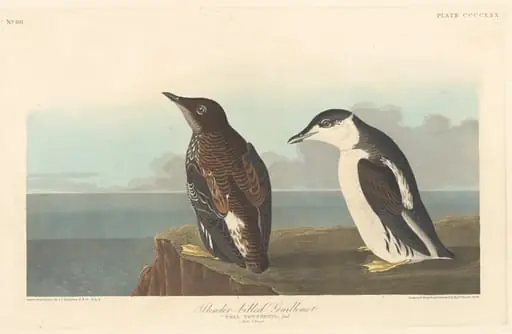
Foolish Guillemot
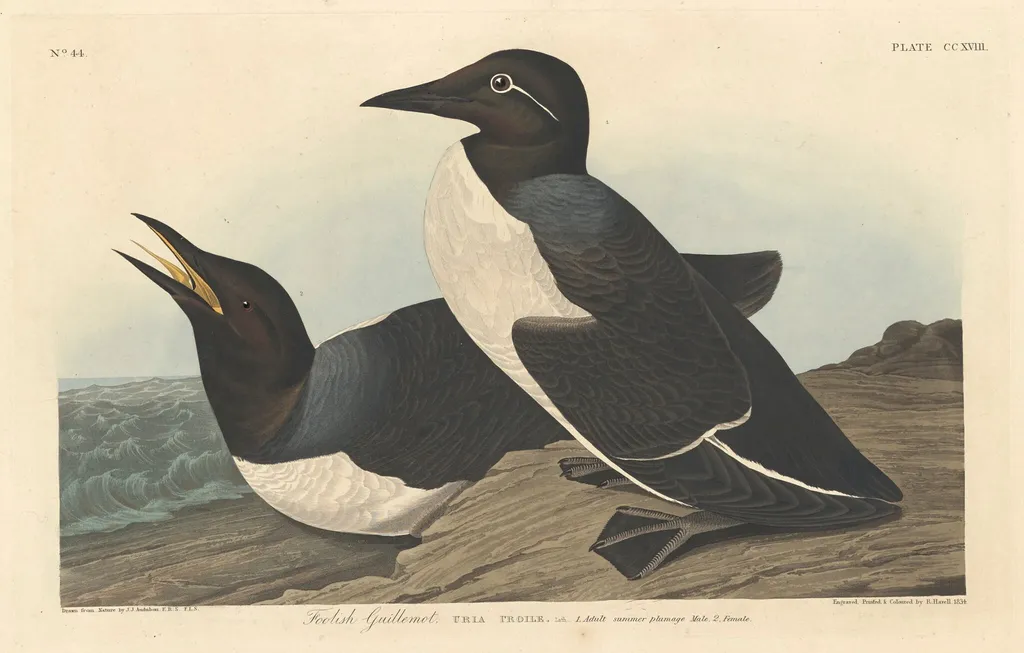
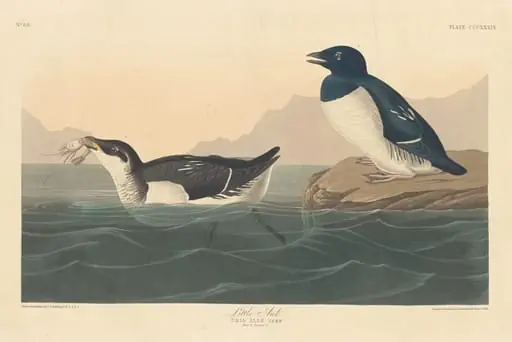
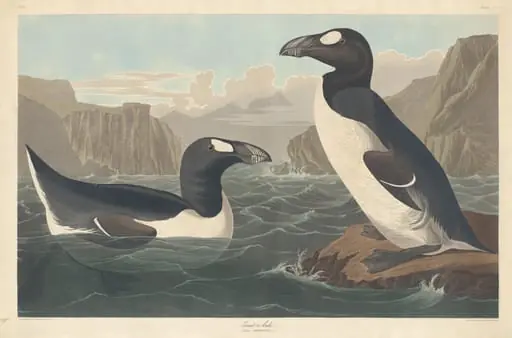
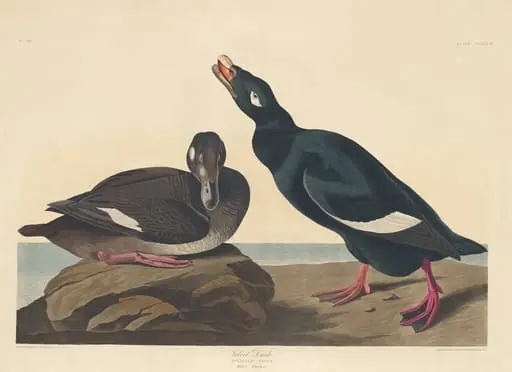
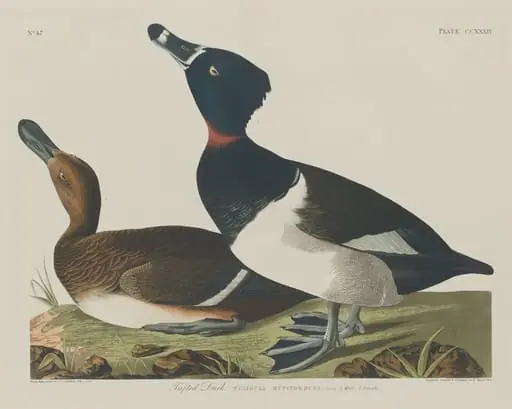
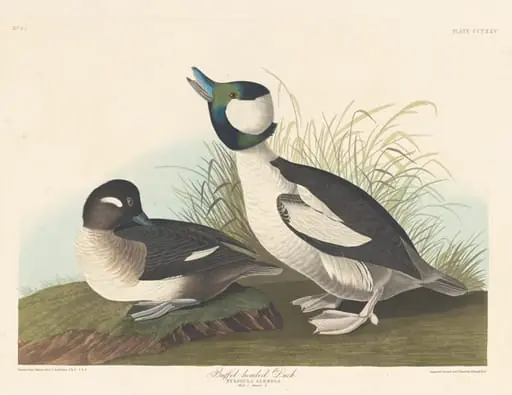
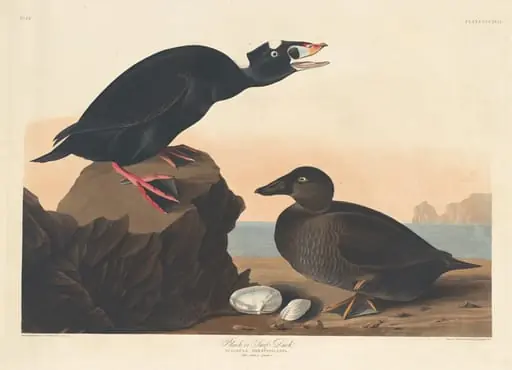
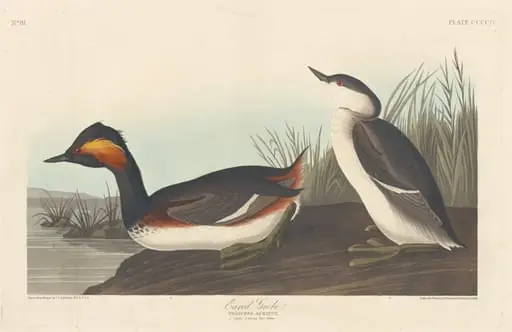
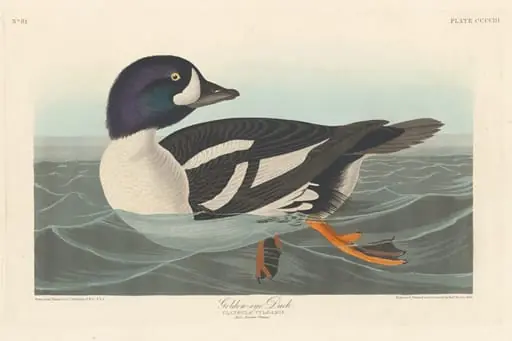
Foolish Guillemot is an ink print by the Romanticist artist Robert Havell Jr.. It dates from 1834 and is held in the collection of the National Gallery of Art.
About this work
Overview
Foolish Guillemot is a hand-colored engraving and aquatint print created by Robert Havell Jr. in 1834 on Whatman wove paper. It features a depiction of two guillemots set against a rocky coastal landscape.
Subject & Meaning
The print focuses on two guillemots, seabirds distinguished by their black heads, white chests, and dark gray wings. One bird stands while the other lies down, both with open beaks, capturing a naturalistic moment.
Technique & Style
Havell Jr. employed the Havell family's characteristic engraving and aquatint techniques. The use of color and texture achieves depth and dimensionality, emphasizing the birds' unique features within a simple yet effective composition.
History & Provenance
Robert Havell Jr., part of the renowned Havell family of engravers from Reading, Berkshire, created this work. His family was noted for aquatint expertise and connections to Indian art, with his father and uncle being prominent figures in the field.
Context
Created in 1834, Foolish Guillemot reflects the Havell family's continued influence in 19th-century printmaking, particularly in aquatint, a technique valued for its ability to capture nuanced textures and tones.
Legacy
While specific legacy details of Foolish Guillemot are not highlighted, it contributes to the broader recognition of the Havell family's contributions to the development and popularization of aquatint in British printmaking.
Artist & collection

Artist
The Havell family of Reading, Berkshire, England, included a number of notable engravers, etchers and painters, as well as writers, publishers, educators, and musicians.