Artwork
Black-winged Hawk
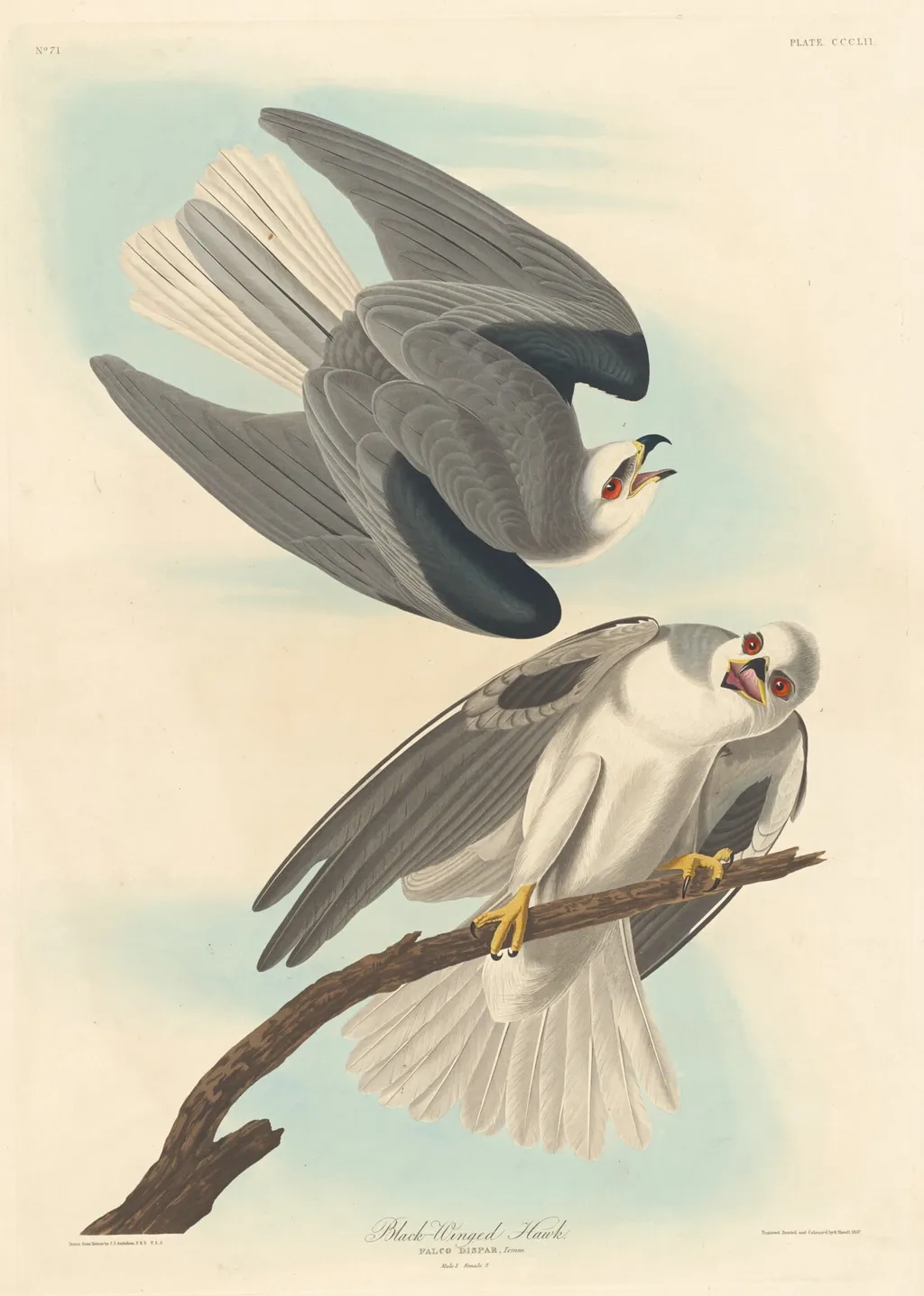
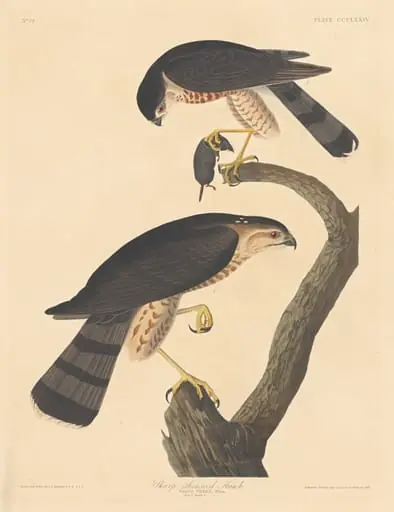
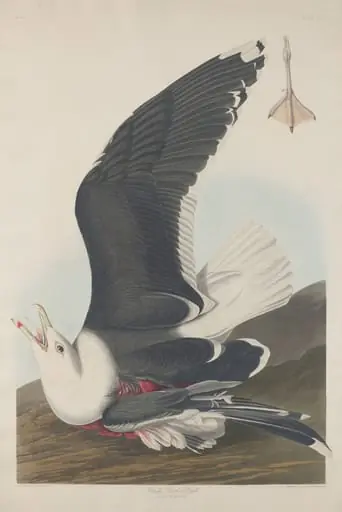
Black-winged Hawk is an ink print by the Romanticist artist Robert Havell Jr.. It dates from 1837 and is held in the collection of the National Gallery of Art.
About this work
Overview
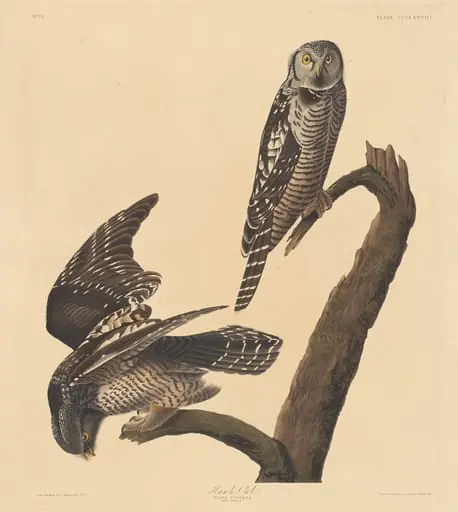
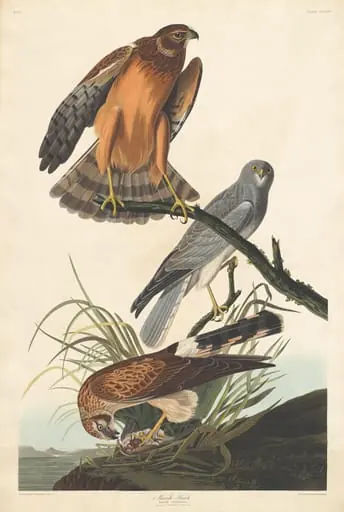
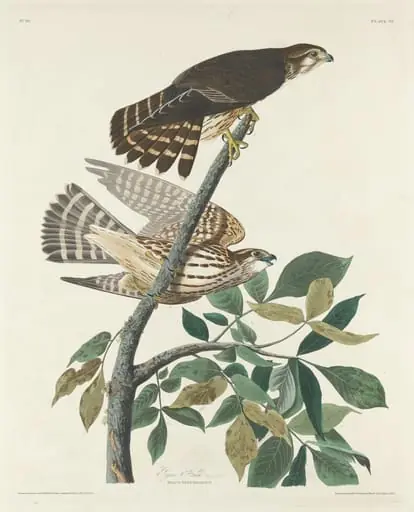
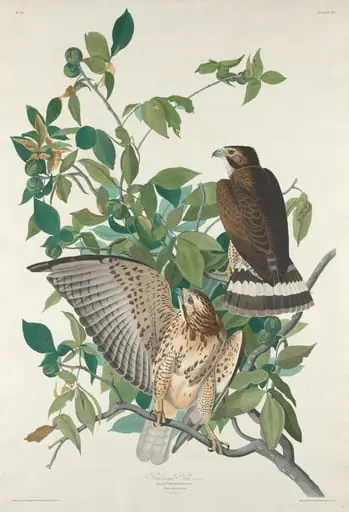
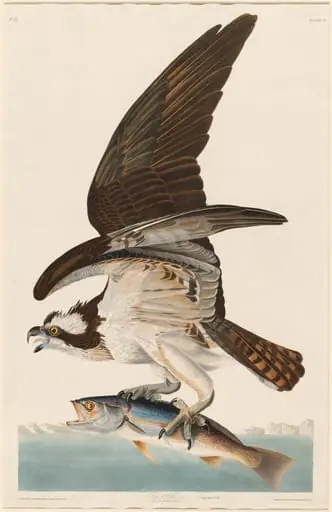
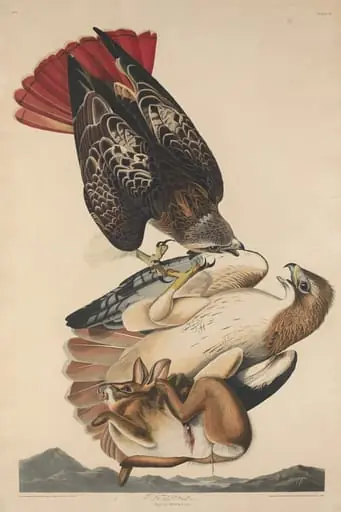
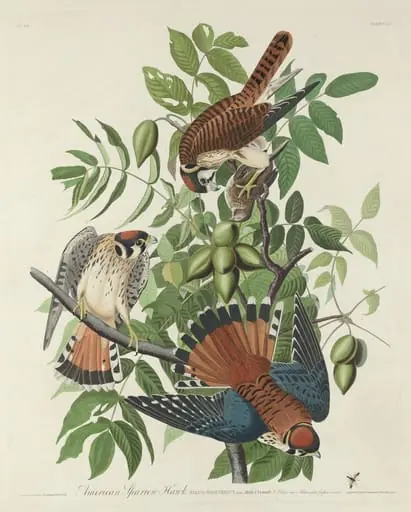
Created in 1837, this hand-colored engraving and aquatint on Whatman wove paper depicts a pair of black-winged hawks. The work is the product of Robert Havell Jr., a printmaker from a multi-generational English family known for technical precision in reproductive printmaking. The image was made using traditional intaglio methods, with color applied by hand to enhance naturalistic detail.
Subject & Meaning
Labeled as male and female, the birds are rendered with anatomical accuracy, reflecting scientific interest in avian species during the early 19th century.
The print presents two hawks: one in flight above, wings fully extended, and another perched below, beak open and gaze directed upward. Labeled as male and female, the birds are rendered with anatomical accuracy, reflecting scientific interest in avian species during the early 19th century. The composition suggests behavioral observation rather than symbolic representation, emphasizing naturalism over allegory.
Technique & Style
Havell employed engraving and aquatint to achieve fine gradations of tone and texture. Delicate cross-hatching defines feather patterns, while hand-coloring adds subtle variations in gray, white, and red. The pale blue background isolates the birds, directing focus to their form. The use of Whatman wove paper, prized for its smooth surface, allowed for crisp ink transfer and delicate washes.
History & Provenance
Robert Havell Jr. belonged to a family of engravers based in Reading, Berkshire, whose work spanned natural history illustration and Indian subjects. His father and uncle were established in the field, and his cousin also practiced engraving. This print likely originated as part of a larger series of ornithological studies, though its exact provenance prior to modern collections remains undocumented.
Context
Produced during a period of growing scientific interest in natural history, the print aligns with European efforts to document and classify wildlife. While Havell’s family was known for Indian subjects, this work reflects broader trends in British ornithological illustration, influenced by figures like John James Audubon. The precision of the rendering suggests collaboration with naturalists or access to live specimens.
Legacy
Havell’s work contributed to the tradition of hand-colored natural history prints, bridging art and science in the pre-photographic era. Though not widely exhibited today, his technical skill and attention to avian detail remain notable within the history of printmaking. His family’s collective output helped shape how wildlife was visually recorded for scientific and public audiences in the 19th century.
Artist & collection

Artist
The Havell family of Reading, Berkshire, England, included a number of notable engravers, etchers and painters, as well as writers, publishers, educators, and musicians.