Artwork
Red-shouldered Hawk
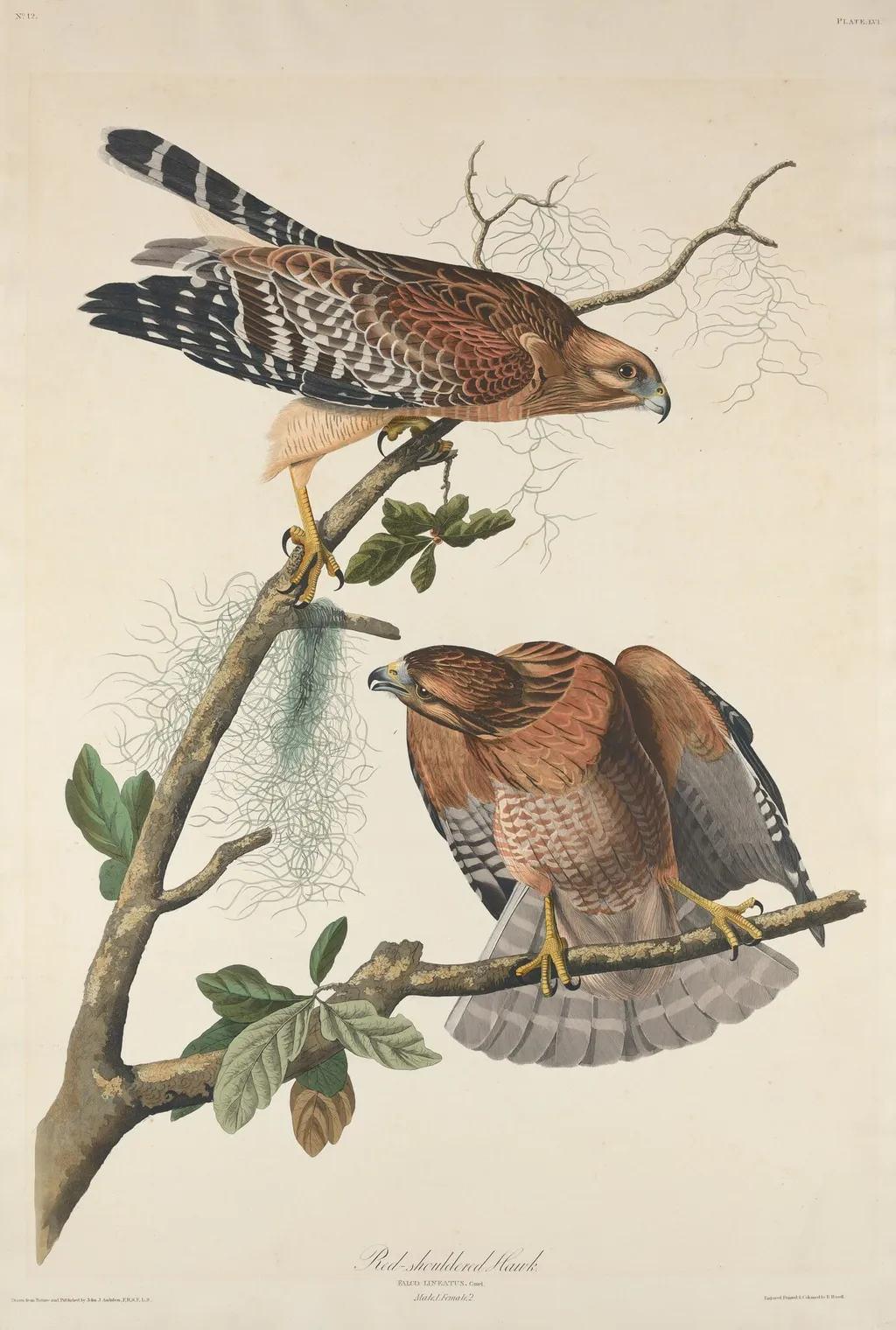
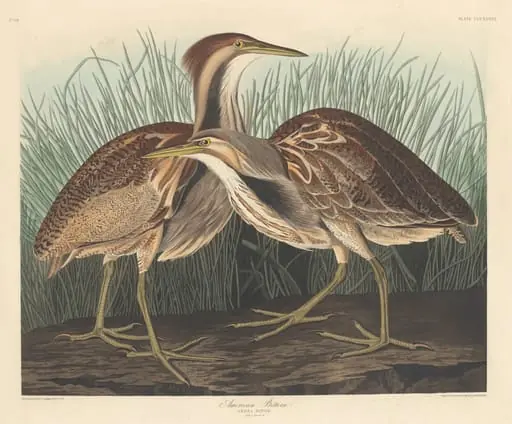
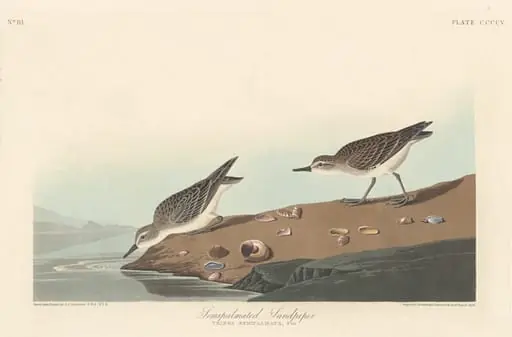
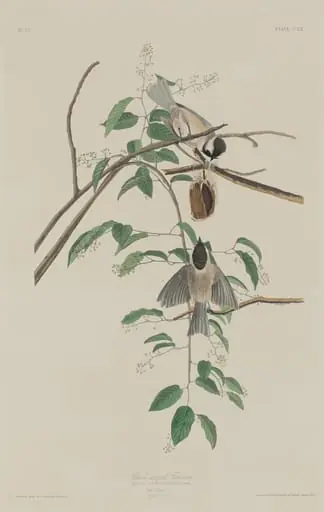
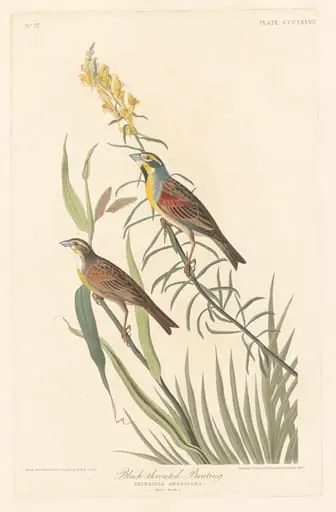
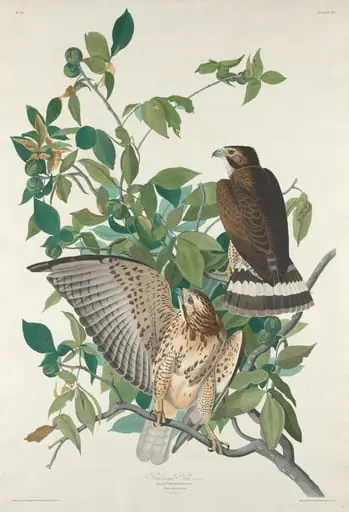
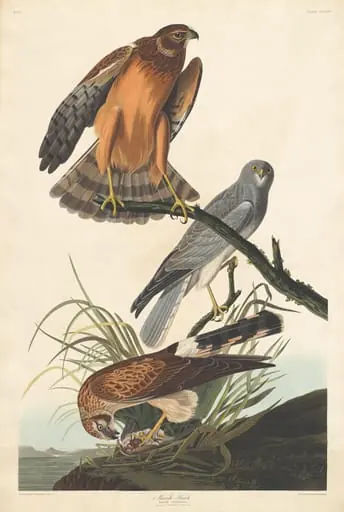
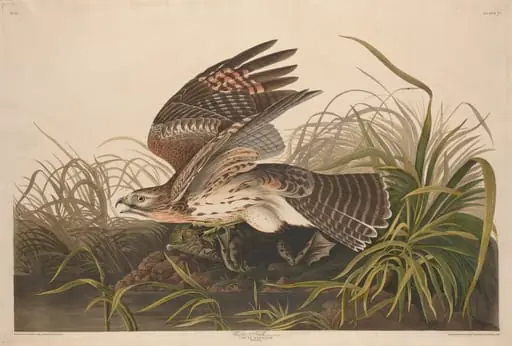
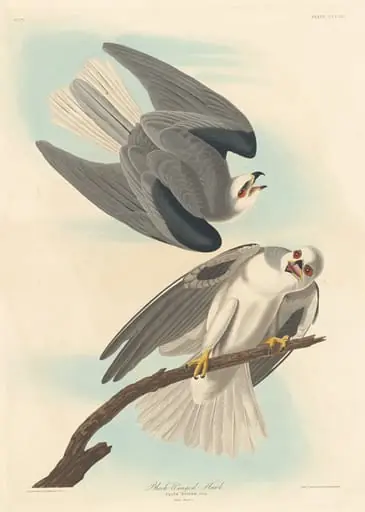
Red-shouldered Hawk is an ink print by the Romanticist artist Robert Havell Jr.. It dates from 1829 and is held in the collection of the National Gallery of Art. Created in 1829, this hand‑colored print presents a pair of red‑shouldered hawks perched on a stripped branch.
About this work
Overview
Created in 1829, this hand‑colored print presents a pair of red‑shouldered hawks perched on a stripped branch. The birds are rendered with meticulous detail, their plumage shown in warm browns, blacks and a pale belly, set against a largely empty background that emphasizes their forms. The lower margin includes a label identifying the specimens as a male and a female.
Subject & Meaning
The work functions as a natural‑history illustration, offering a close study of the species’ morphology and posture. By placing the two birds opposite each other, the image highlights sexual dimorphism and behavioral alertness, inviting viewers to compare the subtle differences in feather pattern and stance within the same species.
Technique & Style
The image combines line engraving with aquatint, a tonal method that produces soft, watercolor‑like washes. After the printing process, each copy was finished by hand‑applying color, allowing nuanced shading of feathers and bark. Fine incised lines convey texture, while the aquatint areas provide atmospheric depth, a hallmark of early 19th‑century printmaking.
History & Provenance
Produced by Robert Havell Jr., a member of the prominent Havell family of Reading, the print reflects the workshop’s long involvement with aquatint and its connections to Indian artistic circles. The Havells were noted for their contributions to natural‑history publishing, and this 1829 edition exemplifies their commercial output for scientific and educational audiences.
Context
At a time when photography was unavailable, detailed engravings served as primary visual records for scholars and collectors. The Havell workshop supplied images for encyclopedic works and periodicals, meeting the era’s demand for accurate depictions of flora and fauna. This print illustrates the intersection of art, science, and commerce in the early Victorian period.
Artist & collection

Artist
The Havell family of Reading, Berkshire, England, included a number of notable engravers, etchers and painters, as well as writers, publishers, educators, and musicians.