Artwork
Fish Hawk
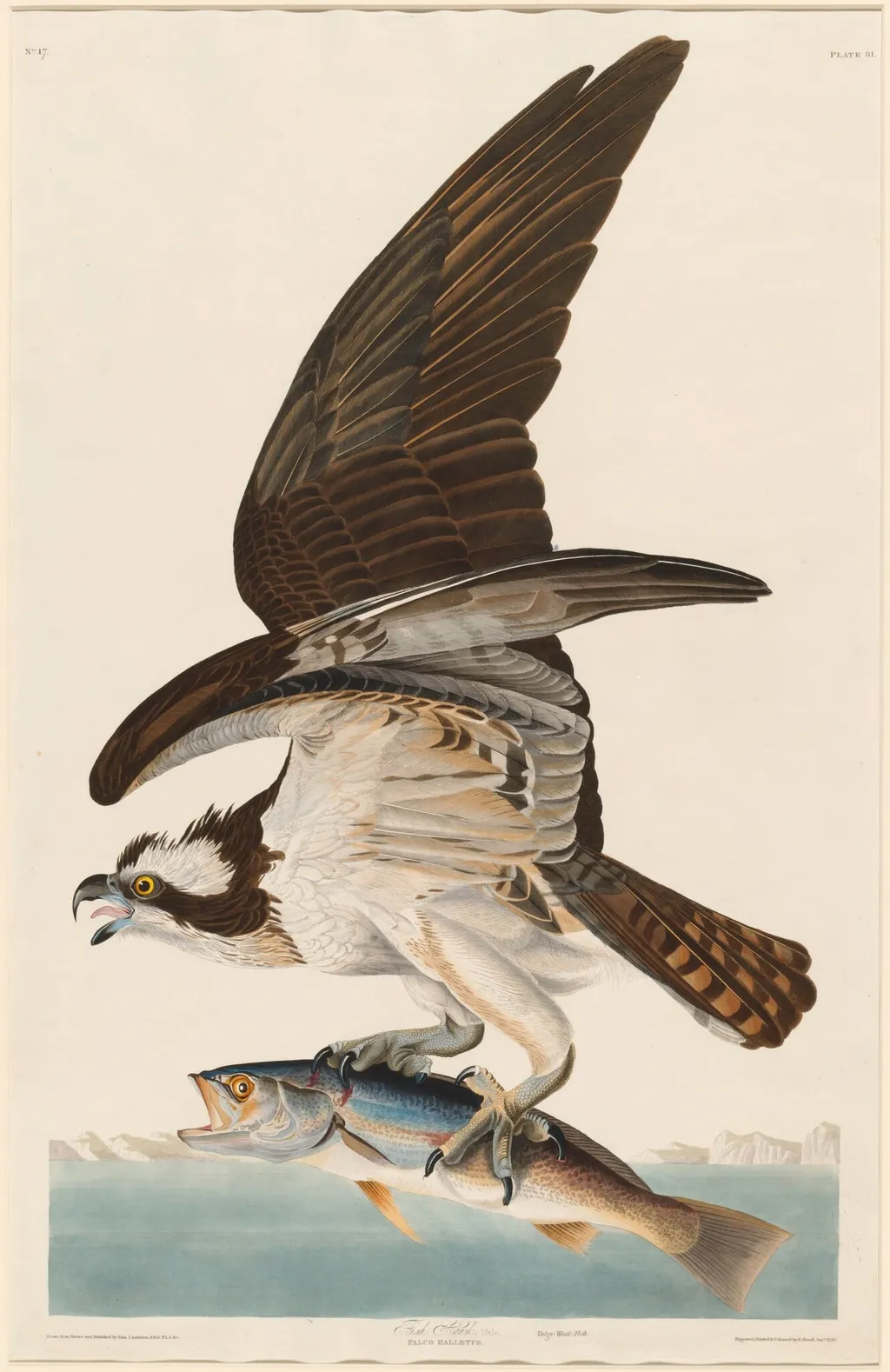
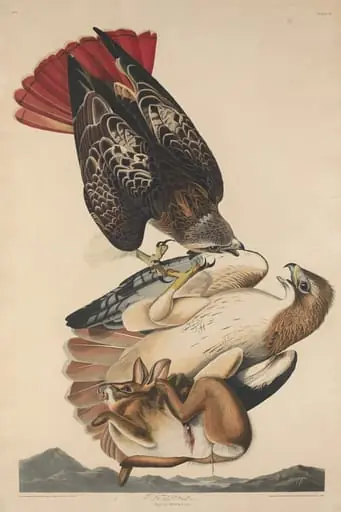
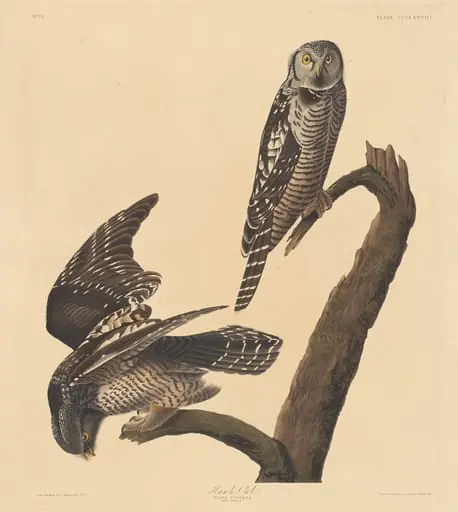
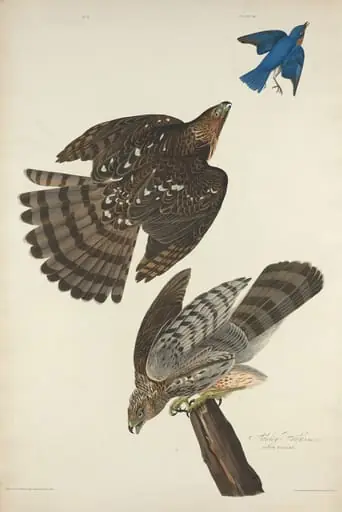
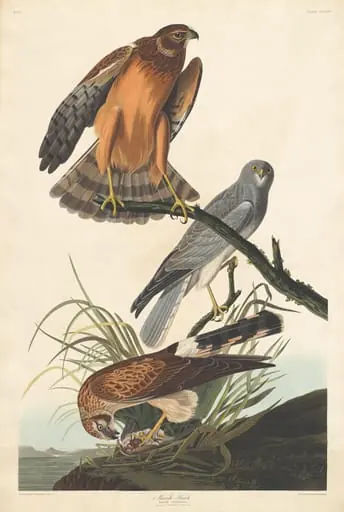
Fish Hawk is an ink print by the Romanticist artist Robert Havell Jr.. It dates from 1830 and is held in the collection of the National Gallery of Art.
About this work
Overview
As part of a multi-generational family of English printmakers, Havell specialized in detailed natural history imagery.
Created in 1830 by Robert Havell Jr., *Fish Hawk* is a hand-colored engraving and aquatint on Whatman wove paper. As part of a multi-generational family of English printmakers, Havell specialized in detailed natural history imagery. The work belongs to a broader tradition of scientific illustration, combining technical precision with delicate color application to capture the vitality of its subject with fidelity to observed form.
Subject & Meaning
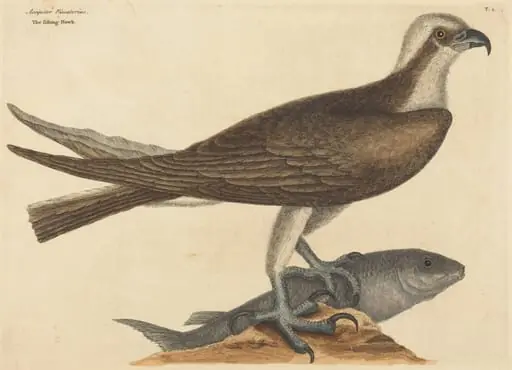
The image depicts a fish hawk mid-dive, talons clenched around a fish, wings fully extended against a hazy horizon. The bird’s focused gaze and the fish’s open mouth suggest a moment of violent capture, rendered with clinical clarity. Rather than romanticizing nature, the scene presents predation as a natural, unembellished event—consistent with the era’s scientific aim to document animal behavior accurately through visual means.
Technique & Style
Havell employed fine-line engraving and aquatint to render intricate textures: individual feathers, gill details, and fish scales are meticulously etched into a copper plate. Hand-coloring with water-based pigments enhanced realism without obscuring the underlying line work. The use of Whatman paper, prized for its smooth, absorbent surface, allowed for subtle gradations in tone and crisp definition, characteristic of high-quality natural history prints of the period.
History & Provenance
Robert Havell Jr. was a member of a prominent English printmaking family based in Reading, Berkshire, known for their work in aquatint and their collaborations with naturalists. *Fish Hawk* was likely produced as part of a larger series of ornithological illustrations, possibly for a published volume. The print’s survival in good condition reflects its value to collectors and institutions interested in early 19th-century scientific imagery.
Context
In the early 1800s, advances in print technology enabled detailed natural history documentation. Artists like Havell worked alongside scientists to produce accurate visual records of species, often for educational or institutional use. The emphasis on anatomical precision and environmental context in *Fish Hawk* aligns with contemporary efforts to classify and understand the natural world through systematic observation and reproduction.
Legacy
Havell’s work contributed to the standardization of visual representation in ornithology, influencing later naturalist illustrators. While overshadowed by more famous publications, his prints remain valued for their technical discipline and quiet realism. Today, *Fish Hawk* stands as an example of how printmaking served as a bridge between art and science, preserving ecological detail before the advent of photography.
Artist & collection

Artist
The Havell family of Reading, Berkshire, England, included a number of notable engravers, etchers and painters, as well as writers, publishers, educators, and musicians.