Artwork
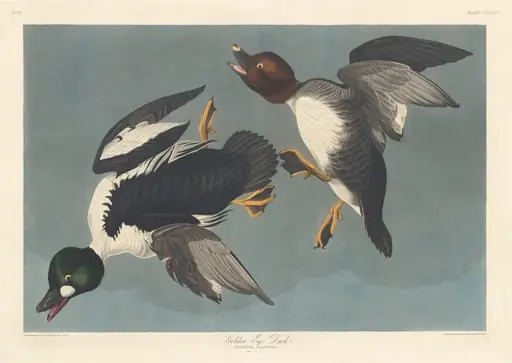
Golden-eye Duck
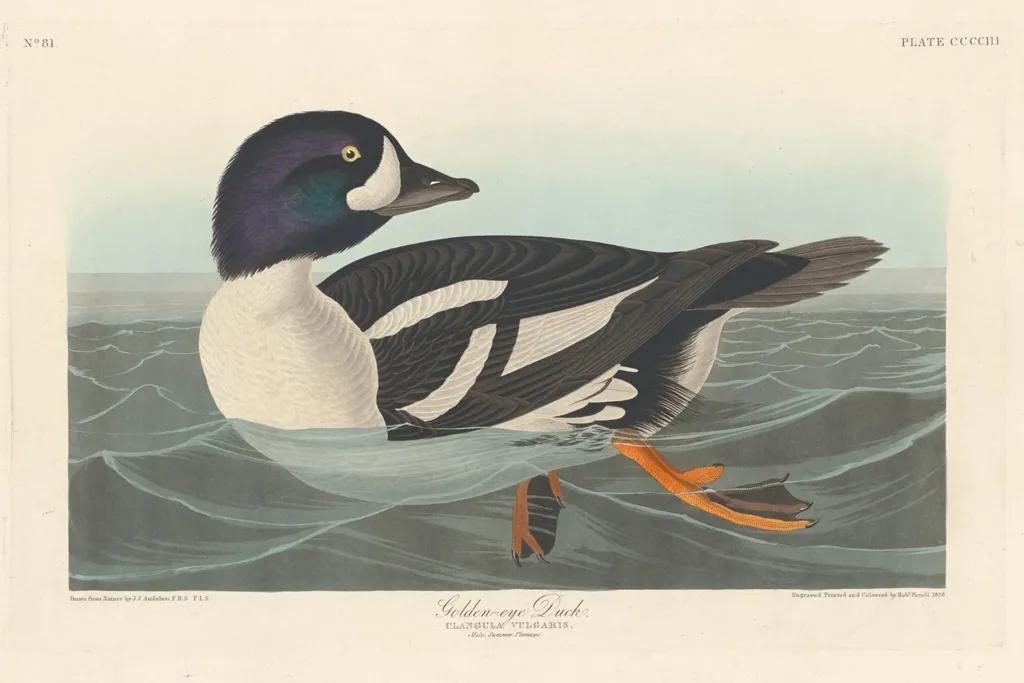
Golden-eye Duck is an ink print by the Romanticist artist Robert Havell Jr.. It dates from 1838 and is held in the collection of the National Gallery of Art.
About this work
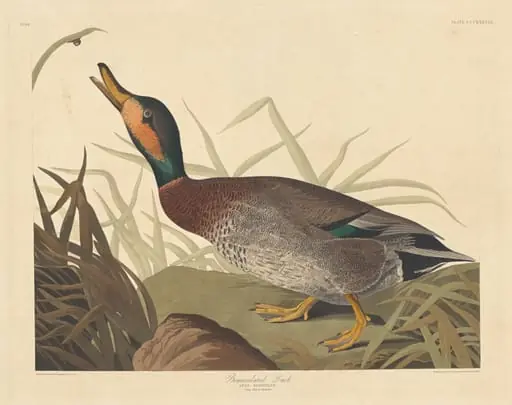
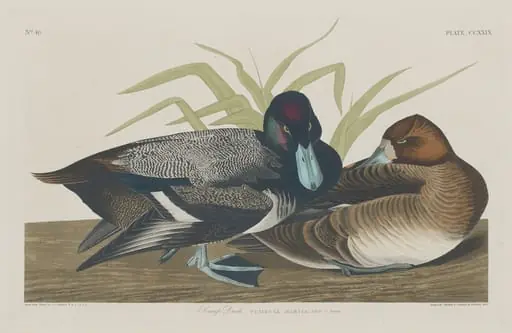
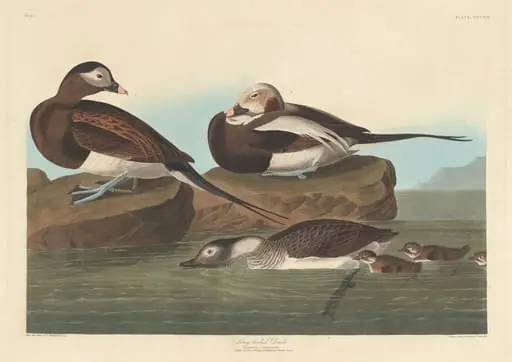
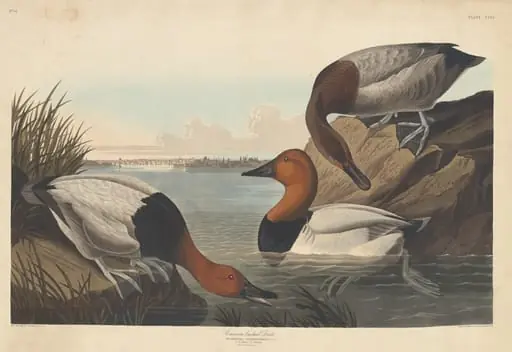
This 1838 print shows one golden-eye duck floating on calm water, its yellow eye and green head catching the light.
This 1838 print shows one golden-eye duck floating on calm water, its yellow eye and green head catching the light. The feathers look almost soft. The artist used fine lines and ink washes to make the bird pop against the plain background.
Hand-colored engravings like this were pricey back then. Artists had to color each print by hand after it was printed.
Want to see another duck in art? Check out Robert Havell, Jr.
Overview
Golden-eye Duck is a hand-colored engraving and aquatint created by Robert Havell Jr. in 1838 on Whatman wove paper.
Subject & Meaning
The print depicts a single golden-eye duck floating on calm water, its plumage rendered in detail with fine lines and ink washes that create a sense of softness.
Technique & Style
The work combines engraving and aquatint techniques, with each print colored by hand, a labor-intensive process that made such prints valuable.
History & Provenance
Robert Havell Jr. was part of a family of artists from Reading, Berkshire, England, known for their expertise in aquatint and their engagement with diverse artistic traditions.
Artist & collection

Artist
The Havell family of Reading, Berkshire, England, included a number of notable engravers, etchers and painters, as well as writers, publishers, educators, and musicians.