Artwork
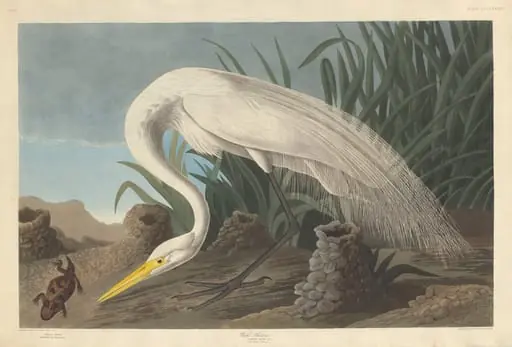
Great White Heron
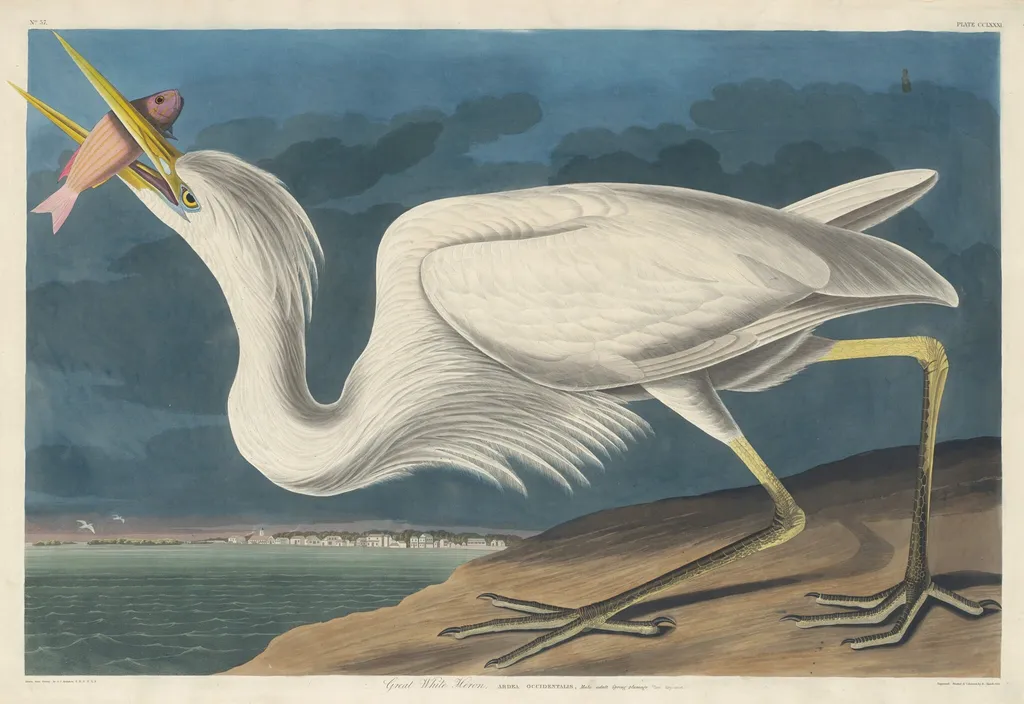
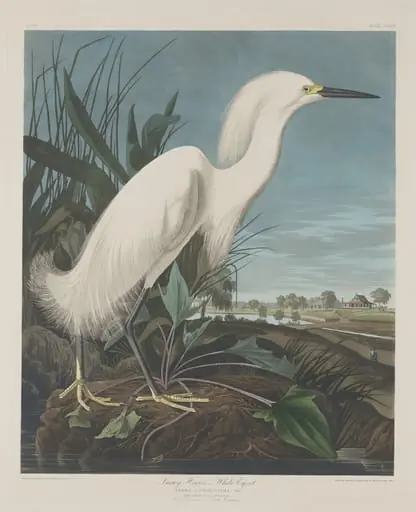
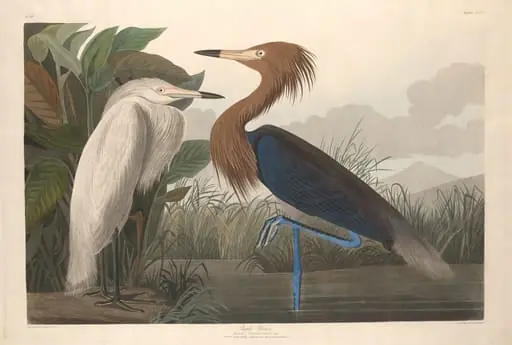
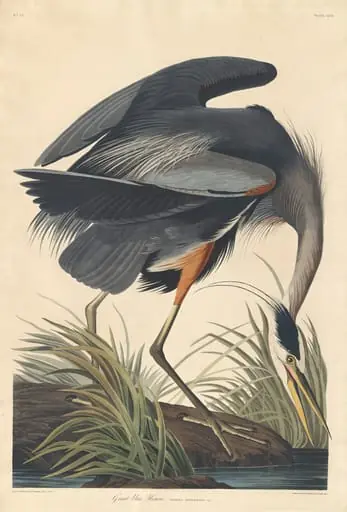
Great White Heron is an ink print by the Romanticist artist Robert Havell Jr.. It dates from 1835 and is held in the collection of the National Gallery of Art.
About this work
Overview
Great White Heron is a hand-colored engraving and aquatint on Whatman wove paper, created by Robert Havell Jr. in 1835. The print showcases the Havell family's technical prowess, particularly in aquatint, and their affinity for Indian art and culture.
Subject & Meaning
The composition centers on a detailed, large white heron in a naturalistic pose, capturing a moment of predation with a fish in its open beak. The heron's dominance in the scene emphasizes the beauty and power of nature.
Technique & Style
The work leverages aquatint for fine tonal gradations, while hand-coloring enhances the heron's textured feathers and shiny beak. The subdued, muted background contrasts with the vivid, detailed foreground, characteristic of Romantic-era emphasis on expressive detail.
History & Provenance
Created in 1835 by Robert Havell Jr., this piece reflects the family's established reputation in aquatint and their connection to Indian art, though the specific provenance of this work is not detailed here.
Context
Aligned with the Romantic movement, the print highlights the era's fascination with nature's drama and intricate beauty, potentially influenced by Indian artistic sensibilities.
Legacy
As a testament to the Havell family's aquatint expertise and a product of its time, Great White Heron contributes to the broader legacy of Romantic-era printmaking and its global artistic exchanges.
Artist & collection

Artist
The Havell family of Reading, Berkshire, England, included a number of notable engravers, etchers and painters, as well as writers, publishers, educators, and musicians.