Artwork
Pigmy Curlew
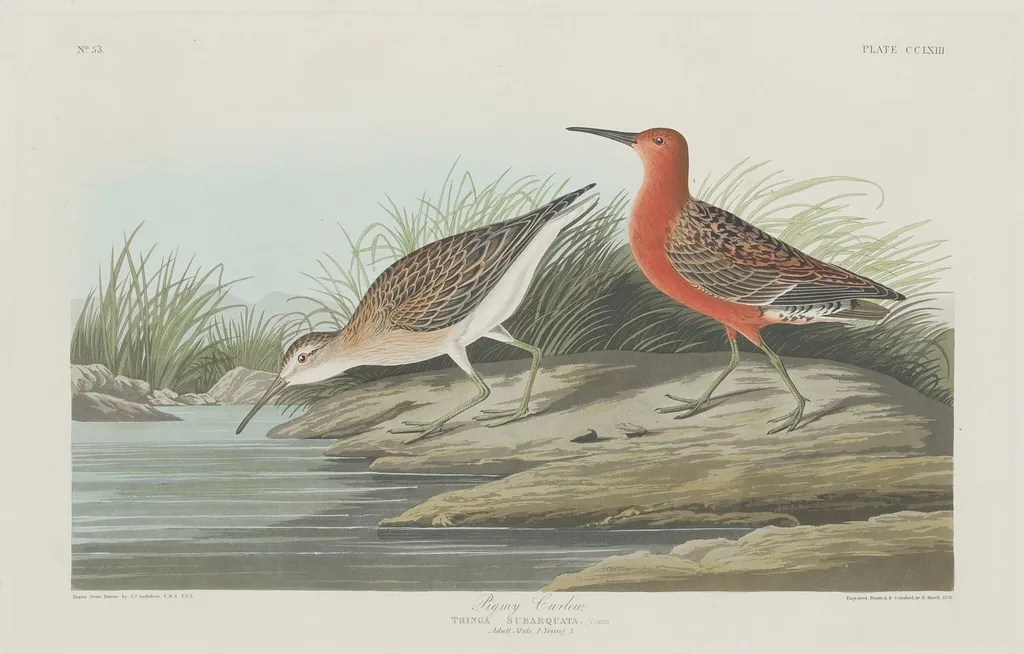
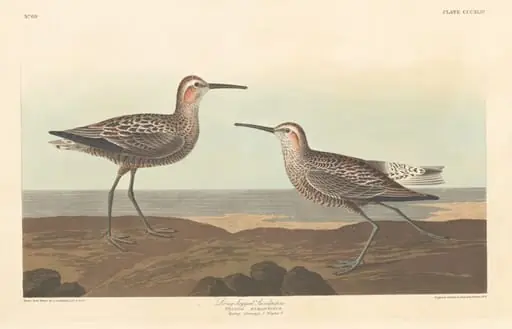
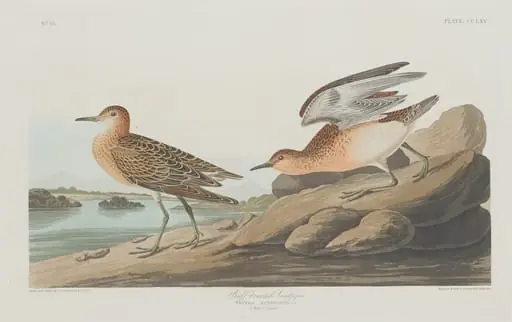
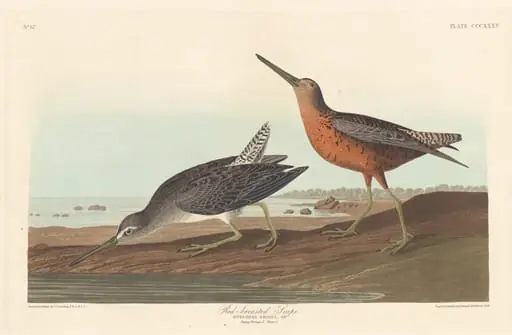
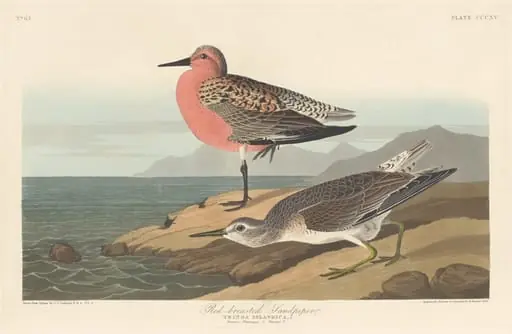
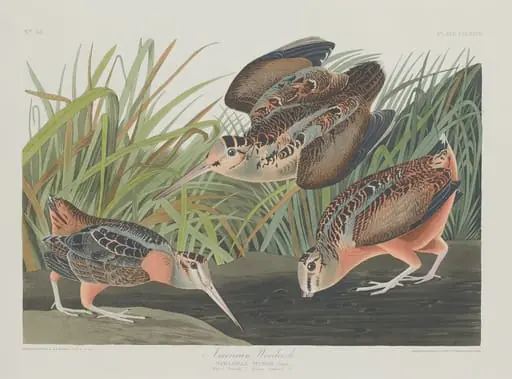
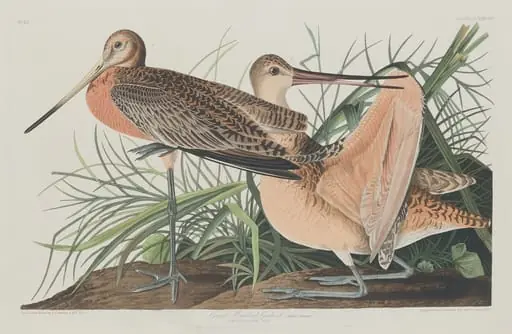
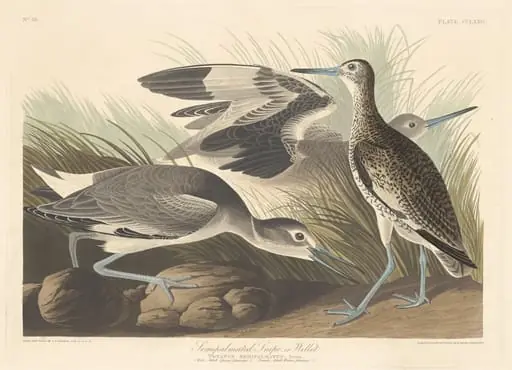
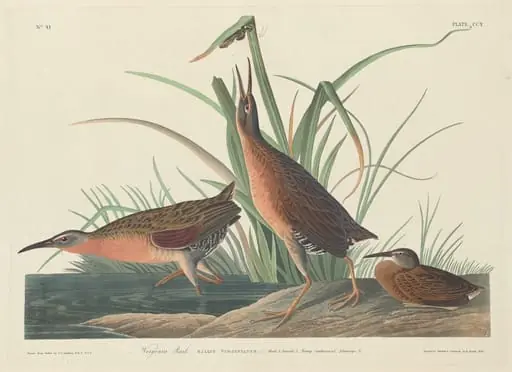
Pigmy Curlew is an ink print by the Romanticist artist Robert Havell Jr.. It dates from 1835 and is held in the collection of the National Gallery of Art. Created in 1835, *Pigmy Cururu* is a hand‑colored engraving combined with aquatint, printed on smooth Whatman wove paper.
About this work
Overview
Created in 1835, *Pigmy Cururu* is a hand‑colored engraving combined with aquatint, printed on smooth Whatman wove paper. The image depicts a diminutive curlew within a naturalistic setting, rendered with meticulous attention to the bird’s plumage and surrounding foliage.
Subject & Meaning
The work portrays the pigmy curlew, a small migratory wader, positioned amid vegetation that suggests its habitat. By presenting the bird in a lifelike pose, the print serves both as a visual study of the species and as an illustration intended for natural‑history audiences.
Technique & Style
Robert Havell Jr. employed aquatint to achieve tonal washes, then added fine line engraving for detail, before applying hand‑applied watercolor to enhance coloration. The Havell workshop was renowned for mastering this combination, allowing subtle gradations of light and texture that convey realism.
History & Provenance
The print emerges from the Havell family of Reading, Berkshire, a lineage of engravers that included Robert Havell the Elder and Luke Havell. Their workshop was active in the early nineteenth century, producing numerous natural‑history plates for scientific publications and private collectors.
Context
*Pigmy Cururu* belongs to a broader tradition of British natural‑history illustration, where skilled printmakers supplied accurate visual references for ornithologists and the expanding public interest in exotic fauna during the period of colonial exploration.
Artist & collection

Artist
The Havell family of Reading, Berkshire, England, included a number of notable engravers, etchers and painters, as well as writers, publishers, educators, and musicians.