Artwork
Long-legged Sandpiper
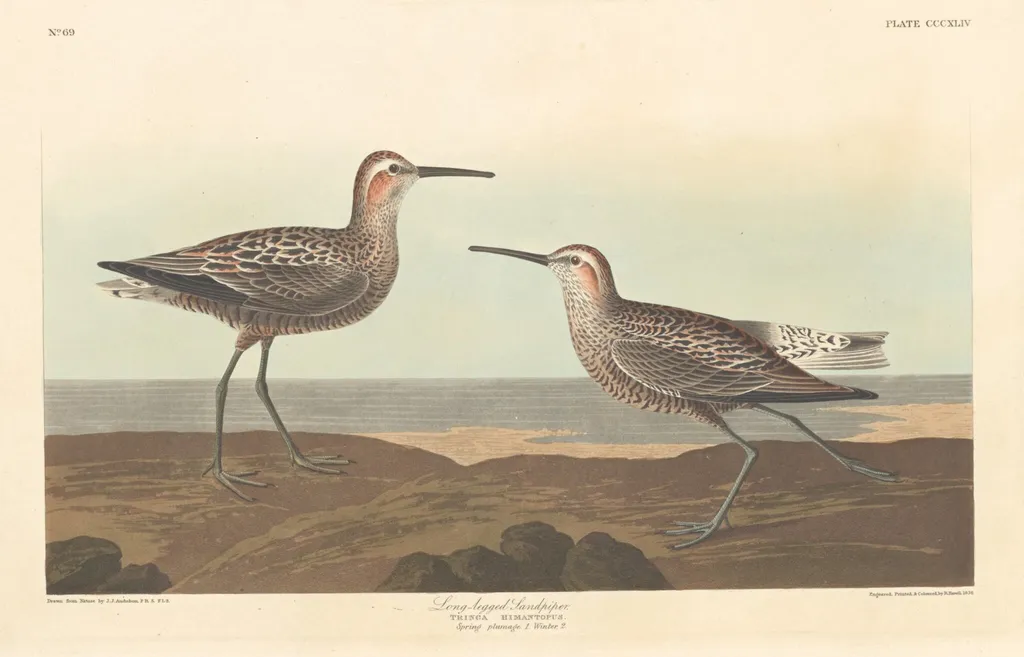
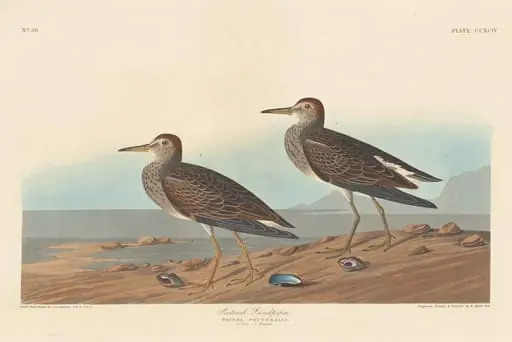
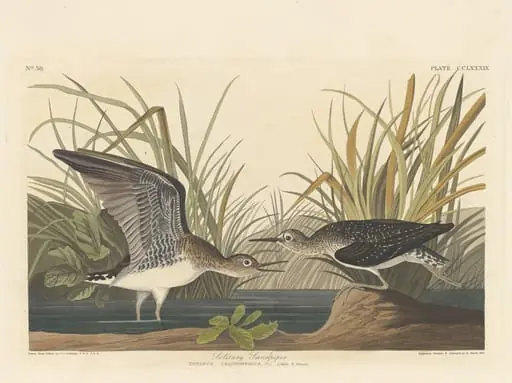
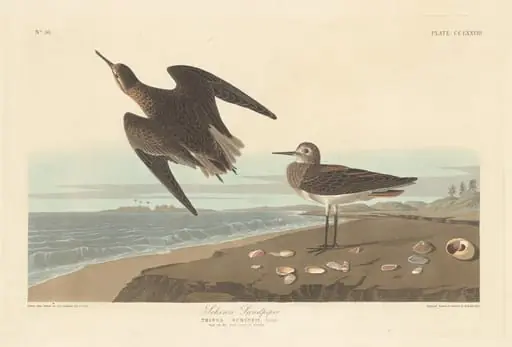
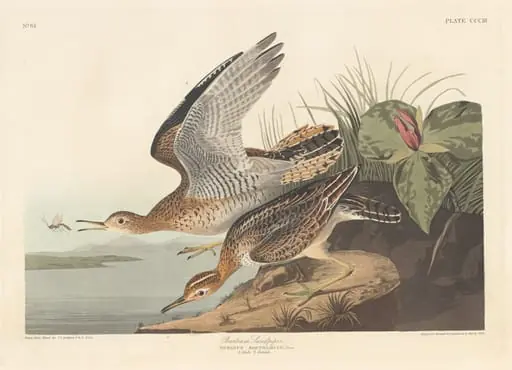
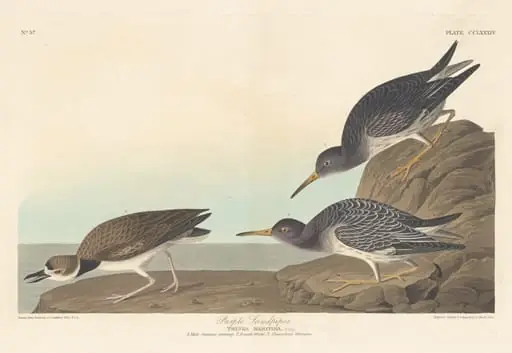
Long-legged Sandpiper is an ink print by the Romanticist artist Robert Havell Jr.. It dates from 1836 and is held in the collection of the National Gallery of Art.
About this work
Overview
The work is part of a broader effort to document avian species with scientific accuracy, reflecting the 19th-century interest in systematic natural observation.
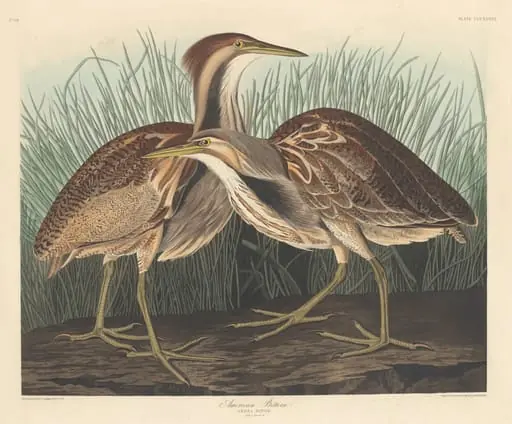
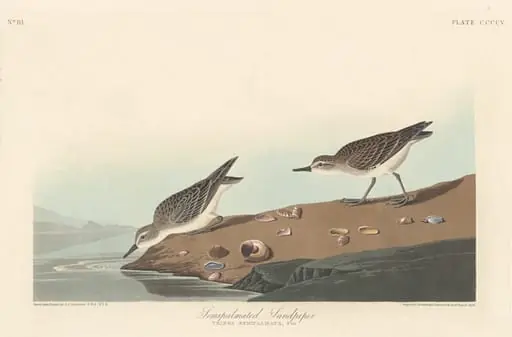
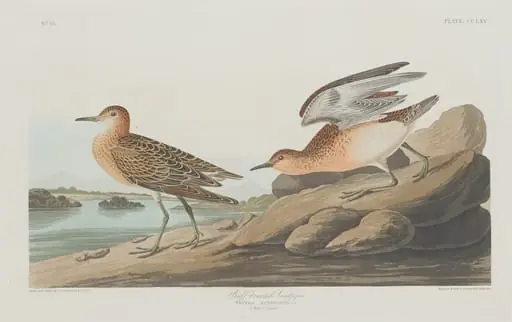
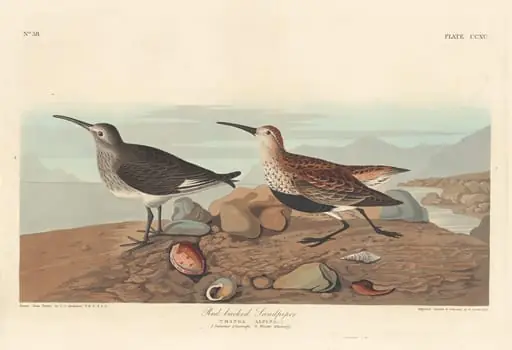
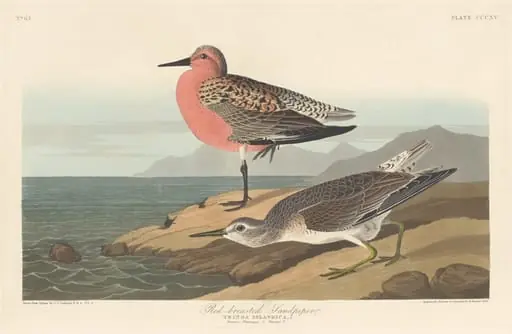
Created in 1836 by Robert Havell Jr., this hand-colored engraving and aquatint depicts a long-legged sandpiper on Whatman wove paper. A member of a family known for technical precision in printmaking, Havell specialized in natural history subjects. The work is part of a broader effort to document avian species with scientific accuracy, reflecting the 19th-century interest in systematic natural observation.
Subject & Meaning
The print presents a solitary long-legged sandpiper in a minimal landscape, emphasizing the bird’s anatomical details—its slender legs, textured plumage, and alert posture. No symbolic or narrative elements are present; the focus is purely observational. This approach aligns with contemporary naturalist practices that valued precise representation over artistic embellishment, treating the bird as a specimen worthy of careful study.
Technique & Style
Havell employed engraving and aquatint to achieve fine gradations of tone and delicate feather textures. The hand-coloring, applied with care, enhances realism without overwhelming the line work. Whatman wove paper, favored for its smooth surface and durability, allowed for crisp impressions and subtle ink absorption. The technique reflects a fusion of scientific documentation and artisanal printmaking traditions of the era.
History & Provenance
Robert Havell Jr. operated within a family workshop in Reading, Berkshire, renowned for producing high-quality natural history prints. His work often accompanied major ornithological publications. While the specific provenance of this print is not documented, it likely originated from a private or institutional collection focused on natural science, consistent with the Havell family’s commercial and scholarly networks.
Context
In the 1830s, detailed ornithological illustrations were in demand among scientists, collectors, and educated amateurs. Havell’s prints contributed to a wave of publications aiming to catalog British and global bird species. His work emerged alongside figures like John James Audubon, though with a quieter, more restrained aesthetic that prioritized accuracy over dramatic presentation.
Legacy
Havell’s prints, including this one, remain valued for their technical fidelity and contribution to 19th-century natural history documentation. Though less celebrated than some contemporaries, his body of work exemplifies the quiet rigor of artisan-scientists who helped shape early ornithological records. These prints continue to serve as references for biologists and historians studying the intersection of art and science.
Artist & collection

Artist
The Havell family of Reading, Berkshire, England, included a number of notable engravers, etchers and painters, as well as writers, publishers, educators, and musicians.